
Kale Fortress
Кале (Kale) / Скопско Кале
North macedonia · Skopje, capital of North Macedonia · Near Skopje
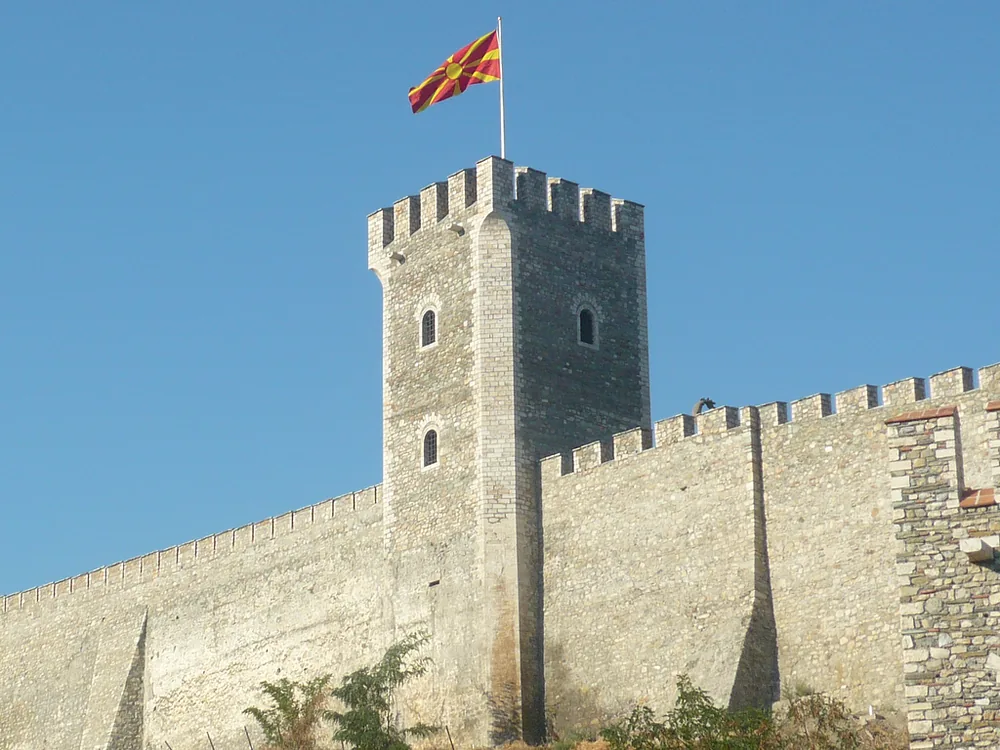
Built 535 · Byzantine fortress on a Neolithic and Roman-era hilltop site — originally fortified in antiquity, the current defensive structure was substantially rebuilt by the Emperor Justinian I in 535 AD as part of his systematic fortification of the Balkan frontier; subsequent modifications were made under Bulgarian, Byzantine, and Serbian medieval kingdoms; the Ottoman period saw the fortress decline from military use; current remains include curtain walls, towers, and the hillside esplanade that serves as a public park; the fortress overlooks the Old Bazaar (Čaršija) and the Vardar River below
This page is part of an independent travel guide and is not affiliated with, endorsed by, or operated by Kale Fortress.
© Castles & Palaces
Quick Facts
- Hours
- Daily 08:00–22:00
- Guided tour from
- €18
- Duration
- 30–60 minutes (fortress walls and panoramic views over Skopje); allow more time if combining with the Old Bazaar below
- Best time
- April to October
- Nearest city
- Skopje
Featured Tour
Walking in Skopje (Includes Kale Fortress Views & Old Bazaar)
Cancellation available · Instant confirmation
Highlights
- ✦Free open-air ruins with panoramic Skopje views — the fortress hilltop provides the best elevated viewpoint over central Skopje: the Vardar River, the Ottoman-era Stone Bridge (Kameni Most), the Old Bazaar (Čaršija), the neoclassical statues and buildings of Skopje 2014, and the surrounding Balkan mountain ranges all visible from the curtain walls and towers
- ✦Justinian I's 535 AD fortification — the Byzantine emperor Justinian I, who was born near modern Skopje in 482 AD and later rebuilt much of his native city after the earthquake of 518, substantially fortified Kale as part of his systematic military construction across the Balkan frontier; this makes Kale one of the oldest documented Byzantine fortifications in the central Balkans
- ✦Kale's position above the Old Bazaar — the fortress overlooks Skopje's Ottoman-era Old Bazaar (Čaršija), one of the largest and best-preserved bazaar districts in the Balkans outside Istanbul; the bazaar's mosque minarets, caravanserai, and covered market streets are visible from the fortress walls in immediate proximity, creating one of the most legible urban historical overlaps in the region — Byzantine military above, Ottoman commercial below
- ✦Skopje 2014 urban context — the fortress predates and entirely contrasts with the controversial Skopje 2014 urban renewal project (launched 2010) that added neoclassical government buildings, triumphal arches, and hundreds of bronze statues to the city centre below; the fortress walls, genuinely medieval, provide a counterpoint to the constructed historical aesthetics of the project
- ✦North Macedonia's layered history — the territory of modern North Macedonia (independent since 1991, and known as the Former Yugoslav Republic of Macedonia until the Prespa Agreement resolved the naming dispute with Greece in 2019) has been Neolithic settlement, Macedonian kingdom, Roman province, Byzantine frontier, Bulgarian empire, Ottoman vilayet, Serbian kingdom, Yugoslav republic, and independent state within the last 3,000 years; Kale is the physical stratigraphy of that history
Skip the queue with a guided tour
Skip-the-line tickets & expert guides
Kale Fortress occupies the rocky hill at the northern edge of central Skopje — a ridge of volcanic rock rising roughly 60 metres above the Vardar River and the Old Bazaar, commanding the valley floor and the mountain passes that have made this site one of the most continuously inhabited positions in the central Balkans. The fortress is free, open-air, and publicly accessible; it is not a museum with entry tickets, guided routes, and roped-off exhibits. What it offers instead is a direct encounter with the accumulated defensive history of a city that has been held by Roman legions, Byzantine garrison troops, Bulgarian khans, Serbian kings, Ottoman Janissaries, and the Yugoslav People's Army in successive centuries — all on the same hilltop, all building on what their predecessors left.
The site's fortification history extends well before the current Byzantine structure. Neolithic pottery has been found on the hill; there is evidence of a fortified Paeonian settlement in the pre-Roman period; and Roman military presence is documented from the 1st century AD, when Skopje (then Scupi) served as a legionary colony on the road between the Adriatic and the Danube. The city was destroyed by a catastrophic earthquake in 518 AD. The Emperor Justinian I — who was born around 482 AD in a village near modern Skopje and referred to himself as a Dardanian (from the ancient people of the central Balkans) — rebuilt the city and fortified the hill as part of his empire-wide programme of frontier military construction. The 535 AD fortification of Kale is documented in the administrative records of the Byzantine Empire and forms the dated baseline for the current ruins.
Subsequent medieval powers all modified and used Kale. The First Bulgarian Empire incorporated Skopje in the late 9th century; the Second Bulgarian Empire and the Serbian medieval kingdoms competed for the city through the 12th–14th centuries. Stefan Dušan, the 14th-century Serbian tsar who briefly created the largest state in the medieval Balkans, held court at Skopje and the fortress served as the seat of his regional administration. The Ottoman conquest of Skopje came in 1392, and the city subsequently became one of the most important centres of the Ottoman Balkans — the Old Bazaar below the fortress was established in this period and expanded through the 15th–19th centuries into one of the largest commercial districts north of Thessaloniki.
Under the Ottomans, Kale's military function gradually diminished as the city's growth moved away from its defensive requirements. The fortress was maintained as a garrison position but not substantially rebuilt; the remains visible today are primarily Byzantine and late medieval in character, with Ottoman-era modifications mainly to the wall fabric. The city of Skopje was destroyed again by a massive earthquake in July 1963 that killed approximately 1,100 people and destroyed most of the pre-war built fabric. The reconstruction that followed — planned with international assistance from the United Nations and from several countries — produced the modernist city that occupies the valley floor today. The fortress, built in stone on its volcanic hill, survived the earthquake intact.
The contemporary visitor experience at Kale is that of an open hilltop park with historical layering rather than a conventional castle with preserved interiors and museum rooms. The curtain walls and towers are partially stable and partially consolidated ruins; the fortress esplanade at the hilltop is used by Skopje residents for walking and evening gathering. The views from the walls are the primary attraction: looking south from the fortress, the visual field takes in the Stone Bridge (a 15th-century Ottoman bridge on Roman foundations, one of the symbols of the city), the Vardar River, and the neoclassical statues and government buildings of the Skopje 2014 urban renewal project — the controversial programme of public works launched in 2010 that added triumphal arches, colonnaded facades, and hundreds of bronze statues to the city centre as a response to the Macedonian-Greek naming dispute, an attempt to construct historical identity through architectural assertion. From the fortress walls, the contrast between the genuinely ancient stonework underfoot and the brand-new neoclassical monuments below is unmistakable.
The Old Bazaar (Čaršija), immediately at the foot of the fortress hill, is the more consistently rewarding destination. Established in the Ottoman period and expanded from the 15th century onward, it is one of the largest and best-preserved bazaar districts in the Balkans, retaining its mosque minarets, hans (merchant inns), covered market streets, and coppersmith workshops in a form that gives a genuine sense of Ottoman commercial urbanism. The Mustapha Pasha Mosque (1492), the Daud Pasha Hammam (15th century), and the Bit Pazar market are all within the bazaar area. The combination of fortress visit and bazaar walk constitutes the most historically coherent Skopje itinerary.
The GetYourGuide walking tour is a general Skopje city walking tour that includes views from the Kale Fortress as one of its stops, along with the Memorial House of Mother Teresa (who was born in Skopje in 1910), the Stone Bridge, Parliament, and the Old Bazaar. There is no dedicated Kale-Fortress-only tour because no entry ticket exists — the fortress is free and open-air. The walking tour provides the contextual and historical framework that makes the fortress visit legible rather than merely scenic.
History
Neolithic and pre-Roman fortified settlement on the Skopje hill. Roman colony Scupi established in the valley below. Byzantine fortification of Kale by Justinian I in 535 AD following the earthquake of 518. Medieval Bulgarian, Byzantine, and Serbian kingdoms all hold and modify the fortress. Stefan Dušan holds court at Skopje, 14th century. Ottoman conquest of Skopje 1392; city becomes a major Ottoman regional centre; Old Bazaar established. Fortress maintained as Ottoman garrison, gradually declining in military significance. Skopje earthquake 1963 destroys city but fortress survives. Yugoslav reconstruction of Skopje 1963–1970s. North Macedonian independence 1991. Skopje 2014 urban renewal project 2010–2014. Prespa Agreement resolves naming dispute with Greece 2019.
How to Visit
Getting there: Skopje Alexander the Great Airport (SKP) is 25 km from the city centre, served by direct flights from many European cities. The fortress is a 10 to 15-minute walk from Macedonia Square; from the Old Bazaar (Čaršija), follow the path uphill from near the Stone Bridge — about 10 minutes. Skopje is also reachable by bus from Thessaloniki (3.5 hours), Sofia (3 hours), Pristina (2 hours), and Ohrid (3 hours).
Tickets: Free entry. There is no ticket booth and no formal entrance gate — the fortress grounds are open-air and freely accessible from the Old Bazaar path. The GetYourGuide tour — a 2-hour guided city walk covering Kale Fortress views, the Old Bazaar, the Stone Bridge, Parliament, and the Memorial House of Mother Teresa — provides the historical context that makes the fortress legible; book in advance.
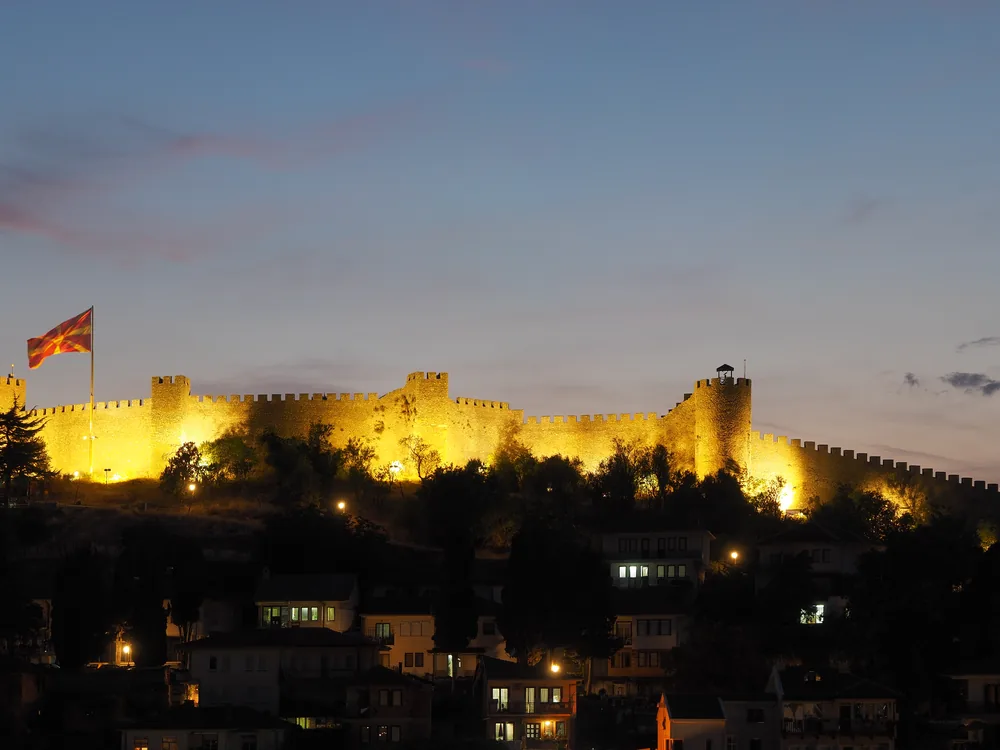
Practical tips: Evening visits are particularly rewarding — the fortress walls are illuminated and the Old Bazaar lights up below, which is when Kale is at its most atmospheric. Avoid midday in July and August (the Skopje basin regularly reaches 38–42°C); early morning or after 17:00 is far more comfortable. Budget an extra 1 to 2 hours to walk the Old Bazaar immediately at the foot of the hill — the Ottoman-era market streets, mosque minarets, and hans are as rewarding as the fortress itself.
Combine with: Samuel's Fortress in Ohrid, about 3 hours south-west by bus or car, is the most important medieval fortress in North Macedonia and the natural companion for a longer in-country itinerary.
Frequently Asked Questions
There is no dedicated Kale Fortress tour because the fortress is a free, open-air site with no ticket or managed entry. The GetYourGuide Skopje walking tour includes the fortress as one of its stops alongside the Old Bazaar, Stone Bridge, and other city landmarks. This is the best way to get historical context for the fortress; a self-guided walk up from the bazaar is also straightforward and costs nothing.
Location
Kale Fortress, Skopje, North Macedonia
Nearby Castles
Tours & Tickets
Powered by GetYourGuide
From
€18/ person