Boyen Fortress
Twierdza Boyen
Poland · Warmian-Masurian Voivodeship — Giżycko, Masuria, between Lake Niegocin and Lake Kisajno · Near Giżycko
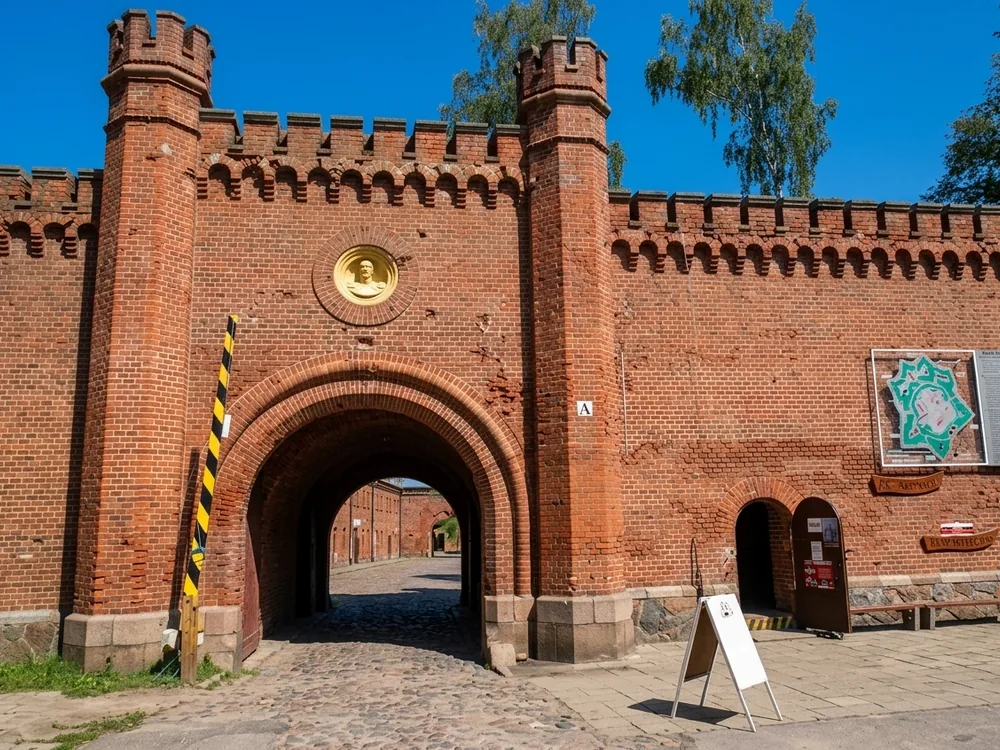
Built 1856 · 19th-century Prussian hexagonal earth-and-brick fortress; four access roads connecting to the mainland; perimeter wall over 2.3 km long; named for Prussian War Minister Hermann von Boyen
This page is part of an independent travel guide and is not affiliated with, endorsed by, or operated by Boyen Fortress.
© Castles & Palaces
Quick Facts
- Hours
- Mon–Sun Verify locally
- Guided tour from
- €149
- Duration
- 2–3 hours (guided tour of city highlights + fortress)
- Best time
- May to September
- Nearest city
- Giżycko
Featured Tour
Giżycko: City Highlights & Boyen Fortress Guided Tour
Cancellation available · Instant confirmation
Highlights
- ✦Built 1844–1856 as a strategic chokepoint defending the only land route across the narrow strip between Lake Niegocin and Lake Kisajno — turning Masuria's lake geography into military advantage
- ✦Hexagonal earth-and-brick design ringed by a defensive wall over 2.3 km long, connected to the mainland by four access roads, with the Masurian lakes forming a natural barrier on either side
- ✦Named for Prussian War Minister Hermann von Boyen by personal order of King Frederick William IV, who commissioned the fortress as part of the broader Prussian eastern defence network
- ✦Giżycko traces its origins to a 14th-century Teutonic Knights' castle — making the town a layered military site, with Boyen representing the Prussian era of a landscape occupied by military forces since the medieval period
- ✦Declared a protected monument in 1975, now home to a fortress museum set in the heart of one of Poland's most popular sailing and lake-holiday regions
Skip the queue with a guided tour
Skip-the-line tickets & expert guides
The town of Giżycko has had a fortified presence since the 14th century, when the Teutonic Knights established a castle to anchor their eastern operations in Masuria. The fortress that visitors see today is an entirely different structure from a different era: a 19th-century Prussian hexagonal fortification, built 1844–1856 on the orders of King Frederick William IV, that reflects the geopolitical concerns of a consolidating Prussian state rather than the crusading ambitions of a medieval military order.
Boyen's strategic logic is immediately apparent from a map. Giżycko sits on a narrow strip of land between Lake Niegocin and Lake Kisajno — the only viable land route through this stretch of the Masurian Lake District. Control the strip, and you control movement through one of the most significant waterway systems in northeastern Poland. The fortress was designed to do exactly that: a hexagonal earth-and-brick structure connected to the mainland by four access roads, surrounded by a defensive perimeter wall over 2.3 km long, with the Masurian lakes forming a natural moat on either side. Frederick William IV named the fortress for Hermann von Boyen, his Minister of War, who had reorganised Prussia's military structure in the early 19th century — a naming choice that connected the new fortification to the administrative reforms underpinning Prussian military power.
The Masurian landscape in which Boyen sits is one of Poland's most celebrated natural environments: over two thousand lakes, dense forest, and a network of waterways that make the region Poland's premier sailing and water-sports destination. Giżycko itself is one of Masuria's most active sailing towns, with a marina on the Łuczański Canal and the Most Obrotowy — a 19th-century rotating bridge still in daily use, a few minutes' walk from the fortress walls. Visiting Boyen in isolation would miss this context; the fortress makes most sense when understood as a landmark in a landscape shaped as much by water as by military history.
Declared a protected monument in 1975, Boyen today houses a museum on the fortress grounds. The guided city and fortress tour covers both Giżycko's historic centre and the fortress itself in a single session — the most efficient way to understand the relationship between the town's medieval origins, its Prussian fortress, and the lake landscape that shaped both.
History
Giżycko's origins lie in a 14th-century Teutonic Knights' castle established to control the Masurian frontier — a medieval structure that gives the town its deepest military layer, though the fortress visitors see today has no physical connection to that original building. In 1844, King Frederick William IV ordered the construction of a new hexagonal fortress on the critical land bridge between Lake Niegocin and Lake Kisajno. Construction ran until 1856, producing a substantial earth-and-brick installation: a hexagonal perimeter wall over 2.3 km long, four access roads connecting the fortress to the surrounding terrain, and the natural barrier of the two Masurian lakes completing the defensive logic. Frederick William IV named the fortress for Hermann von Boyen, his Minister of War and the architect of Prussia's early 19th-century military reforms — an honour that reflected the strategic seriousness with which the Prussian state regarded its eastern frontier. The fortress served as part of the broader Prussian and later German eastern defence network through the 19th and early 20th centuries. Polish heritage authorities declared it a protected monument in 1975, and the fortress now operates as a museum at the heart of one of Poland's most visited lake districts.
How to Visit
Getting there: Giżycko is approximately 110 km east of Olsztyn in Warmia-Masuria. By car from Warsaw, allow about 3.5 hours via the S8 motorway toward Ostrów Mazowiecka and then northeast. From Olsztyn, take the DK16 road east (approximately 1.5 hours). The fortress is in central Giżycko, walkable from the town centre and the Most Obrotowy rotating bridge over the Łuczański Canal.
Tickets: The fortress museum has its own entrance fee (approximately 10 PLN adult; verify current prices at twierdzaboyen.pl before visiting). The GetYourGuide guided city and fortress tour covers Giżycko's city highlights and the Boyen Fortress in sequence; check the current GetYourGuide listing for the exact price and duration before booking.
Practical tips: Giżycko is one of Masuria's most popular sailing and water-sports bases in summer — combine a fortress visit with time on or near the lakes. The Most Obrotowy rotating bridge on the Łuczański Canal, a 19th-century engineering structure still in daily operation, is a five-minute walk from the fortress and worth adding to the visit. The fortress earthworks and perimeter wall are walkable independently of the museum, offering views of both Masurian lakes from the ramparts.
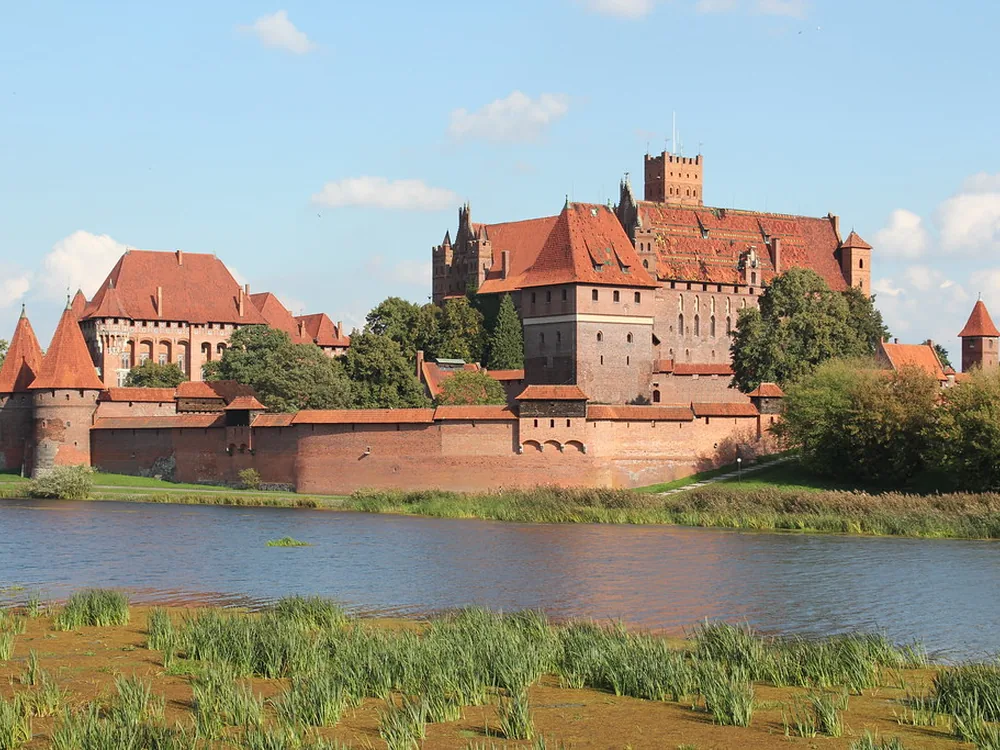
Combine with: Malbork Castle (~200 km northwest — the largest castle in the world by floor area, the Teutonic Knights' Grand Master seat on the Nogat river, a UNESCO World Heritage Site that represents the medieval layer underlying Masuria's longer military history).
Frequently Asked Questions
Not directly — Boyen Fortress is a 19th-century Prussian structure built 1844–1856. Giżycko as a town traces back to a 14th-century Teutonic Knights' castle, but that medieval building is a distinct historical layer; the fortress visitors see today was commissioned by King Frederick William IV of Prussia.
Location
ul. Wojska Polskiego, 11-500 Giżycko, Poland
Nearby Castles
Tours & Tickets
Powered by GetYourGuide
From
€149/ person