
Ojców Castle
Zamek w Ojcowie
Poland · Małopolskie, Polish Jurassic Highland · Near Kraków
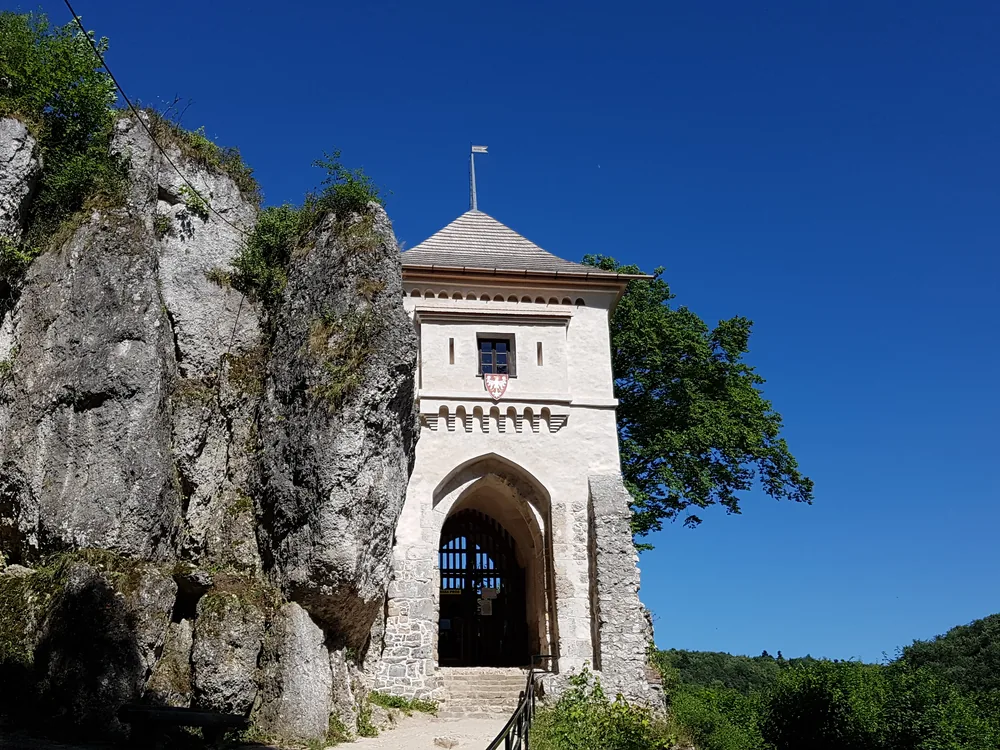
Built 1350 · Royal castle ruin on a limestone outcrop in Ojców National Park; one of the original chain of 25 Eagles' Nests castles built by King Casimir III the Great (Casimir the Great) on the limestone outcrops of the Polish Jurassic Highland (Krakowsko-Częstochowska Upland) in the second half of the 14th century to guard the Kraków–Wrocław trade route; the castle occupied a high natural rock platform above the Prądnik river valley; surviving elements include the octagonal tower (Baszta Łokietka — 'Elbow-high Tower,' named for the legend that Władysław I hid here as a fugitive), the Gothic gatehouse, and fragments of the curtain wall; partially demolished in the 19th century during Austrian partition-era quarrying and clearance; situated inside Ojców National Park — Poland's smallest national park, declared 1956, protecting the limestone gorges, caves, and chalk grasslands of the Prądnik and Sąspówka river valleys; entry to the ruins is free, within a national park context
This page is part of an independent travel guide and is not affiliated with, endorsed by, or operated by Ojców Castle.
© Castles & Palaces
Quick Facts
- Hours
- Mon–Sun Open
- Day trip from
- €127
- Duration
- 45 minutes–1 hour
- Best time
- April to October
- Nearest city
- Kraków
Featured Tour
Krakow: Ojcow National Park, Castles & Hidden Gems Tour
Cancellation available · Instant confirmation
Highlights
- ✦The Eagles' Nests trail — Szlak Orlich Gniazd — is a chain of 25 medieval royal castles built by Casimir III the Great on the limestone outcrops of the Polish Jurassic Highland in the second half of the 14th century; Ojców is one of the most atmospheric of the chain, its ruined tower rising from a cliff above the Prądnik gorge with the national park woodland on all sides, giving it an isolation that more visited castles like Wawel or Malbork cannot replicate
- ✦The octagonal Baszta Łokietka — 'Elbow-High Tower' — is the castle's most distinctive surviving element and the most photographed, rising intact from the limestone platform above the valley; the tower's name refers to the legend that Władysław I the Elbow-High (Łokietek), grandfather of Casimir the Great, hid in a cave below this rock as a fugitive from his Silesian rivals in the early 14th century before recovering power and reunifying Poland
- ✦The castle is inside Ojców National Park — Poland's smallest national park, covering 21 km² of the Prądnik and Sąspówka limestone gorge landscape; the park contains Łokietek's Cave (accessible by guided tour separately), chalk grasslands with rare flora, the Hercules' Club rock formation, and a cluster of bats of significant European biodiversity importance; the combination of castle ruins and national park biodiversity makes Ojców one of the most multi-layered short excursions from Kraków
- ✦Casimir the Great built the Eagles' Nests chain as a coordinated border-and-trade-route defence system along the Kraków–Wrocław corridor, which was one of medieval Poland's most commercially significant land routes; the limestone outcrops of the Jurassic Highland were naturally defensible — high, with vertical cliff faces — and the castle builders integrated natural rock features into their walls wherever possible, making the distinction between built and geological at Ojców almost invisible in places
- ✦The ruins at Ojców are free and open access, which combined with their location inside a national park 20 km from Kraków makes them one of the most underrated heritage sites in southern Poland; the site draws dedicated castle visitors and national park walkers in roughly equal measure, and the Prądnik valley walking trails that connect Ojców with [Pieskowa Skała Castle](/castles/poland/pieskowa-skala-castle) (6 km north by trail) are excellent
Tickets & tours
Book through GetYourGuide
Ojców Castle ruins stand on a limestone platform above the Prądnik river valley, 20 kilometres north of Kraków, inside the boundaries of Ojców National Park. The position is one of the defining features of the Polish Jurassic Highland landscape: limestone outcrops rising from forested gorge valleys, with the rock's natural cliff faces exploited by medieval builders as the foundations and sometimes the walls of the castle structure itself. The relationship between the geology and the architecture at Ojców is immediate and legible — the castle did not sit on the rock so much as grow from it.
Ojców was one of 25 fortifications built or substantially rebuilt by King Casimir III the Great on the limestone outcrops of the Krakowsko-Częstochowska Upland in the second half of the 14th century — the chain of fortifications now known as the Eagles' Nests (Szlak Orlich Gniazd). Casimir's military objective was to secure the trade corridor running northwest from Kraków through Częstochowa toward Wrocław — one of medieval Poland's most important commercial routes — against Bohemian and Silesian incursion. The limestone highland's natural defensive advantages (high ground, vertical cliff faces, cave systems for emergency refuge) were systematically exploited: each castle was positioned so that it could see and be seen from at least one neighbouring castle in the chain, creating a signalling and mutual-support network along the highland ridge.
Casimir the Great (ruled 1333–1370) is one of Poland's most constructively consequential monarchs: he is credited with building or rebuilding approximately 50 castles across the kingdom during his reign, constructing the Kraków Academy (predecessor of Jagiellonian University), issuing the Statutes of Wiślica that codified Polish law, and managing the complex diplomatic relationships between Poland, Hungary, the Holy Roman Empire, and the Teutonic Knights with unusual skill. He took over a country largely built in wood and left it largely built in stone — hence the Polish proverb: 'Casimir found a Poland of wood and left a Poland of stone.'
The castle's association with Władysław I Łokietek (Władysław the Elbow-High) is older than Casimir's construction: legend holds that Władysław hid in a cave below the Ojców rock as a fugitive from his Silesian rivals in the early 14th century, before recovering political support and reunifying Poland. The cave — Łokietek's Cave (Jaskinia Łokietka) — is accessible by guided tour separately from the castle ruins and is one of the national park's main attractions; the castle's distinctive octagonal tower carries his name (Baszta Łokietka), embedding the fugitive-king narrative into the physical structure.
The castle's decline came in the 19th century during the Austrian partition of southern Poland, when the site was used for quarrying and clearance operations that removed the more complete sections of the structure. What survives — the octagonal tower, the Gothic gatehouse fragments, and curtain wall sections — is enough to convey the castle's spatial layout and the scale of the original fortification, while the ruined quality gives the site the atmospheric quality that a fully restored reconstruction could not provide.
Ojców National Park, declared in 1956 and covering 21 km² of the Prądnik and Sąspówka limestone gorge system, is Poland's smallest national park. Its ecological significance is disproportionate to its size: the limestone geology supports chalk grassland habitats with rare flora, the cave system hosts significant bat populations of European biodiversity importance, and the gorge forests are structurally intact in a way unusual for landscapes this close to a major city. The castle ruins and the national park ecology are experienced simultaneously — the path to the castle crosses the national park, passes geological formations (the Hercules' Club column of limestone, the Gate of Kraków rock arch), and arrives at the ruin through woodland rather than a car park.
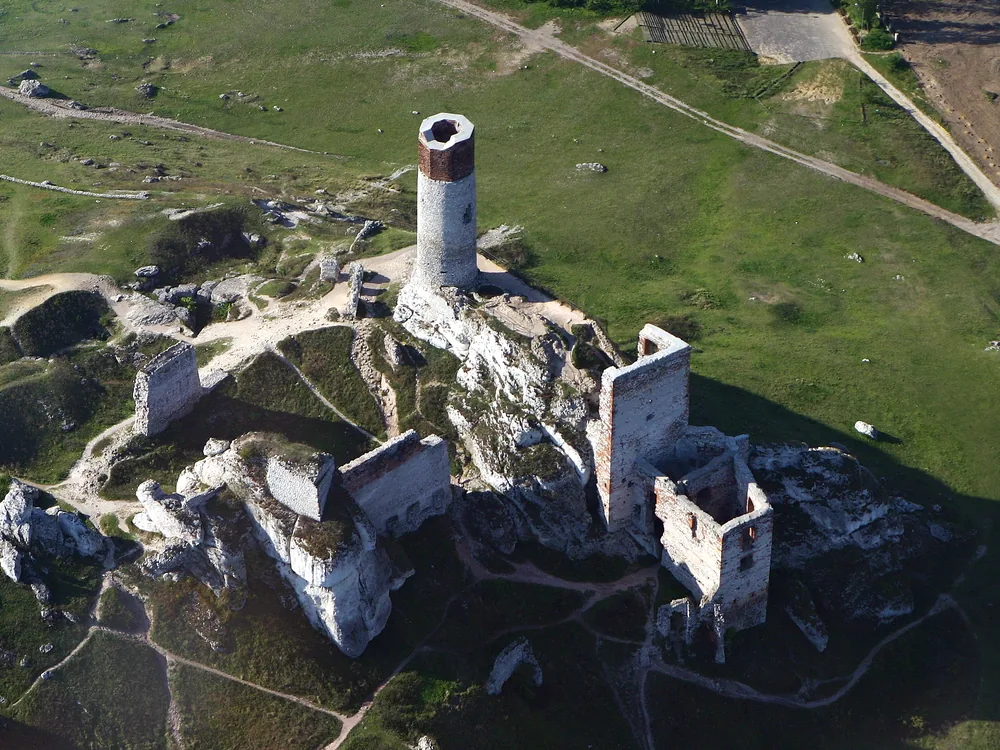
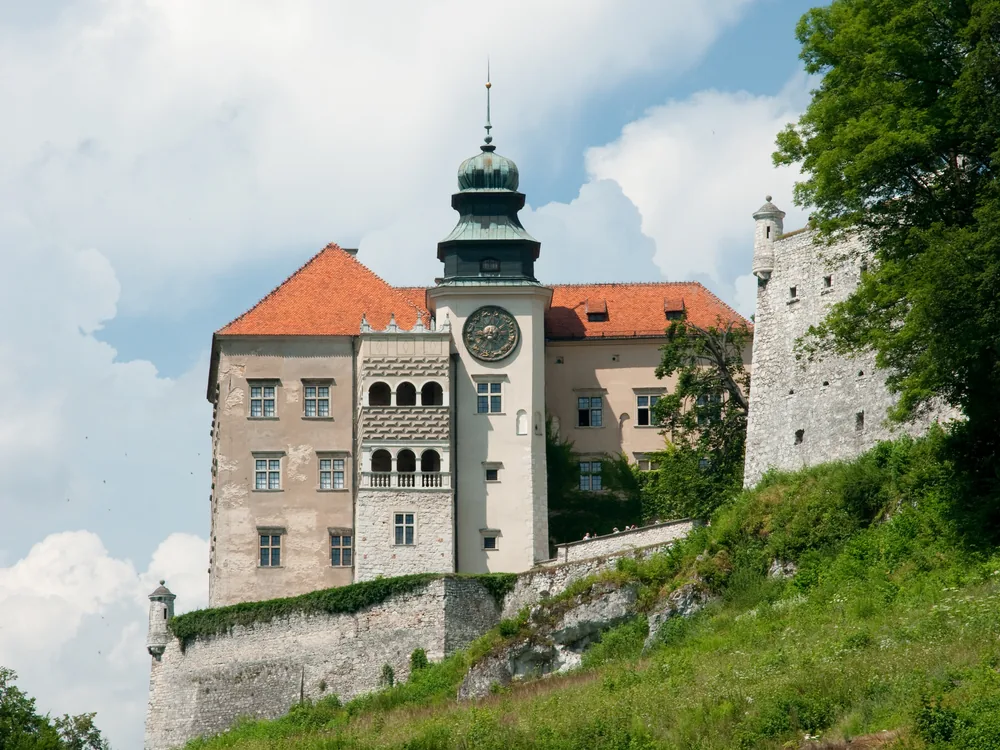
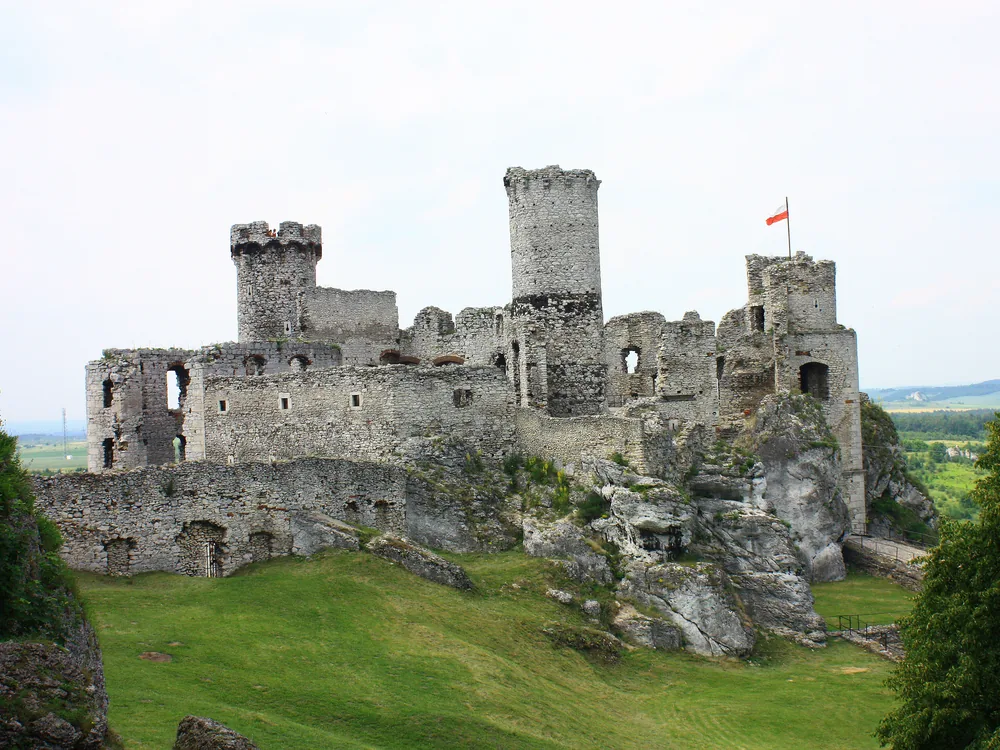
The Eagles' Nests trail as a full tourist circuit connects all 25 castles from Kraków in the south to Częstochowa in the north — a distance of approximately 160 km that can be walked, cycled, or driven over several days. Day tours from Kraków covering the Eagles' Nests chain typically focus on [Pieskowa Skała Castle](/castles/poland/pieskowa-skala-castle) (the only fully intact castle on the trail), [Ogrodzieniec Castle](/castles/poland/ogrodzieniec-castle) (the largest ruin), and [Olsztyn Castle](/castles/poland/olsztyn-castle) near Częstochowa. Ojców Castle ruins are inside the national park that some tours pass through, but the castle itself is not a named stop on the standard itineraries — making it primarily a destination for self-guided visits from Kraków by car or bus.
History
Prehistory–10th century: The Prądnik valley and surrounding limestone rock system occupied by successive populations; Łokietek's Cave used as refuge. 14th century: Legend of Władysław I Łokietek hiding at the Ojców rock as a political fugitive. 1350s: Casimir III the Great builds Ojców Castle as part of the Eagles' Nests chain on the Krakowsko-Częstochowska Upland. 14th–17th centuries: Castle used as a royal administrative post and residence; passes through several administrative custodians. 17th century: Castle falls into disrepair as military value declines. 19th century: Austrian partition-era quarrying and demolition reduce the castle to ruins. 1956: Ojców National Park declared, encompassing the castle ruins. Present day: Free open-access ruins within the national park.
How to Visit
Getting there: Ojców is 20 km north of Kraków. By car: 30 minutes on the DK794 road; park in the Ojców village car park. By bus: several daily bus services from Kraków (Krowodrza Górka stop) to Ojców — check timetable at krakow.pl or mpk.krakow.pl; journey approximately 45 minutes. By bike: the Prądnik valley cycle route connects Kraków with Ojców.
Tickets: Free — no entry ticket required for the ruins or the national park. Łokietek's Cave requires a separate guided tour ticket.
Trail: The Eagles' Nests walking trail (Szlak Orlich Gniazd) connects Ojców with Pieskowa Skała Castle (6 km north, 1.5 hours on foot) through the national park valley — one of the best half-day hikes near Kraków.
Practical tips: April to October.
Combine with: Pieskowa Skała Castle (6 km north — walk the Eagles' Nests trail through the national park valley, 1.5 hours on foot). Olsztyn Castle and Ogrodzieniec Castle further north on the trail. No GetYourGuide tour found that stops at Ojców Castle itself — use the search link for current options, or self-drive from Kraków (30 minutes).
Frequently Asked Questions
The Trail of the Eagles' Nests (Szlak Orlich Gniazd) is a 160-km heritage route connecting 25 medieval castle ruins built or rebuilt by Casimir the Great on the limestone outcrops of the Polish Jurassic Highland between Kraków and Częstochowa. The most visited castles on the trail are Pieskowa Skała (the only fully intact example), Ogrodzieniec (the largest ruin), Olsztyn near Częstochowa, and Ojców in the national park near Kraków. Day tours from Kraków typically cover Pieskowa Skała and Ogrodzieniec as their castle stops; Ojców Castle itself is usually self-visited as it is inside the national park and easily reached by bus or car from Kraków.
Location
Ojców, 32-047 Ojców, Poland
Nearby Castles
Tours & Tickets
Powered by GetYourGuide
From
€127/ person