
Olsztyn Castle
Zamek w Olsztynie
Poland · Śląskie, Polish Jurassic Highland · Near Częstochowa
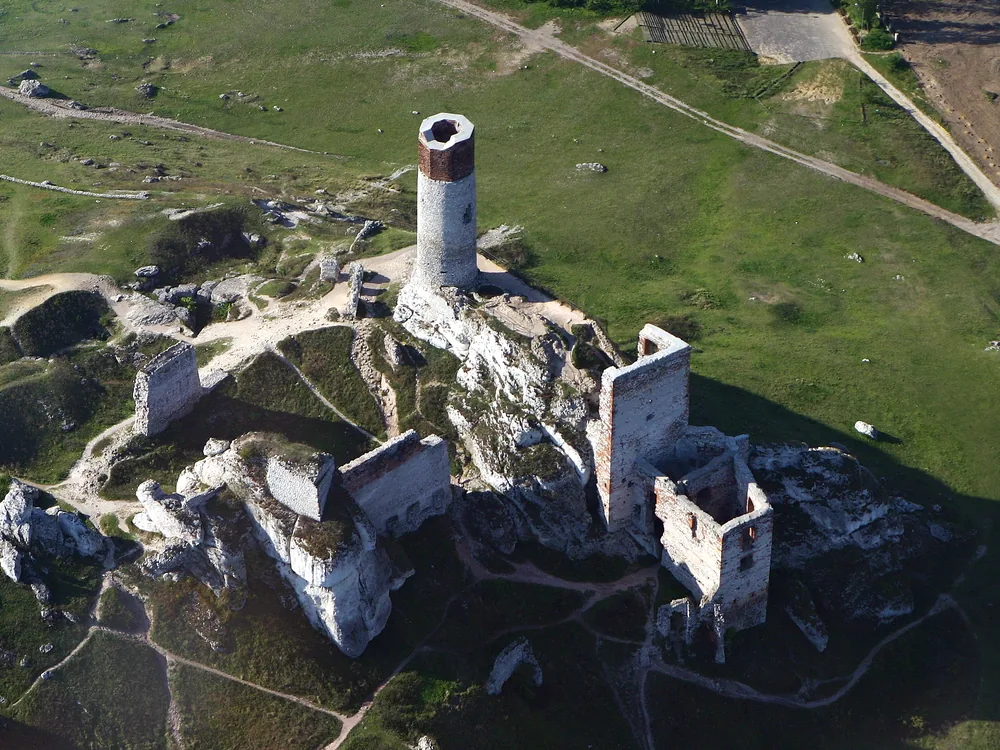
Built 1350 · Royal castle ruin on a karst limestone outcrop near Częstochowa; one of the Eagles' Nests chain built by Casimir III the Great in the second half of the 14th century; notable as one of the few Eagles' Nests castles that genuinely incorporates natural karst grottoes and rock chambers into its defensive layout — natural cave passages connected to the castle's lower level as emergency routes and storage — giving it the character of a cave castle as much as a built fortification; the site successfully withstood a 1587 siege by Archduke Maximilian of Austria, who was attempting to claim the Polish crown after Stephen Báthory's death; fell to the Swedish 'Deluge' in 1655 and has been a ruin since; the principal surviving feature is the large round tower (Wieża Główna) on the main rock, visible from Częstochowa; the ruined walls on multiple levels of the limestone rock form an extensive open-air site; NOT to be confused with Olsztyn Castle in northeastern Poland (the Warmia castle in the city of Olsztyn) — this is the Częstochowa-area limestone ruin on the Eagles' Nests trail
This page is part of an independent travel guide and is not affiliated with, endorsed by, or operated by Olsztyn Castle.
© Castles & Palaces
Quick Facts
- Hours
- Mon–Sun Open
- Entry from
- Free
- Duration
- 1–1.5 hours
- Best time
- April to October
- Nearest city
- Częstochowa
Highlights
- ✦Olsztyn is one of the few Eagles' Nests castles that genuinely incorporates natural karst cave passages into its defensive structure — the castle's lower levels connect with natural grottoes in the limestone that served as emergency routes, storage spaces, and alternative exits; this cave-castle character, where the geological and architectural blend in ways that feel almost organic, makes Olsztyn one of the most physically distinctive sites on the entire highland trail
- ✦The castle successfully held off a 1587 siege by Archduke Maximilian of Austria, who was contesting the Polish crown following the death of Stephen Báthory against Sigismund III Vasa; Maximilian had already lost the Battle of Byczyna but hadn't accepted defeat, and the castle's resistance — combined with his subsequent capture — effectively ended his claim; the siege history gives Olsztyn a specific place in the Polish succession crisis that reshaped Central European politics in the 1580s
- ✦The Swedish 'Deluge' (Potop) of 1655–1660 — the Swedish invasion of Poland that devastated the country and is still a defining historical trauma in Polish national memory — brought the castle's end; Swedish forces captured Olsztyn in 1655 and damaged it sufficiently to begin the process that led to its ruination; the castle was never rebuilt, becoming instead one of the longest-standing ruins in the Jurassic Highland
- ✦The large round tower (Wieża Główna) on the main rock platform is visible from the surrounding countryside and from the city of Częstochowa — a significant vertical silhouette that has made the castle a visual landmark for the region even in its ruined state; climbing the tower (a small fee) gives one of the widest views over the Jurassic Highland, including the distinctive limestone outcrops of the neighbouring terrain on which other Eagles' Nests castles are positioned
- ✦The castle is within easy reach of Częstochowa's Jasna Góra Monastery — one of Poland's most significant Catholic pilgrimage sites, home to the Black Madonna icon — making Olsztyn a natural secular counterpart to a pilgrimage day in Częstochowa; the castle is 9 kilometres from the city, and visitors combining both have a day that moves between the two deepest threads of Polish cultural identity: religious devotion and royal defensive history
Tickets & tours
Book through GetYourGuide
Olsztyn Castle stands on a series of limestone outcrops near the village of Olsztyn, 9 kilometres southeast of Częstochowa in the Śląskie region of southern Poland. This is not the Olsztyn castle in northeastern Poland — the Warmia city of the same name has its own historic castle, associated with Nicolaus Copernicus, which is a completely different building. The Olsztyn on the Eagles' Nests trail is a karst limestone ruin in the Jurassic Highland, built as part of Casimir the Great's 14th-century border castle chain.
The castle's geological setting distinguishes it from most other Eagles' Nests sites. The Polish Jurassic Highland (Krakowsko-Częstochowska Upland) is a karst limestone landscape — not a solid rock plateau but a terrain of soluble limestone shaped by water into a complex system of outcrops, grottoes, solution caves, and sinkholes. At Olsztyn, the builders of the 14th-century castle encountered a limestone rock with natural cave passages in its lower sections and incorporated them into the defensive plan: the cave entrances became additional exits from the fortification, the rock chambers became storage spaces, and the distinction between the built castle and the geological formation it occupied became genuinely ambiguous. The result is one of the few medieval Polish castles that deserves the designation 'cave castle' in a literal rather than metaphorical sense.
The castle was part of Casimir III the Great's Eagles' Nests chain, built in the second half of the 14th century to defend the Kraków–Wrocław trade corridor against Bohemian and Silesian incursion. Casimir's programme exploited the Jurassic Highland's natural defensive advantages systematically: high outcrops with vertical cliff faces were preferred, the castles were spaced so they could signal to each other, and where possible the natural geology was incorporated into the structure rather than built around. Olsztyn's karst caves are the most dramatic example of this integration across the entire trail.
The castle's most significant military event came in 1587, three decades before the Thirty Years' War. When King Stephen Báthory died without an heir, the Polish–Lithuanian Commonwealth faced a succession contest between two candidates: Sigismund III Vasa (backed by the Swedish crown) and Archduke Maximilian of Austria (backed by the Habsburgs). Maximilian invaded Poland in 1587 to enforce his claim, but his forces were defeated at the Battle of Byczyna in January 1588. Before this defeat, Maximilian had attempted to take Olsztyn Castle as part of his campaign in the region; the castle's garrison held out against the siege, and after Byczyna, Maximilian was captured and forced to renounce his Polish claim. The siege resistance is commemorated in the castle's local history as one of its defining moments.
The Swedish Deluge (Potop) of 1655–1660 ended the castle's military career. Swedish forces — part of a simultaneous invasion that overran much of Poland and remains one of the defining national traumas in Polish historical memory — captured Olsztyn in 1655 and damaged the fortification. The subsequent political and economic disruption of the Deluge period meant that repairs were never carried out, and the castle remained uninhabited from the later 17th century, progressively deteriorating into the extensive ruin that visitors walk through today.
The ruins are extensive. The main rock platform supports the Wieża Główna (main tower), a large round tower that is the castle's most intact surviving structure and the most visible element from the surrounding countryside. The walls, towers, and gate structures distributed across multiple levels of the limestone outcrop form an open-air site that takes about an hour to explore fully, crossing between different rock levels, entering cave passages where accessible, and climbing the main tower for the Highland panorama. The visit is free at the basic level — the ruins themselves are open access — with a small charge for the tower interior.
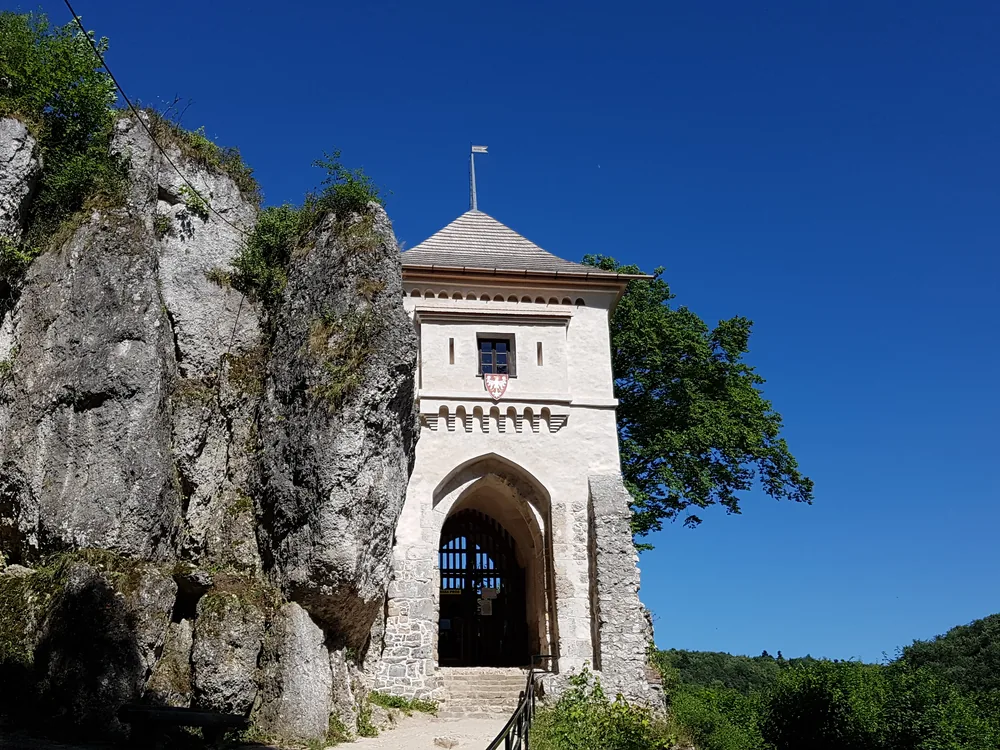
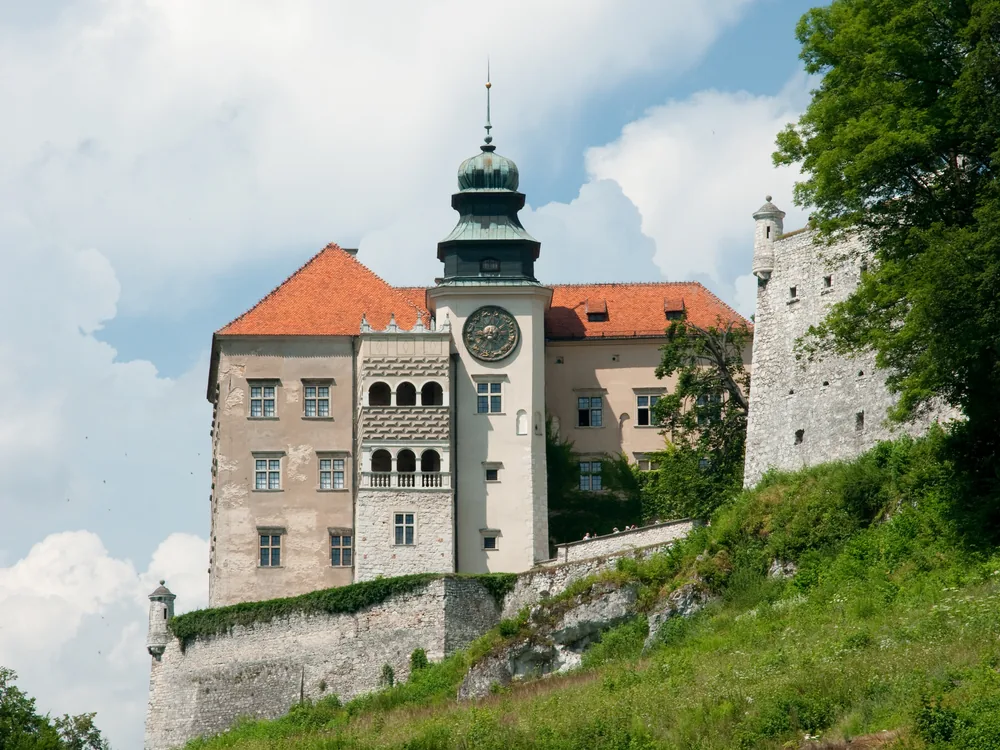
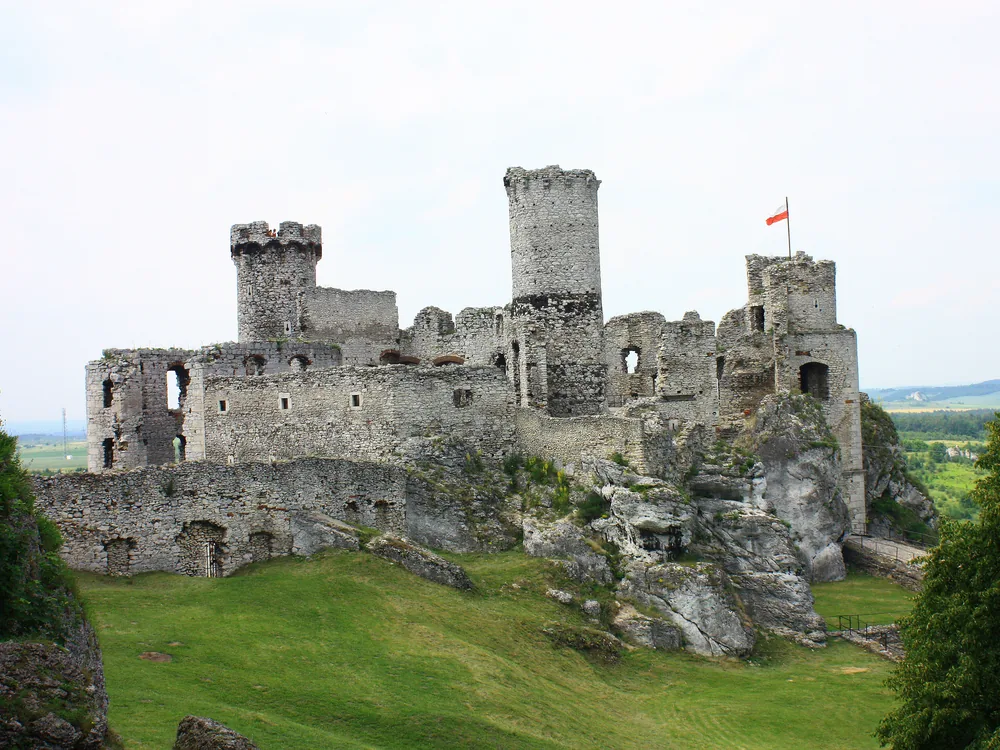
The castle's immediate neighbours on the Eagles' Nests trail are [Ogrodzieniec Castle](/castles/poland/ogrodzieniec-castle) to the south — the largest ruin on the trail, with the most extensive surviving walls — and [Pieskowa Skała Castle](/castles/poland/pieskowa-skala-castle) further south, the trail's only fully intact castle, operating as a Renaissance art museum. [Ojców Castle](/castles/poland/ojcow-castle) and its national park context are the southernmost anchor of the trail near Kraków. Note that no dedicated GetYourGuide tour product was found for Olsztyn Castle itself — GetYourGuide searches for Olsztyn systematically surface the northeastern Polish city of the same name rather than this Jurassic Highland ruin; self-drive from Częstochowa (15 minutes) or Kraków (90 minutes) is the most reliable approach.
History
Prehistory–medieval: Limestone rock used as a natural refuge by successive populations; karst caves occupied before the stone castle. c.1350s: Casimir III the Great builds the castle as part of the Eagles' Nests defensive chain on the Krakowsko-Częstochowska Upland. 14th–16th centuries: Castle serves as a royal administrative post and regional military installation. 1587: Castle withstands a siege by Archduke Maximilian of Austria during the Polish succession crisis; the siege fails and Maximilian is subsequently captured at Byczyna. 1655: Swedish 'Deluge' forces capture and damage the castle. 17th–18th centuries: Castle progressively ruined; abandoned. 19th–20th centuries: Ruins preserved as a regional heritage site. Present day: Free open-access ruins; main tower with small admission charge; museum on site.
How to Visit
Getting there: Olsztyn village is 9 km southeast of Częstochowa. By car from Częstochowa: 15 minutes on local roads off the DK1. Local buses run from Częstochowa city centre to Olsztyn village. From Kraków: 110 km north on the A1 motorway (about 1.5 hours by car).
Tickets: Free entry. The main round tower (Wieża Główna) charges a small fee for interior access; the on-site museum (April–October, Tuesday–Sunday) also has a small admission fee. No advance booking required.
Practical tips: Combine Olsztyn with Jasna Góra Monastery in Częstochowa (9 km) for a full day — Poland's foremost pilgrimage site makes a compelling secular-and-sacred pairing. Wear sturdy shoes for the multiple limestone levels. Note: GetYourGuide searches for 'Olsztyn Castle Poland' will surface tours for the northeastern city of Olsztyn — a different castle entirely; self-drive from Częstochowa is the most reliable approach.
Combine with: Ojców Castle in Ojców National Park — a small Eagles' Nests ruin set above the scenic Prądnik valley. Pieskowa Skała Castle — the Eagles' Nests trail's only fully intact castle, now a Renaissance art museum.
Frequently Asked Questions
No. There are two different Olsztyn Castles in Poland. This page covers the Eagles' Nests limestone ruin near Częstochowa in southern Poland — a Casimir the Great 14th-century royal fortress. The Copernicus castle is Olsztyn Castle in the city of Olsztyn in Warmia-Masuria, northeastern Poland — a completely different building, 350 km north, which Nicolaus Copernicus administered as a canon of the Warmia chapter in the 1520s.
Location
Zamkowa 3, 42-256 Olsztyn, Poland
Nearby Castles
Tours & Tickets
Powered by GetYourGuide
Free Entry