
Wisłoujście Fortress
Twierdza Wisłoujście
Poland · Pomerania · Near Gdańsk
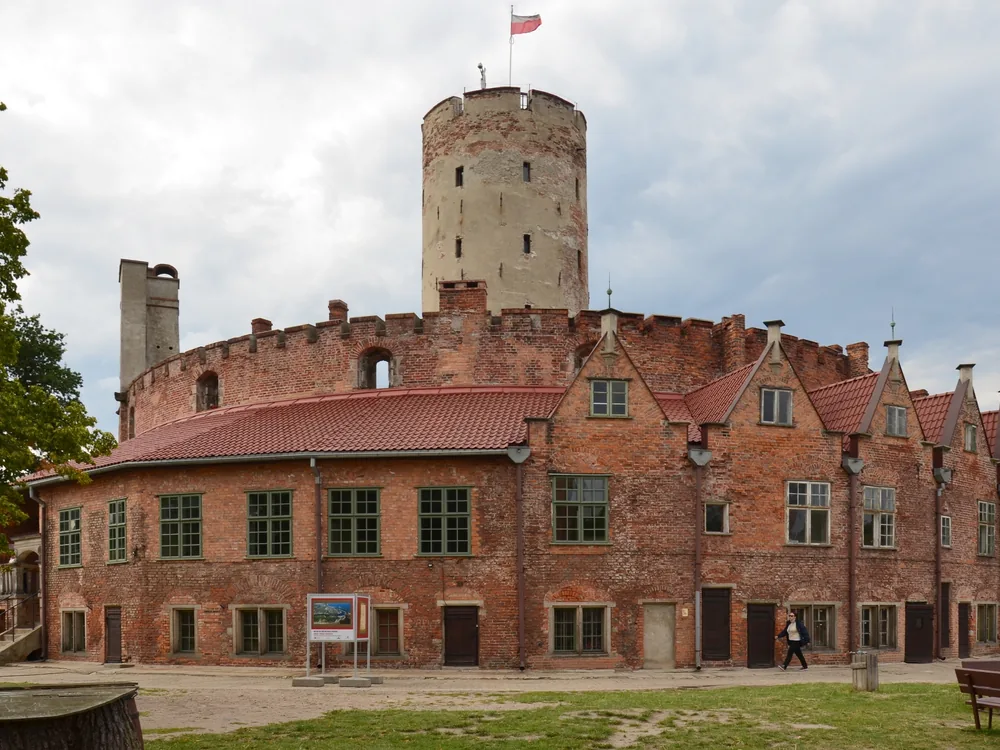
Built 1482 · Medieval harbour fortress with Renaissance and Baroque bastions — the distinctive cylindrical round tower (built 1481–1482) is the oldest surviving structure; the outer ring of artillery bastions and earthworks was added in stages from the 16th to 18th centuries as military engineering adapted to the gunpowder era; the overall plan reflects the Renaissance Italian school of fortification design imported to the Baltic region by the city of Gdańsk
This page is part of an independent travel guide and is not affiliated with, endorsed by, or operated by Wisłoujście Fortress.
© Castles & Palaces
Quick Facts
- Hours
- Tue–Sun 10:00–17:00. Closed Mon
- Entry from
- €20
- Duration
- 1 hour on-site; 2.5 hours total with the boat trip (30 minutes each way) from Gdańsk
- Best time
- May to September
- Nearest city
- Gdańsk
Highlights
- ✦The round tower (Okrągła Wieża) — built 1481–1482 as a combined lighthouse and harbour defence, the cylindrical tower is the most striking element of the fortress and is visible from approaching vessels on the Vistula estuary; it served as both a fire-signal lighthouse for ships entering the Gdańsk roadstead and a gunpowder magazine for the harbour defence
- ✦The boat trip from Gdańsk — the GetYourGuide tour departs from Gdańsk harbour on a small boat (max 6 passengers) for a 30-minute cruise along the historic harbour past the Crane (Żuraw) and the Northern Port before arriving at the fortress; the water approach gives a perspective on the fortress's strategic harbour position impossible to see from land
- ✦Renaissance artillery bastions — the outer defensive ring added in the 16th–17th centuries follows the Italian angled-bastion school of fortification design (trace italienne), which rendered earlier round-tower fortifications inadequate against artillery; the Wisłoujście system of bastions and ravelins is one of the best-preserved examples of early modern military engineering in the Baltic region
- ✦The fortress museum — the on-site museum (included in the GetYourGuide tour price) covers the fortress's construction history, the Gdańsk harbour control system, and the military significance of the Vistula mouth from the medieval period to WWII; the round tower interior is included in the on-site circuit
- ✦⚠️ Weather-dependent tour and Polish/German guide only — the GetYourGuide boat trip **runs only on non-rainy days**; bookings are refunded if the tour is cancelled for weather. The guide language is **Polish and German only — no English guide is available on this specific booking**. English-speaking visitors should factor this into their planning.
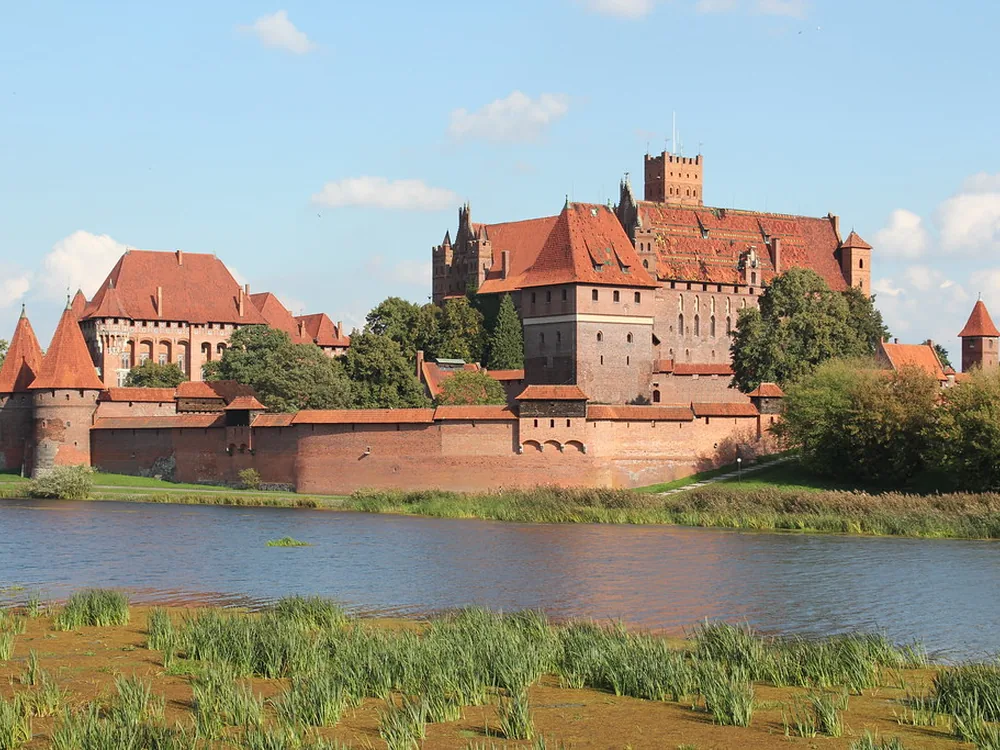
- ✦Relation to Malbork Castle (~60km away) — both are major surviving Teutonic-Hanseatic-era fortifications in Pomerania/Gdańsk region; Malbork (UNESCO, Teutonic Knights' Grand Master's seat) is the inland complement to Wisłoujście's harbour role
Skip the queue with a guided tour
Skip-the-line tickets & expert guides
Wisłoujście Fortress stands at the mouth of the Vistula River where it enters the Baltic, approximately 7km north of Gdańsk's historic Old Town — close enough to the city to be visible on the waterway but remote enough to have been, for 500 years, the practical first and last line of Gdańsk's harbour defence. The fortress controlled everything that entered and left the Gdańsk roadstead: merchant ships carrying grain and timber east, Dutch and Flemish traders bringing finished goods west, and Swedish, Polish, and Prussian warships in the various sieges and blockades that defined the city's military history from the 15th to the 18th centuries.
The core of the fortress is the round tower (Okrągła Wieża), built between 1481 and 1482 by the city of Gdańsk — at this period one of the wealthiest and most powerful trading cities in northern Europe, a de facto city-state within the Polish-Lithuanian Commonwealth, whose merchant elite controlled the grain trade between the agricultural interior of Poland and the grain-hungry markets of the Netherlands and England. The round tower served two functions simultaneously: a lighthouse (the fire signal at its top guided ships into the harbour roadstead) and a gunpowder magazine and defensive tower guarding the river mouth. Its cylindrical form made it structurally strong against cannon fire, though later military engineering would require different solutions.
As gunpowder artillery developed through the 16th century, the round tower alone became insufficient for harbour defence. Gdańsk's military authorities responded with successive expansions: a first ring of earthwork bastions in the 1550s–1560s, built to the Italian trace italienne system (the system of angled bastions and ravelins developed by Italian military engineers that rendered the high vertical walls of medieval fortresses obsolete under cannon fire), and a second outer ring expanded and reinforced through the 17th and early 18th centuries. The result is a layered fortress of three concentric defensive systems — the round tower at the centre, the 16th-century inner bastion ring, and the 17th/18th-century outer works — that together represent one of the most complete surviving examples of evolving early modern military engineering in northern Europe.
The fortress's active military history was extensive. It held during the Swedish siege of Gdańsk in 1627; it was captured by the Swedes in 1655 during the 'Deluge' (the catastrophic Swedish invasion of Poland that nearly destroyed the Polish-Lithuanian Commonwealth); it was besieged by Russian and Saxon forces during the War of Polish Succession in the 1730s. The last significant military use was in 1807, when Napoleonic forces captured it during the siege of Gdańsk. After 1815 the fortress was maintained as a military installation but saw no further combat; it was handed to civilian authority in the 20th century and is now managed by the Museum of the History of Gdańsk.
The GetYourGuide-listed boat tour (2.5 hours total, max 6 passengers, BestBoat Gdańsk) departs from the Gdańsk harbour on a small boat for a 30-minute cruise to the fortress, followed by a 1-hour guided on-site visit including museum entry, before returning to the city by boat. Two critical caveats: **the tour runs only on non-rainy days** — GetYourGuide's own listing specifies weather-dependent cancellation with refunds — and **the guide language is Polish and German only; no English-language guide is available for this booking**. English-speaking visitors should factor both limitations into their planning. Independent visitors can reach the fortress by the city's tourist ferry service from the Gdańsk waterfront in summer, or by taxi (~20 minutes from the Old Town).
History
Round tower built 1481–1482 by the city of Gdańsk to guard the Vistula harbour mouth and serve as a lighthouse. First artillery bastion ring added in the 1550s–1560s using Italian trace italienne engineering. Outer defensive works expanded through the 17th and early 18th centuries. Captured by Swedes during the Deluge (1655); besieged during the War of Polish Succession (1730s); captured by Napoleonic forces during the siege of Gdańsk (1807). Managed after WWI by Polish authorities. Now part of the Museum of the History of Gdańsk (Muzeum Historyczne Miasta Gdańska).
How to Visit
Getting there: The fortress is 7 km north of Gdańsk's Old Town. In summer, reach it by the seasonal tourist ferry from the Old Town waterfront (30 minutes). Year-round: taxi from the Old Town takes about 20 minutes (approximately PLN 35–45). Gdańsk is served by PKP Intercity trains from Warsaw (2.5–3 hours) and Kraków (via Warsaw or Poznań); 10 minutes by tram from Gdańsk Główny to the Old Town.
Tickets: Walk-up entry PLN 20 adult, PLN 10 child. Open April–October, Tuesday–Sunday; closed Mondays and November–March. The GetYourGuide tour — a 2.5-hour excursion combining a 30-minute harbour boat trip with a 1-hour guided on-site visit and museum entry, max 6 passengers — book in advance. Note: runs on non-rainy days only (full refund if cancelled for weather); guide language is Polish and German only — no English guide is available on this booking.
Practical tips: Check the weather forecast before booking the GetYourGuide boat tour; Gdańsk's maritime climate means rain is possible any month and the tour will be cancelled in poor conditions. English-speaking visitors who want a guided experience should contact the Museum of the History of Gdańsk (mhmg.pl) directly to enquire about English tours. Book the boat tour at least 3 days in advance in peak summer.
Combine with: Malbork Castle 60 km south — the Teutonic Knights' UNESCO Grand Master's fortress and the largest brick castle in the world by surface area, a natural day-trip companion from Gdańsk. Pomeranian Dukes' Castle in Szczecin — the Griffin dynasty's Renaissance palace, the principal Pomeranian castle monument in northwestern Poland.
Frequently Asked Questions
No — the GetYourGuide boat tour by BestBoat Gdańsk operates with a Polish and German guide only. No English-language option is available for this specific booking. English-speaking visitors who want a guided experience should contact the Museum of the History of Gdańsk (mhmg.pl) directly to enquire about English-language guided visits, or visit independently with the on-site information materials.
Location
Stara Twierdza 1, 80-751 Gdańsk, Poland
Nearby Castles
Tours & Tickets
Powered by GetYourGuide
Entry from
€20/ adult