
Belém Tower
Torre de Belém
Portugal · Lisbon · Near Lisbon
Built 1515 · Manueline (Portuguese Late Gothic) — built 1515–1521 in the architectural style unique to Portugal's Age of Discovery period, combining Gothic structural forms with elaborate surface decoration of maritime motifs: twisted ropes in stone, armillary spheres (the personal emblem of Manuel I), coral, sea creatures, and the Cross of the Order of Christ; designed by Francisco de Arruda; the tower stands on a basalt plinth at the edge of the Tagus River
This page is part of an independent travel guide and is not affiliated with, endorsed by, or operated by Belém Tower.
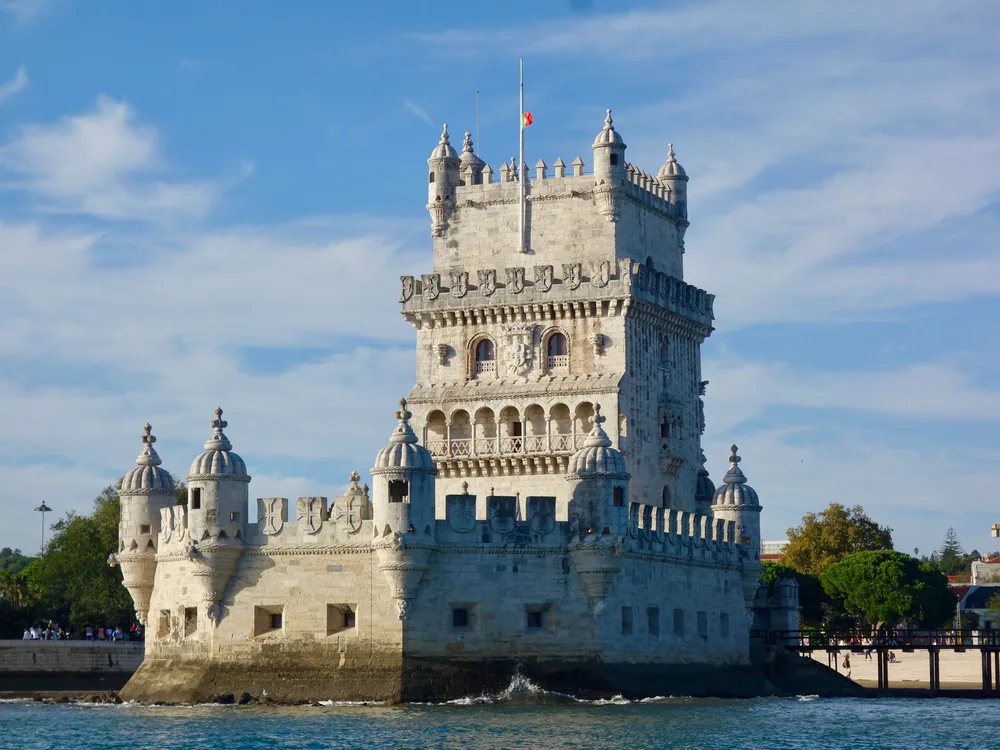
© Castles & Palaces
Quick Facts
- Hours
- Tue–Sun 10:00–17:30. Closed Mon
- Entry via GetYourGuide
- €15
- Duration
- 45 minutes–1 hour — the tower is small; the climb involves 93 narrow steps; terraces on 4 levels with Tagus river views
- Best time
- October to March
- Nearest city
- Lisbon
Featured Tour
Belém Tower: Entry Ticket
Cancellation available · Instant confirmation
Highlights
- ✦UNESCO World Heritage Site (1983) — listed together with the Jerónimos Monastery 1.5km away as part of the 'Monastery of the Hieronymites and Tower of Belém in Lisbon' inscription; the two monuments together define Portugal's Manueline architectural legacy
- ✦Manueline decoration — the most concentrated display of Manueline stone carving on any single structure: armillary spheres (personal emblem of King Manuel I), the Cross of the Order of Christ (the crusading order whose property funded the voyages of discovery), twisted ropes, coral, sea creatures, and rhinoceros (the famous figure on the northeast bastion turret, said to be the first stone representation of a rhinoceros in Europe after Manuel I received one as a diplomatic gift in 1515)
- ✦The departure point of the Age of Discovery — the tower was built at the point on the Tagus where Vasco da Gama's fleet departed for India in 1497 and returned in 1499; the nearby Jerónimos Monastery was built from the profits of the spice trade that followed
- ✦The four terraces — 93 steps through the tower's interior lead to four successive terraces with views over the Tagus mouth, the 25 de Abril Bridge, and the Belém riverside; the third terrace offers the broadest panorama
- ✦The rhinoceros figure — the northeast turret bastion bears what is generally considered the first European stone carving of a rhinoceros, based on the 1515 animal sent by the Sultan of Gujarat to King Manuel I as a diplomatic gift (the animal died at sea en route to the Pope); Dürer's 1515 woodcut of the same rhinoceros was based on a sketch and is the more famous representation
- ✦⚠️ Very long queues in summer — in July and August, queues at the tower regularly extend to 45–60 minutes or more; the GetYourGuide-listed entry ticket provides advance booking but does not guarantee queue-skipping; arriving at 10:00 opening or visiting in the off-season are the most effective strategies
Skip the queue with a guided tour
Skip-the-line tickets & expert guides
The Torre de Belém is the most recognisable monument in Portugal — a 16th-century Manueline tower at the mouth of the Tagus River, its stone carved with armillary spheres, twisted ropes, sea creatures, and the Cross of the Order of Christ, a compact summary of the visual language of Portugal's Age of Discovery built into basalt at the water's edge. It has been a UNESCO World Heritage Site since 1983, listed together with the Jerónimos Monastery 1.5km away, and is the single image most immediately associated with Portugal abroad.
The tower was built between 1515 and 1521 by Francisco de Arruda, on the orders of King Manuel I, at the point on the Tagus where the river meets the sea. Its function was defensive: a fortified platform and watchtower to guard the approaches to Lisbon from the river, positioned to provide crossfire with a now-vanished tower on the opposite bank. But the tower's identity has never really been military — it was too small, and too elaborately decorated, to be primarily a fortress. What it has always been is a monument to the voyages of exploration that defined Portugal's 15th and 16th centuries.
The Manueline style — unique to Portugal and confined to approximately 40 years of intense building activity roughly coinciding with Manuel I's reign (1495–1521) — is the architectural expression of the Age of Discovery. It takes the structural system of Gothic architecture (pointed arches, ribbed vaults, flying buttresses) and covers every surface with carved decoration drawn from maritime experience: twisted ropes, coral branches, sea monsters, the armillary sphere (an astronomical instrument and the personal emblem of Manuel I), and the Cross of the Order of Christ (the crusading military order whose assets — and whose expertise in navigation — funded and organised the Portuguese voyages of exploration). At Belém, this programme of decoration is applied to a tower so compact that the effect is concentrated rather than dispersed: every surface within the visitor's field of view is carved, and the carving is at human scale.
The northeast bastion of the tower carries what is generally identified as the first stone carving of a rhinoceros in European monumental architecture. The source is the rhinoceros sent by the Sultan of Gujarat to King Manuel I in 1515 as a diplomatic gift — an animal that had never been seen in Portugal before and that generated intense public interest in Lisbon before being shipped, fatally, as a gift to Pope Leo X in Rome (it died at sea). Albrecht Dürer's 1515 woodcut of the same animal, made from a sketch rather than direct observation, became the standard European representation of the rhinoceros for more than a century; the Belém tower's stone carving predates the Dürer woodcut by weeks.
The interior of the tower is modest: a series of chambers on five levels connected by 93 narrow spiral steps, with terraces on each level offering progressively wider views over the Tagus mouth, the 25 de Abril suspension bridge, and the Belém waterfront. The climb is not particularly strenuous but the staircase is narrow enough that the tower operates with a one-way system at peak times, requiring visitors to queue at each level.
The GetYourGuide-listed entry ticket is a pre-purchased entry ticket for the tower. **In July and August, queues at the tower regularly reach 45–60 minutes even with a pre-booked ticket** — the ticket provides the booking slot but the entry queue is managed separately by the tower. Arriving at the 10:00 opening time, or visiting Tuesday–Thursday when weekday crowds are lower, are the most consistently effective strategies for avoiding the worst queues. The tower is closed Mondays, Christmas Day, New Year's Day, May Day, and Easter Sunday.
History
Francisco de Arruda built the Torre de Belém for King Manuel I between 1515 and 1521 as a defensive position at the mouth of the Tagus River — a fortified tower from which the approach to Lisbon could be monitored and, if necessary, controlled. The tower's role was military and ceremonial simultaneously: it marked the point of departure for the Portuguese fleets sailing to Africa, India, and Brazil, and the point of return. Its Manueline carved stone programme — armillary spheres, twisted ropes, sea creatures, the Cross of the Order of Christ — compressed the visual language of Portugal's maritime empire into the ornament of a river gatehouse.
The tower briefly served as a prison in the 19th century, most notably during the Miguelite wars when liberal political prisoners were held in its lower chambers. Classification as a national monument came in 1910. UNESCO World Heritage inscription followed in 1983 in a joint listing with the Jerónimos Monastery — the two buildings together representing the Manueline architectural achievement of Manuel I's reign and the material culture of the Age of Discovery.
The Instituto dos Museus e da Conservação manages the tower, which has been fully restored and is one of Portugal's most visited monuments.
How to Visit
Getting there: Belém is in western Lisbon on the Tagus waterfront. Tram 15E from Praça da Figueira takes around 30 minutes; the Cascais commuter train from Cais do Sodré reaches Belém station in about 10 minutes. Bus 728 is an alternative. By car, riverside parking near the tower is limited and often full in summer.
Tickets: Walk-up entry €7 adult, €3 child. The GetYourGuide tour — a pre-purchased timed entry ticket that secures your slot and avoids walk-up uncertainty — book in advance, especially in summer when queues regularly reach 45–60 minutes even with a pre-booked ticket.
Practical tips: Closed Mondays and on 25 Dec, 1 Jan, 1 May, and Easter Sunday — confirm before travelling. Arrive at opening (10:00) on a weekday or visit October–March to avoid peak summer queues. The interior involves 93 narrow spiral steps and is not accessible for visitors with limited mobility.
Combine with: Castelo de São Jorge in central Lisbon for a full monuments day, and National Palace of Ajuda (1.5 km uphill from Belém) for an afternoon extension.
Frequently Asked Questions
In July and August, queues of 45–60 minutes at the tower gate are common even with a pre-purchased ticket. The GetYourGuide ticket provides the booking slot, but entry is still managed through the normal queue system at peak times — a pre-booked ticket is not the same as instant entry. Visiting at 10:00 (opening), on weekdays, or in the off-season (October–March) are the most reliable strategies for shorter waits. If you visit in peak summer, build the queue time into your day.
Location
Av. Brasília, 1400-038 Lisboa, Portugal
Nearby Castles
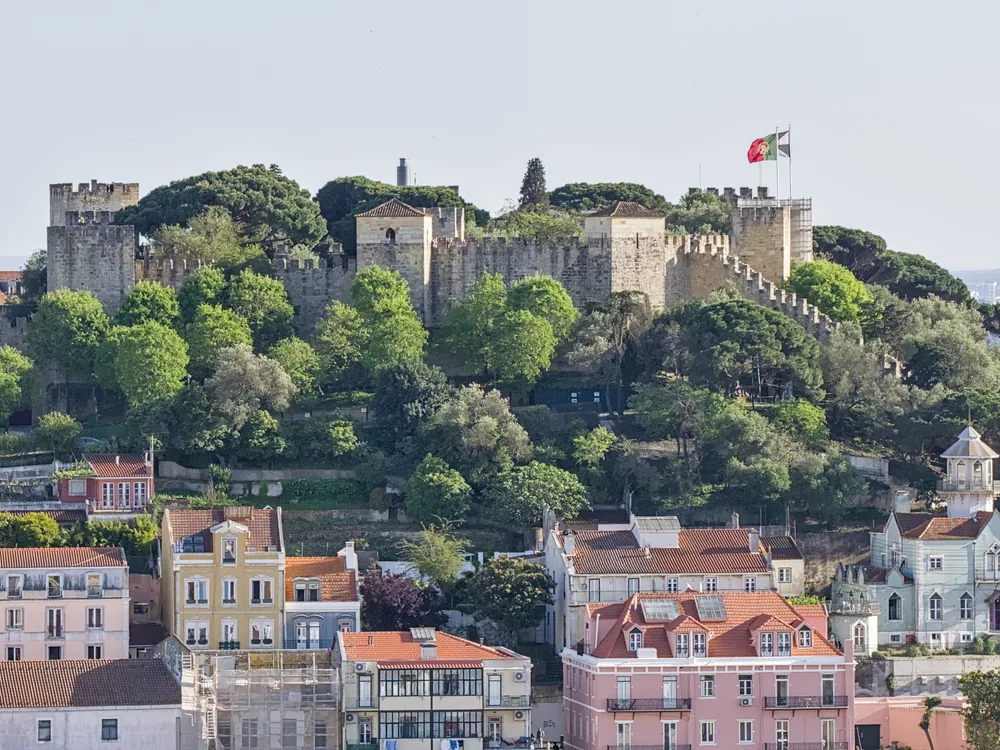
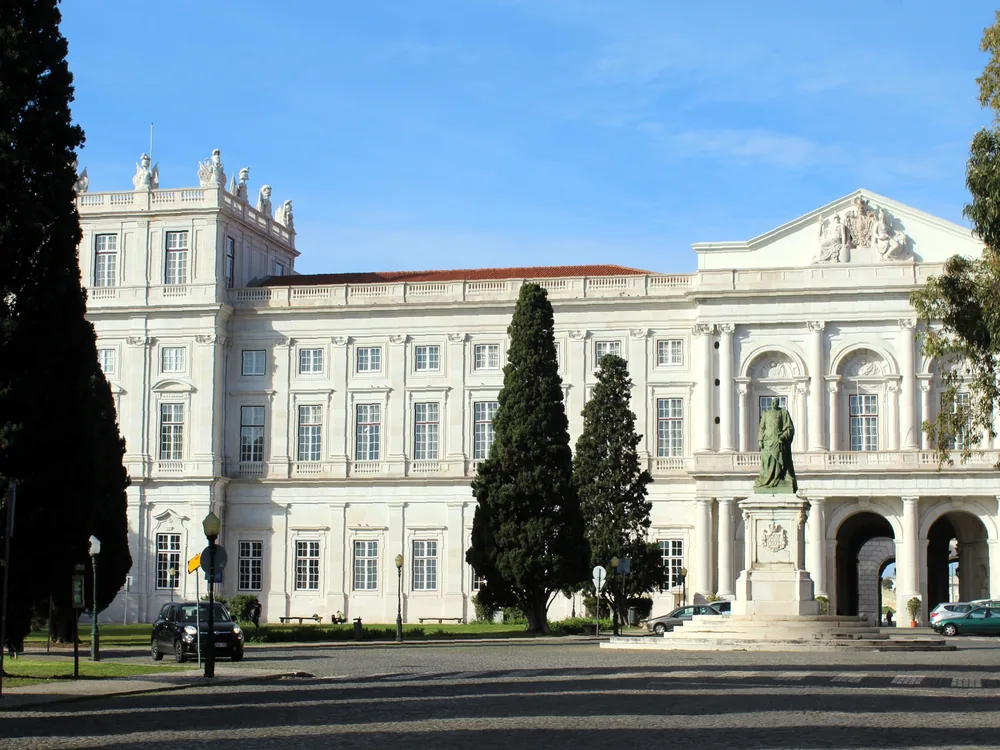
Tours & Tickets
Powered by GetYourGuide
From
€15/ person