
Belmonte Castle
Castelo de Belmonte
Portugal · Centro — Belmonte, Castelo Branco District, Serra da Estrela region · Near Covilhã
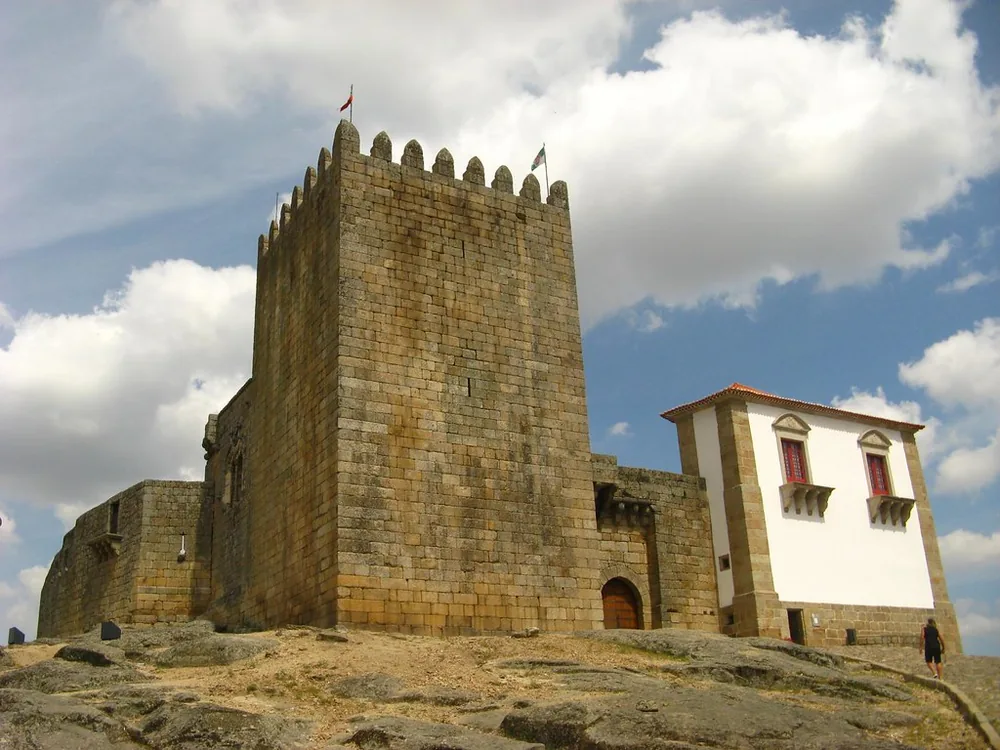
Built 1285 · Medieval Portuguese castle of the 13th century, with later modifications — the castle at Belmonte was ordered built in 1285 by King Dom Dinis (Dinis the Builder), who commissioned numerous castles along Portugal's eastern frontier during his reign as part of a systematic programme of border fortification; the structure includes the Cabral family tower (Torre dos Cabrais), the main keep, and sections of the original curtain wall; the castle's most distinctive architectural feature is the Manueline window on the keep — a carved Gothic-Renaissance stone window frame in the Manueline style characteristic of Portuguese architecture in the era of Pedro Álvares Cabral — installed in the late 15th or early 16th century and one of the few intact Manueline decorative elements in the Beiras region; the castle sits on a granite outcrop above the Belmonte valley at approximately 750 metres elevation with views over the Serra da Estrela to the northwest
This page is part of an independent travel guide and is not affiliated with, endorsed by, or operated by Belmonte Castle.
© Castles & Palaces
Quick Facts
- Hours
- Daily 09:00–12:30 / 14:00–17:30
- Guided tour from
- €110
- Duration
- 45 minutes–1 hour (castle keep, Cabral family tower, Manueline window, and walls); allow additional time for the Belmonte Jewish quarter (Judiaria), synagogue, and museum in the town
- Best time
- April to October
- Nearest city
- Covilhã
Featured Tour
From Lisbon: Serra da Estrela Natural Park
Cancellation available · Instant confirmation
Highlights
- ✦Pedro Álvares Cabral — the man who reached Brazil — Belmonte was the birthplace and family seat of Pedro Álvares Cabral (c. 1467–1520), the Portuguese explorer credited with the European discovery of Brazil in April 1500; Cabral commanded a Portuguese fleet of 13 ships that set out for India in March 1500 following Vasco da Gama's route, sailed west into the Atlantic to avoid calms, and reached the coast of present-day Bahia on April 22, 1500; he claimed the land for the Portuguese crown and named it Terra da Vera Cruz before continuing to India; the Cabral family tower within the castle bears the family name and the town preserves his memory through a monument, a museum (Museu de Pedro Álvares Cabral), and the castle itself
- ✦Belmonte's crypto-Jewish community — 500 years of hidden faith — in 1497, King Manuel I ordered the mass conversion of Portuguese Jews to Christianity or expulsion; many converted outwardly (New Christians / Conversos) while secretly preserving Jewish practices; in Belmonte, a small community maintained crypto-Jewish traditions — Sabbath observance, dietary laws, Hebrew prayers — for over 400 years in almost total isolation, identified by the outside world only in 1917 when the Polish-Jewish engineer Samuel Schwarz encountered them; the community formally reconnected with mainstream Judaism in the 1980s–90s; a synagogue was built in Belmonte in 1996; this is one of the most remarkable stories of Jewish religious continuity in European history, and Belmonte's Judiaria (Jewish quarter) is now a heritage site
- ✦Dom Dinis's border castle — a Beiras frontier fortification — the castle was ordered built in 1285 by Dom Dinis (Dinis the Builder), the Portuguese king who systematically fortified Portugal's eastern border with Castile through a programme of castle construction; Belmonte was one of approximately 50 castles he built or restored; the Serra da Estrela frontier that the Belmonte castle guarded was strategically significant in medieval Portuguese-Castilian relations and was contested through the 13th and 14th centuries
- ✦The Manueline window — Gothic-Renaissance carved stone in the Beiras — on the castle keep, a Manueline window survives in intact condition — a carved Gothic-Renaissance stone window frame decorated in the maritime and naturalistic motifs characteristic of the Manueline style that flourished in Portugal in the early 16th century (the era of Cabral, Vasco da Gama, and the Discoveries); the Manueline of the Beiras region is less well known than the great Manueline monuments of Lisbon and Tomar, but the Belmonte window is an exceptionally well-preserved example in its original structural context
- ✦Serra da Estrela — mainland Portugal's highest mountain range — the GYG day trip from Lisbon (t919880) pairs Belmonte with the Serra da Estrela, mainland Portugal's highest mountains (Torre, 1,993m); the mountain landscape gives the day a natural heritage dimension alongside the castle and community history, though weather-dependent access to the Serra should be confirmed before booking
Skip the queue with a guided tour
Skip-the-line tickets & expert guides
In April 1500, thirteen Portuguese ships reached the coast of what is now the state of Bahia, in northeastern Brazil. The fleet had set out from Lisbon in March following the route that Vasco da Gama had pioneered two years earlier — but da Gama had sailed close to the African coast; this fleet swung west into the Atlantic to avoid the calms that had frustrated the previous voyage, and the westward course brought them to a landmass that was not on anyone's chart. Pedro Álvares Cabral, the fleet's commander, named the land Terra da Vera Cruz and claimed it for the Portuguese crown. He then continued to India.
Cabral was born in Belmonte, in the Beiras hill country below the Serra da Estrela, in approximately 1467. The Cabral family held Belmonte and the castle above the town as their ancestral seat; the tower within the castle enclosure bears the family name. The town preserves his memory through a monument in the main square, a dedicated museum (Museu de Pedro Álvares Cabral), and the castle itself — the physical context of the family that produced the explorer who reached Brazil.
Belmonte's other great historical distinction belongs to a very different kind of story. In 1497, King Manuel I ordered the mass conversion of Portugal's Jewish population — forced conversion or expulsion, with no practical third option given the terms. Most Portuguese Jews converted outwardly, becoming New Christians (Conversos). In Belmonte, a small community went further: they maintained crypto-Jewish practices — Sabbath observance, dietary laws, Hebrew prayers adapted across generations of oral transmission — in almost complete secrecy for over 400 years. They intermarried within the community, concealed their practices from outsiders, and preserved a form of Judaism that had diverged from mainstream practice through four and a half centuries of isolation but retained its core identity.
In 1917, Samuel Schwarz — a Polish-Jewish mining engineer working in Portugal — encountered the Belmonte community almost by accident. His account of their existence brought the community to the attention of the broader Jewish world for the first time since the forced conversions. The community remained in an ambiguous relationship with mainstream Judaism for decades; some members began formal study and reconnection in the 1970s–80s; the Belmonte community formally returned to Judaism in the 1980s–90s, and a synagogue — the Beit Eliahu — was built in Belmonte in 1996. The Judiaria (Jewish quarter) of Belmonte, with the synagogue and the associated museum (Museu Judaico de Belmonte), is now a heritage site that draws visitors interested in one of the most extraordinary stories of religious continuity in European history.
The castle itself is the product of Dom Dinis's systematic 13th-century border fortification programme — approximately 50 castles along Portugal's eastern frontier with Castile, commissioned by the king known as 'the Builder'. The Belmonte keep, curtain walls, and Cabral family tower date from this period and the subsequent medieval modifications. The Manueline window on the keep — a carved Gothic-Renaissance stone frame in the maritime and naturalistic style characteristic of early 16th-century Portuguese architecture — is one of the better-preserved Manueline decorative elements in the Beiras region, contemporaneous with Cabral's voyages and consistent with the cultural ambition of the Portuguese crown at the height of the Discoveries era.
The GYG day tour from Lisbon (t919880) includes Belmonte Castle admission as part of a twelve-hour programme covering the Serra da Estrela, Manteigas, Belmonte, and Monsanto. The tour is ambitious in scope; some reviewers note that weather can close Serra da Estrela access on specific days, and the twelve-hour duration from Lisbon reflects the distances involved. The castle visit and the Belmonte town circuit are not affected by mountain weather — they are the valley and town components of the day.
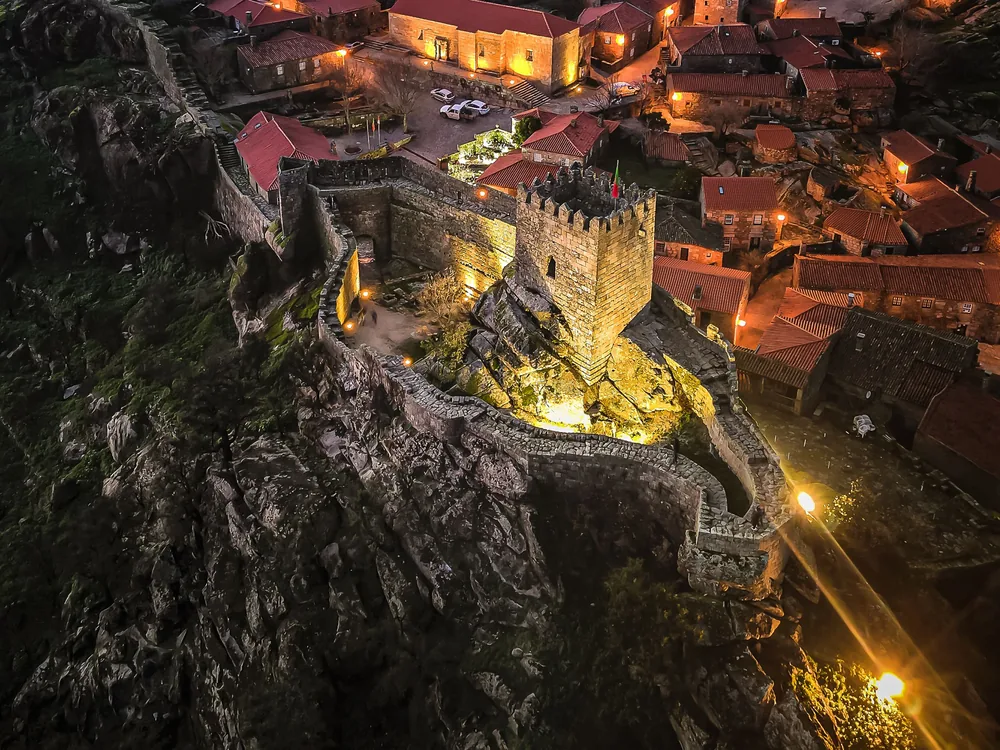
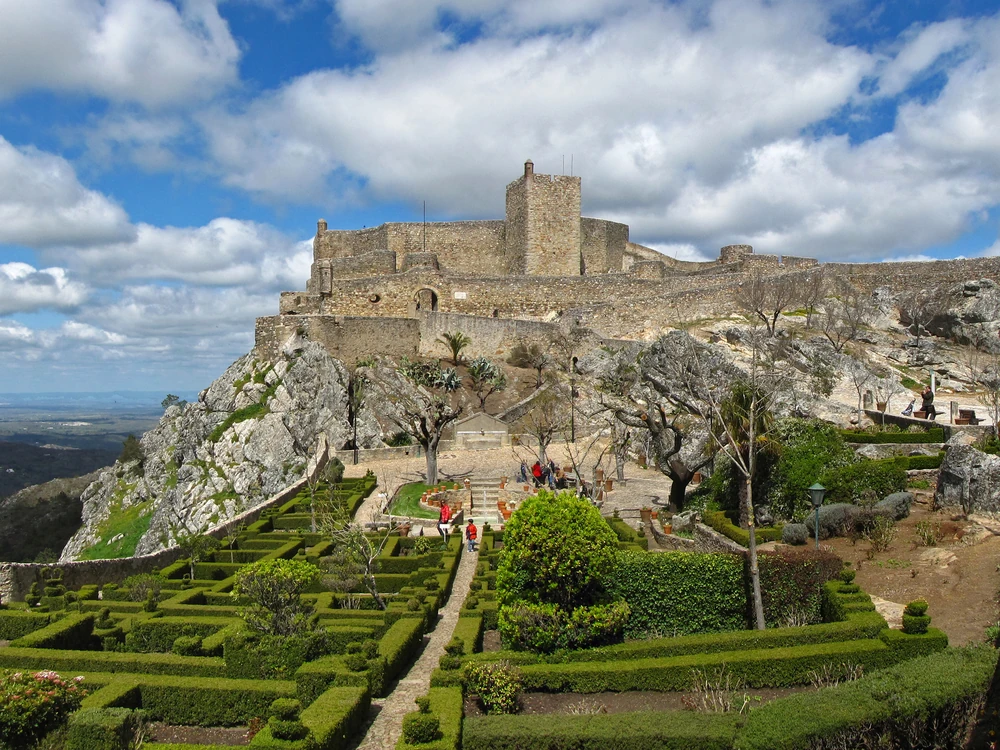
[Sortelha Castle](/castles/portugal/sortelha-castle) — the remarkably preserved medieval village and castle in the Guarda District, approximately 40km north of Belmonte — is the closest comparable castle visit in the Beiras region. [Marvão Castle](/castles/portugal/marvao-castle) — the hilltop medieval fortress on the Alentejo-Spanish border — is a further regional extension for visitors exploring the Serra da Estrela and eastern Portugal.
History
King Dom Dinis ordered the construction of Belmonte Castle in 1285 as part of his systematic programme of fortifying Portugal's eastern border with Castile — the same strategic impulse that produced the chain of tower-houses and castles along the watershed frontier. The castle was built and maintained as a frontier position through the 13th and 14th centuries, with the Cabral family holding Belmonte as their feudal seat across multiple generations.
Two histories converge at Belmonte in the late 15th century. Pedro Álvares Cabral was born here around 1467; his fleet reached the coast of Brazil on 22 April 1500, giving Portugal its claim to the continent. In the same period, King Manuel I's order of 1497 requiring the mass conversion of Portuguese Jews set in motion a crypto-Jewish practice in Belmonte that would persist, largely undiscovered, for over 400 years — the community maintaining Jewish traditions in secret while presenting as Christian to the outside world. The writer Samuel Schwarz discovered the Belmonte crypto-Jewish community in 1917, and their existence became known to the wider world for the first time. The community formally reconnected with mainstream Judaism in the 1980s and 1990s; the Beit Eliahu synagogue was built in Belmonte in 1996.
The castle is open daily. The Museu Judaico de Belmonte and the Museu de Pedro Álvares Cabral both operate in the town, giving visitors access to both layers of the site's history.
How to Visit
Getting there: Belmonte is approximately 280 km northeast of Lisbon via the A1 and A23 (around 3 hours by car). The nearest train station is Covilhã (Beira Baixa line from Lisbon, about 2.5 hours), 20 km northwest, with local buses and taxis covering the remaining distance. No direct public transport from Lisbon to Belmonte.
Tickets: Walk-up entry €2 adult, €1 child. The GYG tour (t919880, from €110, 4.4★/16 reviews) — a 12-hour day trip from Lisbon covering Serra da Estrela, Manteigas, Belmonte (castle admission included), and Monsanto — book in advance. Serra da Estrela access is weather-dependent; some reviewers report the mountain section closed on their visit day, though Belmonte and Monsanto are unaffected.
Practical tips: The castle closes midday (12:30–14:00) daily — build arrival time around that break. Allocate extra time for Belmonte's Judiaria (Jewish quarter), the Beit Eliahu synagogue, and the Museu Judaico de Belmonte — the crypto-Jewish heritage story is as historically significant as the medieval fortress itself.
Combine with: [Sortelha Castle](/castles/portugal/sortelha-castle) (40 km north), one of Portugal's most intact medieval village-castles, and [Marvão Castle](/castles/portugal/marvao-castle) on the Alentejo-Spanish border for a full eastern Portugal heritage circuit.
Frequently Asked Questions
Pedro Álvares Cabral (c. 1467–1520) commanded the Portuguese fleet that reached the coast of present-day Brazil on April 22, 1500, during a voyage that set out from Lisbon in March 1500 to follow Vasco da Gama's route to India. The westward course taken to avoid Atlantic calms brought the fleet to the Brazilian coast — the first documented European contact with the South American landmass south of the Amazon. Cabral claimed the land for the Portuguese crown (naming it Terra da Vera Cruz) and sent a ship back to Lisbon with the news before continuing to India. Portugal subsequently colonised Brazil, and the country's language, legal systems, and many cultural characteristics reflect this connection. Cabral was born in Belmonte and the Cabral family seat was the castle above the town.
Location
Castelo de Belmonte, Rua Pedro Álvares Cabral, 6250-073 Belmonte, Portugal
Nearby Castles
Tours & Tickets
Powered by GetYourGuide
From
€110/ person