Castle of Monsanto
Castelo de Monsanto
Portugal · Beira Baixa — Castelo Branco District, Idanha-a-Nova municipality, Monsanto village · Near Castelo Branco
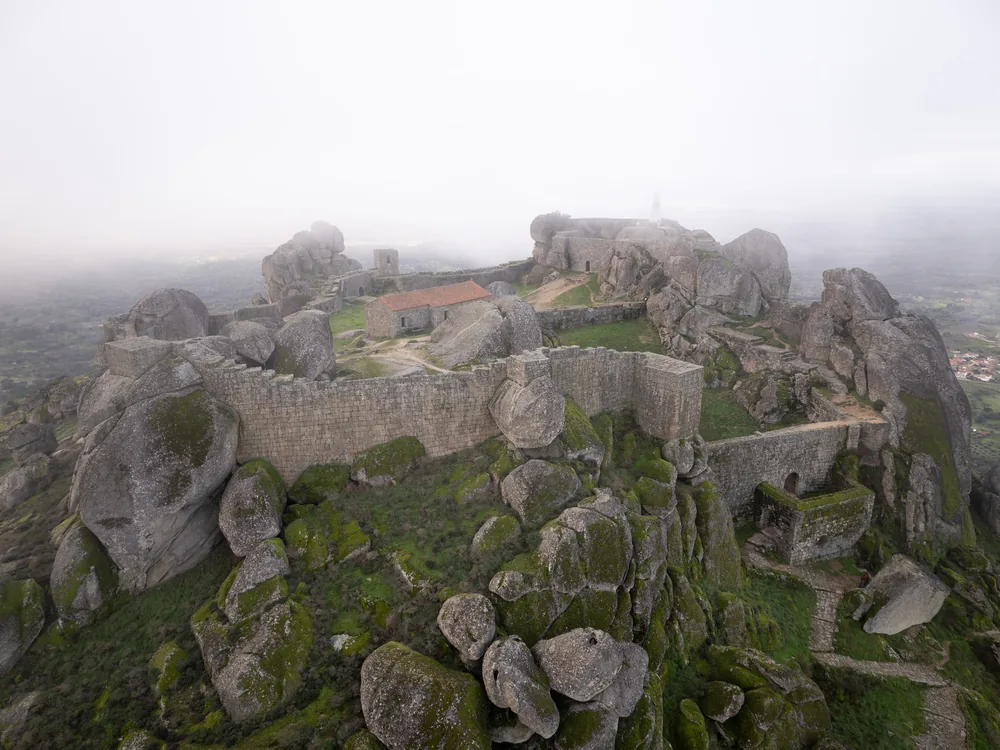
Built 1165 · Medieval Portuguese hilltop castle integrated into a granite boulder landscape, 12th–15th century — the castle at Monsanto is built upon and between the massive granite boulders that define the entire village's topography; rather than clearing the site, medieval builders incorporated the natural rock as walls, foundations, and structural elements, making the castle's masonry inseparable from the boulder landscape it crowns; the surviving elements include the keep, the chapel of Santo António, sections of curtain wall, and towers integrated with the granite outcrops; the castle's strategic position at the summit of the granite hill gives it panoramic command of the Beira Baixa plains in all directions; the construction history spans from the first Portuguese medieval fortification of the site through reinforcements under Dom Dinis and subsequent modifications by the Templars and the Order of Christ; the village of Monsanto below the castle follows the same boulder-integration principle — houses built into crevices, under overhanging rocks, and between boulder faces in a settlement pattern unique in Portugal and rarely paralleled in Europe
This page is part of an independent travel guide and is not affiliated with, endorsed by, or operated by Castle of Monsanto.
© Castles & Palaces
Quick Facts
- Hours
- Daily 09:00–18:00
- Guided tour from
- €120
- Duration
- 2–3 hours (village walk through the boulder settlement, the castle ruins at the summit, chapel of Santo António, and panoramic viewpoints over the Beira Baixa plains)
- Best time
- March to June and September to November
- Nearest city
- Castelo Branco
Featured Tour
Monsanto Village Tour & Transfer - 3 Options Available
Cancellation available · Instant confirmation
Highlights
- ✦The boulder village — a settlement unlike anywhere else in Portugal — the village of Monsanto was built not on the granite boulders but within them: houses occupy crevices between massive rocks, walls are formed partly by the natural rock faces, and the spaces between boulders become courtyards, staircases, and rooms; the result is a settlement that appears to have grown from the geology of the hill rather than been imposed on it — the same pedra viva principle found at Sortelha taken to a more extreme conclusion, where the boulders are not merely incorporated into the construction but are the dominant spatial element; the castle at the summit of this boulder landscape continues the same logic: its walls emerge from and return to the rock with no clear boundary between human and geological architecture
- ✦The most Portuguese village in Portugal — a historic designation and a national identity claim — in 1938, during the Estado Novo cultural programme under Salazar, Monsanto won a national competition for 'the most Portuguese village in Portugal'; the designation was as much political as aesthetic — the Estado Novo promoted a rural, granite, Catholic, rooted Portugal as the nation's authentic identity, and Monsanto's boulder village, its surviving medieval character, and its apparent resistance to modernisation made it the exemplar; the title stuck, and the village's self-presentation today carries the weight of this mid-20th-century cultural claim alongside its genuinely exceptional medieval landscape character
- ✦House of the Dragon — Monsanto as Dragonstone — the village and castle of Monsanto served as a filming location for HBO's House of the Dragon, the Game of Thrones prequel series, specifically for scenes depicting Dragonstone — the volcanic island fortress that serves as the ancestral seat of House Targaryen; the production's choice of Monsanto reflects the unique visual logic of the boulder village: the massive granite outcrops, the medieval walls emerging from the rock face, and the elevated castle summit above the Beira Baixa plains produce a landscape with no obvious analogue in standard European location filming; the Dragonstone scenes gave Monsanto international exposure beyond the Aldeias Históricas heritage circuit
- ✦Panoramic command of the Beira Baixa — the strategic and visual logic of the hilltop — from the castle keep at the summit of the granite hill, the Beira Baixa plains extend in every direction without obstruction; the Serra da Estrela is visible to the northwest on clear days, and the Spanish border (Extremadura) is visible to the east; the castle's command of the plains was the military logic that made Monsanto strategically significant across the medieval period — a border hilltop with visibility over the flat interior that gave defenders advance warning of any approaching force from the Spanish side of the frontier
Skip the queue with a guided tour
Skip-the-line tickets & expert guides
The hill at Monsanto is covered with granite boulders. Not the small rocks of a stony field or the loose scree of a mountain slope, but massive free-standing granite formations — some several metres high, some the size of houses — scattered across the hilltop in a geological arrangement that has been shaping human settlement here for centuries. The village of Monsanto was not built on these boulders or around them: it was built into them. Houses occupy the gaps between rock faces; walls are formed partly by the boulder surfaces themselves; staircases cut between granite masses lead to courtyards entirely enclosed by rock. The settlement pattern has no obvious parallel in Portugal and few equivalents anywhere in Europe.
The castle sits at the summit of this boulder landscape, following the same principle. Medieval builders did not attempt to clear the granite hilltop before constructing — they worked with it, using the natural rock as walls, foundations, and structural elements. The surviving elements of the castle — the keep, the chapel of Santo António, sections of curtain wall, and a sequence of towers integrated with the largest boulders — are architecturally inseparable from the geology they rest on. A Portuguese royal fortress built on granite boulders by the Order of the Knights Templar and later the Order of Christ, the castle formed part of Dom Dinis's eastern frontier fortification programme in the late 13th century, guarding the Beira Baixa's border approaches against Castilian incursion.
In 1938, Monsanto won a national competition organised by the Estado Novo government for 'the most Portuguese village in Portugal'. The designation was not merely aesthetic: the Estado Novo under Salazar was promoting a particular vision of authentic Portuguese identity — rural, Catholic, rooted in granite and medieval history, resistant to modernisation and foreign influence — and Monsanto embodied that vision with unusual completeness. The title stuck. The village has carried it as part of its self-presentation ever since, a cultural claim layered over what is genuinely an exceptional medieval landscape.
More recently, Monsanto gained a different kind of international recognition when HBO's House of the Dragon selected the boulder village as a filming location for Dragonstone — the volcanic island fortress that serves as the ancestral seat of House Targaryen in the Game of Thrones universe. The production's choice of Monsanto reflects the visual logic of the site: the massive granite formations, the castle emerging from the rock face at the summit, and the elevated position above the Beira Baixa plains produce a landscape with no easy parallel in standard European location filming. The Dragonstone scenes brought Monsanto to audiences who had never encountered the Aldeias Históricas heritage circuit.
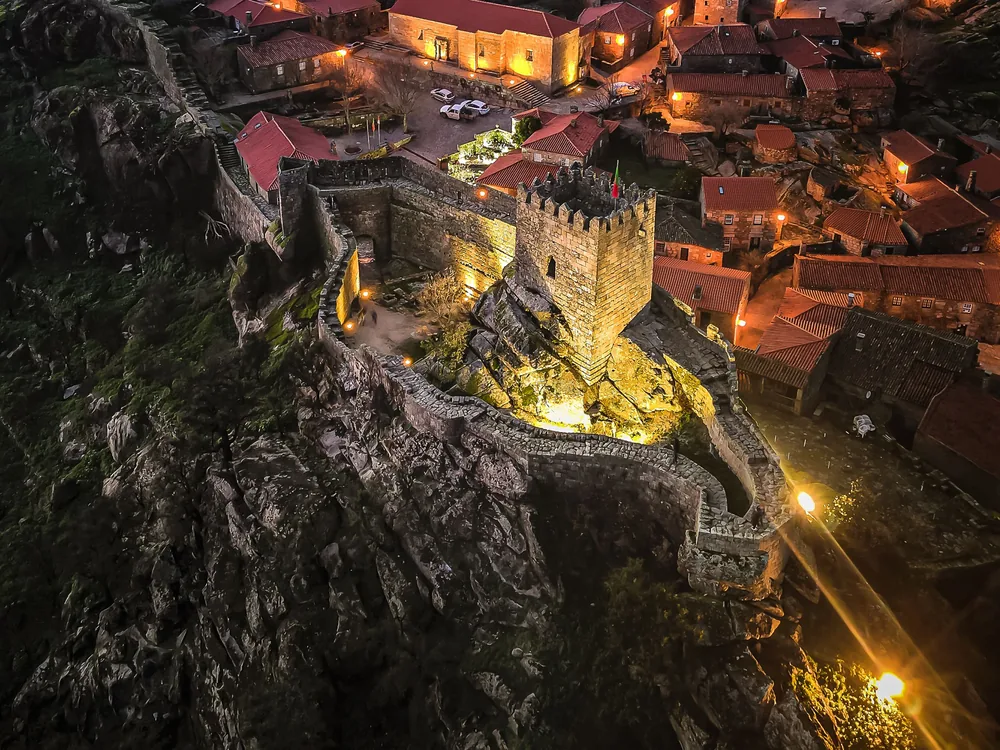
The walk to the castle is the visit. The village ascent follows the natural topography of the granite hill, passing through the lower settlement where the most dramatic boulder-integrated architecture is found — houses under overhanging rocks, walls shared between masonry and granite face, windows cut into crevices that the builders found and adapted rather than created. The uphill path continues through increasingly dramatic boulder terrain to the castle walls and the chapel of Santo António at the summit, and then to the keep itself.
From the keep, the Beira Baixa plains extend in every direction. The Serra da Estrela rises to the northwest on clear days. The Spanish border — the Extremadura plateau — is visible to the east. The military logic of the position is immediately visible: a hilltop with 360-degree command of the flat interior, giving any garrison advance warning of anything moving across the plains. The view explains why this granite hill was worth fortifying.
The GYG private group tour from Castelo Branco (t429368, up to 4 people per group) covers Monsanto village and the castle as the main confirmed Visit and Guided tour stop, with optional afternoon stops at Idanha-a-Velha (a Roman and Visigothic settlement) and Penha Garcia (a schist gorge with rock engravings and a butterfly valley) available as add-ons. The Monsanto portion — including the castle climb — is the non-optional centrepiece of the programme. The price is per group, not per person.
The village and castle are freely accessible independently for visitors arriving by car. Monsanto is approximately 50km northeast of Castelo Branco by road. There is no practical public transport connection.
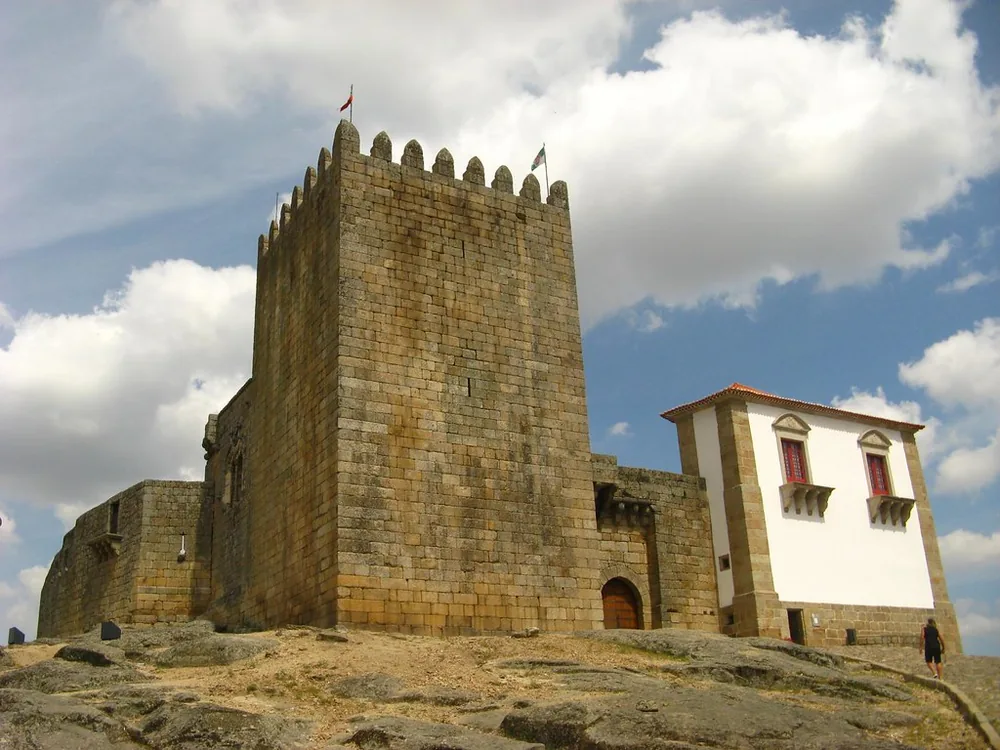
[Sortelha Castle](/castles/portugal/sortelha-castle) — Portugal's other great boulder-integrated medieval village, approximately 60km to the north — is the natural companion visit for understanding the range of this distinctive Beira highland building tradition. [Belmonte Castle](/castles/portugal/belmonte-castle-portugal) — the Dom Dinis frontier fortress with its Cabral family connections — and [Convent of Christ, Tomar](/castles/portugal/convent-of-christ-tomar) extend the broader Beira and Ribatejo heritage circuit.
History
Pre-12th century: site occupied; granite hilltop fortified in the early medieval period. 12th century: castle established as a Portuguese frontier fortification in the Beira Baixa; associated with the Knights Templar. 1165–1200s: castle developed as part of the eastern Portuguese border defence system against Castile. Late 13th century: Dom Dinis reinforces Monsanto Castle as part of his systematic eastern border fortification programme. 14th–15th century: castle transferred to the Order of Christ following the Templar dissolution; maintained as a border stronghold. 1938: Estado Novo competition names Monsanto 'the most Portuguese village in Portugal.' 20th century: castle ruins preserved and opened to visitors; Monsanto designated as one of Portugal's Aldeias Históricas. 2022–present: Monsanto used as a filming location for HBO's House of the Dragon (Dragonstone scenes). Present day: village and castle freely accessible; boulder-integrated architecture preserved as a living inhabited settlement.
How to Visit
Getting there: Monsanto is approximately 50 km northeast of Castelo Branco via the IC31 and EN239 (around 50 minutes by car). No practical public transport connects — a car is essential for independent visitors. From Lisbon, allow around 3 hours via the A23.
Tickets: Free entry. The GYG tour (t429368, from €120, 4.7★/28 reviews) — a private group tour for up to 4 people from Castelo Branco (price is per group, not per person) covering Monsanto village and castle, with optional afternoon stops at Idanha-a-Velha and Penha Garcia — book in advance.
Practical tips: Allow 2–3 hours for the village walk and the castle ascent — the uphill route through the boulder settlement to the keep is the heart of the visit. Wear sturdy shoes; granite surfaces are uneven and can be slippery when wet. July–August in Beira Baixa is intensely hot; spring (March–June) and autumn are considerably more comfortable for the climb.
Combine with: [Sortelha Castle](/castles/portugal/sortelha-castle) (60 km north), Portugal's other great boulder-integrated medieval village, and [Belmonte Castle](/castles/portugal/belmonte-castle-portugal) (50 km north), the Dom Dinis frontier fortress and birthplace of Pedro Álvares Cabral.
Frequently Asked Questions
Yes. HBO's House of the Dragon, the Game of Thrones prequel series, used Monsanto as a filming location for scenes depicting Dragonstone — the volcanic island fortress serving as the ancestral seat of House Targaryen. The production chose Monsanto specifically for the visual character of its boulder landscape: the massive granite formations integrated into the castle walls, the medieval architecture emerging from the rock face, and the elevated summit above the Beira Baixa plains produce a setting with no easy parallel in conventional European filming locations. The Dragonstone scenes brought Monsanto significant international attention from audiences who were not already familiar with the Aldeias Históricas circuit.
Location
Castelo de Monsanto, 6060-091 Monsanto, Portugal
Nearby Castles
Tours & Tickets
Powered by GetYourGuide
From
€120/ person