
Bishop's Palace of Porto
Paço Episcopal do Porto
Portugal · Norte · Near Porto
Built 1653 · Baroque episcopal residence adjoining Porto Cathedral (Sé do Porto) in the historic centre of the city, built from the mid-17th century on the site of an earlier medieval bishop's residence and substantially remodelled in the 18th century; for centuries the seat of the Bishops of Porto and a centre of the city's religious, political and economic authority; interiors hold collections of paintings, sculpture, and decorative arts reflecting the wealth and influence of the diocese at the height of its power
This page is part of an independent travel guide and is not affiliated with, endorsed by, or operated by Bishop's Palace of Porto.
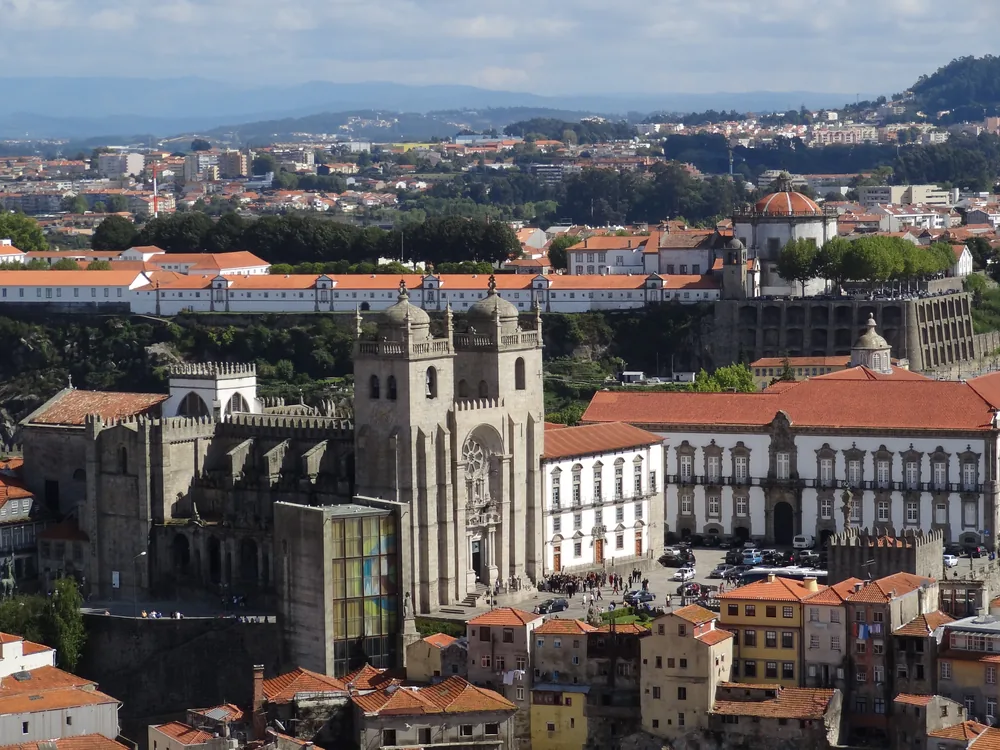
© Castles & Palaces
Quick Facts
- Hours
- Daily 10:00–18:00
- Guided tour from
- €15
- Duration
- 1 hour
- Best time
- Year-round
- Nearest city
- Porto
Featured Tour
Porto Bishop's Palace Guided Tour
Cancellation available · Instant confirmation
Highlights
- ✦One of Porto's most overlooked major interiors — a Baroque episcopal residence whose rooms reflect the accumulated power of one of Portugal's most influential dioceses, built beside the cathedral on the commanding high ground above the Douro
- ✦For centuries the seat of the Bishops of Porto, who held not just religious authority but substantial temporal power over the city and its surrounding territory — a pattern common to Iberian dioceses at the height of their influence
- ✦Collections of paintings, sculpture, and decorative arts assembled over centuries, giving visitors a sense of the material culture of ecclesiastical power that parallels, on a smaller scale, the grander episcopal palaces of Braga or Lisbon
- ✦The terrace on the Terreiro da Sé is one of Porto's finest viewpoints — looking over the Ribeira rooftops to the Douro and across to the port wine lodges of Vila Nova de Gaia on the opposite bank
- ✦The GetYourGuide guided tour includes skip-the-line access and frames the visit around Porto's full political, economic, and cultural history — using the palace as a lens onto the city rather than presenting the collection in isolation
Skip the queue with a guided tour
Skip-the-line tickets & expert guides
Rising directly beside Porto Cathedral on the high ground of the city's historic core, the Bishop's Palace is one of the more overlooked grand interiors in a city better known for its riverside port wine cellars and azulejo-covered train station. For centuries this Baroque residence was the seat of one of Portugal's most powerful ecclesiastical offices — the Bishop of Porto — and its rooms reflect the accumulated wealth, art, and civic authority of a diocese that shaped the city's political and economic life for generations.
Porto's bishops were not merely religious figures. For long stretches of the city's history, the bishopric held substantial temporal authority over Porto and its surrounding territory, collecting revenues, adjudicating disputes, and functioning as one of the primary powers in a city that had only slowly developed the municipal institutions capable of counterbalancing ecclesiastical influence. This fusion of religious and civic power was not unusual in medieval and early modern Iberian cities — Portugal's other great episcopal seats, Braga and Viseu, show the same pattern — but Porto's geography made it particularly concrete: the bishop's palace stands immediately beside the cathedral, on the highest defensible ground in the historic city, looking down over the commercial district of the Ribeira and the Douro River to the south. The position was not accidental. It placed the bishop's residence at the literal and symbolic centre of the city's power structure.
The palace as it stands today was built substantially from the mid-17th century, on the site of an earlier medieval bishop's residence, and significantly remodelled through the 18th century as Porto's wealth — driven increasingly by the port wine trade with England, which enriched the city's merchants, civic institutions, and major religious buildings — allowed more ambitious construction. The 18th-century remodelling gave the building its current Baroque character: the façade overlooking the Terreiro da Sé, the formal rooms of the piano nobile, the ceremonial staircase. Inside, the diocese assembled over centuries a collection of paintings, sculpture, azulejos, and decorative arts that reflects the material culture of ecclesiastical authority at the height of its influence — smaller in scale and ambition than the great episcopal palaces of Braga or the archdiocesan collections of Lisbon, but no less specific to the particular history of Porto's bishops and their engagement with the city's commercial and civic life.
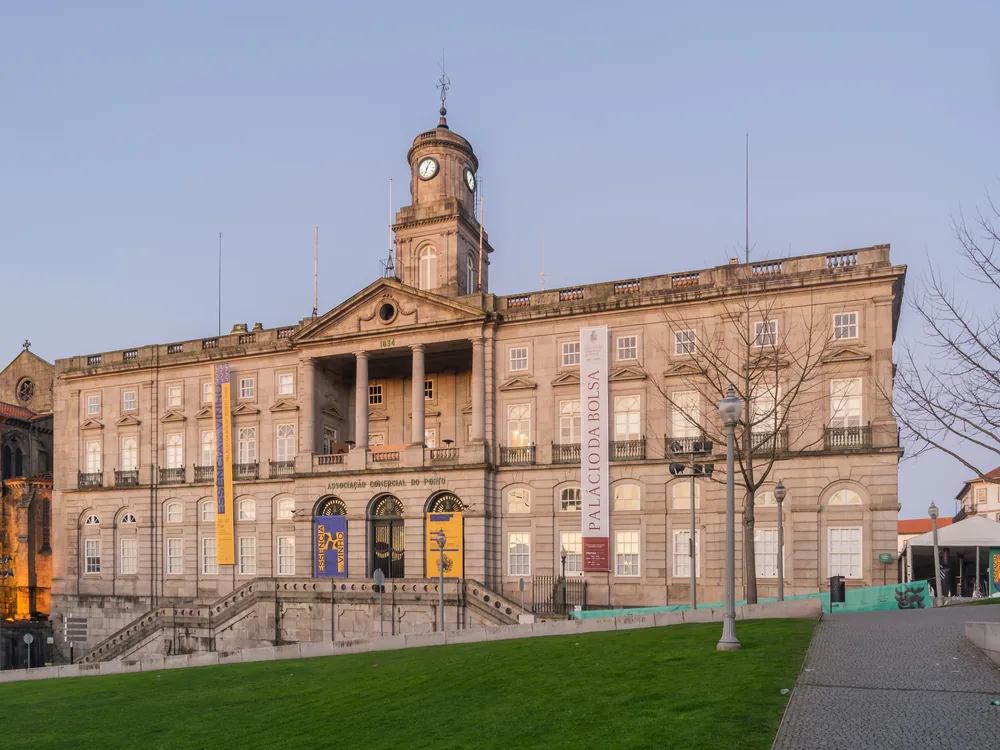
The GetYourGuide guided tour (discounted from €15) makes the visit specifically about Porto's history rather than simply the palace collection in isolation. The guide frames the palace rooms as evidence of the city's political and economic evolution — using the building as a lens onto the bishopric's relationship with the port wine trade, with the merchant class that challenged ecclesiastical authority through the 18th and 19th centuries, and with the broader story of Porto's transition from a medieval episcopal city to a 19th-century commercial capital. This approach makes the Bishop's Palace a useful counterpart to Porto's more frequently visited heritage: where the Livraria Lello and the Palácio da Bolsa (the ornate Stock Exchange Palace, completed in 1848) speak to the city's 19th-century mercantile peak, the Bishop's Palace speaks to the older power structures that preceded and coexisted with that commercial rise.
The position on the Terreiro da Sé is itself worth a significant portion of any visit. The terrace in front of the cathedral and palace gives one of the best unobstructed views of Porto available without climbing: east over the maze of Ribeira rooftops descending to the Douro, south across the river to Vila Nova de Gaia where the lodges of the major port wine houses — Graham's, Sandeman, Taylor's, Ramos Pinto — line the opposite bank and mark the geography of the city's defining industry. In the evening this view takes on a particular quality as the sun sets upriver and the Ribeira lights come on below. This makes the immediate surroundings of the Bishop's Palace worth as much time as the interior itself.
History
The site of the Bishop's Palace has been associated with Porto's episcopal seat since the medieval period, when an earlier residence occupied this position beside the cathedral on the city's highest ground. The current building was constructed substantially from 1653 onward, on and replacing the earlier medieval structure, and underwent significant remodelling in the 18th century as the wealth generated by Porto's port wine trade enriched the diocese and the city's major religious and civic institutions.
For centuries the palace housed the Bishops of Porto, who exercised both religious and substantial temporal authority over the city and its surrounding territory — a pattern common to Portuguese dioceses at the height of ecclesiastical influence. The collection of paintings, sculpture, and decorative arts within the palace accumulated across this period as successive bishops added to the diocese's holdings. The building remains associated with the diocese but has been opened for guided tours, with the visit framed specifically around Porto's political, economic, and cultural history.
How to Visit
Getting there: The Bishop's Palace is on the Terreiro da Sé, directly beside Porto Cathedral, in the historic Sé neighbourhood. It is a 10-minute walk uphill from São Bento railway station, well served by the Porto Metro (São Bento stop, lines A/B/C/E/F) and the city's historic tram network. No parking at the site; Porto's historic centre is best explored on foot.
Tickets: Direct admission is approximately €5. The GetYourGuide guided tour (discounted from the standard €15) includes skip-the-line access and runs approximately 1 hour with a qualified guide — check current price at booking as GetYourGuide discount pricing fluctuates.
The view from the Terreiro da Sé: The terrace in front of the cathedral and palace is freely accessible and one of Porto's finest viewpoints — looking south over the Ribeira rooftops to the Douro and across to the port wine lodges of Vila Nova de Gaia. Worth time on its own regardless of interior visit.
Practical tips: Allow 1 hour for the visit.
Combine with: Porto Cathedral (adjoining the palace, with its 14th-century Gothic nave and the 18th-century azulejo-tiled cloister); the Ribeira district (descend via the steep lanes from the cathedral hill to the riverfront); and the Dom Luís I Bridge and the port wine lodges of Vila Nova de Gaia on the opposite bank for a full day in Porto's historic core.
Frequently Asked Questions
The Bishop's Palace (Paço Episcopal do Porto) is a Baroque episcopal residence built from 1653 adjacent to Porto Cathedral. It was the seat of the Bishops of Porto for centuries and contains collections of paintings, sculpture, azulejos, and decorative arts assembled across that period. The guided tour (recommended over self-guided entry) frames the visit around Porto's full political, economic, and cultural history, using the palace as a lens onto the relationship between the diocese, the port wine trade, and the city's commercial evolution.
Location
Terreiro da Sé, 4050-573 Porto, Portugal
Nearby Castles
Tours & Tickets
Powered by GetYourGuide
From
€15/ person