
Palace of the Dukes of Braganza
Paço dos Duques de Bragança
Portugal · Minho · Near Guimarães
Built 1401 · Gothic-Romanesque transition; built 1401–1422 by Dom Afonso, 1st Duke of Braganza; features 39 large cylindrical chimneys visible from across the city; modelled on French Gothic manor houses the Duke had seen during his travels; heavily restored by António Salazar's Estado Novo 1937–1959
This page is part of an independent travel guide and is not affiliated with, endorsed by, or operated by Palace of the Dukes of Braganza.
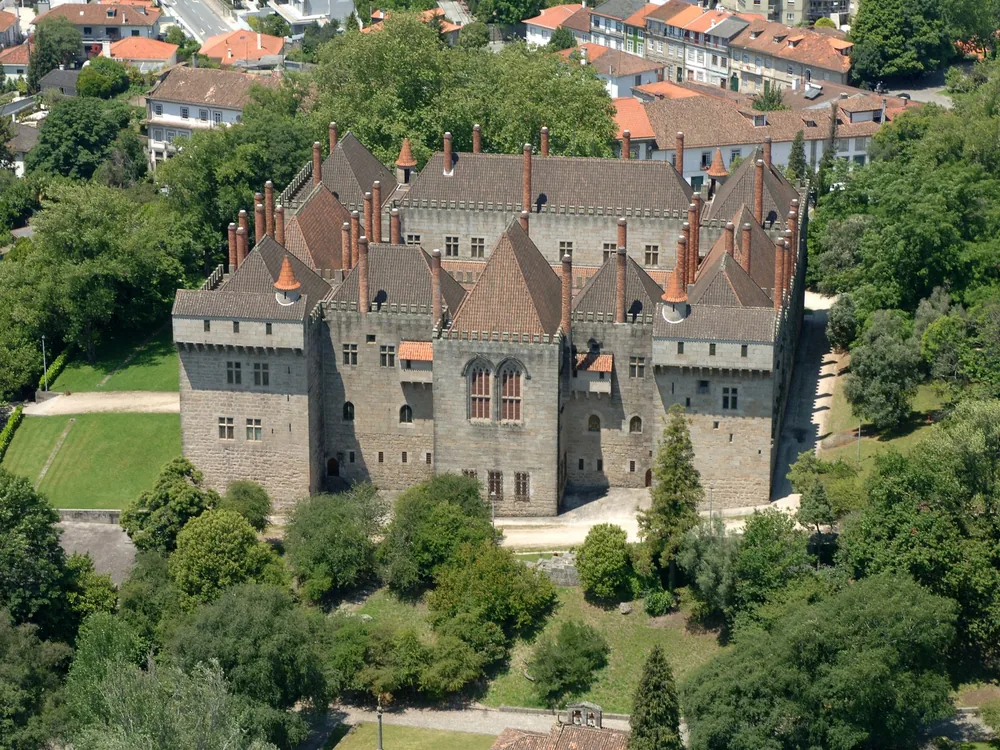
© Castles & Palaces
Quick Facts
- Hours
- Daily 10:00–18:00
- Entry via GetYourGuide
- €5
- Duration
- 1 hour
- Best time
- Year-round
- Nearest city
- Guimarães
Featured Tour
Guimarães: Palace of the Dukes of Bragança Entry Ticket
Cancellation available · Instant confirmation
Highlights
- ✦Thirty-nine large cylindrical chimneys projecting from the roofline — unique in Portuguese architecture and modelled on Burgundian Gothic manor houses
- ✦Built between 1401 and 1422 as the seat of the House of Braganza, the dynasty that later supplied Portugal's kings (1640–1910) and Brazil's emperors
- ✦Tapestries depicting the Portuguese conquest of Arzila and Tangier in 1471, among the finest surviving examples of Portuguese history tapestry
- ✦A controversial 1937–1959 restoration under António Salazar's Estado Novo that rebuilt much of the structure on conjecture rather than documented evidence
- ✦Immediately adjacent to Guimarães Castle, the birthplace of Portuguese independence, forming the most complete ensemble of medieval Portuguese lordship in the country
Skip the queue with a guided tour
Skip-the-line tickets & expert guides
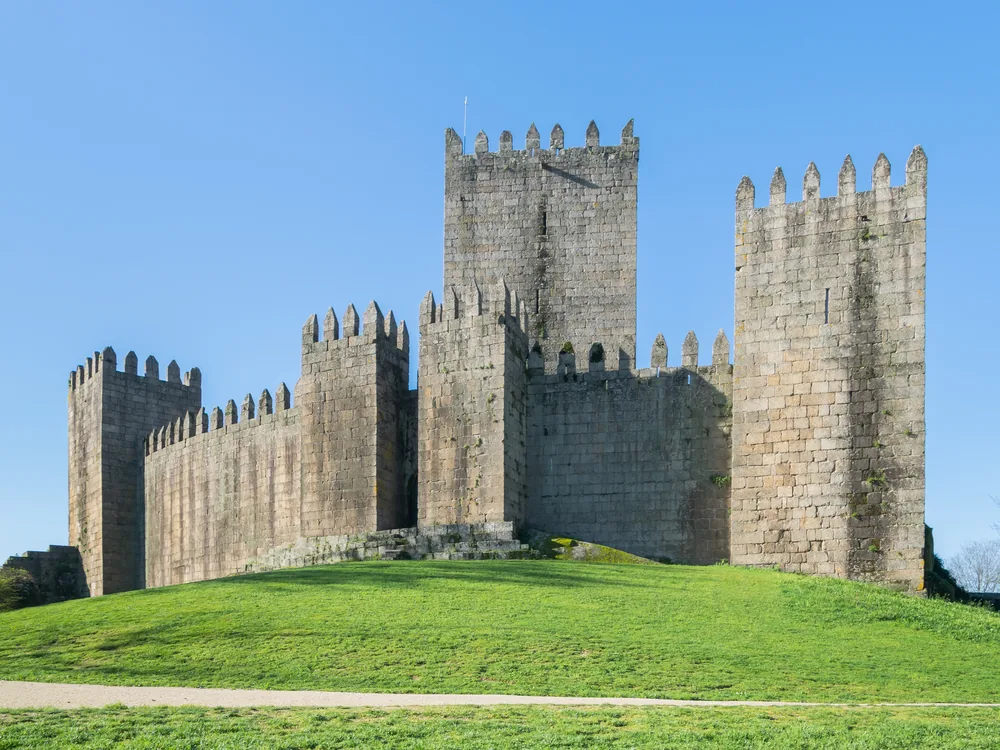
At the top of the old town of Guimarães — the city where Portugal was born, where Afonso Henriques declared independence in 1128 — two medieval structures stand side by side on a hill above the cobbled streets. Guimarães Castle is the fortress: small, stark, built for war. Thirty metres away, the Palace of the Dukes of Braganza is its opposite — a palatial residence for the most powerful noble family in Portugal, built at the moment when the Braganza dynasty's star was rising. Together they form the most complete ensemble of medieval Portuguese lordship anywhere in the country.
The House of Braganza was the most consequential noble family in Portuguese history. Founded by Dom Afonso, illegitimate son of King João I, the 1st Duke of Braganza built the palace in Guimarães — then the family's main seat — between 1401 and 1422. The dynasty would eventually provide Portugal's kings from 1640 until the abolition of the monarchy in 1910, and Brazil's emperors from independence to 1889. This palace was the origin point of that entire dynastic arc.
The building's most immediately recognisable feature — the 39 large cylindrical chimneys projecting from the roofline — has no parallel elsewhere in Portuguese architecture. The inspiration was the late Gothic manor houses of Burgundy and France, which the 1st Duke had observed during his travels at the French-influenced court of King João I. On the Iberian Peninsula, where Moorish and Mudéjar traditions dominated, these French Gothic chimneys were a deliberate statement of European courtly identity, visible from kilometres away above the old town.
After the 1st Duke's successors moved south to Lisbon — and eventually, in the 18th century, the entire Braganza royal court relocated to the new Mafra Palace near Lisbon — the Guimarães palace was abandoned. For four centuries it served variously as a barracks and a gunpowder store, gradually crumbling into ruin. By the early 20th century the roof had collapsed in sections and most of the interior decoration was gone.
António Salazar's Estado Novo regime, the authoritarian nationalist government that ruled Portugal from 1933 to 1974, undertook a massive restoration of the palace between 1937 and 1959 as a project of national identity, wanting a symbol of Portuguese medieval glory restored to full visibility. The result is genuinely controversial among architectural historians: the restoration is thorough but often invented, filling gaps in the historical record with conjectural reconstruction rather than documented evidence. The interior today — with its tapestries, painted ceilings, Gothic furniture and Arraiolos carpets — presents a 20th-century vision of what a 15th-century palace might have looked like, not a genuine, unbroken survival. The building is beautiful; its authenticity as a medieval structure is legitimately debatable, and the palace is best understood with that distinction in mind.
Despite the reconstruction controversy, the palace holds genuine historical objects of real significance. The tapestries depicting the Portuguese conquest of Arzila and Tangier in 1471 — transferred here from other Portuguese royal collections — are among the finest surviving examples of Portuguese history tapestry. The portrait gallery of Braganza monarchs, the Arraiolos carpets (one of Portugal's distinctive craft traditions), and the collection of Portuguese furniture are all authentic. In short: the architecture is largely reconstruction, but the contents are largely genuine — two different kinds of history occupying the same rebuilt rooms.
The Palace of the Dukes is immediately adjacent to Guimarães Castle, effectively sharing the same hilltop complex, and a combined ticket for both is available and strongly recommended. Guimarães Castle is the birthplace of Portuguese independence; the Palace of the Dukes represents the country's subsequent aristocratic flowering. The two tell a connected story and reward being visited together rather than separately.
History
Dom Afonso, illegitimate son of King João I and the first Duke of Braganza, built the palace at Guimarães between 1401 and 1422 as the seat of his new dynasty, drawing architectural inspiration from the Gothic manor houses of Burgundy and France that he had encountered through the French-influenced Portuguese court. The Braganza family's power grew steadily over the following centuries, and when the dynasty's successors relocated their main seat south, first to Lisbon and eventually to the newly built Mafra Palace in the 18th century, the Guimarães palace lost its primary residential role.
Over the following four centuries the building served variously as a barracks and a gunpowder store, falling into progressive disrepair as it lost any consistent function. By the early 20th century the roof had collapsed in several sections and most of the original interior decoration had been lost entirely. António Salazar's Estado Novo regime undertook a comprehensive restoration between 1937 and 1959, motivated by a desire to present a fully restored symbol of medieval Portuguese national identity; the work has since been criticised by architectural historians as substantially conjectural in places, reconstructing missing elements without firm documentary basis rather than preserving only what could be verified. The palace today functions as a museum, displaying both its reconstructed architecture and a collection of genuinely historic tapestries, furniture and decorative arts.
How to Visit
Getting there: Guimarães is 50 km north of Porto. Take the train from Porto Campanhã or São Bento to Guimarães station (about 1 hour), then walk 15–20 minutes uphill through the old town to the hilltop complex. By car from Porto via A3/A11, roughly 45 minutes; paid parking is available near the historic centre.
Tickets: Walk-up entry €6 adult, €3 child. The GetYourGuide tour — official entry ticket for the palace, valid one day — book in advance to skip the box office queue. A combined ticket covering both the Palace and the adjacent Guimarães Castle is available at the site and strongly recommended.
Practical tips: Visit Guimarães Castle first (it's a short walk and opens the same hours), then cross to the Palace — together they tell a single coherent story of Portuguese independence and dynasty. The tapestries depicting the 1471 conquest of Arzila and Tangier are the most historically significant objects inside; allow time to read the panels explaining the Estado Novo restoration controversy, which shapes everything you see.
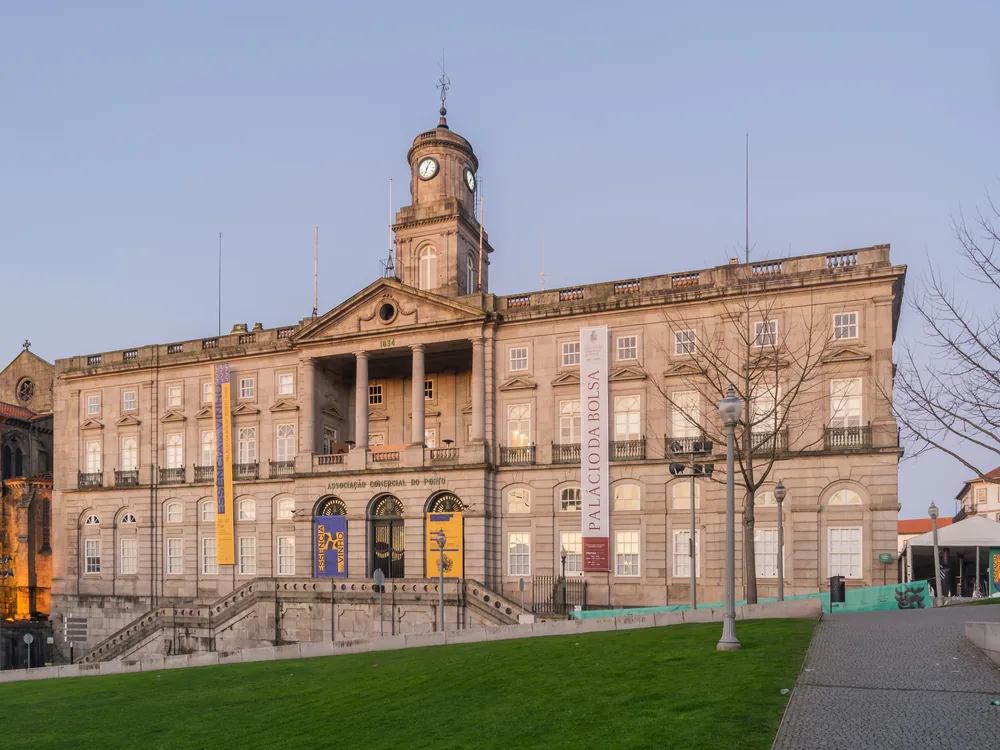
Combine with: Guimarães Castle immediately adjacent on the same hilltop, and Palácio da Bolsa in Porto for a Northern Portugal heritage day.
Frequently Asked Questions
Only partly. The palace was genuinely built between 1401 and 1422, but it fell into severe disrepair over the following centuries, with the roof collapsing and most original interior decoration lost. The building visible today is largely the result of a 1937–1959 restoration under António Salazar's Estado Novo regime, which rebuilt much of the structure based on conjecture rather than documented evidence. The architecture should be understood as a 20th-century reconstruction of a medieval original; many of the objects displayed inside, including the tapestries and furniture, are genuinely historic.
Location
Rua Conde Dom Henrique, 4810-262 Guimarães, Portugal
Nearby Castles
Tours & Tickets
Powered by GetYourGuide
From
€5/ person