
Mateus Palace
Solar de Mateus
Portugal · Norte Region — Mateus (parish), Vila Real, Trás-os-Montes / Upper Douro · Near Vila Real
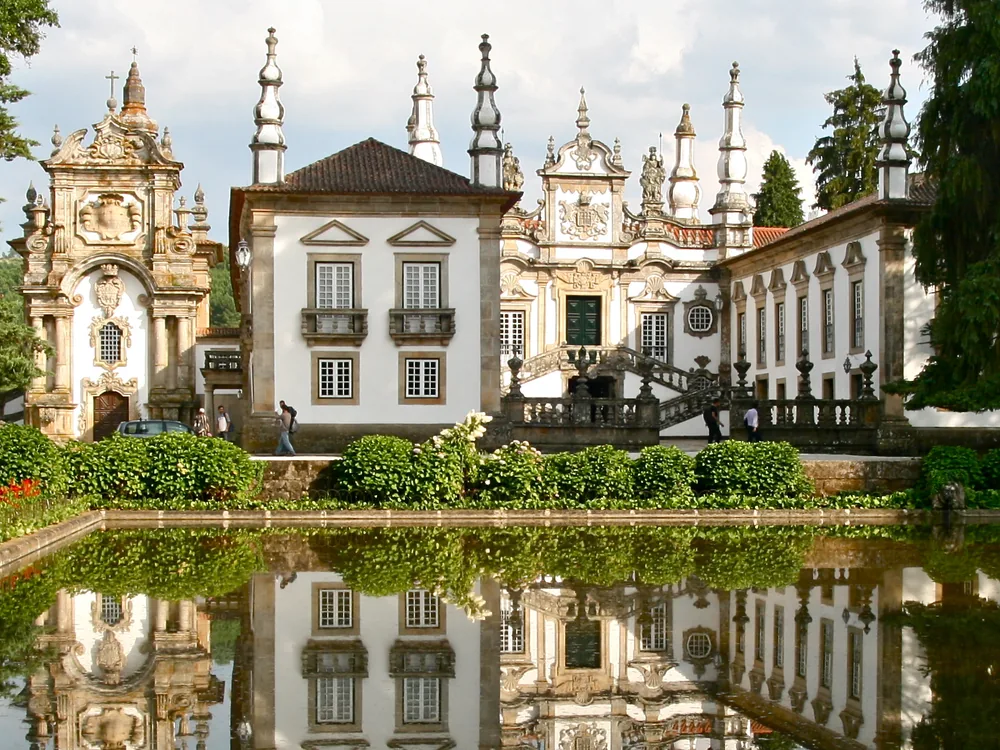
Built 1740 · Portuguese Baroque manor palace, 1740s–1750s, designed by Nicolau Nasoni — Solar de Mateus is the most photographed private building in Portugal and one of the defining examples of 18th-century Portuguese Baroque architecture; designed by Nicolau Nasoni (c. 1691–1773), the Italian-born architect who settled in Porto and gave the city its Baroque character (Torre dos Clérigos, Episcopal Palace of Porto); the palace's distinctive facade — a two-tower symmetrical composition with an ornate entrance staircase and balustrade, reflected in the ornamental pool — became internationally famous as the image on the label of Mateus Rosé wine; the interior includes state rooms with carved ceilings, a historic library, and a museum; the estate includes a baroque chapel, extensive formal gardens (the cedar tunnel is the most celebrated feature), a modern garden with topiary, and a working winery producing Douro PDO wines; the estate is managed by the Casa de Mateus Foundation
This page is part of an independent travel guide and is not affiliated with, endorsed by, or operated by Mateus Palace.
© Castles & Palaces
Quick Facts
- Hours
- Daily 09:00–13:00 / 14:00–18:00
- Guided tour from
- €116.1
- Duration
- 1.5–2 hours (museum/palace interior guided tour, baroque chapel, formal gardens including the cedar tunnel, and winery access); the GYG tour adds a full regional lunch
- Best time
- April to October
- Nearest city
- Vila Real
Featured Tour
Mateus Palace - In the Footsteps of Wine History
Cancellation available · Instant confirmation
Highlights
- ✦The Mateus Rosé label — one of wine's most famous images — the Solar de Mateus became internationally known in the 1960s when Sogrape began selling Mateus Rosé — a medium-sweet rosé wine that became one of the best-selling wines in the world through the 1970s and 1980s; the label features the palace facade reflected in the ornamental pool; the palace's photogenic symmetry — twin towers, baroque staircase, reflection in still water — created one of the most recognised images in 20th-century wine marketing; the palace's fame in international markets is substantially an accidental consequence of becoming one of wine's most viewed label images
- ✦Nicolau Nasoni — the Italian who gave Porto its Baroque character — the Solar de Mateus was designed by Nicolau Nasoni (c. 1691–1773), an Italian artist and architect from Siena who settled in Porto in the 1720s and became the primary architectural force of Portuguese Baroque in the Norte region; his Torre dos Clérigos and the Episcopal Palace (Palácio Episcopal do Porto) define the Baroque skyline of Porto; the Solar de Mateus, approximately 100km to the east in Vila Real, is his masterpiece of country architecture — an intimate baroque composition that translates the formal language of urban church design into a private estate setting
- ✦The cedar tunnel — Mateus's most theatrical garden feature — the formal garden of the Solar de Mateus contains a tunnel of shaped cedar trees approximately 35 metres long, the branches trained over a wooden frame to form a vaulted passage; it is one of the most frequently photographed garden features in Portugal, a combination of the controlled geometry of formal garden design and the material presence of living trees shaped over decades into architectural form
- ✦Working winery producing Douro PDO wines — the estate's cellar dates to the 16th century and the Solar de Mateus produces its own wines under the Douro PDO (Protected Designation of Origin), one of the world's oldest demarcated wine regions (demarcated by the Marquis of Pombal in 1756); the GYG day tour from Porto (t989223) includes access to the winery and three Douro PDO wine tastings, giving the visit a wine-production dimension alongside the architectural heritage
- ✦The Casa de Mateus Foundation — a living cultural institution — the Solar de Mateus is not a state museum but a private estate managed by the Casa de Mateus Foundation, which organises cultural events, music festivals, and residencies in the palace gardens and spaces; the foundation gives the estate an active contemporary cultural life that museum management typically cannot replicate
Skip the queue with a guided tour
Skip-the-line tickets & expert guides
The Solar de Mateus sits 3 kilometres east of Vila Real, in a shallow valley where the Corgo stream crosses agricultural land below the Marão mountains. The building's facade — a symmetrical composition with two towers, an elaborate central entrance staircase, and a baroque balustrade, all rendered in the local grey granite — is reflected in the ornamental pool that sits in the forecourt. This image of facade and reflection appeared on the label of Mateus Rosé wine from the 1960s and made the Solar de Mateus one of the most recognised buildings in the world among populations who had never heard of Nicolau Nasoni, the Douro, or Vila Real.
Nicolau Nasoni (c. 1691–1773) was born in Siena and arrived in Porto in the 1720s. He spent the rest of his life in the Norte region, designing buildings that gave Porto its characteristic Baroque identity: the Torre dos Clérigos, whose circular bell tower defines the Porto skyline; the Episcopal Palace (Palácio Episcopal); and numerous other churches, palaces, and civic buildings that accumulated across five decades of practice in the Portuguese northwest. The Solar de Mateus, commissioned by António José Botelho Mourão around 1740, was Nasoni's largest domestic commission and his most coherent architectural composition.
The facade's formal logic is Baroque in the Italian tradition — bilateral symmetry, central emphasis on the entrance staircase and pediment, twin towers at the ends — but its execution is distinctively Portuguese: the grey granite gives the building a solidity and slight roughness that the polished stone of Italian Baroque lacks; the ornamental detail is exuberant but contained; the whole composition achieves a balance between formal ambition and domestic scale that makes the Solar de Mateus legible as a private residence of exceptional quality rather than as a public monument. It was designed to impress arriving guests approaching across the forecourt, and the reflection pool — which frames the facade in still water — is the completion of that theatrical calculation.
The interior of the palace includes state rooms with carved chestnut ceilings, a historic library, a museum of the Mateus family's collections, and a baroque chapel. The chapel, adjacent to the main palace block, is a complete baroque ecclesiastical interior at domestic scale — carved altars, azulejo panels, and a decorative programme consistent with the palace's overall ambition. The formal garden extends from the palace's rear facade with the cedars that form the tunnel as its centrepiece — approximately 35 metres of trained cedar branches creating a vaulted green passage that is one of Portugal's most photogenic garden features.
The estate's cellar dates to the 16th century, predating the Nasoni palace by nearly two centuries. The Solar de Mateus produces its own Douro PDO wines from the estate's vineyards — the Douro being one of the world's oldest demarcated wine regions, its boundaries established by the Marquis of Pombal in 1756 to protect the authenticity and quality of port and table wine production. The GYG day tour from Porto (t989223) includes the guided museum tour, gardens, chapel visit, winery access with three Douro PDO wine tastings, and a full regional lunch in a six-hour programme from Porto.
The wine connection is worth addressing directly. The Mateus Rosé — a medium-sweet Portuguese rosé produced by the Sogrape company — was not originally made from Solar de Mateus estate wines; the agreement that placed the palace image on the label was a licensing arrangement rather than an indication of origin. The wine became one of the best-selling wines in the world through the 1970s and 1980s, particularly in export markets, and the label's ubiquity made the palace facade internationally familiar in a way that its architectural quality alone could not have achieved. The estate today produces its own wines under the Douro PDO designation, which are separate from the Mateus Rosé brand.
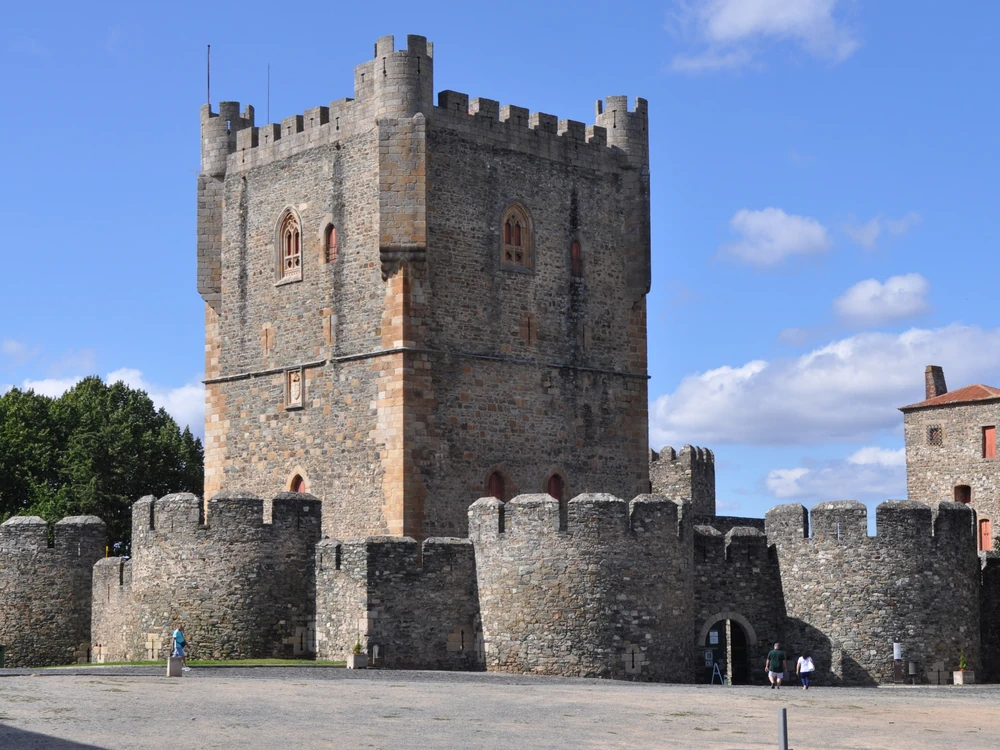
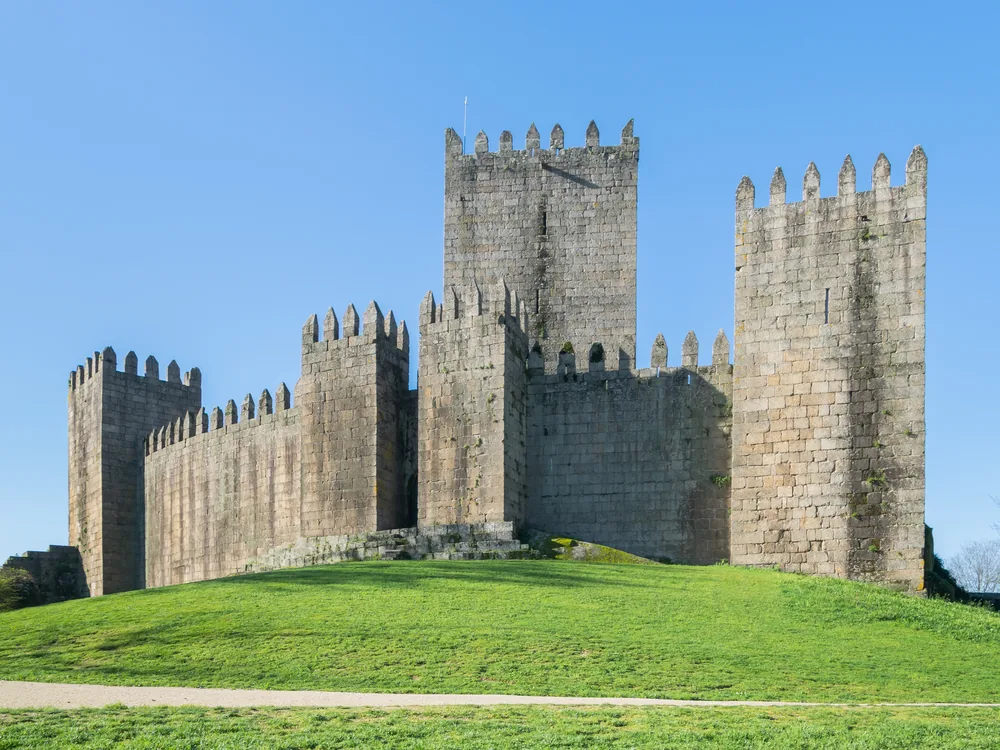
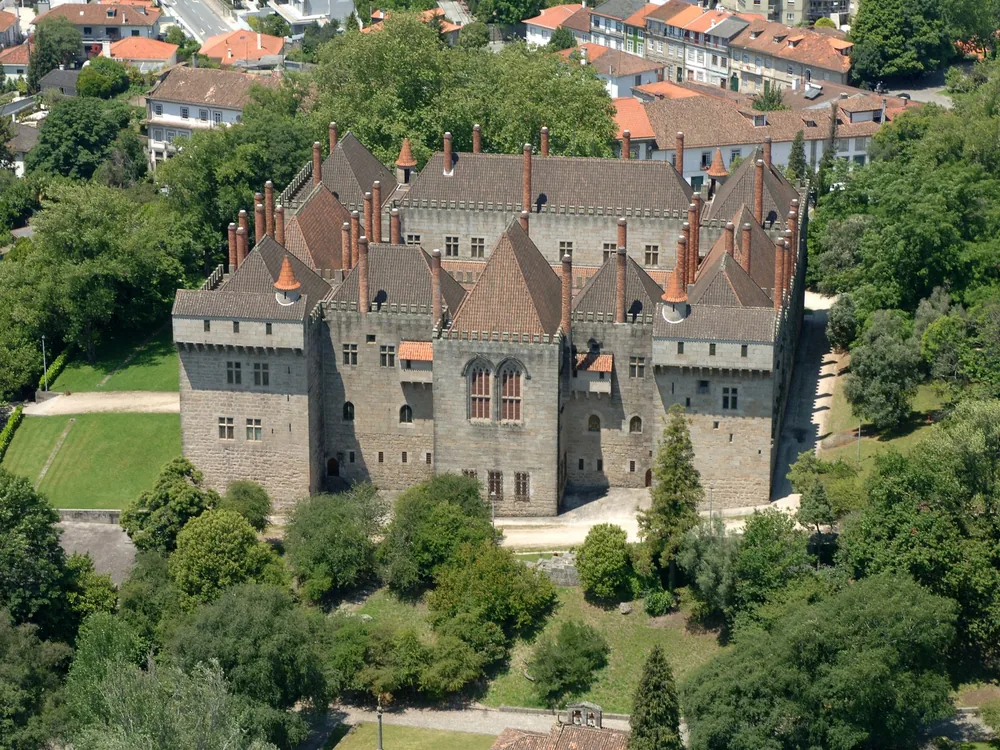
[Guimarães Castle](/castles/portugal/guimaraes-castle) — the medieval birthplace of Portugal's first king, Afonso Henriques, approximately 70km northwest — and [Palace of the Dukes of Braganza](/castles/portugal/palace-of-the-dukes-of-braganza) in Guimarães are the major Norte region heritage sites for visitors extending from Vila Real toward the Portuguese northwest. [Bragança Castle](/castles/portugal/braganca-castle) — the medieval fortress of the Braganza dynasty's ancestral seat, approximately 120km northeast in Trás-os-Montes — is a more distant but regionally related extension.
History
1590s–16th century: estate at Mateus established; cellar built in the 16th century, predating the current palace by nearly two centuries. c. 1740s: António José Botelho Mourão commissions Nicolau Nasoni to design the current baroque palace; construction and decoration completed through the 1740s–1750s. Late 18th–19th century: palace remains in the Botelho Mourão family; estate maintained as a working agricultural and wine-producing property. Late 19th–early 20th century: estate passes to the Counts of Vila Real; baroque character of the palace and gardens preserved. 1961: Sogrape licenses the Solar de Mateus facade for the Mateus Rosé wine label; the palace image begins its global distribution on wine bottles sold across Europe and North America. 20th century–present: estate managed by the Casa de Mateus Foundation; museum and cultural programme developed; wine production continues under Douro PDO designation.
How to Visit
Getting there: Vila Real is approximately 110 km east of Porto via the A4 (around 1 hour by car). The estate is 3 km from Vila Real centre — take a taxi from the town or from Vila Real train station (Porto São Bento to Vila Real is around 1.5 hours by train). No direct tourist transport from Porto to the estate.
Tickets: Walk-up entry €14 adult, €7 child. The GYG tour (t989223, from €116, 5.0★/4 reviews) — a 6-hour day trip from Porto including a guided museum tour, gardens and chapel visit, winery access with three Douro PDO wine tastings, a full regional lunch, and hotel pickup and drop-off — book in advance. Not suitable for wheelchair users.
Practical tips: The palace interior requires a guided tour — no unaccompanied self-access to the state rooms. Visit the formal garden (including the cedar tunnel) before or after the guided interior tour; extended summer hours (until 19:00–20:00 from June–September) make late-afternoon visits practical. The estate closes briefly midday (13:00–14:00) in lower-season months.
Combine with: [Guimarães Castle](/castles/portugal/guimaraes-castle) (70 km northwest), the medieval birthplace of Portugal's first king, and [Bragança Castle](/castles/portugal/braganca-castle) (120 km northeast) in Trás-os-Montes for a full Norte region heritage circuit.
Frequently Asked Questions
In 1961, the Sogrape wine company (producers of Mateus Rosé) entered a licensing agreement with the Solar de Mateus estate to use the image of the palace facade — reflected in the ornamental pool — on the label of Mateus Rosé, a medium-sweet Portuguese rosé wine. The wine became one of the best-selling wines in the world through the 1970s–1980s, particularly in export markets (United Kingdom, United States, Brazil), and the label's global distribution made the palace facade one of the most widely reproduced images of any Portuguese building. The estate's own wines — Douro PDO table wines produced from the estate's vineyards — are a separate product from the Mateus Rosé brand, which is produced by Sogrape from a broader sourcing base.
Location
Solar de Mateus, 5000-291 Mateus, Vila Real, Portugal
Nearby Castles
Tours & Tickets
Powered by GetYourGuide
From
€116.1/ person