
Fortress São Filipe
Forte de São Filipe
Portugal · Setúbal District — Setúbal city, hilltop above Setúbal Bay and the Sado estuary · Near Setúbal
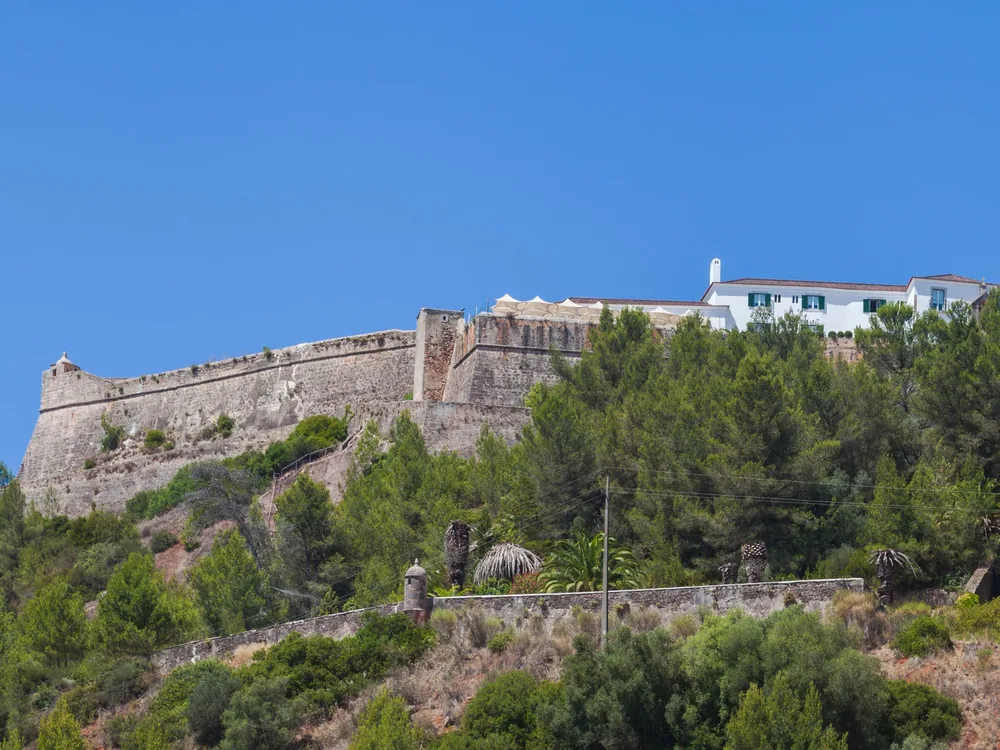
Built 1590 · Late 16th-century Portuguese star-shaped fortress (forte abaluartado), 1590, attributed to Filippo Terzi — Forte de São Filipe was built on the orders of Philip II of Spain (Philip I of Portugal during the Iberian Union, 1580–1640) to defend Setúbal's harbour and the seaward approach to Lisbon along the Sado estuary; the fortress is attributed to Filippo Terzi, the Italian-born architect who served the Spanish-Portuguese crown and designed major Portuguese buildings including the church of São Vicente de Fora in Lisbon; the plan is a compact trace italienne star fortress with bastioned angles positioned on a prominent hilltop above Setúbal, commanding both the Sado estuary entrance and the coastal approaches from the Atlantic; the interior chapel (Capelinha de São Filipe) was subsequently decorated with 18th-century azulejo panels (c. 1738) depicting scenes from the life of São Filipe, one of the more complete azulejo chapel programmes in a Portuguese military building; the fortress complex was converted in part to a pousada (state-managed historic hotel) which occupies sections of the interior while preserving the fortress's military architecture and the chapel for visitors
This page is part of an independent travel guide and is not affiliated with, endorsed by, or operated by Fortress São Filipe.
© Castles & Palaces
Quick Facts
- Hours
- Daily 09:00–17:30
- Guided tour from
- €130
- Duration
- 45 minutes–1 hour (fortress walls, chapel of São Filipe with its azulejo panels, and panoramic Setúbal Bay viewpoints over the Sado estuary and Tróia Peninsula)
- Best time
- Year-round
- Nearest city
- Setúbal
Featured Tour
Winery Visit & Fish Market Tour with Tasting from Lisbon
Cancellation available · Instant confirmation
Highlights
- ✦Philip II and the Iberian Union — the fortress's political origins — Forte de São Filipe was built in 1590 on the orders of Philip II of Spain, who had become Philip I of Portugal in 1580 when the Portuguese royal line failed and the Iberian crowns were united under Habsburg rule; Philip's strategic priority was the defence of the Iberian Peninsula's Atlantic coast, and Setúbal's harbour — one of the principal ports serving Lisbon — was a vulnerability; the fortress was part of a wider Iberian Union investment in coastal fortifications that also included works at Cascais, Peniche, and other Atlantic-facing positions; the building of a Spanish royal fortress above a Portuguese harbour city captures the political ambiguity of the Iberian Union period — a shared state whose military infrastructure was built to defend the combined monarchy's Atlantic interests
- ✦Filippo Terzi — the architect who shaped late 16th-century Portugal — the fortress is attributed to Filippo Terzi (c. 1520–1597), the Italian-born architect who entered the service of Philip II and became one of the most prolific designers of the late 16th-century Portuguese built environment; Terzi's major Portuguese works include the church and monastery of São Vicente de Fora in Lisbon (begun 1582, his most important commission) and several other churches and royal projects; his trace italienne approach to fortress design — star-shaped bastioned plan, clean geometry, maximum field of fire — is visible at São Filipe in the compact, efficient layout of the hilltop position above Setúbal
- ✦The chapel and its azulejo panels — a complete 18th-century interior — the Capelinha de São Filipe, inside the fortress walls, was decorated in approximately 1738 with a series of azulejo tile panels depicting scenes from the life of the saint — one of the more complete azulejo chapel programmes surviving within a Portuguese military fortification; the 18th-century date places the chapel decoration firmly in the era of the great Portuguese azulejo tradition, when blue-and-white tile painting had become the defining decorative vocabulary of Portuguese ecclesiastical and noble interiors; the combination of a late 16th-century military fortress and an 18th-century azulejo chapel within the same enclosure gives the fortress a layered interior character unusual in Portuguese military architecture
- ✦Panoramic views over the Sado and Arrábida — the strategic calculus made visible — from the fortress walls, the panorama encompasses Setúbal Bay, the Sado estuary, the Tróia Peninsula extending south into the Atlantic, and the Serra da Arrábida's limestone ridges rising to the east; this is the view that made the hilltop strategically decisive — from these walls, any maritime approach to Setúbal's harbour along the Sado estuary was visible for several kilometres; the same panorama that gave the 16th-century garrison control of the harbour approach gives the modern visitor one of the most expansive coastal viewpoints in the Setúbal Peninsula
Skip the queue with a guided tour
Skip-the-line tickets & expert guides
The hilltop above Setúbal commands the harbour in both directions — the Sado estuary stretching south and west toward the Atlantic, the Arrábida hills rising to the east, the Tróia Peninsula's sand spit extending into the open sea. From this position, any ship approaching Setúbal's port along the Sado would be visible for several kilometres and within cannon range for most of that distance. In 1590, Philip II of Spain — who had been King Philip I of Portugal since the union of the Iberian crowns in 1580 — ordered a fortress built on the hilltop.
The Iberian Union, which lasted from 1580 to 1640, combined the Spanish and Portuguese crowns under Habsburg rule following the extinction of the Portuguese royal line. Philip II's strategic concerns were Atlantic: the Spanish Netherlands were in revolt, the English were raiding Iberian shipping, and the Portuguese coastline — long and exposed to Atlantic approaches — was a series of potential vulnerabilities. Setúbal's harbour was one of the principal ports serving Lisbon, and defending it meant controlling the Sado estuary approach. The fortress on the hill was the answer.
The design is attributed to Filippo Terzi, an Italian-born architect who entered Habsburg service and became one of the most important designers of the late 16th-century Portuguese built environment. Terzi's major Portuguese project was the church and monastery of São Vicente de Fora in Lisbon, begun in 1582 on Philip II's commission — a statement of Habsburg patronage and Catholic reform architecture at the edge of the Atlantic world. The fortress at Setúbal was a different kind of commission: military rather than ecclesiastical, functional rather than ceremonial. The trace italienne plan — star-shaped bastioned circuit, clean geometry, maximum field of fire over the ground below — applied the Italian military engineering revolution of the 16th century to the Sado hilltop.
Inside the fortress walls, the Capelinha de São Filipe was decorated in approximately 1738 — nearly 150 years after the fortress was built — with azulejo tile panels depicting scenes from the life of São Filipe. The 18th-century date places the chapel in the golden age of Portuguese azulejo production, when blue-and-white tile painting had become the defining interior vocabulary of Portuguese buildings from churches to palaces to refectories. The combination of a 16th-century military enclosure and an 18th-century devotional interior gives the fortress an unusual layered character: the exterior geometry is Habsburg military rationalism; the chapel interior is baroque Portuguese decorative art.
The fortress subsequently became a pousada — one of Portugal's state-managed historic hotels, which converts significant historical buildings into accommodation without destroying the structure. The Pousada de Setúbal São Filipe occupies sections of the fortress interior; overnight guests wake to the Sado estuary panorama that the garrison would have scanned for hostile sails. The fortress walls and chapel remain accessible to non-staying visitors.
The GYG day tour from Lisbon (t761722, approximately 5 hours) includes Fortress São Filipe as the final confirmed Visit and Guided tour stop of a programme that also covers Bacalhôa Palace with wine tastings in Azeitão and the Livramento fish market in Setúbal. The fortress is the culmination of the tour: from the walls, the tour description confirms, visitors can admire the Setúbal Bay panorama and the chapel's azulejo programme before returning to Lisbon. The two heritage sites on this tour — the Renaissance quinta with its 1565 azulejo panel and the Habsburg star fortress with its 1738 chapel — represent very different chapters of Portugal's past, but both sit within the same Setúbal Peninsula landscape.
The views from the fortress walls over the Sado estuary and Arrábida coast are the visit's most immediate reward. The Sado stretches south toward the open Atlantic; the Tróia Peninsula's narrow sand spit marks the estuary's western edge; the Arrábida Natural Park's limestone ridges close the eastern horizon. On clear days — common in winter and spring — the panorama extends over 30 kilometres of coastal landscape from a single hilltop position.
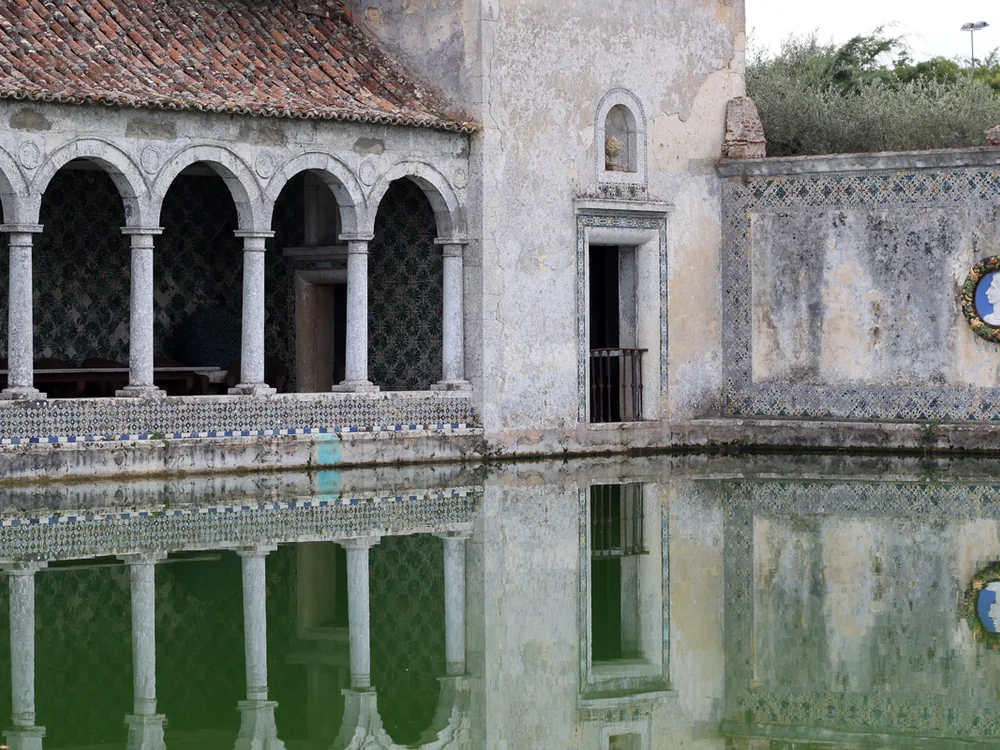
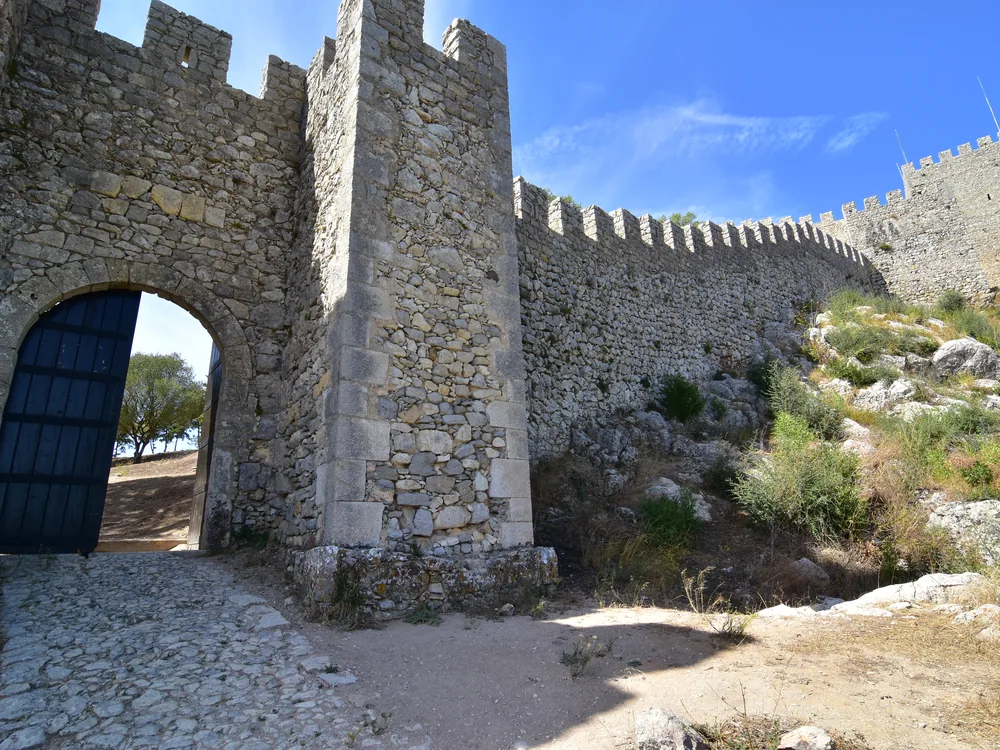
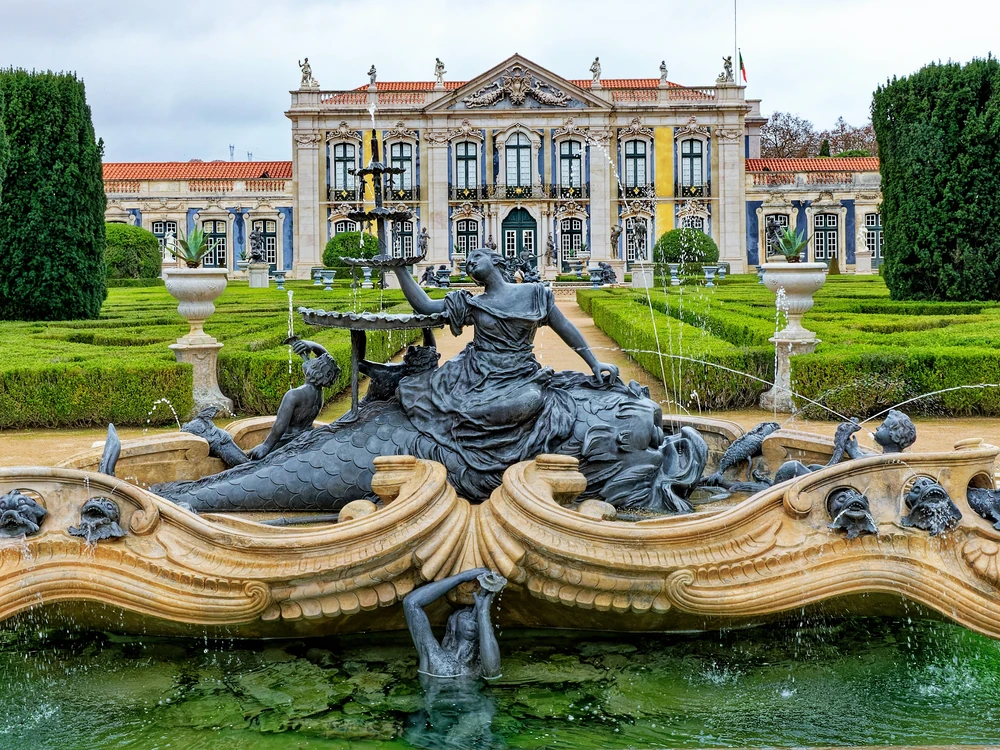
[Bacalhôa Palace](/castles/portugal/bacalhoa-palace) — the Renaissance manor house in Azeitão on the same GYG day tour — is the natural companion visit for the Setúbal Peninsula heritage circuit. [Sesimbra Castle](/castles/portugal/sesimbra-castle) — the free Moorish-Portuguese fortress on the Arrábida coast — and [Queluz Palace](/castles/portugal/queluz-palace) on the outskirts of Lisbon extend the circuit in the Setúbal-Lisbon direction.
History
Philip II of Spain became Philip I of Portugal in 1580, establishing the Iberian Union under Habsburg rule and bringing Spain's strategic concerns to Portugal's harbours and estuaries. Philip II commissioned the Forte de São Filipe above Setúbal in 1590 to defend the harbour and the Sado estuary approach — a design attributed to the Italian military engineer Filippo Terzi, who also worked on other Iberian fortifications of the period. The star-plan fortress on the hilltop, commanding the estuary in both directions, was maintained as an active military position through the Iberian Union period.
Portugal's Restoration of Independence in 1640, when João IV overthrew Spanish rule, transferred the fortress to Portuguese sovereignty without any disruption to its military function. Around 1738 the Capelinha de São Filipe within the fortress was decorated with azulejo panels depicting scenes from the life of São Filipe — a commission that added a layer of devotional art to the military architecture. The fortress's strategic importance diminished through the 18th and 19th centuries as naval warfare changed and the Sado estuary ceased to be a contested sea lane.
In the 20th century the fortress was converted in part to a pousada — the Pousada de Setúbal São Filipe — while the military architecture and chapel were preserved. The fortress walls, bastions, and chapel are accessible to visitors, and the pousada continues operating within the complex.
How to Visit
Getting there: Setúbal is approximately 50 km south of Lisbon via the A2 (around 40 minutes by car). By train from Lisboa Oriente (Fertagus line), Setúbal station is reached in about 1 hour; the fortress is a 20-minute uphill walk or short taxi ride from the station.
Tickets: Free entry. The GYG tour (t761722, from €130, 4.5★/3 reviews) — a 5-hour day trip from Lisbon covering Bacalhôa Palace with a guided tour and four wine tastings, Setúbal's Livramento fish market, and Fortress São Filipe with a guided visit and chapel — book in advance.
Practical tips: The fortress is partly a pousada — the Pousada de Setúbal São Filipe — so the main gate is staffed and accessible during hotel operating hours. The hilltop approach from central Setúbal is steep; a taxi saves 20 minutes each way. Winter and spring offer the clearest visibility across the Sado estuary and Arrábida coastline.
Combine with: [Bacalhôa Palace](/castles/portugal/bacalhoa-palace) in Azeitão (15 km west), included on the same GYG day tour, and [Sesimbra Castle](/castles/portugal/sesimbra-castle) on the Arrábida coast (20 km southwest) for a full Setúbal Peninsula heritage circuit.
Frequently Asked Questions
Forte de São Filipe was ordered by Philip II of Spain, who had become Philip I of Portugal in 1580 when the Iberian crowns were united under Habsburg rule (the Iberian Union, 1580–1640). Philip's strategic concern was the defence of Portugal's Atlantic coast and its harbour towns: Setúbal was one of the principal ports serving Lisbon, and its Sado estuary approach was a vulnerability for the combined Iberian monarchy. The fortress was part of a broader Atlantic defensive investment that also included works at Cascais, Peniche, and other Portuguese coastal positions. It was built in 1590, during the same period as Philip II's major Portuguese ecclesiastical commission — São Vicente de Fora monastery in Lisbon.
Location
Forte de São Filipe, Rua de São Filipe, 2900-345 Setúbal, Portugal
Nearby Castles
Tours & Tickets
Powered by GetYourGuide
From
€130/ person