
Quinta da Regaleira
Quinta da Regaleira
Portugal · Sintra, Lisbon District — UNESCO Cultural Landscape of Sintra · Near Sintra
Built 1904 · Neo-Manueline/Neo-Gothic/Renaissance Revival — designed by the Italian stage designer and architect Luigi Manini for the Brazilian-Portuguese millionaire António Augusto Carvalho Monteiro between 1904 and 1910; the palace's style deliberately blends several romantic historicist vocabularies simultaneously: Portuguese Manueline (the maritime late-Gothic found at the Jerónimos Monastery, with twisted rope motifs and naturalistic carvings), Italian Gothic tracery, and Renaissance ornamental detail; the garden structures — wells, grottos, bridges, chapels — are built in the same theatrical, layered idiom, creating a unified but deliberately fantastical landscape design
This page is part of an independent travel guide and is not affiliated with, endorsed by, or operated by Quinta da Regaleira.
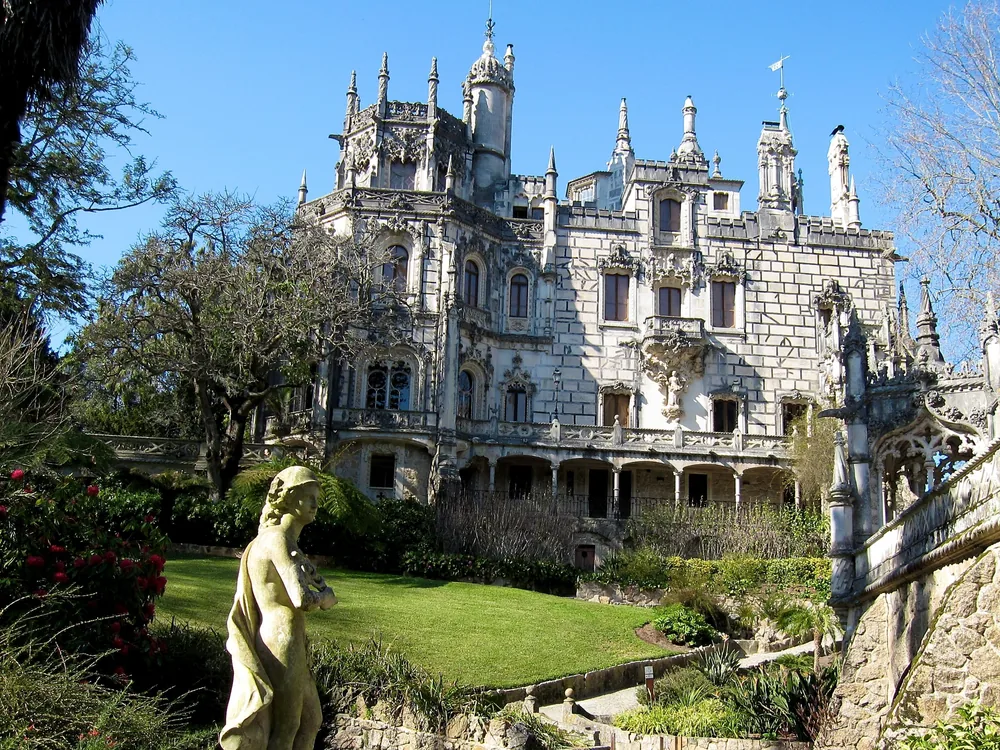
© Castles & Palaces
Quick Facts
- Hours
- Daily 09:30–20:00
- Skip-the-line from
- €39
- Duration
- 1.5–2.5 hours (the garden and underground tunnel network extend the visit considerably beyond the palace building itself)
- Best time
- October to April
- Nearest city
- Sintra
Featured Tour
Sintra: Quinta da Regaleira Skip-the-Line Ticket with Host
Cancellation available · Instant confirmation
Highlights
- ✦The Initiation Well (Poço Iniciático) — the estate's defining feature: a 27-metre deep inverted tower/well structure entered from the top, with a spiral staircase descending through nine circular platforms to the bottom; at the base, tunnels radiate outward connecting to other structures on the estate; built for ritual initiation ceremonies involving Freemasonic, Rosicrucian, Templar, and Tarot symbolism
- ✦Underground tunnel network — a system of tunnels connecting the Initiation Well, the Leda's Cave grotto, a smaller Unfinished Well, and other garden structures; navigating the tunnels is part of the visit, creating the impression of moving through a deliberately constructed symbolic landscape
- ✦Neo-Manueline palace — the main palace building designed by Italian architect Luigi Manini, with Gothic tracery, twisted Manueline rope columns, and theatrical interior rooms that reflect Manini's background as a set designer for opera; the palace is the least-visited part of the estate for most visitors, who prioritise the wells
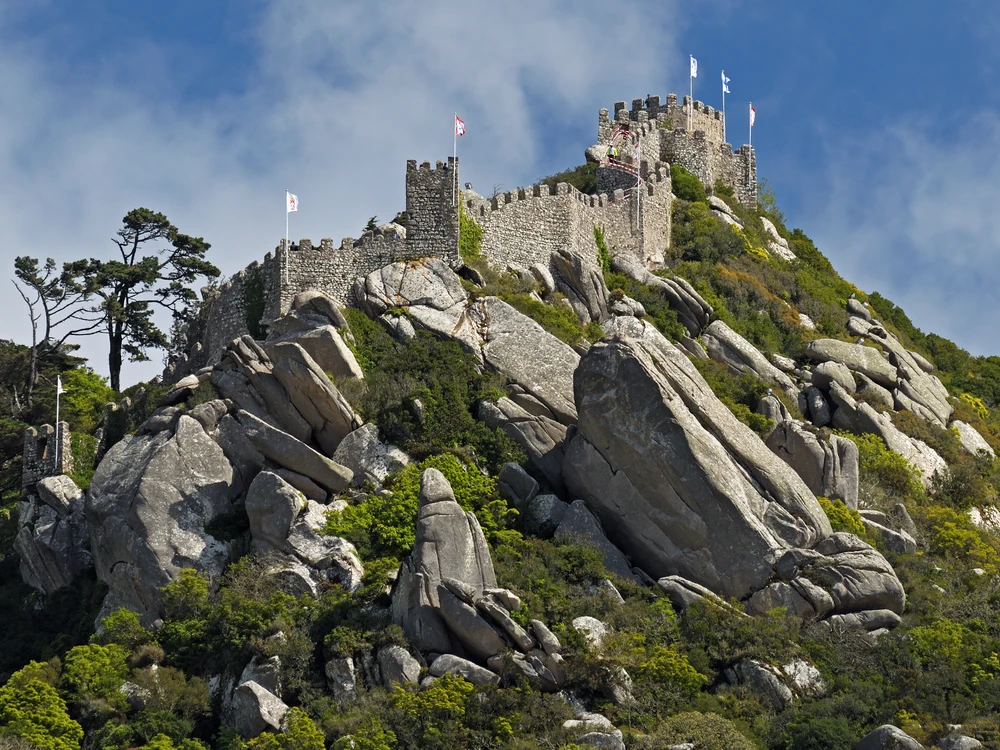
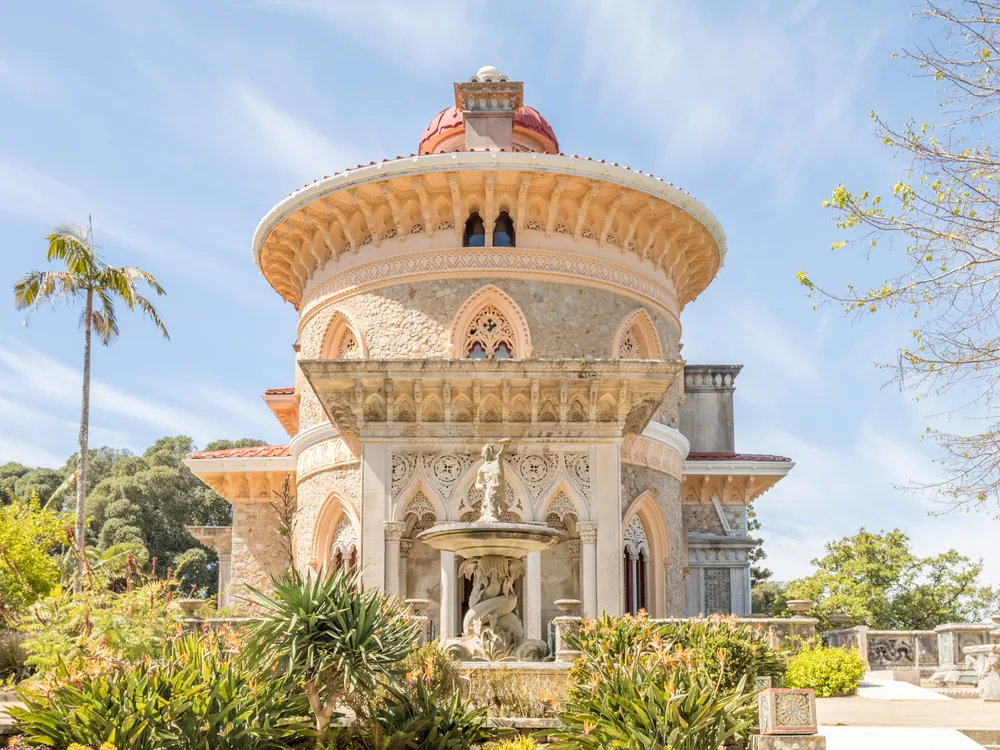
- ✦UNESCO Cultural Landscape of Sintra — Quinta da Regaleira is within the inscribed landscape (1995) that covers the entire Sintra hills area; it shares this UNESCO designation with [Pena Palace](/castles/portugal/pena-palace), [Castle of the Moors](/castles/portugal/castle-of-the-moors), and [Monserrate Palace](/castles/portugal/monserrate-palace)
- ✦The chapel — a Neo-Manueline private chapel with trompe-l'oeil frescoes, decorative tilework, and a layout incorporating the esoteric symbolism that runs through the entire estate; often missed by visitors who focus on the well
- ✦Esoteric symbolism throughout — the entire estate is read as a symbolic programme: the nine platforms of the Initiation Well reference Dante's Inferno and/or Freemasonic initiation degrees; the garden statuary, the floor mosaics in the wells, the chapel decoration, and the architectural ornament all incorporate Tarot iconography, Templar crosses, alchemical symbols, and Masonic motifs
Skip the queue with a guided tour
Skip-the-line tickets & expert guides
Quinta da Regaleira occupies approximately four hectares on the hillside between Sintra town centre and the Monserrate road, two kilometres west of the town's main square. It is one of the smaller estates in the Sintra cultural landscape — the grounds of Pena Palace cover far more territory, the Castle of the Moors commands a wider ridge — but it is in many ways the most unusual, and for many visitors the most memorable. The reason is the Initiation Well.
The estate was purchased in 1893 by António Augusto Carvalho Monteiro, a wealthy merchant from a Portuguese family that had made its fortune in Brazil during the coffee and diamond boom of the 19th century. His nickname 'Monteiro dos Milhões' — Millionaire Monteiro — reflected his fortune and his willingness to spend it on collecting and building. He was a passionate entomologist (one of Portugal's leading butterfly collectors), a bibliophile, and an initiate of Freemasonry and related esoteric traditions. The estate he created between 1904 and 1910 reflects all of these interests simultaneously.
His architect was Luigi Manini, an Italian who had trained as a painter and scenographer and had worked extensively at the Teatro alla Scala in Milan before establishing himself in Lisbon. Manini designed theatrical sets — spaces intended to create atmosphere, surprise, and symbolic weight through the manipulation of architectural elements and spatial sequence. At Quinta da Regaleira, he applied exactly this theatrical expertise to a real landscape, designing a palace, a chapel, and a garden system in which every structure has symbolic meaning and every path reveals a new architectural surprise.
The palace building itself is relatively conventional by the standards of the estate: a Neo-Manueline/Neo-Gothic structure with Gothic tracery, twisted rope columns in the Portuguese Manueline tradition, and interior rooms with the Romantic historicist decoration typical of late 19th-century wealthy domestic architecture. The chapel is more interesting: a private oratory with trompe-l'oeil frescoes, Manueline arches, and a symbolic layout that incorporates the esoteric programme of the estate as a whole — Templar crosses, Masonic geometry, alchemical symbols, and Tarot imagery appear in the floor mosaics and the painted decoration.
The garden is where the estate becomes extraordinary. Manini and Carvalho Monteiro designed a landscape of successive discoveries: stone terraces, fountains, a lake, a rose garden, bridges, artificial grottos (including Leda's Cave, a large subterranean cave with a mosaic floor and stone benches), and two wells — the Initiation Well (Poço Iniciático) and the Unfinished Well (Poço Imperfeito). It is the Initiation Well that has made Quinta da Regaleira internationally famous.
The well is entered from a small circular opening at the surface, surrounded by a parapet with a Templar cross carved in the stone floor. A spiral staircase descends nine platforms — each separated by a short landing — to the bottom, 27 metres below. The nine-level structure has been interpreted as a reference to the nine circles of Dante's Inferno, the nine degrees of Freemasonic initiation, the nine spheres of the Ptolemaic cosmos, and the nine cards of the Tarot's minor arcana. In all likelihood it references all of these simultaneously, since Carvalho Monteiro's intellectual interests encompassed all of them. At the bottom, four tunnels radiate outward, connecting through the estate's underground system to the Unfinished Well, Leda's Cave, and a series of exits at various points in the garden. Navigating the tunnels — low-ceilinged, uneven, dramatically lit by small apertures — is part of the intended experience.
The estate passed to the Câmara Municipal de Sintra (Sintra Council) in 1997 and was opened to the public shortly after. It has grown steadily in visitor numbers as its visual distinctiveness spread through photography and social media; the Initiation Well photograph — the view upward through the spiral staircase from the bottom — is one of the most widely circulated images of any European heritage site.
Quinta da Regaleira is most usefully visited as the first or last stop in a Sintra day that also includes [Pena Palace](/castles/portugal/pena-palace), [Castle of the Moors](/castles/portugal/castle-of-the-moors), and [Monserrate Palace](/castles/portugal/monserrate-palace). All four are within the UNESCO Cultural Landscape of Sintra and all four are within 4km of each other. Quinta da Regaleira, with its compact grounds and high intensity of unusual features, typically takes 1.5–2.5 hours; beginning here before the main Pena Palace crowds arrive is a practical approach.
History
Estate property in the Sintra hills from the 18th century. António Augusto Carvalho Monteiro acquires the quinta in 1893. Construction of the current palace, chapel, and garden begins 1904 (architect Luigi Manini). Completed approximately 1910. Carvalho Monteiro dies 1920; estate passes through several owners. Câmara Municipal de Sintra acquires the estate 1997. Opens to the public as a museum and heritage site. Sintra Cultural Landscape (UNESCO, 1995) encompasses the property. International visitor numbers grow substantially after photography of the Initiation Well spreads via social media from approximately 2012 onward.
How to Visit
Getting there: From Sintra town centre (2 km west), walk along the Monserrate road in about 25 minutes, or take a tuk-tuk or taxi for roughly €5. Bus 434 from Sintra station passes near the estate. From Lisbon, take the regional train from Rossio to Sintra station (about 40 minutes) then connect by bus or tuk-tuk.
Tickets: Walk-up entry €10 adult, €5 child. The GetYourGuide tour — skip-the-line ticket with a host for 70 minutes to 1.5 hours — book in advance for summer and peak-season weekends to guarantee entry without queuing.
Practical tips: Arrive at opening (09:30) or after 17:00 in summer to avoid peak density in the narrow garden paths and at the Initiation Well entrance. Bring a phone torch for the underground tunnels — parts of the network are dark. Do not skip the chapel: most visitors rush to the well and miss the esoteric programme built into the palace and chapel interiors, which is equally intentional.
Combine with: Pena Palace on the hilltop above Sintra, and Monserrate Palace a further 2 km west on the same road — all three are within the UNESCO Cultural Landscape of Sintra.
Frequently Asked Questions
Advance booking is not strictly required but is strongly recommended in summer (June–August) and during weekends in spring and autumn. The GetYourGuide skip-the-line ticket is sold by a third-party reseller at a premium over the official price — useful if you want guaranteed access time without queuing at the ticket desk. The official regaleira.pt website also sells tickets online at the standard price.
Location
R. Barbosa du Bocage 5, 2710-567 Sintra, Portugal
Nearby Castles

Tours & Tickets
Powered by GetYourGuide
From
€39/ person