
Seteais Palace
Palácio de Seteais
Portugal · Lisbon District — Sintra municipality, UNESCO Sintra Cultural Landscape · Near Sintra
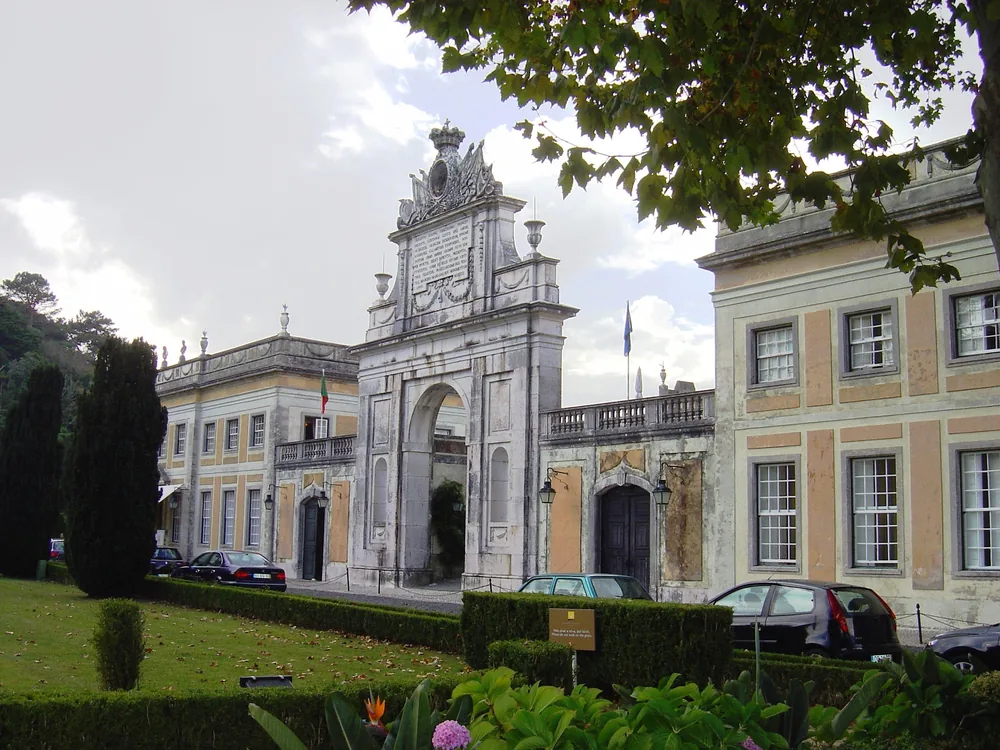
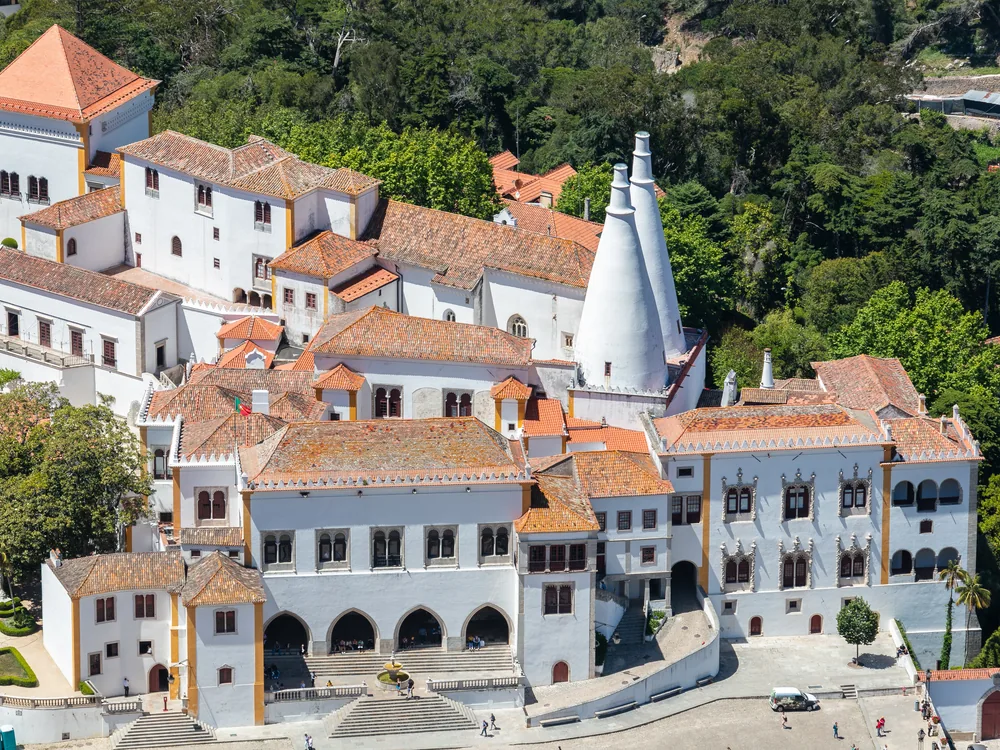
Built 1787 · Late 18th-century Portuguese Neoclassical palace, c. 1787–1802, with a distinctive triumphal arch connecting two symmetrical wings — the Palácio de Seteais was originally built for the Dutch consul Daniel Gildemeester as a country residence within the Sintra hills; after Gildemeester's death, the property was acquired by Dom Diogo de Noronha, the 5th Marquess of Marialva, who commissioned the construction of the triumphal arch connecting the two palace wings and the formal completion of the ensemble; the arch frames a direct view toward Pena Palace on the opposite hill — the visual alignment between the neoclassical triumphal arch and the Romantic royal palace beyond it is a defining element of the Seteais experience; the palace's exterior is executed in Sintra's characteristic combination of lime-washed plaster and stone detailing, with the twin-wing composition and the central arch creating a formal architectural statement within the romantic landscape of the Sintra hills; the interior, today operating as the five-star Tivoli Palácio de Seteais hotel, retains neoclassical decorative elements including painted ceilings and period furniture; the surrounding grounds include manicured gardens extending toward the Sintra forest and views toward the Pena hill
This page is part of an independent travel guide and is not affiliated with, endorsed by, or operated by Seteais Palace.
© Castles & Palaces
Quick Facts
- Hours
- Daily open as hotel
- Day trip from
- €450
- Duration
- 30 minutes–1 hour for the exterior and gardens (if accessible); the arch and its framed view of Pena Palace are visible from the road without entering the grounds
- Best time
- Year-round
- Nearest city
- Sintra
Featured Tour
From Lisbon: Private Sintra Tour with a Local Guide
Cancellation available · Instant confirmation
Highlights
- ✦The triumphal arch and the view it frames — Seteais's defining architectural gesture — the most distinctive feature of the Palácio de Seteais is the triumphal arch that connects its two neoclassical wings: a formal architectural statement in the Sintra hills that serves also as a carefully calibrated frame; standing beneath the arch and looking back toward the palace, the opposite hill carries Pena Palace — the wildly Romantic royal confection of towers, battlements, and colour that King Ferdinand II commissioned in the 1840s; the visual alignment between the sober neoclassical arch of 1802 and the exuberant Romantic palace of the 1840s is an architectural accident of history that has become one of Sintra's defining views; the two palaces represent opposed aesthetic moments — neoclassical restraint versus Romantic excess — framed in direct visual dialogue
- ✦Daniel Gildemeester and the Marquess of Marialva — the palace's dual patrons — the palace has two founding figures: Daniel Gildemeester, the Dutch consul in Lisbon who began construction of the twin-wing residence as a country retreat among the Sintra pines, and Dom Diogo de Noronha, the 5th Marquess of Marialva, who acquired the property after Gildemeester's death and commissioned the triumphal arch that completed the ensemble and gave it its distinctive silhouette; the Marquess of Marialva represented one of the most distinguished titles of the Portuguese aristocracy, and his investment in the Seteais property reflects the aristocratic fashion for Sintra country retreats that made the hill town's landscape into the most intensely palaced landscape in Portugal
- ✦Sintra's most elegant hotel and the question of public access — the Palácio de Seteais has operated as the Tivoli Palácio de Seteais hotel for several decades, making it one of Sintra's palaces that cannot be visited as a ticketed attraction in the conventional sense; the interior neoclassical state rooms — painted ceilings, period furniture, formal dining — are accessible to hotel guests and, for specific purposes, to diners at the hotel restaurant; the gardens may be open to non-guests at certain times; this restricted-access character gives the palace a different status from Pena, Quinta da Regaleira, or Monserrate — it is less visited but arguably more elegantly preserved, since it functions as a residence rather than a museum
- ✦Position within the UNESCO Sintra Cultural Landscape — Seteais Palace sits within the Sintra Cultural Landscape designated as a UNESCO World Heritage Site in 1995; the designation recognises the ensemble of palaces, gardens, quintas, and forest that makes the Sintra hills a unique European concentration of Romantic and earlier architectural ambition; the palace's position on the Estrada de Seteais between the historic centre of Sintra and Pena Palace makes it a natural stopping point on the walk or drive between the two — the arch is visible from the road and gives even passing visitors a clear sense of the neoclassical episode in Sintra's otherwise predominantly Romantic architectural narrative
Skip the queue with a guided tour
Skip-the-line tickets & expert guides
The road from central Sintra toward Pena Palace climbs through pine and oak forest past a series of gates and walls that mark the edges of estates whose interiors are famous worldwide — Quinta da Regaleira, the Palace of the Moors, Monserrate. Midway up, on the left side of the road, a triumphal arch appears between two symmetrical neoclassical wings. This is Seteais.
The Palácio de Seteais is the most restrained building in Sintra's intensely Romantic architectural landscape. Where Pena Palace is polychrome and fantastical, where Monserrate's palace is Neo-Gothic and Moorish, where Quinta da Regaleira is neo-Manueline and occult, Seteais is neoclassical — lime-washed facades, symmetrical wings, a formal triumphal arch. It looks like it belongs in the outskirts of Lisbon or a French regional capital rather than on a forested Romantic hill in Portugal. This contrast is part of what makes it interesting.
The palace was begun c. 1787 for Daniel Gildemeester, the Dutch consul in Lisbon, who chose the Sintra hills for a country retreat in the same period that the Portuguese aristocracy and foreign diplomats were establishing their quintas among the pines and granite outcrops above the Atlantic. After Gildemeester's death, the property was acquired by Dom Diogo de Noronha, 5th Marquess of Marialva — holder of one of the most distinguished Portuguese titles and a figure at the centre of late 18th-century Lisbon court life. The Marquess commissioned the triumphal arch that connects the two wings and gives the palace its distinctive silhouette, completing the ensemble around 1802.
The arch does something unexpected. Standing beneath it and looking back toward the hill that faces the palace, the view frames Pena Palace directly. Pena's towers and coloured battlements appear perfectly centred in the neoclassical arch — but this visual alignment is an historical accident. The Pena Palace that Ferdinand II built in the 1840s was constructed 40 years after the Seteais arch was completed; Gildemeester and the Marquess of Marialva were not framing a palace that did not yet exist. What makes the view so striking is that the later Romantic building and the earlier neoclassical arch have ended up in exact visual dialogue despite being separated by four decades and two entirely different aesthetic programmes.
The name Seteais is traditionally said to derive from 'sete ais' — seven sighs — with various legends attached to explain the phrase. None of the explanations is entirely convincing, but the name has stuck, and the palace's slightly melancholy elegance within Sintra's more flamboyant landscape gives it a certain aptness.
The palace has operated as the Tivoli Palácio de Seteais hotel for several decades. This is the primary fact a visitor to Sintra needs to understand about Seteais: it is not a ticketed heritage attraction. The neoclassical interior — painted ceilings, period furniture, formal dining room — is accessible to hotel guests and to diners at the hotel's restaurant. The gardens and grounds may be accessible to non-guests at certain times; the hotel's current access policy should be confirmed directly before planning a visit. The palace exterior and the arch are visible from the road without entering the property.
For a visitor doing Sintra's heritage circuit in a day, Seteais is best understood as a point of visual and architectural contrast on the route between the historic centre and Pena Palace — a neoclassical interlude in the Romantic itinerary, worth a few minutes of attention for the arch and the view it frames, rather than a destination requiring the same preparation as Quinta da Regaleira or Monserrate. For those who stay at the hotel or dine at the restaurant, the experience of sleeping in a neoclassical Sintra palace is genuinely unlike anything the ticketed attractions can offer.
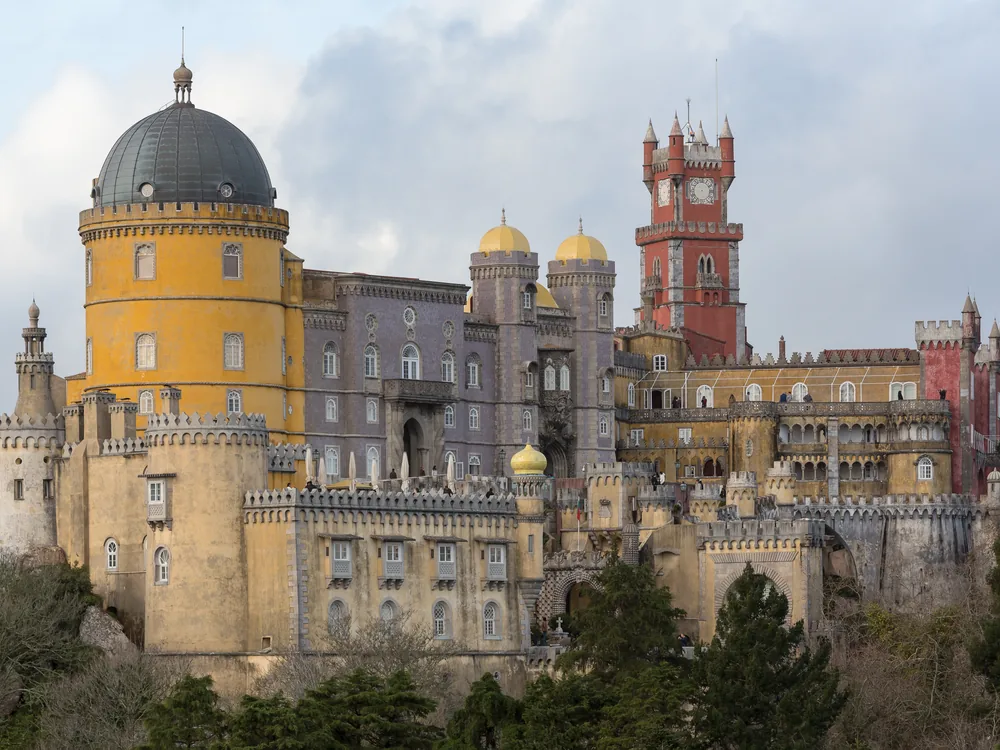
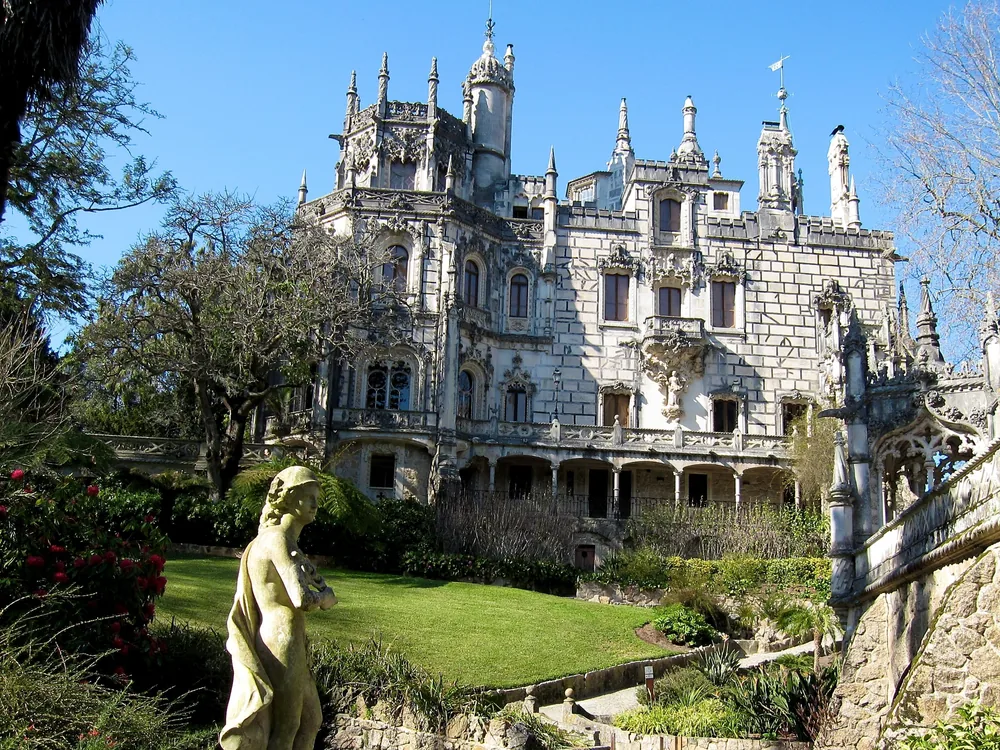
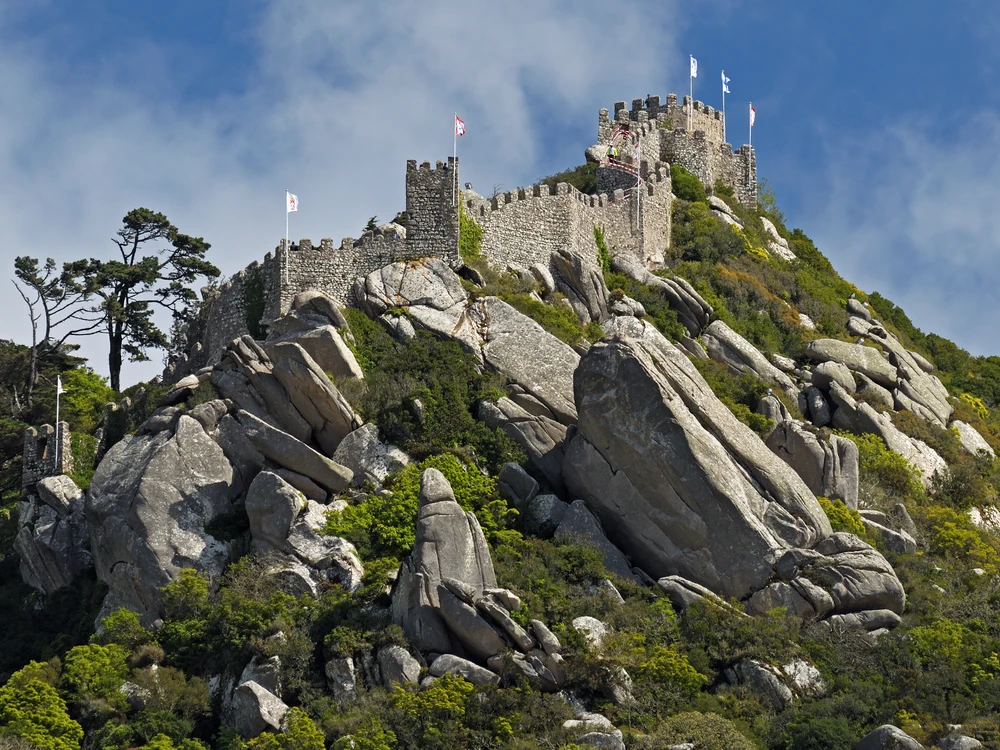
[Pena Palace](/castles/portugal/pena-palace) — visible from the Seteais arch and the defining building of Romantic Sintra — is the essential companion to understanding Seteais's neoclassical position in the landscape. [Quinta da Regaleira](/castles/portugal/quinta-da-regaleira) — the neo-Manueline occultist estate with its initiation wells — and [Monserrate Palace](/castles/portugal/monserrate-palace) — the orientalist Neo-Gothic estate at the end of the Seteais road — complete the Sintra architectural spectrum. [Castle of the Moors](/castles/portugal/castle-of-the-moors) — the medieval Moorish hilltop walls above the forest — gives the Sintra circuit its pre-Romantic chapter. [Sintra National Palace](/castles/portugal/sintra-national-palace) anchors the town below.
History
Daniel Gildemeester, the Dutch consul in Lisbon, began construction of the Palácio de Seteais around 1787 as a country residence within the Sintra hills — a site already established as the location of the Portuguese aristocracy's most prestigious rural estates. Gildemeester died around 1800 before the palace was finished, and the unfinished property was acquired by Dom Diogo de Noronha, 5th Marquess of Marialva, one of the most senior titles in the Portuguese aristocracy.
The Marquess of Marialva commissioned the triumphal arch connecting the two wings around 1802 — a feature that completed the palace's distinctive symmetrical silhouette and created the framed view toward the Pena hill that is now the building's most photographed element. The palace passed through successive aristocratic ownership through the 19th century as the Sintra hills continued as the centre of Portuguese elite country estate culture.
The Sintra Cultural Landscape was designated a UNESCO World Heritage Site in 1995, with the Palácio de Seteais included within the designated area. Conversion to the Tivoli Palácio de Seteais luxury hotel followed in the late 20th century. The exterior arch and grounds are visible from the Estrada de Seteais; the interior is accessible to hotel guests and restaurant diners.
How to Visit
Getting there: From Sintra historic centre (about 1 km), walk uphill on the Estrada de Seteais through the forest for 20–30 minutes, or take a tuk-tuk or taxi from Sintra station for roughly €5. The palace sits on the road between Quinta da Regaleira and Pena Palace, making it a natural exterior stop on a walking circuit between those two sites.
Tickets: The triumphal arch and exterior wings are viewable from the road at no charge. Interior access — neoclassical state rooms, painted ceilings, formal gardens — is available only to hotel guests or restaurant diners at the Tivoli Palácio de Seteais; book via tivolihotels.com well in advance. The GYG tour (t856768, from €450 per private group of up to 3) — a full-day private Sintra tour from Lisbon with 7 sites including a 20-minute exterior stop at Seteais — book in advance.
Practical tips: The defining view — Pena Palace framed through the neoclassical triumphal arch — is visible from the road without entering the property; position yourself beneath the arch looking back toward the hill for the photograph. If you want interior access, booking dinner at the hotel restaurant is the most practical route for non-guests. Confirm current garden access policy directly with the hotel before visiting, as it changes.
Combine with: [Quinta da Regaleira](/castles/portugal/quinta-da-regaleira) immediately nearby on the Estrada de Seteais, and [Pena Palace](/castles/portugal/pena-palace) — the Romantic royal palace visible through the arch — both within the same UNESCO Sintra Cultural Landscape.
Frequently Asked Questions
The palace interior — neoclassical state rooms, painted ceilings, period furniture — is generally only accessible to hotel guests staying at the Tivoli Palácio de Seteais or to diners at the hotel restaurant. There is no standard public ticketed visit to the interior. The palace exterior and triumphal arch are visible from the Estrada de Seteais road without entering the property. Garden access for non-guests may be possible at certain times — the hotel's current access policy should be confirmed directly before planning a visit. For those who want to experience Seteais fully, staying at the hotel or booking dinner at the restaurant is the most reliable approach.
Location
Palácio de Seteais, Rua Barbosa do Bocage 8, 2710-517 Sintra, Portugal
Nearby Castles
Tours & Tickets
Powered by GetYourGuide
From
€450/ group