
Neamț Citadel
Cetatea Neamțului
Romania · Moldavia, Romania · Near Târgu Neamț
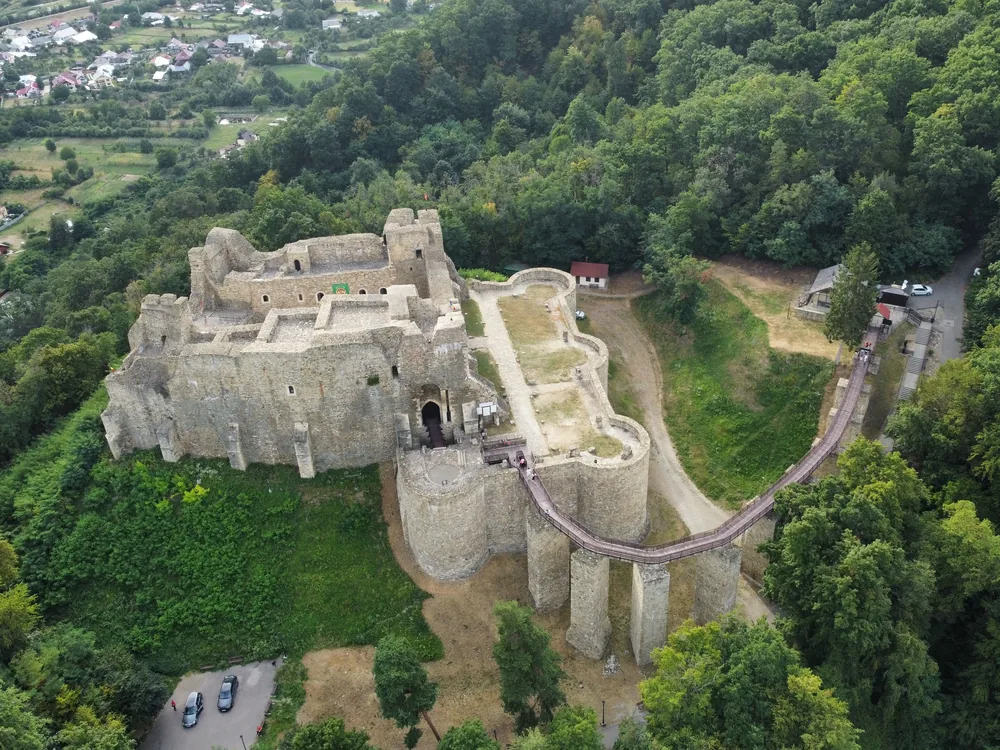
Built 1375 · 14th–15th century medieval citadel on Timuș Rock, a 480-metre limestone outcrop above the Neamț valley; the fortress was founded in the reign of Petru I Mușat (c. 1375) and substantially expanded and fortified by Stephen the Great (Ștefan cel Mare) in the 15th century; the characteristic quadrilateral plan with four towers at the corners and a central keep reflects the Moldavian defensive architecture of the period; the outer defences were expanded by Stephen with a series of outer walls and a dry moat cut into the rock; the approach requires a 10–15 minute uphill climb from the base of Timuș Rock
This page is part of an independent travel guide and is not affiliated with, endorsed by, or operated by Neamț Citadel.
© Castles & Palaces
Quick Facts
- Hours
- Daily 09:00–17:00
- Guided tour from
- €89
- Duration
- 1–1.5 hours at the citadel; approximately 5–6 hours on the full GetYourGuide guided tour from Piatra Neamț
- Best time
- May to October
- Nearest city
- Târgu Neamț
Featured Tour
From Piatra Neamț: Neamț Citadel and Târgu Neamț Guided Tour
Cancellation available · Instant confirmation
Highlights
- ✦Stephen the Great's greatest fortress — Neamț Citadel is most closely associated with Stephen the Great (Ștefan cel Mare, r. 1457–1504), the Moldavian voivode who is the central figure of Romanian national memory; Stephen substantially expanded and fortified the citadel in the 15th century, extending the outer walls and cutting the dry moat into the living rock; his 47-year reign, during which he fought approximately 36 battles — winning most of them against Ottoman, Hungarian, and Polish forces — made Neamț Citadel the primary symbol of Moldavian military resistance
- ✦Never taken by the Ottomans — across more than a century of Ottoman expansion into southeastern Europe, the Ottoman army never succeeded in capturing Neamț Citadel by direct assault; Mehmed II, the conqueror of Constantinople, was repulsed at the citadel in 1476 during his Moldavian campaign; this record of successful resistance — unique among the fortress sites of the Carpathian region — is what gives Neamț Citadel its particular weight in Romanian historical memory
- ✦Timuș Rock — the natural limestone outcrop on which the citadel stands is as much a defensive feature as the man-made walls above it; the rock rises approximately 100 metres above the valley floor, with sheer faces on three sides that made any conventional assault approach impossible; the 10–15 minute uphill climb to reach the fortress gives the visitor a direct physical experience of the defensive advantage that Timuș Rock provided
- ✦Guided tour from Piatra Neamț with entrance included — the GetYourGuide tour includes the citadel's entrance tickets and guided visit, alongside the Heroes' Monument, the Veronica Micle House (the home of Mihai Eminescu's great love), and the Ion Creangă Museum (birthplace of Romania's best-known storyteller); the tour covers the full cultural landscape of Neamț County in a single day with transport and a live guide
- ✦The broader Neamț County heritage context — the citadel sits within a region exceptionally dense with Romanian cultural landmarks; Târgu Neamț is close to Agapia, Văratec, and Neamț Monastery — some of the most important Orthodox monasteries in Moldavia — and the county was the home of two foundational figures of Romanian literature: Mihai Eminescu (Romania's national poet, whose relationship with Veronica Micle was centred on this region) and Ion Creangă (the great storyteller of 19th-century Romanian literature, born at nearby Humulești)
Skip the queue with a guided tour
Skip-the-line tickets & expert guides
Neamț Citadel rises from Timuș Rock above the Neamț River valley, its limestone walls commanding a position that no Ottoman army ever succeeded in taking by direct assault. The fortress was founded around 1375 by the Moldavian prince Petru I Mușat and substantially expanded by Stephen the Great in the 15th century, becoming the primary military stronghold of the medieval Principality of Moldavia at the height of its resistance to Ottoman expansion.
Stephen the Great (Ștefan cel Mare, r. 1457–1504) is the figure most deeply associated with Neamț Citadel and with Romanian historical memory more broadly. His 47-year reign was defined by almost continuous warfare — against the Ottoman Empire, against Matthias Corvinus of Hungary, against the Polish-Lithuanian Commonwealth — and his record of military success, including the repulsion of Mehmed II's Moldavian campaign in 1476, gave him a legendary status that the Romanian Orthodox Church eventually formalised by canonising him as a saint in 1992. The citadel that Stephen expanded and defended is the physical centrepiece of this historical legacy.
The fortress's position on Timuș Rock explains much of its military record. Three sides of the rock are sheer limestone faces that no medieval assault force could scale; the fourth approach was defended by the outer walls and the dry moat that Stephen's engineers cut into the living rock. The combination of natural and man-made defences gave the garrison a defensive advantage that compensated for Moldavia's consistent inferiority in numbers against its larger neighbours.
The GetYourGuide guided tour from Piatra Neamț includes entrance tickets to the citadel and a guided visit alongside three additional cultural stops: the Heroes' Monument at Mărășești, the Veronica Micle House in Târgu Neamț, and the Ion Creangă Museum at Humulești — Romania's greatest poet and its greatest storyteller, both associated with this region. The tour is operated from Piatra Neamț, the nearest city, and includes transport throughout.
History
The earliest fortification on Timuș Rock is attributed to the reign of Petru I Mușat of Moldavia (c. 1375). The citadel was expanded and substantially refortified by Alexander the Good (Alexandru cel Bun) in the early 15th century. Stephen the Great undertook the most significant expansion, including the construction of additional outer walls and the dry moat, during his reign (1457–1504). The citadel withstood Ottoman attacks in 1476 during Mehmed II's Moldavian campaign. The fortress was dismantled on the orders of Dimitrie Cantemir in 1711 to prevent its capture by the Ottoman army; after its capture and abandonment, the walls were not significantly repaired. The citadel was partially restored in the 20th century and designated a protected historical monument. A modern museum and visitor facility have been added at the foot of the rock.
How to Visit
Getting there: Neamț Citadel is near Târgu Neamț in Neamț County, approximately 45 km from Piatra Neamț. From Piatra Neamț, the GetYourGuide guided tour provides direct transport. By car from Piatra Neamț: take the DN15B northwest toward Târgu Neamț (approximately 45 minutes). From Bucharest, Neamț County is approximately 4–5 hours by road.
Tickets: Walk-up entry is a modest RON fee payable on-site. The GetYourGuide tour from Piatra Neamț includes entrance tickets to the citadel, alongside transport, a live guide, and visits to the Heroes' Monument, Veronica Micle House, and Ion Creangă Museum.
Practical tips: The approach to the citadel requires a 10–15 minute uphill climb on a footpath from the car park at the base of Timuș Rock; wear appropriate footwear. The fortress is not accessible for wheelchair users. Note the tour operator specifies the tour is not suitable for people with motion sickness, babies under 1 year, or people over 95. The views from the citadel walls over the Neamț valley and the wooded Carpathian foothills are the visual reward for the climb — take time on the outer walls before entering the interior.
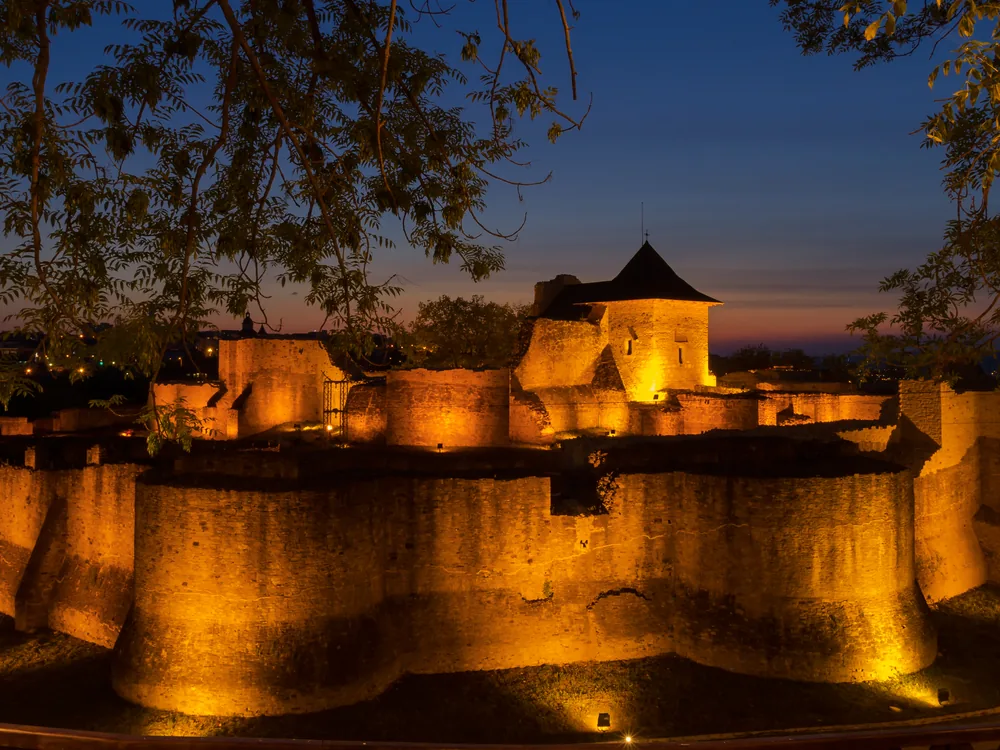
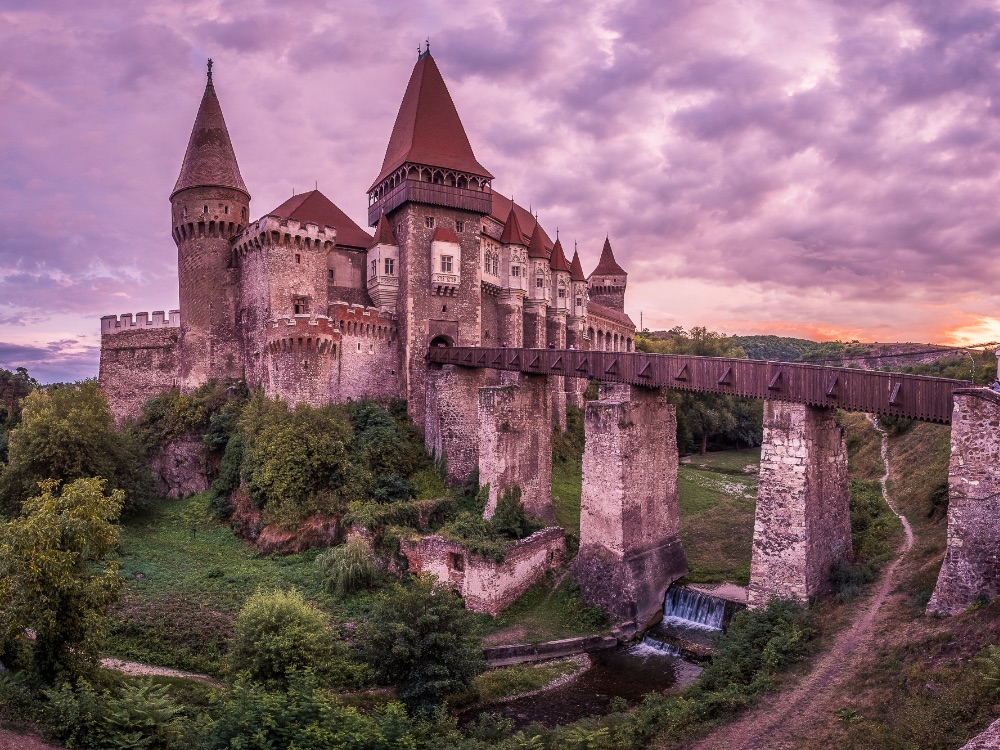
Combine with: Cetatea de Scaun a Sucevei (150 km north in Suceava — the Moldavian princely fortress that served as Stephen the Great's main residence and capital; the two citadels together bookend the geography of Stephen's Moldavia) and Corvin Castle (230 km southwest in Hunedoara — the most spectacular Gothic-Renaissance castle in Romania, built by John Hunyadi in the 15th century; a contemporary of Stephen the Great and occasional adversary, Hunyadi's castle represents the Transylvanian parallel to Neamț's Moldavian heritage).
Frequently Asked Questions
No — Neamț Citadel was never taken by direct Ottoman assault. The most significant test came in 1476 when Mehmed II, the conqueror of Constantinople who had taken most of the Balkans, led a major campaign into Moldavia following Stephen the Great's repeated refusal to pay tribute. Stephen lost the pitched Battle of the Răsboieni (Valle Albă) against the Ottoman force but retreated to Neamț Citadel, which the Ottomans were unable to capture. Mehmed II withdrew, leaving Moldavia unconquered. The citadel was later dismantled in 1711 by Dimitrie Cantemir — not to avoid Ottoman capture in the military sense, but as a tactical decision during the Russo-Ottoman War to prevent the fortress from being used against the Russian-Moldavian coalition. It was the Moldavian ruler's own decision to destroy it, not an Ottoman conquest.
Location
Cetatea Neamțului, Târgu Neamț 615200, Romania
Nearby Castles
Tours & Tickets
Powered by GetYourGuide
From
€89/ person