
Viscri Fortified Church
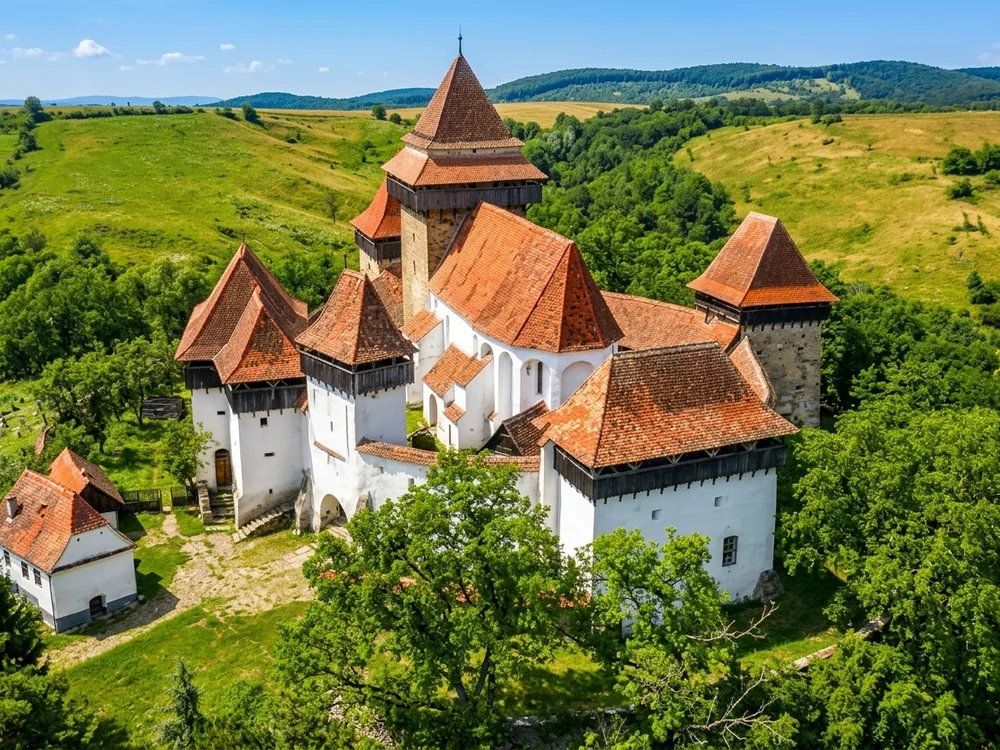
Biserica Fortificată Viscri (German: Weißkirch)
Romania · Brașov County, Transylvania · Near Brașov
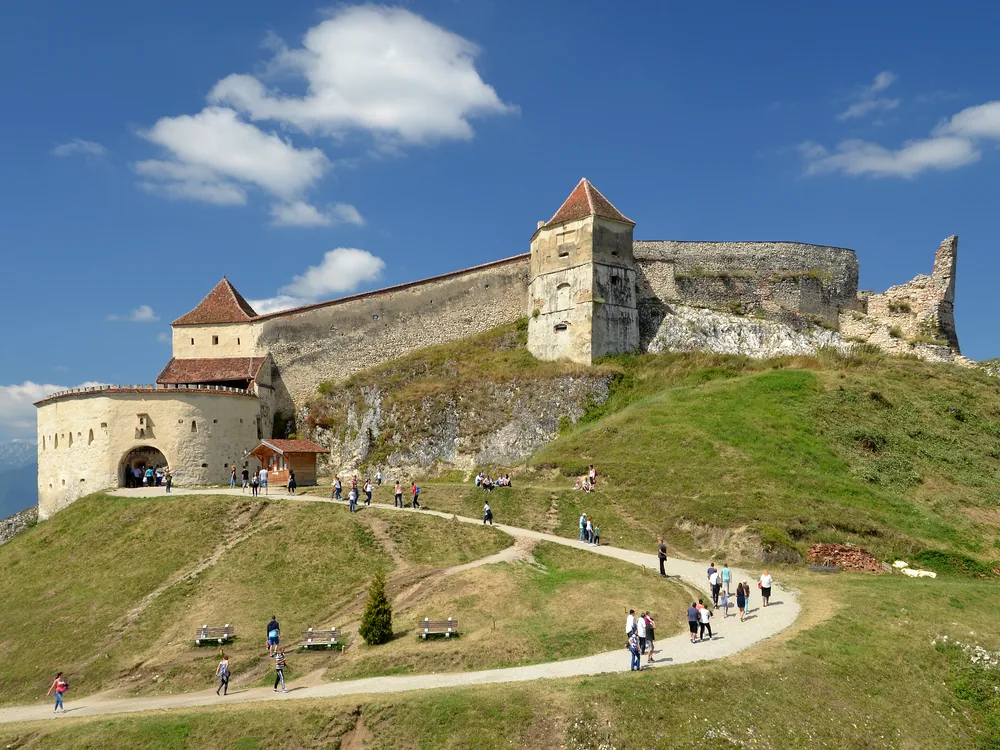
Built 1185 · Romanesque foundation (12th century, pre-Saxon Székely chapel adapted); Gothic additions 13th–15th century; characteristic circular defensive walls with three small towers; whitewashed church interior with original wooden galleries and painted decoration
This page is part of an independent travel guide and is not affiliated with, endorsed by, or operated by Viscri Fortified Church.
© Castles & Palaces
Quick Facts
- Hours
- Daily 09:00–17:00
- Day trip from
- €87
- Duration
- 45 minutes–1 hour (church and defensive walls); 2–3 hours to walk the village and surrounding landscape
- Best time
- May to September
- Nearest city
- Brașov
Featured Tour
From Brasov: Sighisoara and Viscri UNESCO Day Tour
Cancellation available · Instant confirmation
Highlights
- ✦UNESCO World Heritage Site — one of seven fortified Saxon church villages inscribed in 1993 and 1999 under 'Villages with Fortified Churches in Transylvania'; Viscri is the oldest surviving example
- ✦Romanesque Weißkirch (White Church) — the name 'Viscri' derives from the German for the whitewashed church that has marked this village on the hilltop for over 800 years
- ✦King Charles III (as Prince of Wales, then as King) purchased and restored a traditional Saxon house in Viscri — dramatically raising the village's international profile and accelerating its conservation efforts
- ✦A genuinely living village: horse-drawn carts still work the fields, Saxon farmhouses stand largely unmodified, and the community manages its own conservation work through the ADEPT Foundation
- ✦The GetYourGuide day tour from Brașov pairs Viscri (75 min guided) with Sighișoara (2.5 hrs free time) in a single excursion — small group (max 8), highly rated with a large review base
Skip the queue with a guided tour
Skip-the-line tickets & expert guides
Viscri is not a castle in the conventional sense — it has no towers designed for offensive war, no noble family at its centre, and no monarchical lineage. It is something rarer: a 12th-century Saxon village church, fortified by its community with circular defensive walls and small towers over several centuries, and still standing in an almost unchanged village where the same Saxon building types have lined the same unpaved street for 700 years. The fortification was never about power projection but about survival — a place where the village's entire population could shelter during the Ottoman and Tatar raids that swept through Transylvania repeatedly between the 14th and 17th centuries.
The church itself — Weißkirch in German, meaning 'White Church', the origin of the Romanian name Viscri — is the oldest Saxon fortified church in Transylvania. Its core is a Romanesque chapel that pre-dates the arrival of German settlers, built before 1185 by the Székely community that preceded them. When Saxon colonists arrived in the late 12th century, they absorbed the existing chapel into their own church and began fortifying the site with the defensive walls and towers that give Viscri its distinctive silhouette. UNESCO inscribed the village as part of the 'Villages with Fortified Churches in Transylvania' World Heritage Site in 1993 and 1999.
Viscri's most famous modern connection is to King Charles III of the United Kingdom, who as Prince of Wales first visited the village in the 1990s and later purchased a traditional Saxon farmhouse there, which he restored and uses for private stays. His public advocacy for the Saxon heritage of Transylvania — the traditional farming landscape, the unmodified villages, the vernacular architecture — drew international attention to what had been a largely unknown corner of Romania and contributed to the conservation work of the ADEPT Foundation, the local NGO that manages sustainable development and tourism in the area. The village remains genuinely inhabited: horses pull carts in the fields, and the farmhouses along the main street are working agricultural buildings, not heritage-project facades.
The GetYourGuide day tour from Brașov is the most convenient way to visit Viscri without a car, pairing 75 minutes of guided time at the fortified church with 2.5 hours of free time at Sighișoara Citadel in a single day. Note that the entrance fee to Viscri's fortified church is paid on-site (approximately €3), separately from the tour price.
History
The settlement at Viscri predates the Saxon colonisation of Transylvania: a Székely community built the original Romanesque chapel before 1185, when the first documented reference to the site appears. German settlers arrived in the late 12th century under the colonisation programme of the Hungarian king, integrated with the existing population, and rebuilt and enlarged the church while beginning to fortify the site. The defensive walls and towers were extended and strengthened through the 14th–16th centuries in response to the Ottoman and Tatar raids that devastated many Transylvanian settlements. The Saxon community maintained Viscri through the period of Ottoman suzerainty over Transylvania, Habsburg rule, and Romanian national integration. The post-WWII Communist period brought collectivisation and partial abandonment; the mass emigration of Transylvanian Saxons to West Germany after 1989 reduced the Saxon population to almost nothing. The Romanian families and the small remaining Saxon community now maintain the village in partnership with the ADEPT Foundation. UNESCO inscribed it as part of the 'Villages with Fortified Churches in Transylvania' heritage group.
How to Visit
Getting there: Viscri is a remote village with no public transport. By car from Brașov (~90 km), take the DN13 east toward Sighișoara, turn south at Rupea toward Bunești, and follow the unpaved track to Viscri (~3 km from Bunești). The final stretch is unpaved — a standard car is manageable in dry weather; a higher-clearance vehicle is more comfortable after rain. The GetYourGuide day tour from Brașov is the most practical option without a car — it picks up in Brașov and covers both Viscri and Sighișoara in a single day.
Tickets: Entrance to Viscri's fortified church is paid on-site in cash (approximately €3 per adult, €1 per child) — this is NOT included in the tour price (€87/person). The tour covers guide, transport, and the Sighișoara portion only; bring cash for the church entry at Viscri. The tour (max 8 guests) is a shared small-group product with high ratings for guide quality and itinerary pacing.
Practical tips: Arrive by 09:00 if travelling independently — the village is busier in the afternoon, when tour groups arrive. The ADEPT Foundation guesthouse offers accommodation in a restored Saxon farmhouse; an overnight stay is the most atmospheric way to experience Viscri outside tour-group hours. Walking the village perimeter takes about 20 minutes and gives the best views of the defensive walls and the surrounding Transylvanian countryside. Bring cash for church entry and any local food purchases — card terminals are limited.
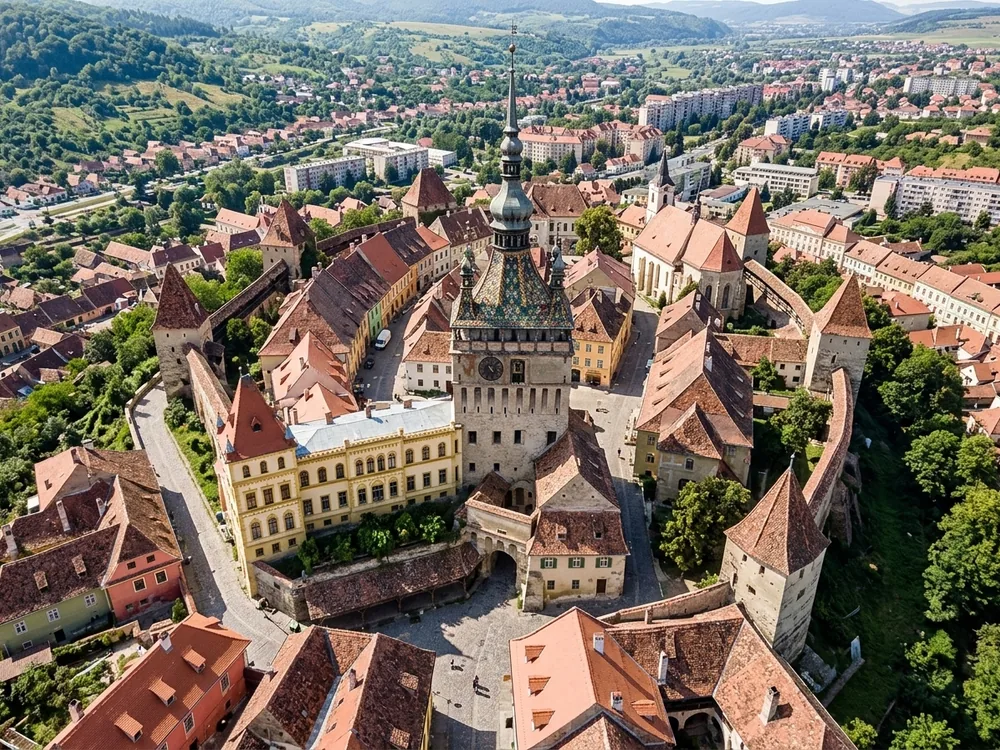
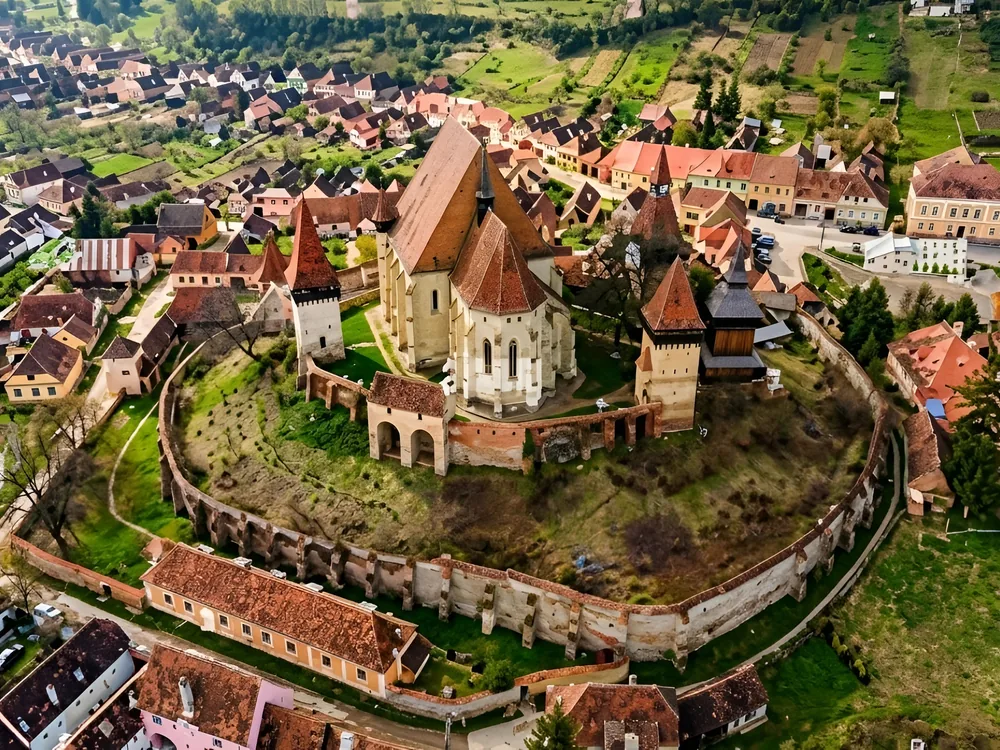
Combine with: Sighișoara Citadel (~50 km north — the UNESCO medieval fortress and birthplace of Vlad the Impaler; the tour pairs both in a single day) and Biertan Fortified Church (~70 km west — the largest and most elaborately fortified Saxon church in Transylvania, also UNESCO listed, with a three-ring defensive wall and the famous Gothic lock).
Frequently Asked Questions
Charles, then Prince of Wales, first visited Transylvania in 1998 and was struck by what he described as an 'unspoilt landscape with its ancient farming practices and extraordinary wildlife.' He later purchased and restored a traditional Saxon farmhouse in Viscri through a Romanian conservation charity, as part of a broader engagement with the vernacular architecture and farming traditions of the region. He has spoken publicly about the need to preserve the Saxon villages' agricultural landscape and building traditions against development pressure. His visits to the house (he also has properties in Viscri and in neighbouring villages) have brought sustained international attention to the fortified church villages and supported the ADEPT Foundation's conservation work.
Location
Sat Viscri, 507242 Bunești, Brașov County, Romania
Nearby Castles
Tours & Tickets
Powered by GetYourGuide
From
€87/ person