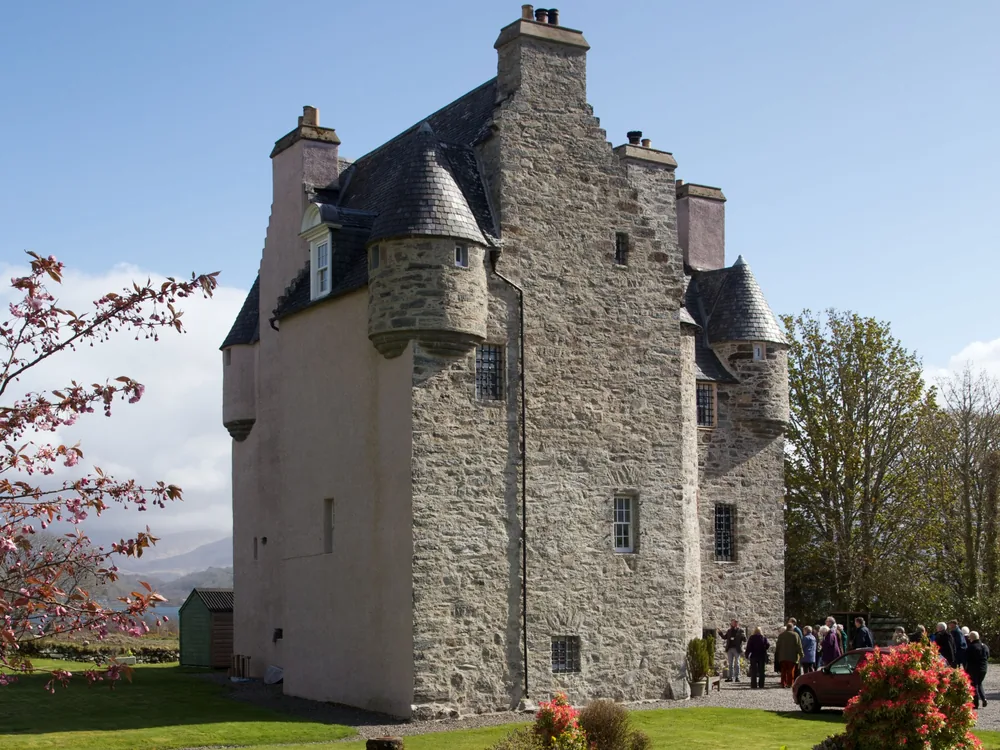
Barcaldine Castle
Scotland · Argyll — Barcaldine, near Oban · Near Oban
Built 1601 · Early 17th-century Scottish tower house, L-plan with walls roughly 9 feet thick, restored 1897–1906 with added turrets
This page is part of an independent travel guide and is not affiliated with, endorsed by, or operated by Barcaldine Castle.
© Castles & Palaces
Quick Facts
- Rooms from
- £192 / night
- Hotel rating
- ★★★★ 4-Star Hotel
- Duration
- Overnight stay only
- Best time
- Year-round
- Nearest city
- Oban
Stay Here
Barcaldine Castle
★★★★ 4-Star HotelRooms are within the historic castle building itself
Booked via Booking.com · Cancellation terms vary by rate
No day-visitor access confirmed — a small seasonal B&B, not a public attraction
Highlights
- ✦Built 1601–1609 as a military garrison post by Sir Duncan Campbell of Glenorchy, known as 'Black Duncan'
- ✦The Campbells of Barcaldine descend from Black Duncan's son Para Beg ('Little Black Patrick')
- ✦L-plan tower house with walls roughly 9 feet thick, two secret staircases, a dungeon and the castle's original iron yett still guarding the entrance
- ✦Attacked in 1692 during the aftermath of the Massacre of Glencoe
- ✦Restored 1897–1906 by Sir Duncan Campbell, 10th of Barcaldine — the exterior stone is original, the turrets were added in the restoration
Stay in the castle itself
Book a room via Booking.com
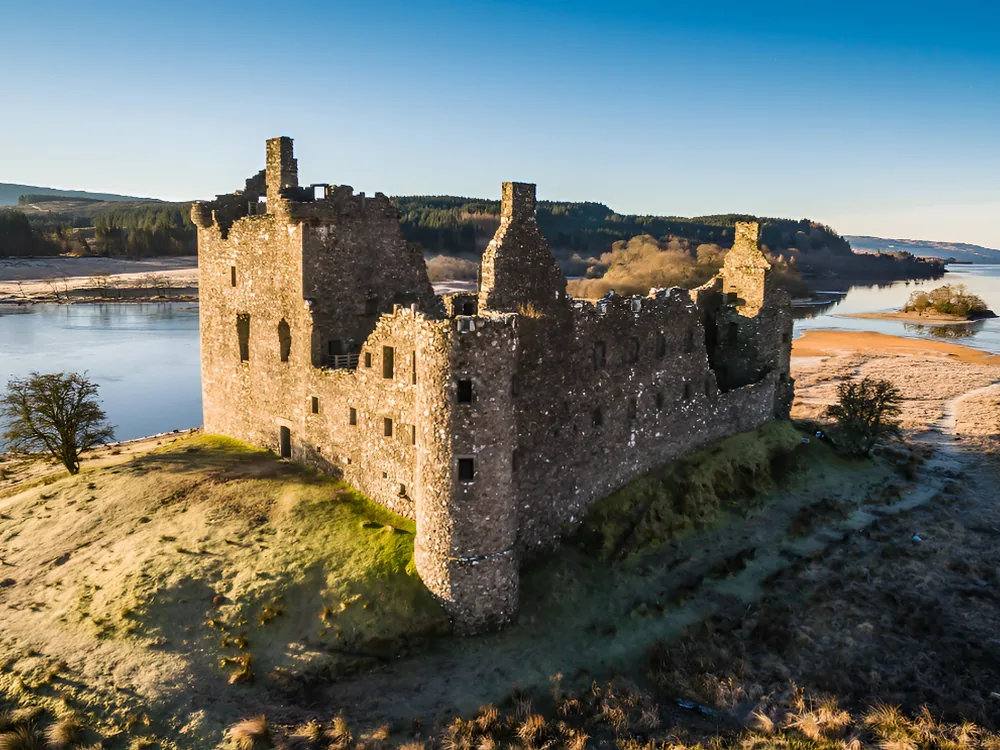
Barcaldine Castle sits on the shore of Loch Creran in Argyll, a short distance north of Oban, and its origins are unusually well documented for a Highland tower house of its age: it was built between 1601 and 1609 as a military garrison post by Sir Duncan Campbell of Glenorchy, a formidable figure in Campbell clan history remembered to this day by his nickname, Black Duncan. The castle's defensive purpose is legible in its construction — an L-plan tower house with walls roughly nine feet thick, built from local stone to withstand both the elements and the periodic violence of Highland clan politics.
The Campbells of Barcaldine, the family line that would go on to hold the castle for centuries, descend from Black Duncan's son, known by the vivid epithet Para Beg, or 'Little Black Patrick.' That inheritance placed the family, and the castle, squarely within the network of Campbell interests and rivalries that shaped so much of 17th-century Highland history. The castle's most dramatic recorded moment of violence came in 1692, when it was attacked in the turbulent aftermath of the Massacre of Glencoe — an event that remains one of the darkest chapters in Scottish clan history and one in which Campbell forces played a central, still-controversial role.
Barcaldine's interior preserves genuine features from this defensive era: two secret staircases built into the thick walls, a dungeon beneath the main structure, and — perhaps most tangible of all — the castle's original 'yett,' the heavy latticed iron gate that would have been the last line of defence at the entrance, still in place today. Few surviving Scottish tower houses retain their original yett, making it one of Barcaldine's more remarkable authentic details for visitors interested in genuine medieval and early-modern defensive architecture rather than later romantic reconstruction.
The Campbell family did not remain in continuous residence at the castle indefinitely. In 1735, the family left Barcaldine to build a more comfortable manor house in the nearby village of the same name, and the old tower house entered a long period of reduced use. It was restored between 1897 and 1906 by Sir Duncan Campbell, 10th of Barcaldine, in a project that respected the building's original character while adapting it for renewed residential life: the exterior stonework is substantially original to the 1601–1609 construction, while the turrets that give the castle its more picturesque silhouette today were added during this restoration, along with a full renovation of the interior from the great hall to the roof.
The Campbell family's long association with Barcaldine finally ended in 2009, when the castle was sold to David Whitehead, a buyer from Yorkshire, marking the first time in the castle's history that it passed outside Campbell ownership. Today Barcaldine operates as an adults-only luxury castle-hotel, its rooms furnished with views over the surrounding gardens or Loch Creran itself, and its position on the shore makes it a genuinely striking base for exploring Argyll's lochs, castles and coastline — though, unlike some of the other Scottish castle-hotels in this collection, Barcaldine's restaurant and bar remain reserved for overnight guests rather than open to casual day visitors, preserving something of the exclusivity and intimacy of a private Highland residence.
That sense of intimacy is reinforced by the castle's scale: Barcaldine remains a genuinely small, family-run operation rather than a large resort hotel, and its adults-only policy further shapes the atmosphere toward a quiet, romantic retreat rather than a family-oriented country escape. Loch Creran itself is known for its clear waters and its population of native oysters and seals, and the loch's shoreline setting gives Barcaldine a genuinely different character from the more inland castle-hotels of central Scotland — closer in spirit to the maritime history of Argyll's clan seats than to a landlocked Baronial mansion.
History
Barcaldine Castle was built between 1601 and 1609 as a military garrison post by Sir Duncan Campbell of Glenorchy, known as Black Duncan, on the shore of Loch Creran in Argyll. The Campbells of Barcaldine, who held the castle for centuries afterward, descend from Black Duncan's son Para Beg. The castle was attacked in 1692 in the aftermath of the Massacre of Glencoe. The Campbell family left the castle in 1735 to build a manor house in the nearby village, and Barcaldine underwent a major restoration between 1897 and 1906 under Sir Duncan Campbell, 10th of Barcaldine, which preserved the original 1601–1609 stonework while adding the castle's turrets and renovating the interior. The Campbell family sold the castle in 2009 to David Whitehead, ending centuries of family ownership.
How to Stay
Getting there: Benderloch, near Oban, Argyll and Bute, on the shore of Loch Creran.
Rooms & rates: All 6 individually decorated rooms are within the historic 1609 tower house itself — some with loch views, antique four-poster beds and free-standing baths.
On-site: Castle gardens overlooking Loch Creran; cooked-to-order breakfast.
Good to know: Operates as a B&B during the summer season only — check current opening dates before booking outside peak season.
Combine with: Oban town and its ferry connections to the Inner Hebrides, a short drive away.
Frequently Asked Questions
No. Barcaldine Castle operates exclusively for overnight guests — there is no public day-visit, restaurant or bar access for non-residents. This is a deliberate point of difference from several other Scottish castle-hotels, which do open a restaurant or afternoon tea to day visitors; Barcaldine has been confirmed as guest-only.
Location
Barcaldine, Argyll PA37 1SB, Scotland
Nearby Castles
Rooms from
£192/ night