
Broomhall Castle
Scotland · Clackmannanshire — Menstrie · Near Stirling
Built 1874 · Scots Baronial mansion, built 1874 by architects Francis Mackison and John Foukes
This page is part of an independent travel guide and is not affiliated with, endorsed by, or operated by Broomhall Castle.
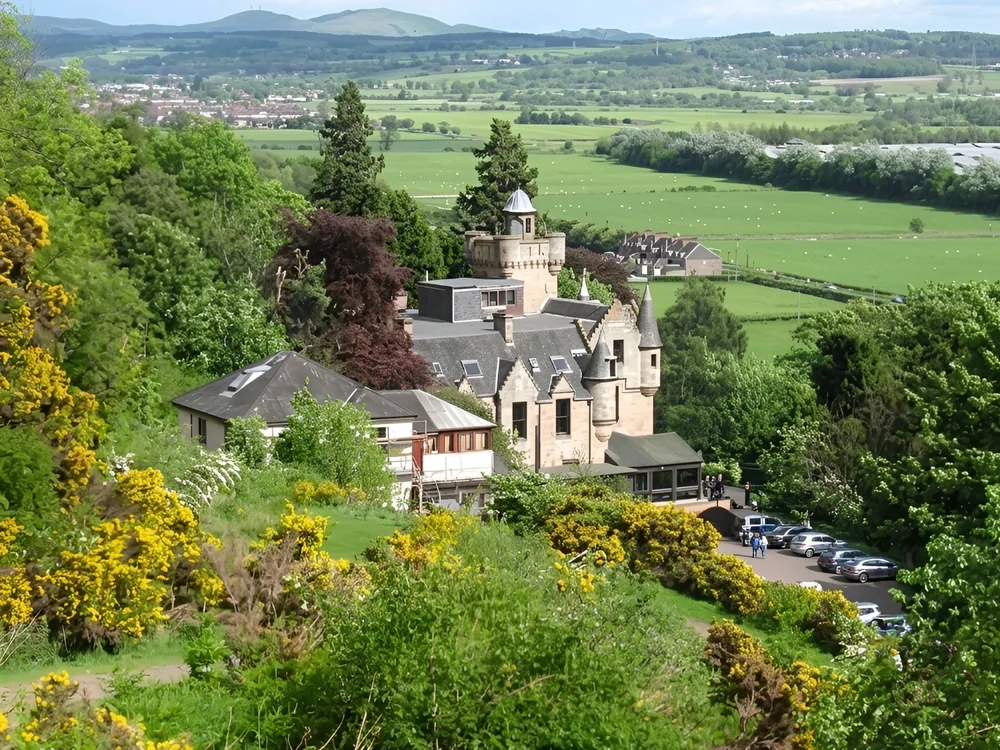
© Castles & Palaces
Quick Facts
- Rooms from
- £85 / night
- Hotel rating
- ★★★ 3-Star Hotel
- Duration
- Dinner: 1–2 hours; overnight stay separately bookable
- Best time
- Year-round
- Nearest city
- Stirling
Stay Here
Broomhall Castle Hotel
★★★ 3-Star HotelRooms are within the historic castle building itself
Booked via Booking.com · Cancellation terms vary by rate
Restaurant explicitly open 7 days/week to public and guests alike — see Highlights above
Highlights
- ✦Built in 1874 by architects Francis Mackison and John Foukes, in the Scots Baronial style popularised by Queen Victoria's own Balmoral Castle
- ✦Commissioned by local industrialist James Johnstone together with his business partner George Drummond, owners of the successful Elmbank Mill in Menstrie
- ✦Set at the foot of the Ochil Hills, 5 miles from Stirling
- ✦Views from the hotel take in Stirling Castle and the National Wallace Monument
- ✦The restaurant is open 7 days a week to non-residents and hotel guests alike for dinner, alongside two separate bars and lounges
Stay in the castle itself
Book a room via Booking.com
Broomhall Castle stands at the foot of the Ochil Hills in Menstrie, Clackmannanshire, a short distance from Stirling, and its origins lie firmly in the industrial wealth of Victorian central Scotland rather than any medieval military history. The mansion was built in 1874 by the architects Francis Mackison and John Foukes, commissioned by James Johnstone, a local industrialist, together with his business partner George Drummond. The two men owed their fortune to the Elmbank Mill in Menstrie, one of the successful textile mills that drove the local economy in this stretch of the Forth valley during the 19th century, and Broomhall was built as a suitably grand statement of that commercial success.
The architectural style chosen for Broomhall — Scots Baronial, with its turrets, crow-stepped gables and castellated silhouette — places the house firmly within one of the defining architectural trends of Victorian Scotland, a style given royal endorsement and considerable popularity through Queen Victoria's own rebuilding of Balmoral Castle earlier in the same century. For a newly wealthy industrial family like the Johnstones, adopting this style for a new-built mansion was as much a statement of aspiration and taste as it was a purely practical building decision, aligning their new fortune with an architectural language associated with ancient Scottish nobility even though the building itself had no genuine medieval past.
Broomhall's position at the foot of the Ochil Hills gives the property a genuinely striking outlook: from the house and its grounds, views extend across the Forth valley to Stirling Castle and the National Wallace Monument, two of central Scotland's most recognisable historic landmarks, visible from the hotel without needing to travel to either site directly. This panorama, combined with the surrounding hill country, makes Broomhall's setting one of the more scenic among the smaller castle-hotels in this collection.
Today Broomhall operates as a family-run, 3-star hotel with 16 en-suite rooms, each finished with exposed stone walls and generously sized beds that draw on the building's historic fabric rather than disguising it behind purely modern decor. What distinguishes Broomhall most clearly from many comparable properties, however, is the explicitness and consistency of its public dining access: the hotel's restaurant is open seven days a week to non-residents and overnight guests alike for dinner, with reservations recommended given the property's limited table capacity. Two separate bars and lounges round out the public spaces, giving visitors a choice of settings for a drink or a more relaxed evening beyond the main dining room.
For travellers based in or passing through Stirling — a natural hub for exploring central Scotland's castles, battlefields and the southern edge of the Highlands — Broomhall offers a genuinely accessible dinner destination within easy reach of the city, whether or not a room is booked for the night, set against one of the more memorable backdrops available to any smaller Scottish castle-hotel.
Menstrie itself carries its own small but distinctive place in Scottish history: it was the birthplace of Sir William Alexander, 1st Earl of Stirling, the 17th-century poet and courtier who was granted the territory that became Nova Scotia and played a central role in early Scottish colonial ventures in North America — a genuinely unexpected historical thread running through this quiet village at the foot of the Ochils, easily missed by visitors focused solely on Broomhall's own Victorian story.
History
Broomhall Castle was built in 1874 by the architects Francis Mackison and John Foukes, commissioned by the local industrialist James Johnstone together with his business partner George Drummond, owners of the successful Elmbank Mill in nearby Menstrie. The house was built in the Scots Baronial style, popularised earlier in the 19th century by Queen Victoria's rebuilding of Balmoral Castle, as a statement of the two industrialists' commercial success. Broomhall today operates as a family-run 3-star hotel with 16 en-suite rooms, its restaurant and two bars open to the public.
How to Stay
Getting there: Menstrie, Clackmannanshire, near Stirling — not to be confused with the unrelated Broomhall House in Charlestown, Fife (see FAQ).
Rooms & rates: All 10 en-suite rooms are within the historic 1874 castle building itself — no separate annex.
On-site: Restaurant, open daily to residents and non-residents.
Good to know: A genuinely single-building property built in the style of Balmoral — every room is inside the same historic structure.
Combine with: Stirling Castle and the Wallace Monument, both a short drive away.
Frequently Asked Questions
Yes. Broomhall Castle's restaurant is open seven days a week to non-residents and hotel guests alike for dinner, with reservations recommended given the property's limited tables. Two separate bars and lounges are also available for drinks or a more relaxed evening.
Location
Menstrie, Clackmannanshire FK11 7ES, Scotland
Nearby Castles
Rooms from
£85/ night