Stirling Castle
Caisteal Shruighlea
Scotland · Central Scotland · Near Stirling
Built 1110 · Renaissance palace within medieval fortress
This page is part of an independent travel guide and is not affiliated with, endorsed by, or operated by Stirling Castle.
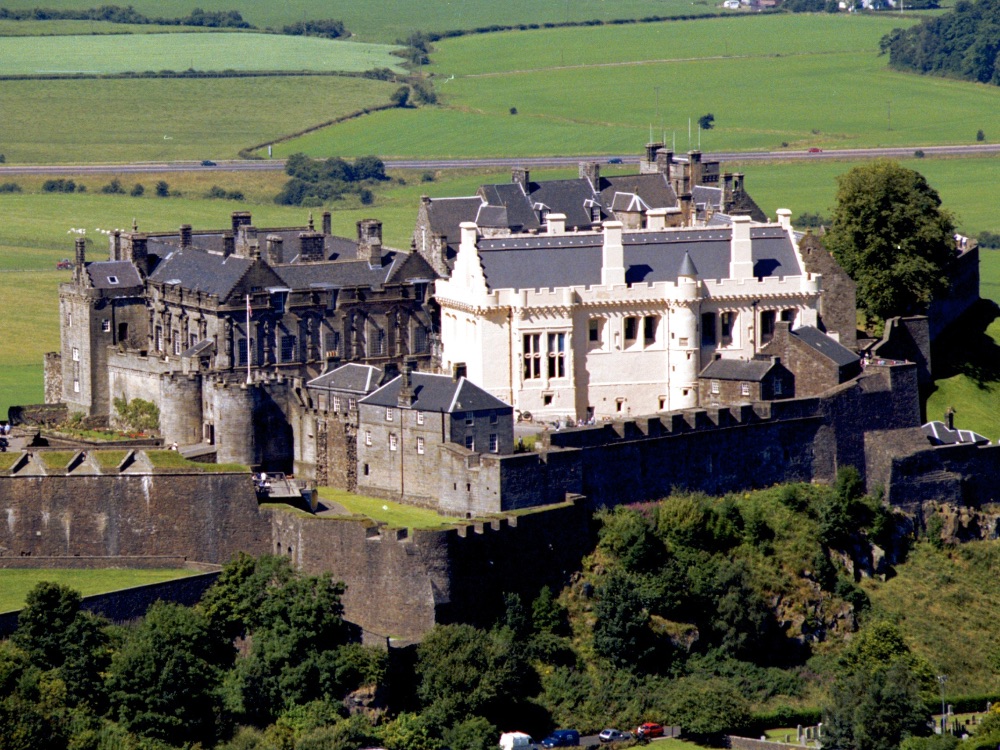
© Unsplash
Quick Facts
- Hours
- Daily 09:30–18:00
- Day trip from
- €61
- Duration
- 2–3 hours
- Best time
- May to September
- Nearest city
- Stirling
Featured Tour
From Edinburgh: Stirling Castle, Kelpies and Loch Lomond
Cancellation available · Instant confirmation
Highlights
- ✦One of the grandest Renaissance palaces in Scotland, built by James V and Mary Queen of Scots
- ✦Site of nine Scottish royal coronations, including Mary Queen of Scots and the infant James VI
- ✦The Stirling Heads — 38 extraordinary carved oak medallion portraits of Renaissance royalty
- ✦Views of the battlefield of Bannockburn (1314) from the castle ramparts
- ✦The Great Hall is the finest medieval hall in Scotland, with a hammerbeam roof
Tickets & tours
Book through GetYourGuide
Stirling Castle has been called 'the key to Scotland' — and the metaphor is geographical before it is military. The castle sits on a 76-metre volcanic rock commanding the lowest crossing point of the River Forth, the gateway between the Highlands and the Lowlands. Every army that moved north or south in Scotland for a thousand years passed within sight of this rock. Whoever held Stirling held Scotland.
Today the military reality has faded into history, but the castle is no less impressive for it. The centrepiece is the Royal Palace, built by James V between 1538 and 1542 as a statement of Renaissance magnificence to rival the courts of France, where he had been educated. Its exterior is decorated with an extraordinary sequence of sculpted figures — kings, courtiers, mythological beasts — that art historians consider one of the finest examples of Renaissance sculpture in northern Europe. Inside, the Stirling Heads: 38 carved oak medallion portraits of monarchs, nobles and mythological figures that once decorated the ceiling of the King's Inner Hall, now displayed in the palace rooms after painstaking conservation.
Stirling's history is inseparable from Scotland's defining moments. William Wallace's victory at Stirling Bridge (1297) was fought within sight of the rock. Robert the Bruce's decisive victory at Bannockburn (1314) — which secured Scottish independence for a generation — took place 2km south of the castle. Mary Queen of Scots was crowned here at nine months old in 1543. James VI, who would unite the Scottish and English crowns, spent much of his childhood within these walls.
History
The rock at Stirling has been occupied since prehistoric times, but recorded castle history begins with Alexander I, who held court here in the early 12th century. The castle's strategic importance made it the prize of the Wars of Independence: Edward I of England captured it in 1296 (having already taken Edinburgh Castle), and it changed hands repeatedly between English and Scottish forces until Robert the Bruce's victory at Bannockburn in 1314 settled the question — temporarily — in Scotland's favour.
The Stewarts transformed Stirling from a military fortress into a royal residence. James III was born here; James IV held magnificent tournaments in the lists below the castle walls. James V, who had grown up in France and absorbed Renaissance culture with enthusiasm, commissioned the Royal Palace between 1538 and 1542 — a building that imported Italian and French decorative ideas into a Scottish Gothic structure with startling originality. His daughter Mary Queen of Scots was crowned in the Chapel Royal at nine months old, having inherited the throne immediately after her father's death at Flodden.
The castle declined as a royal residence after James VI inherited the English throne in 1603 and moved his court to London. It remained a military garrison for centuries, with the army occupying much of the site until 1964. Historic Scotland (now Historic Environment Scotland) took control and began the restoration of the Royal Palace, completed in 2011 — a project that included recreating the unicorn tapestries based on the Hunt of the Unicorn series at the Cloisters Museum in New York, which scholars believe were originally woven for Stirling.
How to Visit
Getting there: Stirling is on the main Edinburgh–Glasgow railway line, with frequent direct trains from both cities (45 min from Edinburgh, 40 min from Glasgow). Stirling station is a 20-minute walk uphill to the castle, or a 5-minute taxi. By car from Edinburgh, 1 hour via M9; from Glasgow, 45 min.
Tickets: Walk-up entry €20 adult, €12 child. The GetYourGuide tour — From Edinburgh — offers a guided visit; book in advance.
Practical tips: May to September.
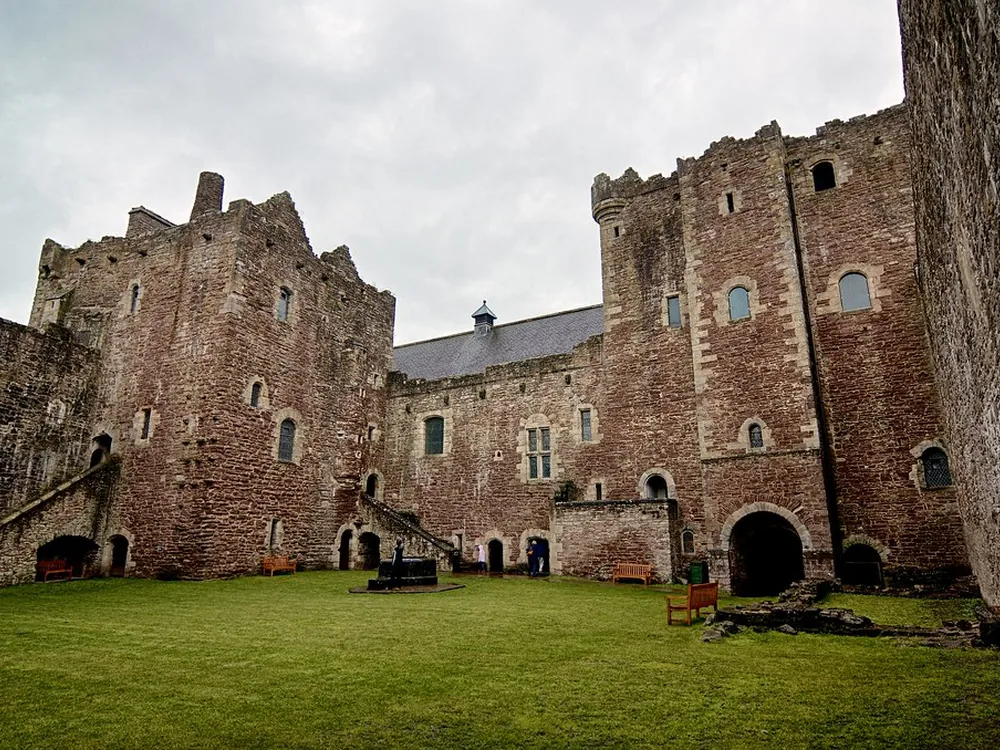
Combine with: The Wallace Monument (2km northeast of the castle, unmissable tower on the Abbey Craig) and the Bannockburn Heritage Centre (2km south) make Stirling a full day of Scottish history. Both are within easy walking distance of the town centre. Doune Castle (25km northwest) is worth the short drive if you have a car — it's the filming location for Monty Python and the Holy Grail and Game of Thrones' Winterfell exteriors.
Frequently Asked Questions
The Stirling Heads are 38 carved oak medallion portraits — depicting monarchs, courtiers, mythological figures and classical heroes — that originally decorated the ceiling of the King's Inner Hall in the Royal Palace, probably installed around 1540. They are considered the most important works of Renaissance sculpture in Scotland. The original heads, damaged and dispersed over centuries, are displayed in the palace alongside high-quality replicas in the reconstructed ceiling.
Location
Castle Wynd, Stirling FK8 1EJ, Scotland
Nearby Castles
Tours & Tickets
Powered by GetYourGuide
From
€61/ person