
Falkland Palace
Falkland Palace
Scotland · Fife · Near Cupar
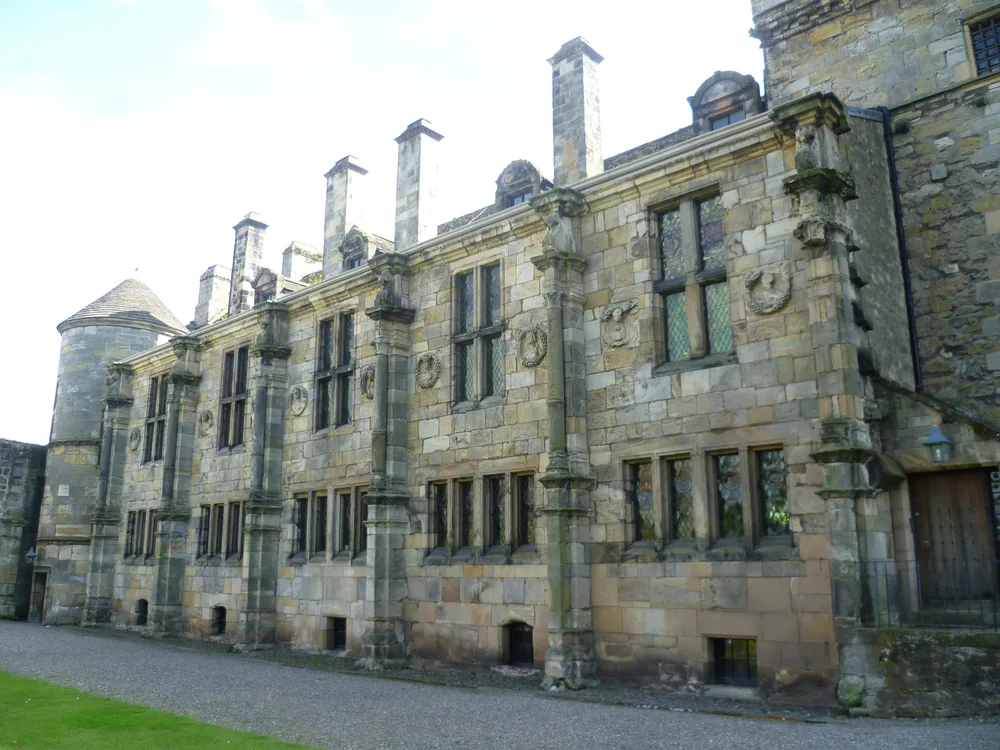
Built 1450 · French Renaissance palace on the site of a 12th-century hunting lodge; James IV and James V transformed the earlier castle into a showpiece of Franco-Scottish Renaissance architecture between c.1501 and 1541; the twin drum towers of the South Gatehouse — James V's signature addition, constructed by French master mason Nicolas Roy — are the most complete expression of French Renaissance influence on Scottish architecture of their period, directly paralleling Loire Valley château work of the same decades; the Great Hall and Chapel Royal formed the principal ceremonial spaces of the south range; the East Range was burned by Cromwell's forces in 1654 and never rebuilt, creating a preserved ruin standing adjacent to the restored south range; the 3rd Marquess of Bute undertook a historically sensitive restoration of the south range and gatehouse in the 1880s–1890s
This page is part of an independent travel guide and is not affiliated with, endorsed by, or operated by Falkland Palace.
© Castles & Palaces
Quick Facts
- Hours
- Tue–Sun 10:00–17:00. Closed Mon
- Day trip from
- €76
- Duration
- 2–3 hours
- Best time
- May to October
- Nearest city
- Cupar
Featured Tour
Edinburgh: St Andrews, Dunnottar Castle & Falkland Palace Day Tour
Cancellation available · Instant confirmation
Highlights
- ✦James V died at Falkland in December 1542 at the age of thirty — six days after news arrived that his wife Mary of Guise had given birth to a daughter at Linlithgow Palace (the future Mary Queen of Scots). His reported dying words — 'it cam wi' a lass, it will gang wi' a lass' — predicted that the Stuart dynasty would end with the same infant girl through whom it had come to power, making the palace the setting for one of the most quoted moments in Scottish royal history
- ✦The twin drum towers of the South Gatehouse are the most complete example of French Renaissance architecture in Scotland — built by French master mason Nicolas Roy for James V in the 1530s, they have direct visual kinship with Loire Valley château work of the same decades and represent the physical expression of the Franco-Scottish cultural alliance at its architectural peak
- ✦The Real Tennis court (1539) is one of the oldest surviving and still-active real tennis courts in Britain — built for James V's personal use, it predates the Hampton Court example in its documented construction date, and real tennis (the original indoor game from which lawn tennis descended) has been played here continuously for nearly five centuries
- ✦Mary Queen of Scots used Falkland regularly throughout her personal reign (1561–1567) as a place of genuine pleasure rather than political obligation — hunting, hawking, and riding in the Fife countryside — making it the only Scottish royal residence that represents the private, recreational face of Mary's character rather than the political drama of Holyroodhouse or the formality of Stirling
- ✦Cromwell's forces burned the East Range in 1654 and it was deliberately never rebuilt — the preserved ruins of the burned wing stand adjacent to the intact south range, so that a single visit encompasses both the palace's Renaissance completeness and the violence that ended its active royal life, without the false comfort of a restored ruin
Tickets & tours
Book through GetYourGuide
Falkland Palace sits in the village of Falkland, in the agricultural heartland of Fife, about twelve miles south of the North Sea fishing town of Cupar. It is not a palace in the sense of an administrative centre or a seat of government — it was never that. It was a private retreat, a country house on a royal scale, the place where the Stuart kings of Scotland came when they did not want to be kings in any formal sense. The difference matters when you visit: Falkland is not Edinburgh Castle or Stirling Castle, built to intimidate and govern. It was built to be enjoyed, and the pleasure of hunting, hawking, and tennis is written into its architecture as clearly as the politics are written into the other royal residences.
The site has been used since the 12th century as a royal hunting ground in what was then the Forest of Falkland — a managed landscape of woodland, game, and riding ground attached to an earlier castle that stood here before the present structure. James II began converting the existing castle into a more substantial residence in the mid-15th century; it was James IV (reigned 1488–1513) who began the transformation into the Renaissance palace visible today, employing French and Scottish master masons to rebuild the south range in the new Franco-Scottish architectural idiom that characterised the Scottish Renaissance. The twin drum towers of the South Gatehouse — the most immediately striking feature of the palace exterior — are the work of James V (reigned 1513–1542), who continued and accelerated his father's architectural programme. Nicolas Roy, a French master mason, directed this work; the drum towers have a direct visual kinship with the châteaux of the Loire Valley that French royal architecture was producing in the same decades.
James V's death at Falkland in December 1542 is one of the most evocative final scenes in Scottish royal history. He died at thirty years old, six days after receiving news that his wife Mary of Guise had given birth to a daughter at Linlithgow Palace. The infant was the future Mary Queen of Scots. James V's reported dying words — 'it cam wi' a lass, it will gang wi' a lass' — refer to the way the Stuart dynasty had come to the throne through Marjorie Bruce marrying Walter Stewart, and express his prediction that it would end with the infant girl just born. Whether the words are exactly his is debated, but the palace has absorbed them into its own identity: you cannot stand in the courtyard without thinking of the dying king and the news from Linlithgow.
Mary Queen of Scots used Falkland regularly throughout her personal reign (1561–1567), as a place of genuine personal pleasure rather than political obligation. She hunted, hawked, and played in the parkland and forest surrounding the palace — the kind of physical freedom that her constrained political life rarely allowed. The paintings and tapestries that hung in these rooms during her time have long since scattered, but the architectural shell she knew is largely intact.
The Real Tennis court in the north garden is one of the oldest surviving real tennis courts in Britain. Built in 1539 for James V, it predates the better-known court at Hampton Court Palace in documented construction date. Real tennis — the original indoor form of the game from which lawn tennis is derived — was the sport of Renaissance courts, played in a three-walled court with a sloping penthouse roof that forms part of the playing surface. The Falkland court is not a museum piece: it is still used, still marked and maintained for play. The survival of a working 1539 real tennis court attached to a royal palace that is also substantially intact is, by any European standard, an extraordinary preservation.
Cromwell's forces occupied and burned the East Range of the palace in 1654 during the Civil War campaigns in Scotland. The East Range was never rebuilt. The National Trust for Scotland maintains the East Range as a stabilised ruin — not demolished, not rebuilt — so that Falkland carries both its Renaissance completeness and its 17th-century destruction within the same site visit. The South Range and Gatehouse, which were not burned, remain as the primary architectural showpiece.
The 3rd Marquess of Bute — the same wealthy aristocrat who funded William Burges's Gothic Revival work at Cardiff Castle and Castell Coch in Wales — undertook a major restoration of Falkland Palace in the 1880s. Bute was a Catholic convert with a deep interest in medieval and Renaissance religious and architectural culture; his restoration was more attentive to historical precedent than many Victorian works of the same type. The National Trust for Scotland has managed the palace since 1952, when the 3rd Marquess's nephew Michael Crichton-Stuart passed it over, retaining the hereditary title of Keeper of Falkland Palace.
The walled garden behind the south range is a reconstruction of the 17th-century formal garden, maintained by the NTS with period planting. The palace exterior and interior rooms, the Real Tennis court, and the garden together make Falkland a site of considerable variety for a single visit — there is more here than most comparable royal residences of the same tier.
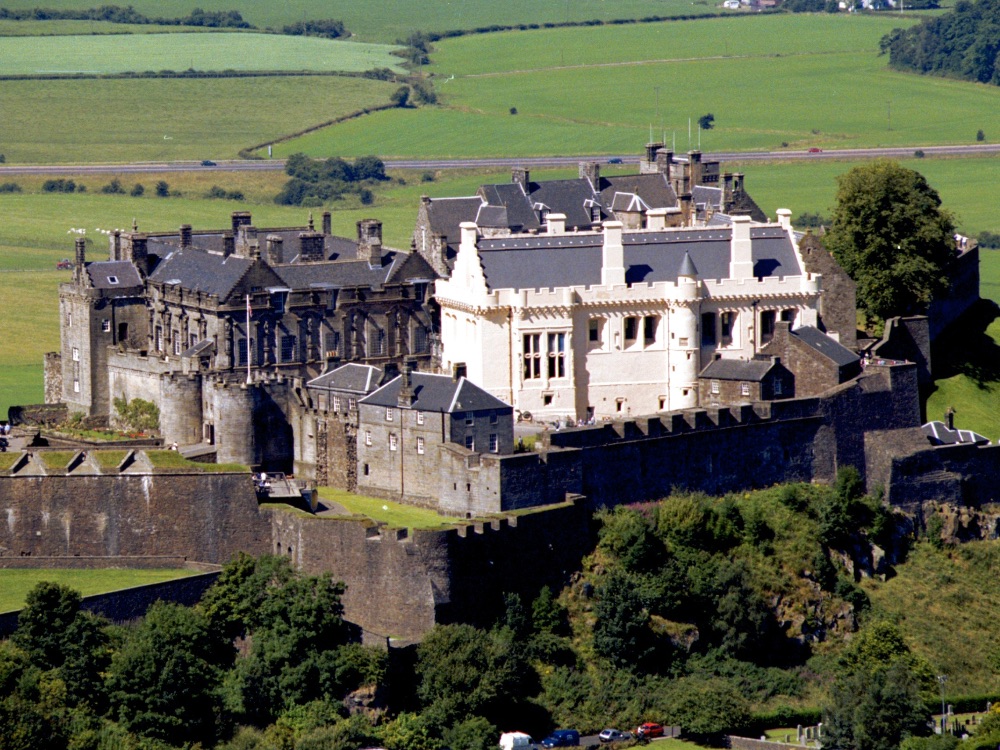
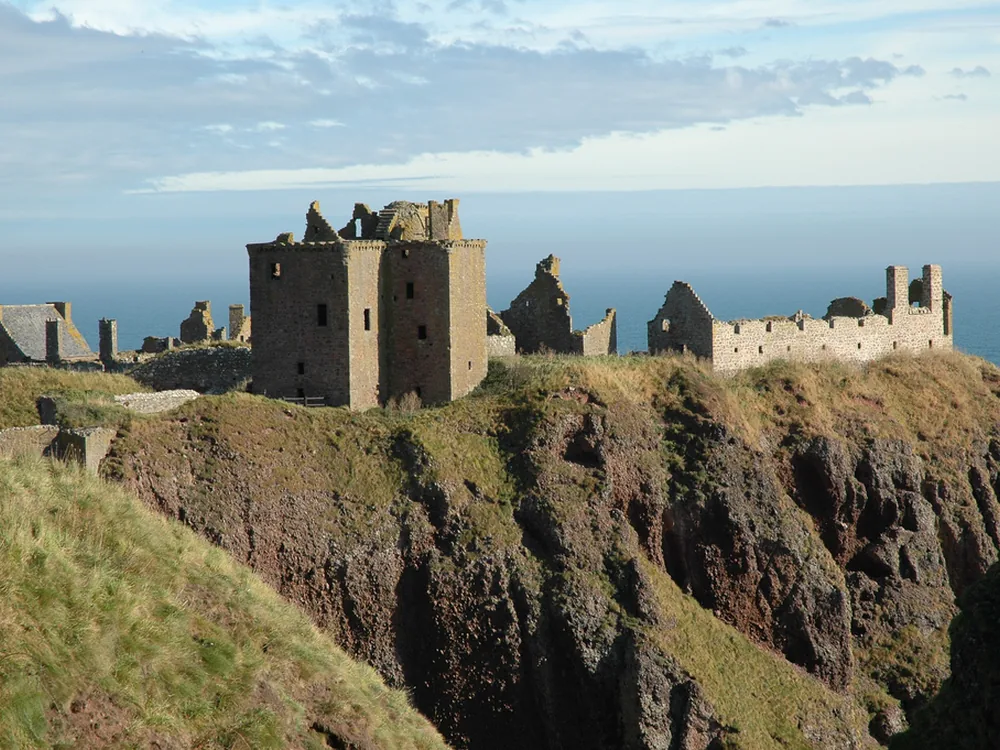
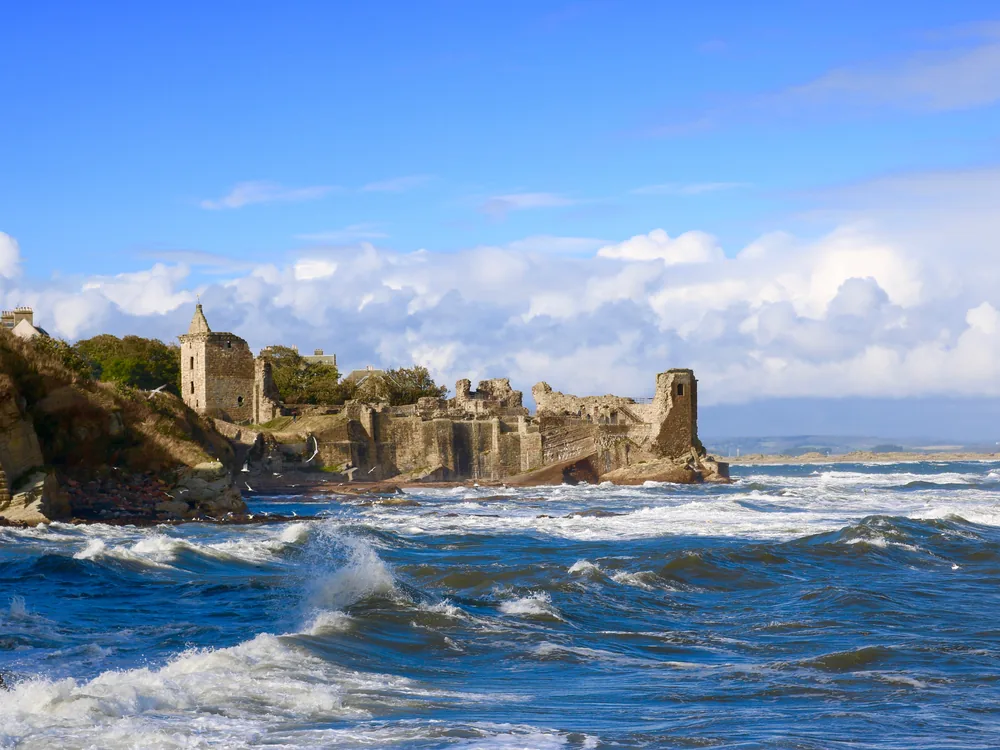
For visitors combining with other Fife and Scottish castles: St Andrews Castle, fifteen miles northeast on the North Sea coast, is the ruined episcopal palace where Cardinal Beaton's body was displayed from the walls after his assassination in 1546. [Dunnottar Castle](/castles/scotland/dunnottar-castle), on a dramatic clifftop above the North Sea, is the most visually striking castle in the northeast and appears with Falkland in the same Edinburgh day tour circuit. [Stirling Castle](/castles/scotland/stirling-castle), forty minutes west, was the formal ceremonial counterpart to Falkland's private character — where Falkland was the retreat, Stirling was the stage on which the Stuart monarchy performed its public authority.
History
The Royal Forest of Falkland was established as a hunting ground in the 12th century, with an early castle on the site recorded as a Scottish Crown possession by 1337. James II and James III made incremental improvements in the 1450s to 1501. The transformative work came under James IV, who began the major reconstruction and rebuilt the south range in Franco-Scottish Renaissance style between 1501 and 1513, employing both French and Scottish masons — one of the earliest Renaissance building projects in Scotland. James IV died at the Battle of Flodden in 1513, leaving the work unfinished.
James V completed the south gatehouse and drum towers in the 1530s to 1541, employing French master mason Nicolas Roy in work that brought the palace to its architectural peak. James V died at Falkland in December 1542, aged 30, days after learning of the birth of his daughter Mary Queen of Scots — a coincidence that made Falkland's most celebrated royal association immediately tragic. Mary herself used Falkland regularly as a hunting retreat during her personal reign from 1561 to 1567. Charles I visited in 1625, and the palace remained in active royal use through the first half of the 17th century before Cromwell's forces burned the East Range in 1654, which was never rebuilt.
The 1st Earl of Mar prepared the palace for possible Jacobite use in 1715, and further decline followed. The 3rd Marquess of Bute commissioned a major restoration of the south range and gatehouse between 1887 and 1897. The palace was transferred to the National Trust for Scotland in 1952, with the Crichton-Stuart family retaining the hereditary Keepership.
How to Visit
Getting there: Falkland is a small Fife village about 12 miles from Cupar on the A912. By car from Edinburgh take the M90 north, then the A91 and A912 — about 1 hour; parking is available in the village on High Street. By public transport: train from Edinburgh Waverley to Cupar (Edinburgh–Dundee line, about 45 minutes), then Stagecoach bus from Cupar to Falkland (roughly 20 minutes); alternatively travel to Glenrothes and change there.
Tickets: Walk-up entry £14 adult, £9 child; NTS members enter free. The Edinburgh day tour — a full-day coach trip from Edinburgh covering St Andrews, Dunnottar Castle, and Falkland Palace — is the most popular GetYourGuide option for this route; note it covers three sites across the day rather than Falkland alone; book in advance.
Practical tips: Open Tuesday to Sunday, April to October only — the palace is closed Mondays and entirely November to March; verify exact dates at nts.org.uk before travelling. Allow 2–3 hours for the palace interior, walled garden, and the 1539 Real Tennis court, which can be viewed from the garden and occasionally hosts demonstrations. May and June offer the best combination of weather and garden colour.
Combine with: Stirling Castle, the Stuart dynasty's formal ceremonial counterpart to Falkland's private character, is about 40 miles west; St Andrews Castle, the ruined episcopal palace on the North Sea coast, is 15 miles northeast and appears alongside Falkland on the GetYourGuide Edinburgh day tour.
Frequently Asked Questions
Falkland was the Stuart dynasty's private country retreat — where the kings came for hunting, hawking, and rest — rather than a seat of government or a military fortress. It is the only Scottish royal residence that gives you the private, recreational face of the Stuart court rather than its formal or military face. James V died here; Mary Queen of Scots rode and played here more freely than anywhere else she lived. The palace's character as a place of personal pleasure rather than political power is what makes it distinct.
Location
High Street, Falkland, Fife KY15 7BU, Scotland
Nearby Castles
Tours & Tickets
Powered by GetYourGuide
From
€76/ person