
Carberry Tower
Scotland · East Lothian — Musselburgh · Near Edinburgh
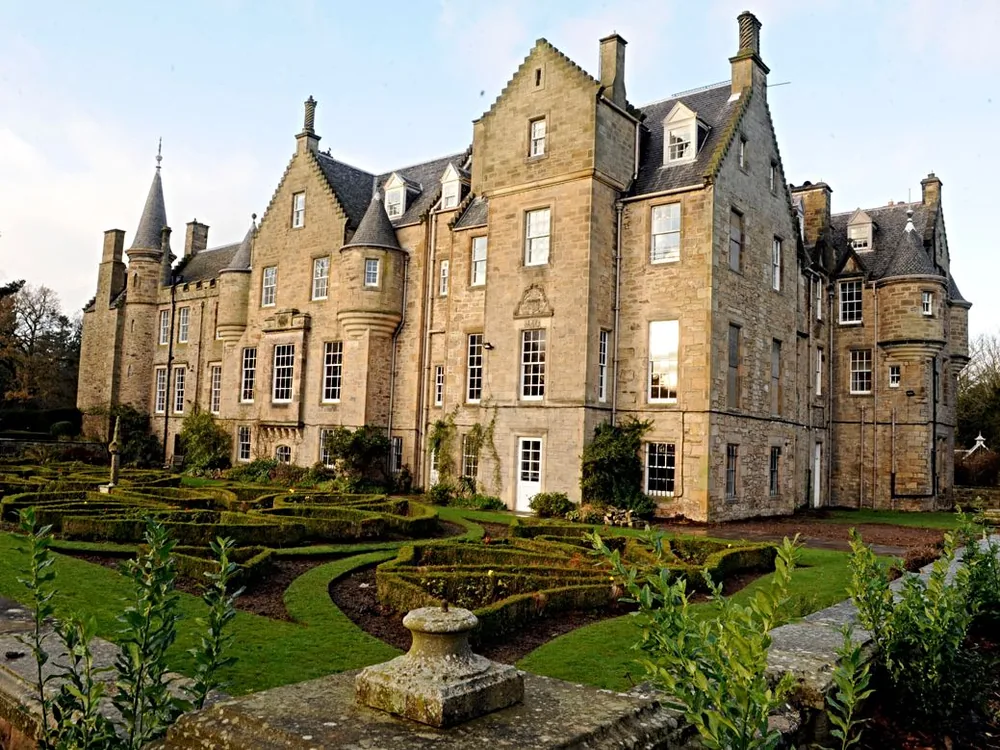
Built 1480 · 16th-century defensive tower house, four storeys with a corbelled parapet and thick walls, enlarged with a substantial mansion in 1819 remodelled by architect David Bryce
This page is part of an independent travel guide and is not affiliated with, endorsed by, or operated by Carberry Tower.
© Castles & Palaces
Quick Facts
- Rooms from
- £53 / night
- Hotel rating
- ★★★★ 4-Star Hotel
- Duration
- Bistro dining: 1–2 hours; overnight stay separately bookable
- Best time
- Year-round
- Nearest city
- Edinburgh
Stay Here
Carberry Tower Mansion House and Estate
★★★★ 4-Star HotelRooms are within the historic castle building itself
Booked via Booking.com · Cancellation terms vary by rate
Bistro open daily to non-residents, with a capacity caveat during high hotel occupancy — see Highlights above
Highlights
- ✦First recorded in 1480; a defensive square tower house of four storeys with a corbelled parapet and very thick walls was built in the 16th century
- ✦Leased to the Johnstone family in the 15th century, who built the original defensive tower; the Johnstones held it until 1541, when Hugh Rigg took a 44-year lease
- ✦In 1567, forces loyal to Mary, Queen of Scots confronted a confederation of rebel lords here — and lost, in the confrontation that led directly to her abdication soon after
- ✦Enlarged with a substantial mansion in 1819, remodelled by architect David Bryce — the same prolific Victorian architect behind Glenapp Castle and Invergarry House
- ✦Today a multi-award-winning 4-star castle-hotel set in 35 acres of parkland, which has hosted Queen Elizabeth II as a guest
Stay in the castle itself
Book a room via Booking.com
Carberry Tower stands within 35 acres of parkland near Musselburgh in East Lothian, a short distance southeast of Edinburgh, and its history reaches back to one of the more consequential single episodes in Scottish royal history. The site was first recorded in 1480, and by the 16th century a proper defensive tower house had been built here: a square, four-storey structure with a corbelled parapet projecting from the top of its walls and stonework thick enough to withstand both weather and hostile intent. The land was leased to the Johnstone family in the 15th century, who were responsible for building this original tower, and the Johnstones held Carberry until 1541, when Hugh Rigg took over the property on a substantial 44-year lease.
Carberry's single most significant historical moment came in 1567, and it is a genuinely pivotal one in the story of Mary, Queen of Scots. Forces loyal to the queen confronted a confederation of rebel Scottish lords at Carberry, and the encounter did not go Mary's way — her side capitulated without serious fighting, in a standoff that effectively ended her ability to rule and led directly to her forced abdication shortly afterward. Carberry Hill, immediately next to the tower, is remembered specifically as the site of this confrontation, making the tower an eyewitness, in effect, to one of the decisive turning points in 16th-century Scottish history, on a par with sites far better known to visitors than this quiet East Lothian estate.
Ownership of Carberry subsequently passed through the Rigg and Elphinstone families over the centuries that followed, and the estate underwent its most significant physical transformation in 1819, when the original tower was substantially enlarged with the addition of a grand mansion. That expansion was remodelled by David Bryce, one of the most prolific and influential architects of Victorian Scotland, whose Baronial-influenced work also touched Glenapp Castle on the Ayrshire coast and Invergarry House in the Great Glen — a genuine pattern of prolific output across very different parts of Scotland, reflecting just how in-demand Bryce's particular blend of historicist grandeur and domestic comfort was among 19th-century Scottish landowners.
Carberry Tower today operates as a multi-award-winning 4-star castle-hotel, its 30 guestrooms ranging from classic and executive rooms through turret suites to grander suite categories, all set within the estate's 35 acres of mature parkland. The property's guest list over the years has included Queen Elizabeth II, a detail that speaks to the level of prestige Carberry has maintained since its conversion to hospitality use, alongside its continuing role as a wedding and events venue drawing on both the historic tower and the more spacious 19th-century mansion rooms.
For day visitors, Carberry's Campaign Room Bistro — known in some more recent materials as the Hearth Restaurant — is open daily from midday until 10pm to residents and non-residents alike, offering a straightforward way to experience the estate's grounds and public rooms without booking a night's stay. One practical note worth knowing: during periods of high hotel occupancy or exclusive-use bookings, the property may need to prioritise resident reservations over non-resident tables, so calling ahead to confirm availability is a sensible precaution rather than assuming a table will always be guaranteed on arrival.
Carberry Hill itself remains a quietly significant piece of ground beyond the tower's own walls — the site of the 1567 standoff is remembered in Scottish history as the effective end of Mary's personal rule, distinct from the later, more decisive military defeat at the Battle of Langside the following year that finally forced her into exile in England. Visitors with an interest in the queen's turbulent final years as an active monarch will find Carberry a meaningful, if less-visited, complement to better-known Marian sites such as Holyroodhouse and Loch Leven — a place where a single tense afternoon changed the course of Scottish royal history without a battle ever actually being fought.
History
Carberry was first recorded in 1480. The land was leased to the Johnstone family in the 15th century, who built the original 16th-century defensive tower house, a four-storey structure with a corbelled parapet and thick walls. The Johnstones held Carberry until 1541, when Hugh Rigg took a 44-year lease. In 1567, forces loyal to Mary, Queen of Scots confronted a confederation of rebel lords at Carberry and were forced to capitulate, a confrontation that led directly to the queen's abdication soon afterward. Ownership subsequently passed through the Rigg and Elphinstone families, and in 1819 the tower was substantially enlarged with a grand mansion, remodelled by the architect David Bryce. Carberry Tower today operates as a multi-award-winning 4-star hotel that has hosted Queen Elizabeth II as a guest.
How to Stay
Getting there: Inveresk, near Musselburgh, East Lothian.
Rooms & rates: 30 rooms across the four-storey main building, which combines the original 16th-century tower house with the large 1819 mansion wing (remodelled by architect David Bryce) — both sections are genuinely historic, not a modern extension.
On-site: Bistro restaurant, grounds.
Good to know: Unlike some properties in this collection, there's no modern annex here — every room sits within the combined 16th/19th-century building complex.
Combine with: Musselburgh and Edinburgh city centre, both a short drive away.
Frequently Asked Questions
Yes. The Campaign Room Bistro, also referred to in more recent materials as the Hearth Restaurant, is open daily from midday to 10pm to residents and non-residents alike. During periods of high hotel occupancy or exclusive-use bookings, non-resident reservations may occasionally be limited to prioritise guests, so calling ahead to confirm availability is recommended rather than assuming a table is guaranteed.
Location
Carberry, Musselburgh, East Lothian EH21 8PZ, Scotland
Nearby Castles
Rooms from
£53/ night