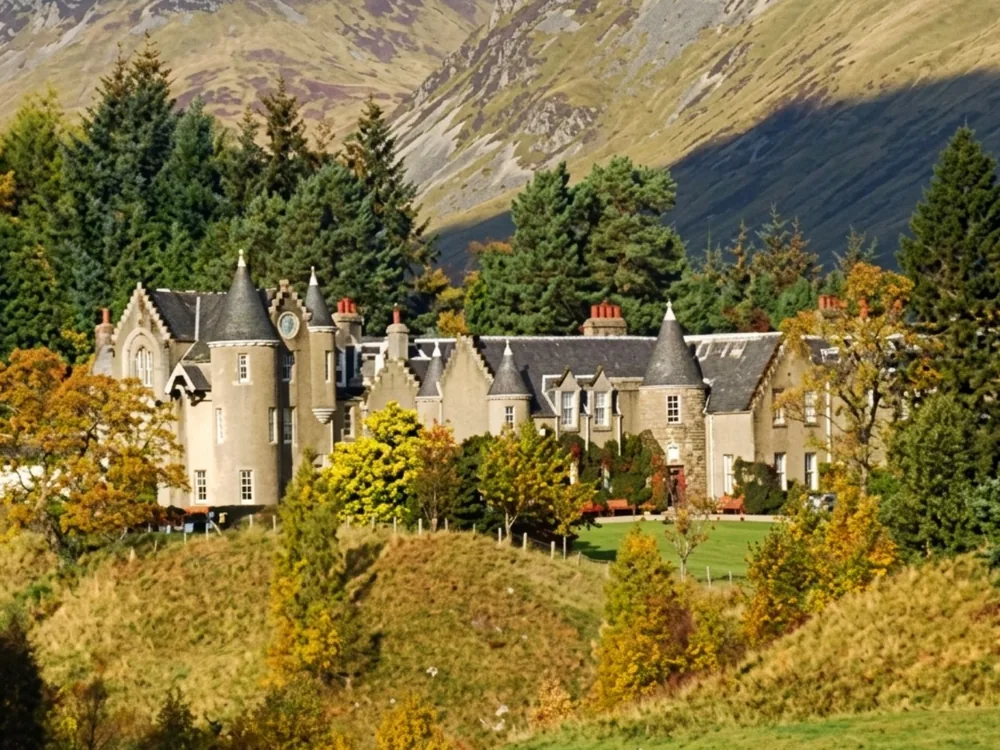
Dalmunzie Castle
Scotland · Perth and Kinross — Spittal of Glenshee · Near Blairgowrie
Built 1510 · Late 19th-century Scots Baronial house, built on an estate first recorded in 1510, with an earlier castle on the site already ruined by the 17th century
This page is part of an independent travel guide and is not affiliated with, endorsed by, or operated by Dalmunzie Castle.
© Castles & Palaces
Quick Facts
- Rooms from
- £170 / night
- Hotel rating
- ★★★ 3-Star Hotel
- Duration
- Golf: half a day; restaurant access for non-residents subject to availability; overnight stay separately bookable
- Best time
- Golf season: mid-April to mid-October
- Nearest city
- Blairgowrie
Stay Here
Dalmunzie Castle Hotel
★★★ 3-Star HotelRooms are within the historic castle building itself
Booked via Booking.com · Cancellation terms vary by rate
No day-visitor access confirmed — a private country-house hotel on a working 6,500-acre estate
Highlights
- ✦Estate first documented in 1510, when Sir William Scott granted the lands, including Dalmunzie, to John Fergusson of Dunfallandy
- ✦Held later by the Mackintosh family — Robert Mackintosh, 3rd of Dalmunzie, fought for the Marquess of Montrose in 1645; other family members fought for the Jacobites in the 1715 Rising and at Culloden in 1746
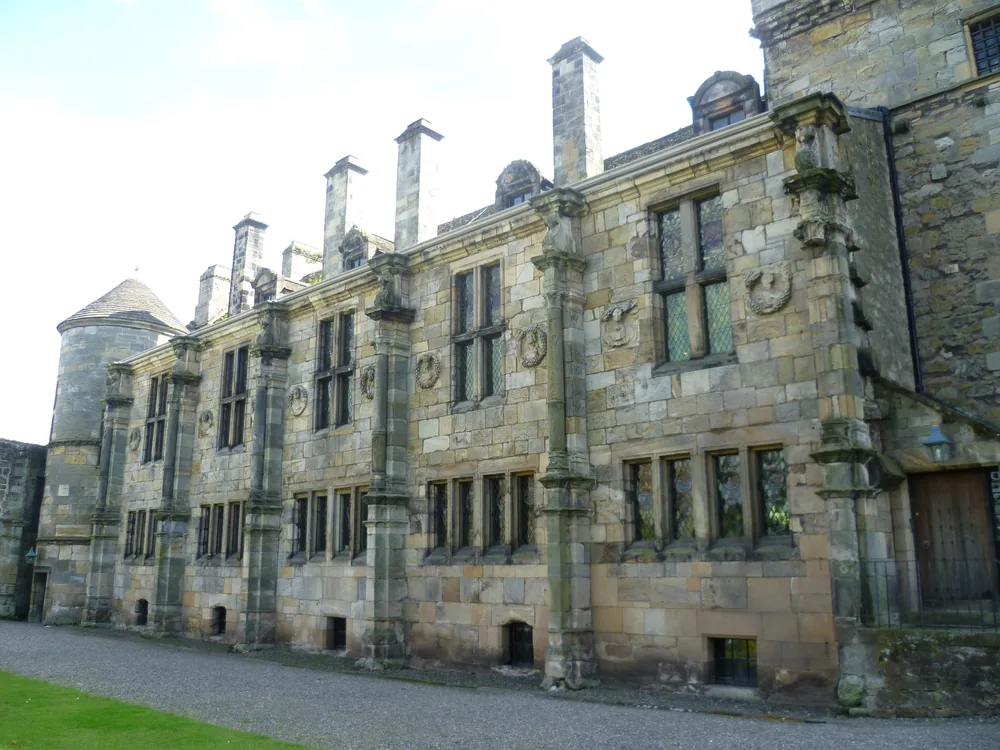
- ✦The current Scots Baronial house dates to the late 19th century; an earlier castle on the site was already in ruins by the 17th century
- ✦Bought in 1920 by Sir Archibald Birkmyre, who expanded the house, laid out a golf course, and built a private railway to reach the remote estate
- ✦Served as a base for a mountain artillery regiment during the Second World War; sold in 1946 and operating as a hotel ever since — today a 17-room boutique country hotel
Stay in the castle itself
Book a room via Booking.com
Dalmunzie Castle sits deep within a 6,500-acre Highland Perthshire estate at Spittal of Glenshee, on the southern edge of the Cairngorms National Park, in one of the more remote settings among Scotland's castle-hotels. The estate's documented history reaches back to 1510, when Sir William Scott granted the lands — including Dalmunzie — to John Fergusson of Dunfallandy. Ownership passed subsequently to the Fergussons of Dunfallandy and then to the MacRitchie family; two members of that family, Robert MacRitchie and his son, were outlawed in 1584 and 1589 respectively, a detail that hints at the turbulent, semi-lawless character of Highland landholding disputes in this period.
The family later associated most closely with Dalmunzie is also recorded under the name Mackintosh, and their history at the estate spans some of the most consequential conflicts in Scottish history. Robert Mackintosh, 3rd of Dalmunzie, fought on the side of the Marquess of Montrose in 1645, during the civil wars that convulsed Scotland at the time. Generations later, members of the Mackintosh family fought for the Jacobite cause, both in the 1715 Rising and at the decisive Battle of Culloden in 1746 — placing Dalmunzie's family history squarely within the broader Jacobite story that shaped so much of the Highlands' 18th-century experience. Notably, the castle that stood on the estate during these earlier centuries was already in ruins by the 17th century; the Scots Baronial house visitors encounter today dates only to the late 19th century, built well after the original fortification had been lost.
The Mackintosh family held Dalmunzie until 1916, when the last laird died without heirs, bringing centuries of family continuity at the estate to an end. The property was sold in 1920 to Sir Archibald Birkmyre, who undertook a significant expansion of the house and left two lasting marks on the estate that still define its character today: he laid out a golf course, and — in a striking display of the scale of ambition brought to bear on even the most remote Scottish estates in this period — built a private railway specifically to reach the estate, underscoring just how isolated Dalmunzie's setting in Glenshee genuinely was and remains.
During the Second World War, the estate served as a base for a mountain artillery regiment, a role suited to the surrounding terrain's steep glens and exposed high ground. Dalmunzie was sold in 1946 and has operated as a hotel ever since, evolving today into a 17-room boutique country hotel that trades on genuine remoteness and estate access rather than a conventional town or coastal setting.
The estate's nine-hole golf course remains explicitly open to the public, not just hotel guests, running from mid-April through to mid-October, with green fees payable at reception — a clear and confirmed point of non-resident access. The restaurant and bar present a more mixed picture: while the hotel describes itself as welcoming non-residents, at least one visitor account has reported being unable to secure a table without being a guest, so prospective day visitors are better served treating the golf course as the reliable public draw and checking availability for dining rather than assuming a table will be guaranteed.
History
The Dalmunzie estate was first documented in 1510, when Sir William Scott granted the lands to John Fergusson of Dunfallandy. Ownership passed to the Fergussons of Dunfallandy and then to the MacRitchie family, two of whom were outlawed in 1584 and 1589. The family later associated with Dalmunzie, also recorded as Mackintosh, held the estate through several major conflicts: Robert Mackintosh, 3rd of Dalmunzie, fought for the Marquess of Montrose in 1645, and later Mackintoshes fought for the Jacobite cause in the 1715 Rising and at Culloden in 1746. An earlier castle on the estate was already in ruins by the 17th century; the current Scots Baronial house dates to the late 19th century. The Mackintosh family held Dalmunzie until 1916, when the last laird died without heirs. The estate was sold in 1920 to Sir Archibald Birkmyre, who expanded the house, laid out a golf course and built a private railway to reach the property. It served as a base for a mountain artillery regiment during the Second World War, was sold in 1946, and has operated as a hotel ever since.
How to Stay
Getting there: Spittal of Glenshee, Perth and Kinross.
Rooms & rates: All 19 individually designed rooms are within the historic 1910 Laird's mansion itself, including three tower rooms that were once home to the Laird — no separate annex or wing.
On-site: 6,500-acre estate grounds dating back to 1510.
Good to know: A genuinely remote Highland estate — factor in driving distance from the nearest town when planning arrival.
Combine with: The Cairnwell Pass and Glenshee Ski Centre, both close by.
Frequently Asked Questions
Yes. The estate's nine-hole golf course is explicitly open to the public, not just hotel guests, running from mid-April to mid-October, with green fees paid at reception. This is the most reliably confirmed form of non-resident access at Dalmunzie — the restaurant and bar present more mixed signals, so it's worth checking availability for dining in advance rather than assuming a table without a room booking.
Location
Spittal of Glenshee, Blairgowrie, Perth and Kinross PH10 7QG, Scotland
Nearby Castles
Rooms from
£170/ night