
Faside Estate
Scotland · East Lothian — near Tranent · Near Edinburgh
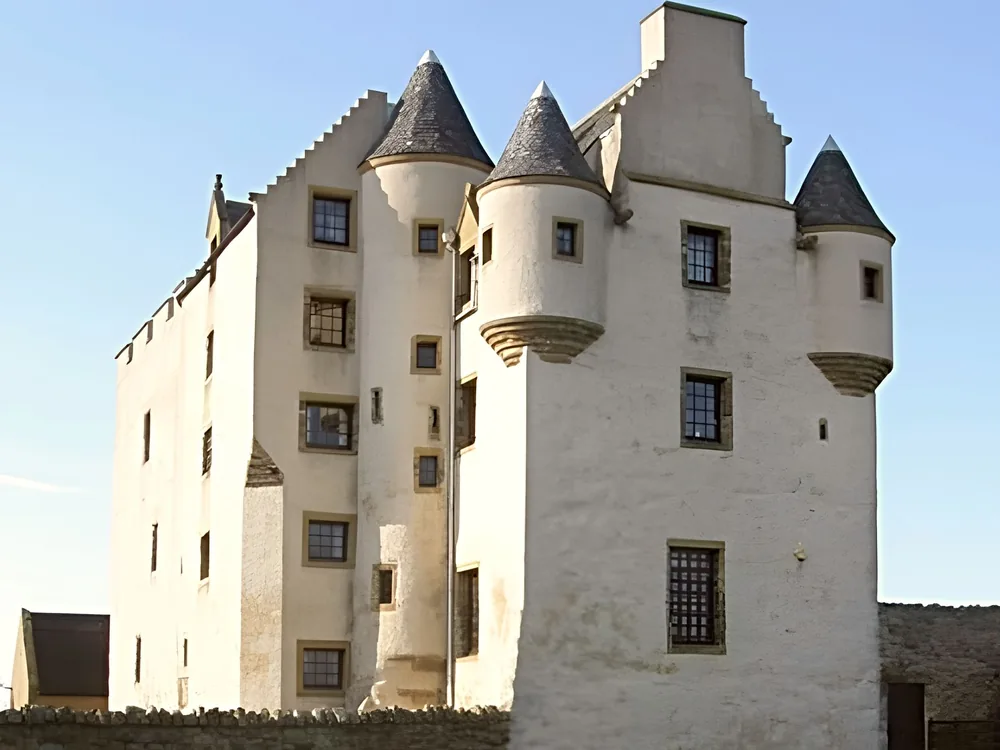
Built 1189 · Medieval tower house on a prominent ridge, with a house added alongside it in 1618; restored in the 1980s and Category B listed
This page is part of an independent travel guide and is not affiliated with, endorsed by, or operated by Faside Estate.
© Castles & Palaces
Quick Facts
- Rooms from
- £195 / night
- Duration
- No casual day-visit or restaurant access — bookable overnight by the room, or exclusively for private events and weddings
- Best time
- Year-round for private bookings
- Nearest city
- Edinburgh
Stay Here
Faside Estate
Rooms are within the historic castle building itself
Booked via Booking.com · Cancellation terms vary by rate
No day-visitor access — the Tower is rented as a single exclusive-use property, similar to Ballindooley Castle in Ireland
Highlights
- ✦The name dates to 1189, when monks of Newbattle Abbey granted the land to Saer de Quincy, 1st Earl of Winchester, to build a castle — a fortification is believed to have already stood on this prominent ridge since the 11th century
- ✦Held by the Fawside family through the 13th and 14th centuries; confiscated from Alexander de Such by Robert the Bruce
- ✦Overlooked the Battle of Pinkie in 1547 — the last pitched battle fought between Scotland and England as separate nations, with the Duke of Somerset commanding English forces from a position beside the castle
- ✦A new house was built alongside the older castle in 1618; the estate appears absent from window tax records between 1748 and 1798, suggesting it stood empty for much of that period
- ✦Restored in the 1980s and now Category B listed; today bookable by the room as a bed-and-breakfast from around £195/night, or hired exclusively for private events, weddings and luxury retreats
Stay in the castle itself
Book a room via Booking.com
Faside Estate occupies a commanding ridge near Tranent in East Lothian, roughly midway between Musselburgh and the town itself, and its name carries a documented history stretching back further than almost any other property in this collection. The name itself dates to 1189, when monks from Newbattle Abbey granted this land to Saer de Quincy, who would go on to become the 1st Earl of Winchester, specifically so that he could build a castle here — though local tradition and archaeological evidence both suggest some form of fortification had already occupied this prominent, defensible ridge since as early as the 11th century, well before de Quincy's formal grant.
Ownership in the centuries that followed passed through several hands typical of medieval Scottish landholding disputes: the property belonged at one point to Alexander de Such, before being confiscated by Robert the Bruce, whose consolidation of royal authority in the early 14th century involved exactly this kind of redistribution of contested estates. The Fawside family — whose name is directly reflected in the estate's own — held the property through the 13th and 14th centuries, with specific individuals recorded in the historical record: Thomas de Fawside, a knight, appears in 1376, and William and Gavin of Fawside are both documented in 1476, giving Faside an unusually well-preserved thread of named medieval ownership.
The estate's single most significant historical moment came in 1547, when it found itself overlooking the Battle of Pinkie — a genuinely consequential engagement remembered as the last pitched battle fought between Scotland and England as fully separate nations, before the eventual union of the crowns reshaped the relationship between the two countries. The Duke of Somerset commanded the English forces from a position immediately beside the castle, placing Faside at the literal centre of one of the defining military encounters in Anglo-Scottish history.
A new house was built alongside the older castle structure in 1618, and the estate's fortunes fluctuated considerably in the centuries that followed: it was sold in 1631 to an Edinburgh merchant named Hamilton, and its notable absence from window tax records between 1748 and 1798 — a period when most substantial houses of this kind would be expected to appear in such records — strongly suggests the property stood empty or largely unused for much of the later 18th century. Faside's more recent history has been considerably kinder: the estate was restored in the 1980s and now holds Category B listed status, Scotland's official recognition of buildings of particular architectural or historic interest.
Faside's booking model sits somewhere between the two ends of the castle-accommodation spectrum. The estate is actively promoted for exclusive-use private events, weddings and luxury retreats, where a booking secures the entire castle and grounds for the duration of the stay — the kind of arrangement more common at dedicated event venues than at a conventional hotel. At the same time, its own Booking.com listing operates on more familiar terms, offering individual room-style bookings, from roughly £195 per night, in a bed-and-breakfast format alongside self-catering holiday lets on the grounds such as the estate's own tower accommodation. Prospective visitors should approach Faside with that dual identity in mind: there is no restaurant or casual day-visit access here, but a room can be booked without necessarily hiring the whole property, and current rates and availability for either option are best confirmed directly through the booking link.
History
The name Faside dates to 1189, when monks of Newbattle Abbey granted the land to Saer de Quincy, later 1st Earl of Winchester, to build a castle, though a fortification is believed to have already stood on the site since the 11th century. The property belonged to Alexander de Such before being confiscated by Robert the Bruce, and was held by the Fawside family through the 13th and 14th centuries, with Thomas de Fawside recorded as a knight in 1376 and William and Gavin of Fawside recorded in 1476. In 1547, Faside overlooked the Battle of Pinkie, the last pitched battle fought between Scotland and England as separate nations, with the Duke of Somerset commanding English forces from beside the castle. A new house was built alongside the castle in 1618, the estate was sold to an Edinburgh merchant named Hamilton in 1631, and its absence from window tax records between 1748 and 1798 suggests it stood largely unused during that period. Faside was restored in the 1980s and is now Category B listed.
How to Stay
Getting there: about 10 miles east of Edinburgh city centre, near Tranent, East Lothian.
Rooms & rates: The entire accommodation is the 14th-century castle Tower itself, rented as a single exclusive-use property on two levels, including private use of the Great Hall.
On-site: Self-contained — Great Hall with fireplace and log-burning stove, roof-top walkway with panoramic Firth of Forth views; no shared restaurant.
Good to know: This is a whole-tower rental for one party at a time, not a room-by-room hotel — best suited to a couple or small group wanting the entire historic tower to themselves.
Combine with: Edinburgh city centre, about 30 minutes away.
Frequently Asked Questions
Yes — Faside Estate's own Booking.com listing offers individual room-style bed-and-breakfast bookings, from roughly £195 per night, alongside self-catering holiday lets on the grounds. Separately, the estate is also promoted for exclusive-use hire of the entire castle and grounds for private events, weddings or luxury retreats. There is no restaurant or casual day-visit access, but a standard room booking does not require hiring the whole property.
Location
Tranent, East Lothian EH33 2LE, Scotland
Nearby Castles
Rooms from
£195/ night