
Studenica Monastery
Manastir Studenica
Serbia · Raška District, near Ušće, central Serbia · Near Kraljevo
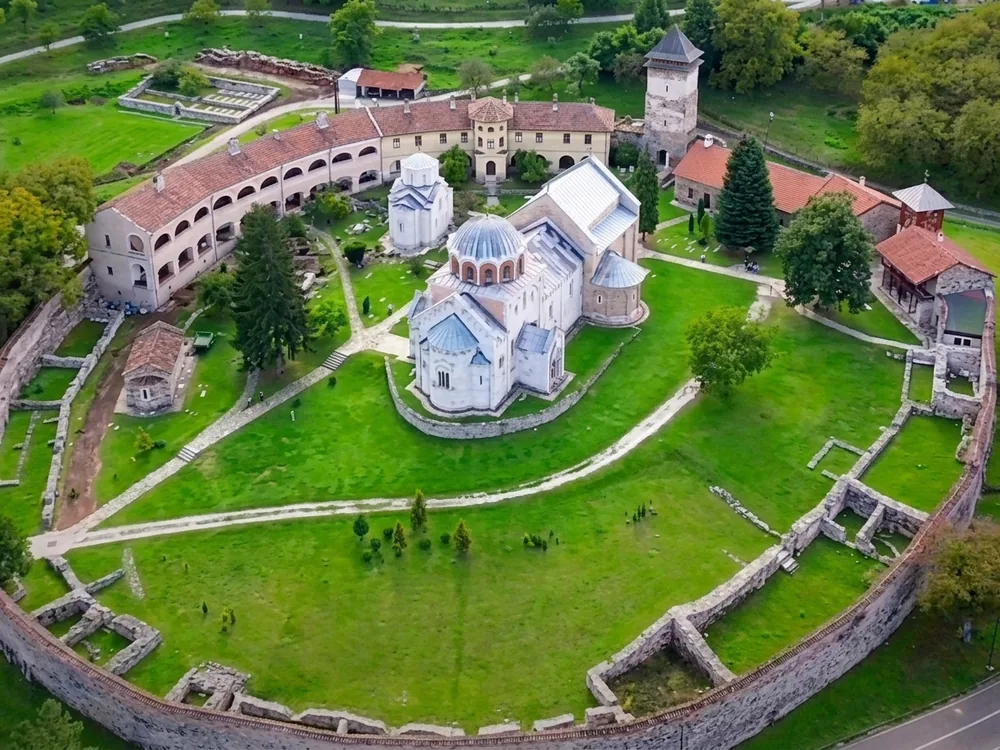
Built 1190 · Late 12th-century fortified Serbian Orthodox monastery complex; the Church of the Theotokos (the Virgin, 1190s) and the Church of the King (1314) are Romanesque-Byzantine hybrid structures in white marble, surrounded by fortified walls with towers; the frescoes in both churches are among the finest surviving examples of Byzantine and early Serbian painting from the 13th–14th centuries
This page is part of an independent travel guide and is not affiliated with, endorsed by, or operated by Studenica Monastery.
© Castles & Palaces
Quick Facts
- Hours
- Daily 07:00–20:00
- Guided tour from
- €129
- Duration
- 1.5–2 hours; full day on the GetYourGuide Belgrade tour with Žiča Monastery
- Best time
- April to October
- Nearest city
- Kraljevo
Featured Tour
From Belgrade: Studenica Monastery & Žiča Monastery
Cancellation available · Instant confirmation
Highlights
- ✦Founded by Stefan Nemanja — Studenica was established in the late 12th century by the founder of the Serbian Nemanjić dynasty, Stefan Nemanja, who abdicated his throne and became the monk Simeon to spend his final years here; after his death, his son (the future Saint Sava, founder of the independent Serbian Orthodox Church) brought his relics back to Studenica, making it the most sacred monastery in Serbia
- ✦UNESCO World Heritage Site — Studenica Monastery is inscribed on the UNESCO list (1986) as an outstanding example of the Raška school of Serbian medieval architecture, combining Romanesque sculptural elements with Byzantine spatial organisation in a synthesis that is uniquely Serbian
- ✦The 13th–14th century frescoes — the churches of Studenica contain Byzantine-era frescoes of exceptional quality; the Crucifixion in the Church of the Theotokos (late 13th century) is one of the most important surviving examples of medieval Serbian painting, and the Church of the King adds a further 14th-century cycle of equal standing
- ✦A functioning Serbian Orthodox monastery — Studenica is an active monastic community, not a museum; monks live and pray within the fortified walls, and the monastery maintains the Serbian tradition of hospitality to pilgrims and visitors. The complex includes two principal churches, the refectory, and the monks' quarters within fortified marble walls
- ✦The GetYourGuide private day tour from Belgrade combines Studenica with Žiča Monastery in a 12-hour programme; hotel pickup from Belgrade, private transport, and professional guide are all included. The tour conducts a 2-hour guided visit at Studenica.
Skip the queue with a guided tour
Skip-the-line tickets & expert guides
Studenica Monastery sits in a gorge of the Studenica River in central Serbia, surrounded by forested slopes and enclosed by medieval fortified walls built of local white marble. It is, by general Serbian consensus, the most important monastery in the country — not only for its artistic and architectural quality, but for the biographical weight it carries as the burial place of Stefan Nemanja, the 12th-century ruler who founded the dynasty that would unify the Serbian lands and produce Saint Sava, the father of the independent Serbian Orthodox Church.
Stefan Nemanja founded Studenica in approximately 1190, toward the end of his reign as Grand Župan of the Serbian lands. In 1196, he abdicated his throne in favour of his son Stefan (later Stefan the First-Crowned) and became a monk under the name Simeon, spending his final years at Studenica before dying on Mount Athos in 1200. His son Sava — who had become a monk even before his father, later founding the independent Serbian Orthodox Church in 1219 — retrieved Stefan Nemanja's relics from Athos and returned them to Studenica, where they were venerated as the relics of the newly canonised Saint Simeon. This chain of events made Studenica the spiritual centre of the Nemanjić dynasty and the primary pilgrimage site in medieval Serbia.
The monastery's principal church, the Church of the Theotokos (dedicated to the Virgin Mary), was built in the 1190s and combines Romanesque carved stonework on its portals and blind arcades with a Byzantine-influenced internal spatial arrangement — a hybrid that art historians identify as characteristic of the Raška school of medieval Serbian architecture. The church's frescoes, executed in multiple campaigns from the late 12th to early 14th century, include the Crucifixion (late 13th century) — one of the most significant surviving examples of medieval Serbian painting, showing a transition toward the emotional expressiveness that would later characterise the Palaeologan Renaissance in Byzantine art. A second major church, the Church of the King (1314), adds a further 14th-century fresco cycle of equal importance.
Studenica is an active monastery, not a museum. The community of monks living within the walls continues the religious life the complex was built for. Modest dress is required, and visits should be made with awareness that the monastery is a place of prayer as well as heritage. Entrance is donation-based — consistent with Serbian Orthodox monastic practice — and no ticketing infrastructure exists.
The GetYourGuide private day tour from Belgrade combines Studenica with Žiča Monastery — a 13th-century royal monastery 50km to the north, where the Serbian kings were traditionally crowned — in a 12-hour programme. Hotel pickup, private transport, and a professional guide for a 2-hour guided visit at Studenica are all included in the tour price.
History
Studenica Monastery was founded by Stefan Nemanja, Grand Župan of Serbia, in approximately 1190. Nemanja abdicated in 1196 and took monastic vows under the name Simeon; he died in 1200 at the Hilandar Monastery on Mount Athos, which he had co-founded with his son Sava. Sava (later Saint Sava) returned Stefan Nemanja's relics to Studenica in 1207, and Nemanja was canonised as Saint Simeon. The monastery was substantially expanded under Stefan the First-Crowned (Nemanja's son) and subsequently under Stefan Uroš II Milutin (1282–1321), who commissioned the Church of the King. The monastery served as the most important royal burial site of the Nemanjić dynasty. It survived the Ottoman conquest of Serbia in the 15th century, though it suffered periodic raids and fire damage. It was inscribed as a UNESCO World Heritage Site in 1986. An active monastic community has been maintained at Studenica throughout its history.
How to Visit
Getting there: Studenica is approximately 210 km south of Belgrade; the journey takes 3–3.5 hours by car. From Kraljevo (the nearest town, 50 km north), take the road south into the Studenica river gorge. There is no direct public transport to the monastery; most visitors arrive by private car, guided tour, or taxi from Kraljevo. The GetYourGuide private day tour from Belgrade provides door-to-door transport from Belgrade.
Tickets: Studenica is a donation-based site — no entrance ticket is required. The GetYourGuide private day tour from Belgrade includes hotel pickup from Belgrade, private transport, and a professional guide for a 2-hour guided visit at Studenica, paired with Žiča Monastery on the same day. Food, drinks, and gratuities are excluded. Modest dress (covered shoulders and knees) is required at both monasteries.
Practical tips: The drive into the Studenica gorge is itself a worthwhile experience — the river valley and forested slopes are typical of the landscapes of the Raška district. The monastery is an active religious community; visit during the morning or early afternoon for the most contemplative atmosphere, avoiding peak pilgrim days if tranquility matters. The frescoes in both churches are poorly lit by natural light — allow time for your eyes to adjust. The monastery gift shop sells books on the Byzantine fresco tradition and local products.
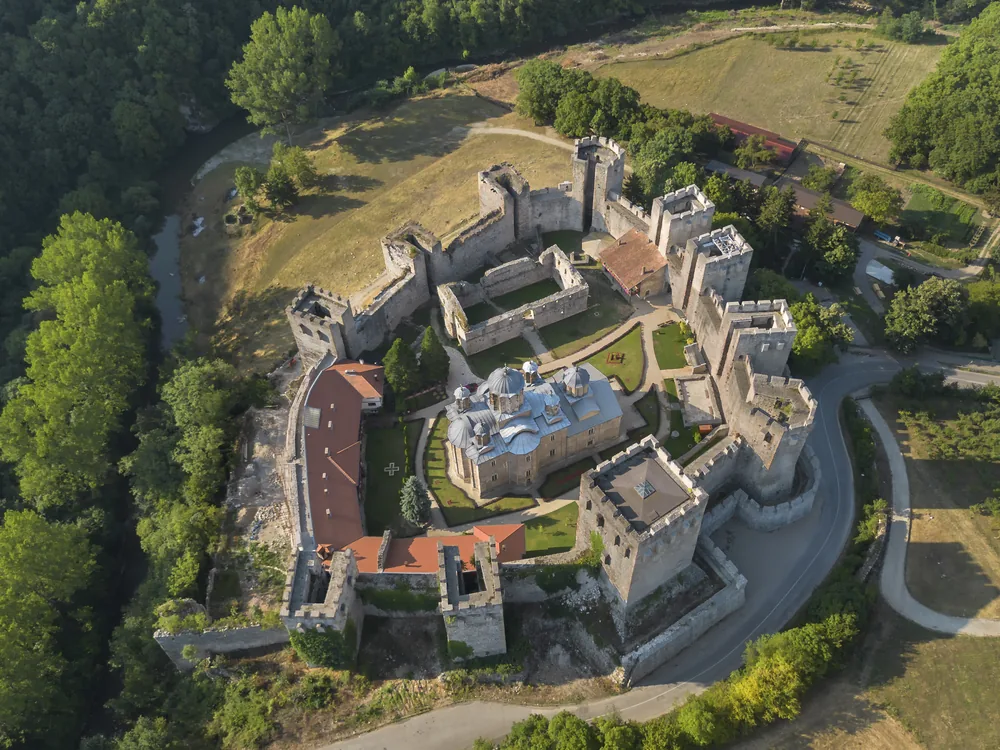
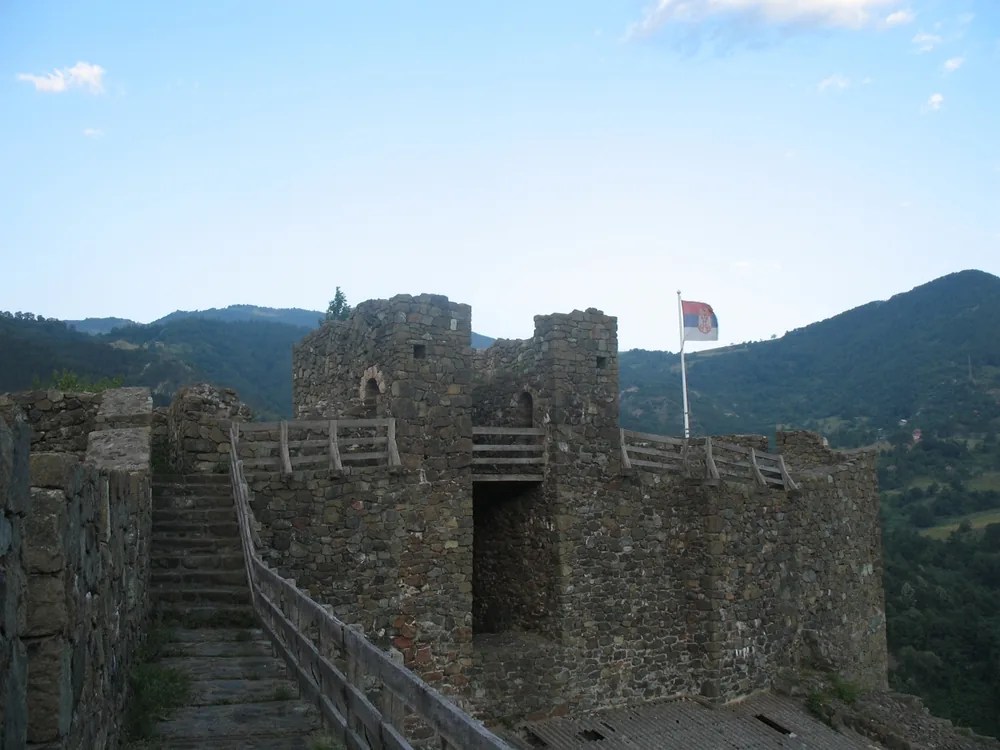
Combine with: Manasija Monastery (~120 km northeast — another fortified medieval Serbian Orthodox monastery, built by Despot Stefan Lazarević in the early 15th century; the most heavily fortified of all Serbian medieval monasteries, with eleven towers) and Maglic Fortress (~80 km northwest — the medieval fortress guarding the Ibar river valley, close to Studenica geographically and historically connected to the same Nemanjić period).
Frequently Asked Questions
Stefan Nemanja (approximately 1114–1200) was the founder of the Nemanjić dynasty — the ruling house that would unify the Serbian lands and govern for nearly two centuries, producing Stefan the First-Crowned (Serbia's first king), Saint Sava (founder of the independent Serbian Orthodox Church), and Stefan Dušan (who proclaimed himself Emperor of the Serbs and Greeks in 1346). Nemanja unified the Serbian župe (chiefdoms) under a single rule in the late 12th century and established Serbian independence from Byzantine suzerainty. He was canonised as Saint Simeon after his death in 1200 and remains the founding spiritual figure of the Serbian Orthodox religious tradition. Studenica, which he founded and where his relics are kept, is accordingly the most sacred site in Serbian Orthodoxy.
Location
Manastir Studenica, 36314 Ušće, Serbia
Nearby Castles
Tours & Tickets
Powered by GetYourGuide
From
€129/ person