Beckov Castle
Hrad Beckov
Slovakia · Trenčín Region · Near Nové Mesto nad Váhom
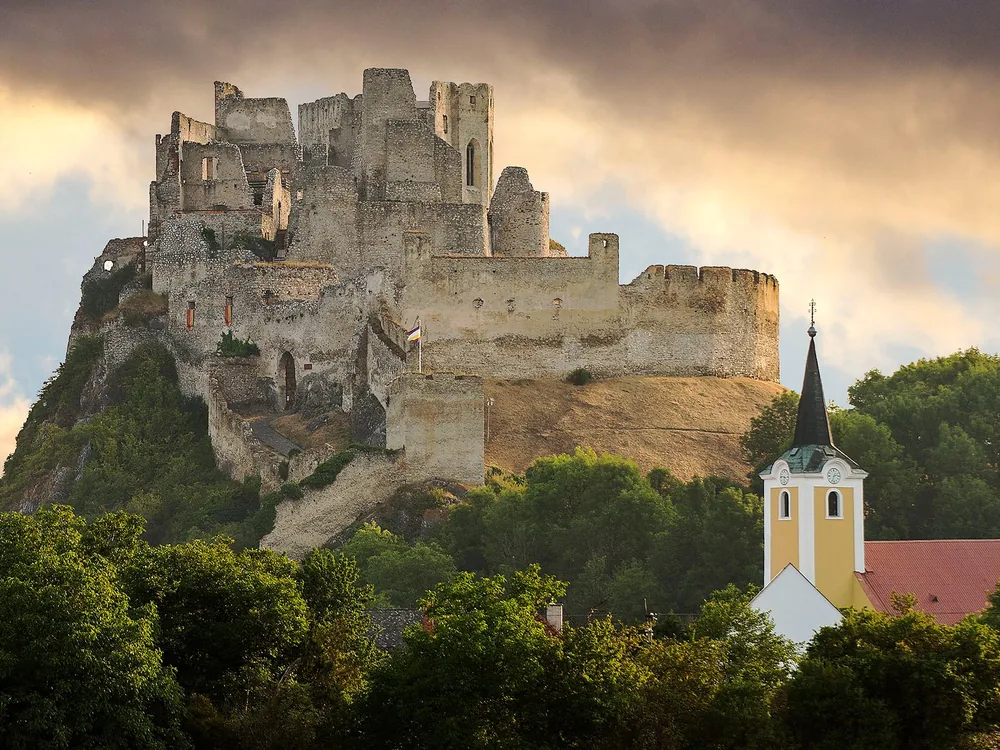
Built 1250 · Medieval hilltop castle ruin on a 60-metre limestone cliff above the Váh River; a Great Moravian wooden fort occupied this strategic promontory in the 9th–10th centuries before a stone castle was established by the mid-13th century as part of the Kingdom of Hungary's border defence line along the Váh valley; expanded and converted to a Gothic family residence by Stibor of Stiboricz after 1388, when it became his primary seat among 31 castles held across Hungary; a devastating fire in 1729 gutted the roofs and interiors, leaving the curtain walls and towers as an open ruin; declared a Slovak national cultural monument in 1970 and subject to restoration works in the late 20th century; the castle's visual impact is inseparable from the limestone cliff it occupies — the cliff face forms the southern wall of the fortification
This page is part of an independent travel guide and is not affiliated with, endorsed by, or operated by Beckov Castle.
© Castles & Palaces
Quick Facts
- Hours
- Tue–Sun 09:00–17:00. Closed Mon
- Day trip from
- €97
- Duration
- 1–1.5 hours
- Best time
- May to October
- Nearest city
- Nové Mesto nad Váhom
Featured Tour
From Bratislava: Beckov, Trenčín & Bojnice Castles Day Trip
Cancellation available · Instant confirmation
Highlights
- ✦Beckov Castle stands on a limestone cliff rising 60 metres directly above the Váh River — a defensive position so naturally formidable that it has been fortified continuously since the Great Moravian period in the 9th century; the cliff face itself forms the southern wall of the fortress, making the distinction between built and natural architecture almost invisible from the riverbank below
- ✦Stibor of Stiboricz, who received Beckov from King Sigismund in 1388, was arguably the most powerful magnate in 14th-century Hungary: a Polish-born military commander who accumulated 31 castles across the Kingdom and chose Beckov as his personal residence, transforming an existing border fortress into a Gothic family seat of unusual ambition
- ✦The castle's end came not from military defeat but from an accident — a 1729 fire, the kind that ended many medieval fortifications as the costs of timber-roof reconstruction became unjustifiable for a building no longer required for military purposes; the curtain walls and towers survived intact, while the roofless interiors became the picturesque ruin that visitors walk through today
- ✦The 1970 declaration as a national cultural monument initiated conservation works that stabilised the structure without attempting anachronistic restoration — Beckov is preserved as a ruin with archaeological integrity rather than rebuilt as a period approximation, leaving the evidence of 1729 visible in the walls
- ✦The Váh valley below the castle was the main route into the Kingdom of Hungary from the northwest, and the sequence of castles along this corridor — Beckov, [Trenčín Castle](/castles/slovakia/trencin-castle) upstream, and [Bojnice Castle](/castles/slovakia/bojnice-castle) across the hills — represents the concentrated medieval military investment in guarding what was, for several centuries, one of Central Europe's most contested border corridors
Tickets & tours
Book through GetYourGuide
Beckov Castle occupies a 60-metre limestone cliff above the Váh River in western Slovakia, in a stretch of the Váh valley where the river narrows between steep bluffs and the road south toward Bratislava passes through a natural defile. The limestone cliff is not a geological accident chosen by a medieval builder looking for high ground — it is an anomalous feature in the landscape, a vertical wall of karst rising directly from the riverbank with almost no slope at its base, and the castle that sits on it has been a natural focal point for military occupation since before anyone thought to document it. The earliest fortification on this site was a wooden Great Moravian stronghold from the 9th or 10th century — part of the defensive organisation of the Great Moravian state that preceded the Hungarian Kingdom, and the evidence for which comes from archaeological finds rather than documentary records.
The stone castle visible today was begun in the mid-13th century, when the Kingdom of Hungary was rebuilding its defensive infrastructure after the Mongol invasion of 1241 exposed the inadequacy of its existing fortification. Beckov, positioned on the only natural cliff above the Váh's main route south, was an obvious place to establish a stone tower house. Through the 13th and 14th centuries the castle passed through several hands as a royal border fortress; its documentary history is competent but not distinguished. What changed everything was 1388, when King Sigismund of Hungary granted Beckov to Stibor of Stiboricz.
Stibor of Stiboricz was, by any contemporary measure, the most powerful man in Hungary who was not a king. A Polish-born military commander who had accompanied Sigismund from Poland and proved essential to his political survival through several dynastic crises, Stibor was rewarded with land on a scale that had no precedent in the kingdom's history: he accumulated 31 castles and the territories attached to them, primarily in the Váh valley region. Of all of them, he chose Beckov as his personal seat. The reason was the view — not the landscape, though that was dramatic, but the strategic picture it offered. From Beckov's cliff top, the Váh valley in both directions was visible for miles, every boat and traveller on the river was observable, and the military logic of the fortress's position was immediately apparent to anyone who stood on its walls.
Stibor rebuilt Beckov as a Gothic family residence: the round tower, the palace range with its vaulted halls, the chapel. Contemporary accounts describe a furnished interior appropriate for a man who received ambassadors and entertained royalty. The castle passed to his son, Stibor the Younger, who died without heirs in 1434, at which point it reverted to the crown and began a century of more conventional administrative ownership, passing through various noble families without ever recovering the political prominence of the Stiboricz period.
The castle's final chapter as a functioning residence ended in 1729, when a fire gutted the interior and destroyed the timber roofs. This was the fate of many medieval buildings in the 18th century — not military destruction or deliberate demolition but the combination of fire, lack of heirs, and the changing economics of castle maintenance in an era when baroque palaces in the lowlands offered more comfortable living than a cliff-top fortress. The walls survived; the roofs did not; the interiors became the open ruins that characterise the castle today.
Modern restoration works, begun after the 1970 declaration as a national cultural monument, stabilised the surviving masonry without reconstructing the lost elements. The result is a ruin with genuine medieval fabric — the Gothic window frames, the vaulting springs where ceilings once met walls, the line of the cliff-edge rampart above the Váh — that rewards careful looking. The archaeology is visible rather than curated: you can see where the fire damage ends and the undamaged wall begins, follow the sequence of building phases in the changing character of the stonework, and understand from the physical evidence alone roughly what the castle contained.
The path up to the castle from the village of Beckov is steep — the cliff that made the fortress defensible also makes the approach demanding for visitors — but the view from the top justifies it. The Váh valley, visible in both directions, is still the landscape that Stibor of Stiboricz chose to dominate from this rock. The river below has changed — there are hydroelectric structures now, and the road has been widened — but the relationship between the cliff and the valley is the same.
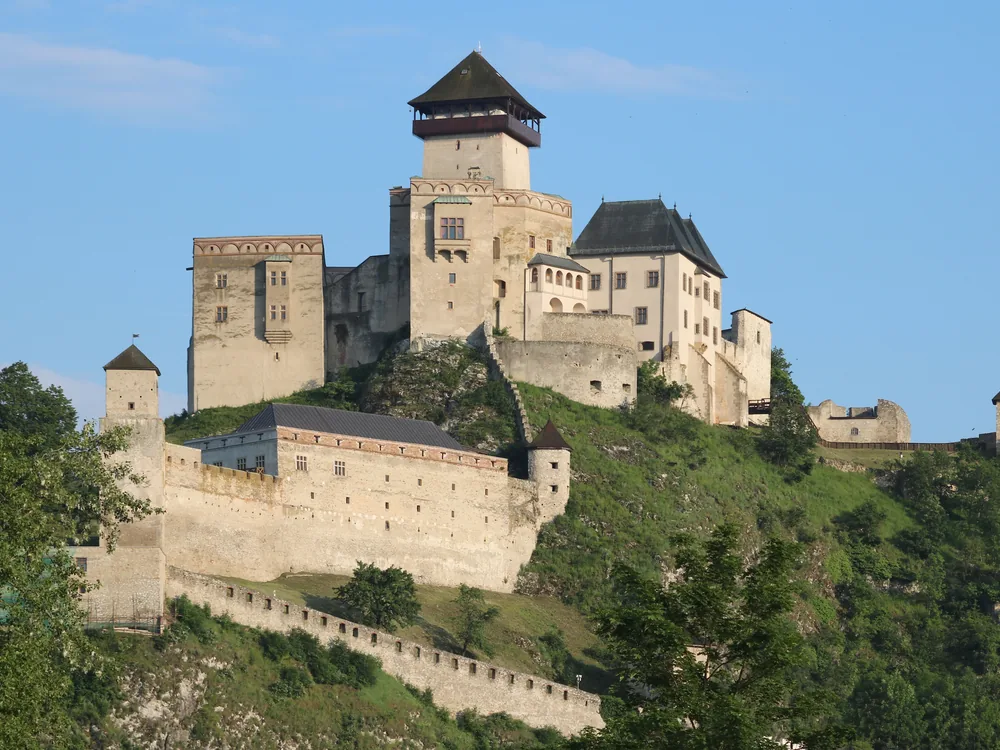
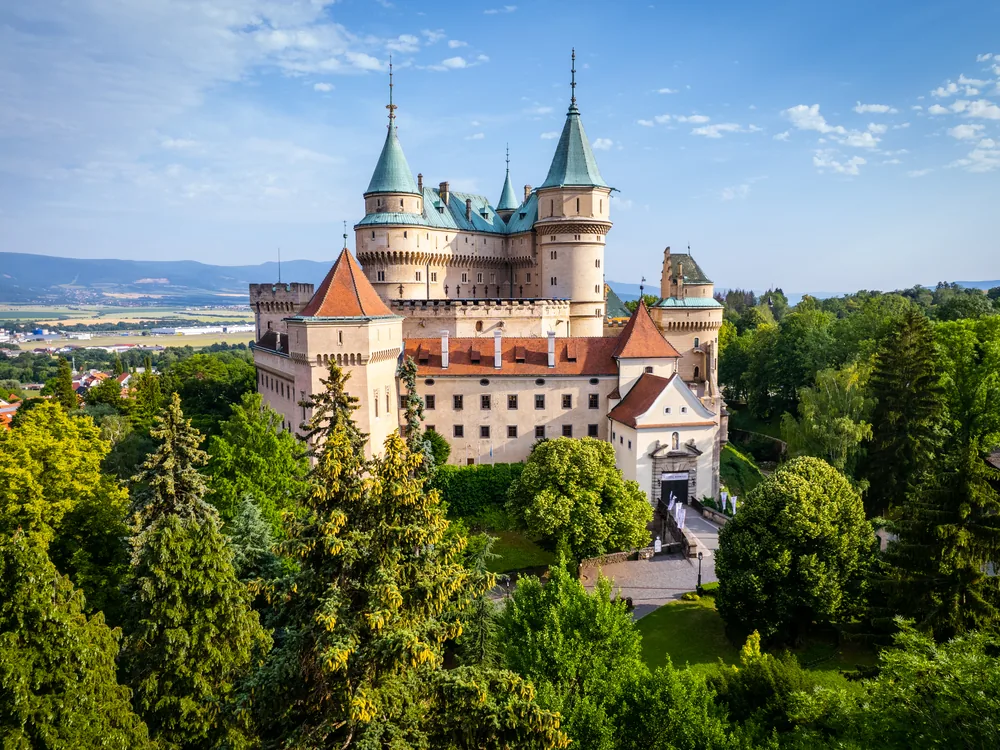
The Váh valley castle chain that Beckov anchors in its midsection is one of the most concentrated sequences of medieval fortifications in Central Europe. [Trenčín Castle](/castles/slovakia/trencin-castle), visible upriver, sits on its own rock above the river town of Trenčín — more famous, more completely surviving, and carrying the memory of the Roman inscription that makes it one of Central Europe's most remarkable epigraphic monuments. [Bojnice Castle](/castles/slovakia/bojnice-castle), in the hills east of Beckov, is the most visited castle in Slovakia: a romantic 19th-century reconstruction over genuine medieval remains, transformed by Count Ján Pálffy into the fantasy of a Loire Valley château that has become Slovakia's most photographed building. [Bratislava Castle](/castles/slovakia/bratislava-castle), downstream to the south, anchors the other end of the valley as the capital's own hilltop fortress, completed and burned and rebuilt across a thousand years of Danubian history.
The GetYourGuide day tour from Bratislava visits all three major Váh valley castles — Beckov, Trenčín, and Bojnice — in a single day and represents the most logistically efficient way to see the sequence in one visit, given that the distances between them make independent transport essential and the combination tells the valley's story better than any single site alone.
History
A Great Moravian wooden fortification occupied the limestone cliff above the Váh in the 9th and 10th centuries, established on the site that the geography of the river valley had always made strategically obvious. Stone construction began in the mid-13th century under the Kingdom of Hungary, as part of the programme of defensive reconstruction that followed the Mongol invasion of 1241 — a wave of fortress-building across the Hungarian kingdom intended to prevent a second Mongol incursion from finding the country as undefended as the first had.
The castle's most politically significant phase came in 1388, when King Sigismund granted Beckov to Stibor of Stiboricz — the most powerful magnate in 14th-century Hungary, who held 31 castles and made Beckov his primary seat. Stibor rebuilt in Gothic style. His son Stibor the Younger died without heirs in 1434, and the castle reverted to the crown, passing through various noble families through the 15th to 18th centuries in use as a regional administrative centre.
A fire in 1729 destroyed the timber roofs and interiors, beginning the transition to ruin that has persisted since. Beckov was declared a Slovak national cultural monument in 1970, and restoration and stabilisation works began. The ruin is now managed as a heritage site under the Trenčín Regional Tourism Authority, with open access.
How to Visit
Getting there: Beckov village is on the D1 motorway corridor between Bratislava (90 km south) and Trenčín (15 km north). By train: Nové Mesto nad Váhom station is 5 km from Beckov village; taxi or local bus to the village. By car: park in the village and follow the footpath up to the castle (steep, 15–20 minutes).
Tickets: Walk-up entry at the castle gate. Approximate adult €4, child €2. Open May–October, Tuesday–Sunday. Cash only. The "From Bratislava: Beckov, Trenčín & Bojnice Castles Day Trip" is a single GetYourGuide day trip covering all three major Váh valley castles and is the most efficient way to visit without a rental car.
Practical tips: The path up to the castle from the village is steep on loose stone — wear sturdy shoes. The site is open-air ruins with no shelter; bring water in summer.
Combine with: Trenčín Castle (15 km north — Slovakia's most significant Váh valley castle, with the Roman inscription carved into the rock). Bojnice Castle (30 km east — Slovakia's most visited castle, romantic 19th-century reconstruction).
Frequently Asked Questions
Stibor of Stiboricz was a Polish-born military commander who became the most powerful magnate in late 14th-century Hungary through his loyalty to King Sigismund. He accumulated 31 castles across the kingdom, and chose Beckov — a cliff-top fortress above the main Váh valley route — as his personal seat because of its strategic position: from its walls, movement through the valley in both directions was visible for miles. He rebuilt the existing castle in Gothic style as a family residence befitting a man who received ambassadors and entertained royalty.
Location
Beckov, 916 38, Slovakia
Nearby Castles
Tours & Tickets
Powered by GetYourGuide
From
€97/ person