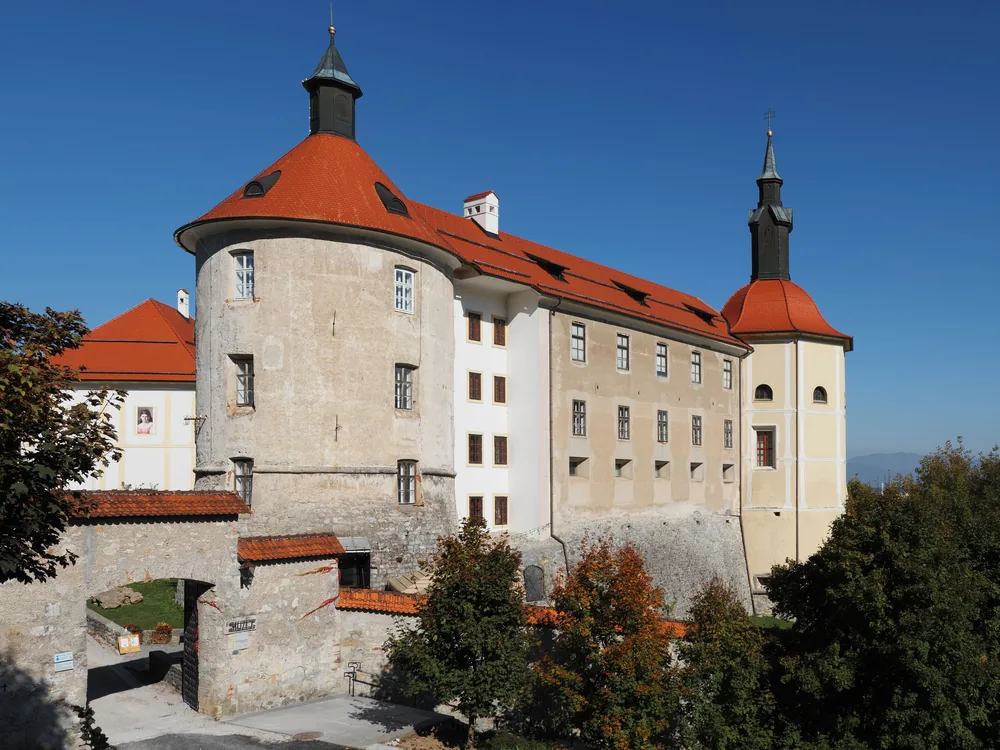
Škofja Loka Castle
Loški grad
Slovenia · Upper Carniola, Slovenia · Near Škofja Loka
Built 1170 · Romanesque-to-Renaissance castle on a wooded hill above the medieval town of Škofja Loka; the original Romanesque structure was built by the Bishops of Freising in the 12th century as the administrative seat of their Slovenian estates; the castle was rebuilt after a 1511 earthquake destroyed much of the structure, giving the current appearance its Renaissance character; it houses the Loka Museum with a permanent collection of local history, Carniolan folk art, and a notable lapidary
This page is part of an independent travel guide and is not affiliated with, endorsed by, or operated by Škofja Loka Castle.
© Castles & Palaces
Quick Facts
- Hours
- Tue–Sun 10:00–18:00. Closed Mon
- Guided tour from
- €960
- Duration
- 1–1.5 hours for the castle museum; 3–4 hours on the GetYourGuide group baking tour
- Best time
- April to October
- Nearest city
- Škofja Loka
Featured Tour
Škofja Loka: Medieval Town Tour with Honey Bread Baking Workshop
Cancellation available · Instant confirmation
Highlights
- ✦The Bishops of Freising's Slovenian seat — Škofja Loka and the surrounding lands were granted to the Bishops of Freising (Bavaria) in 973 CE, making it one of the oldest German ecclesiastical estates in Slovenian territory; the bishops built the castle on the hill above their market town and governed the Loka estate for over eight centuries, until Napoleonic reorganisation in 1803 ended their rule; the castle is the surviving physical centre of this extraordinarily long-lived German bishopric estate in Slovenia
- ✦One of Slovenia's best-preserved medieval towns — Škofja Loka's old town below the castle is consistently cited as one of the most intact medieval urban ensembles in Slovenia, with a largely unaltered street plan, coloured burgher houses, the Capuchin Bridge (1755), and the main square that functioned as the town's commercial centre for centuries; the castle-over-town combination gives Škofja Loka an unusually complete medieval atmosphere for a Slovenian settlement of its size
- ✦The 1511 earthquake reconstruction — the castle in its current Renaissance form was largely rebuilt following a devastating earthquake in 1511 that destroyed much of the original Romanesque structure; the reconstruction gave the castle its characteristic Renaissance courtyard with arched galleries and the residential tower that dominates the approach from the old town; the 1511 earthquake also severely damaged much of the town below, making the current streetscape largely a 16th-century reconstruction
- ✦The Loka Museum — the castle houses a permanent collection covering Carniolan local history from the medieval period, folk art and peasant culture from Upper Carniola, a lapidary with stone monuments and architectural fragments, and temporary exhibitions; the collection is particularly strong on traditional crafts and the social history of the Loka estate under the Bishops of Freising
- ✦Honey bread baking workshop and town tour — the GetYourGuide group experience combines a guided walk through Škofja Loka's medieval old town (which takes in the castle from the outside as a key highlight) with a hands-on workshop making traditional Slovenian honey bread (medenjaki) using historic moulds; the group format makes it ideal for families or small parties wanting an active, participatory experience
Skip the queue with a guided tour
Skip-the-line tickets & expert guides
Škofja Loka Castle sits on a forested hill directly above the medieval town of Škofja Loka in Upper Carniola, its Renaissance tower visible from across the old town's orange-roofed skyline. The hill site has been occupied since the 12th century — the Bishops of Freising, who received the surrounding lands from Holy Roman Emperor Otto II in 973 CE, built the original castle around 1170 as the administrative centre of their Slovenian estate.
The long Freising connection shapes everything about Škofja Loka. The bishops governed the Loka estate for over eight centuries — one of the longest unbroken examples of German ecclesiastical administration over Slovenian territory — and the castle, the town plan, and the surrounding village settlement pattern all reflect Bavarian administrative and architectural influence adapted to the Carniolan environment. This layering of German episcopal administration over Slovenian peasant culture is what the Loka Museum, housed in the castle's interior, makes visible through its collection of local history and folk art.
The castle's current Renaissance appearance is largely the result of reconstruction after a severe earthquake in 1511 destroyed much of the original Romanesque structure. The rebuilding gave the complex its characteristic courtyard with arched galleries — a feature more typical of Italian Renaissance castle architecture than the German Romanesque of the original bishops' stronghold — and the residential tower that anchors the composition. The town below was also extensively rebuilt after the same earthquake, making the Škofja Loka that visitors see today largely a 16th-century reconstruction on medieval foundations.
The GetYourGuide group tour provides an engaging entry point for visitors who want more than a standalone castle visit: the combination of a guided medieval town walk (with the castle as one of its highlights) and a hands-on honey bread baking workshop using traditional Slovenian medenjaki moulds creates a participatory experience that makes the town's craft heritage tangible. The group format and pricing per group make it particularly suited to families or small parties.
History
The Loka estate was granted to the Bishops of Freising by Holy Roman Emperor Otto II in 973 CE. The first castle on the hill above Škofja Loka was built around 1170 as the administrative seat of the Freising bishops' Slovenian holdings. The castle was progressively expanded and fortified over the following centuries. A catastrophic earthquake in 1511 destroyed much of the structure; the current castle is largely a Renaissance reconstruction on the earlier foundations. The Bishops of Freising governed Škofja Loka until 1803, when the Napoleonic reorganisation of the Holy Roman Empire ended their secular rule over the estate. The castle subsequently passed through several private owners and was eventually converted to its current use as the Loka Museum.
How to Visit
Getting there: Škofja Loka is approximately 25 km from Ljubljana, a 30-minute drive or 30-minute train/bus journey. The train station and bus stop are in the lower town; the castle is a 15-minute walk up the hill from the town square. The GetYourGuide group tour is organised locally in Škofja Loka and includes the castle as part of the town walk.
Tickets: Castle and Loka Museum entrance: €6 adults, €3 children. The GetYourGuide honey bread and town walk group tour includes the guided town walk with the castle as a highlight and the honey bread baking workshop; confirm at booking whether museum entry is included.
Practical tips: The walk up to the castle is short but steep on a forest path; comfortable walking shoes are advisable. The Loka Museum's lapidary collection, in the castle courtyard, is particularly interesting and is often overlooked in favour of the residential floors above. The castle terrace has good views over the old town's tiled roofscape and the Sora river confluence below.
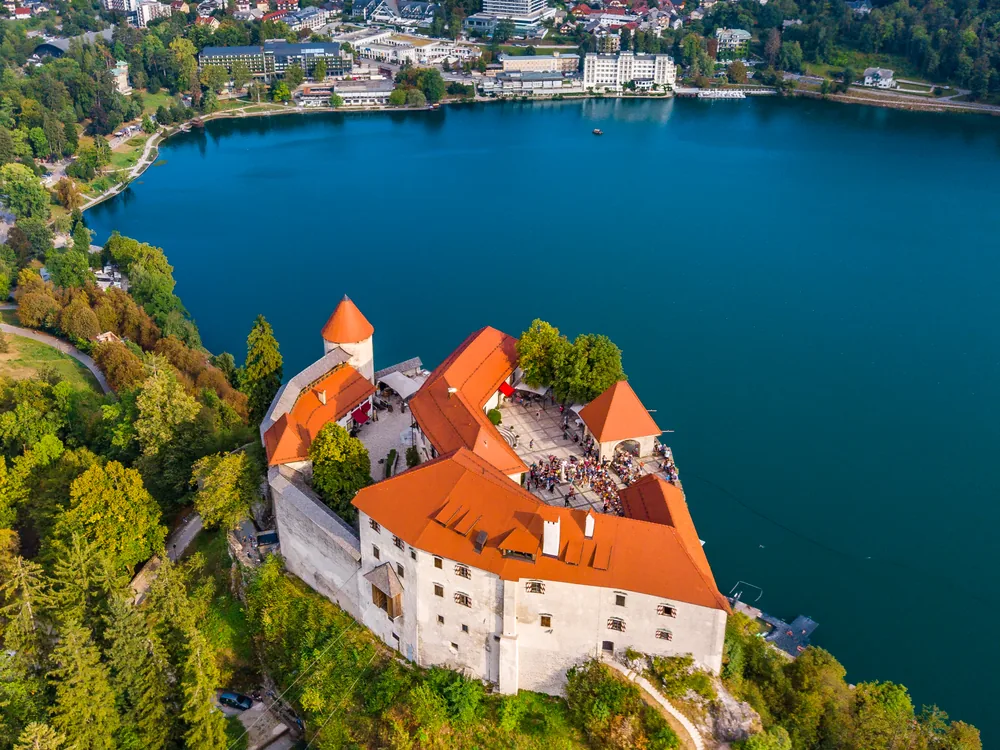
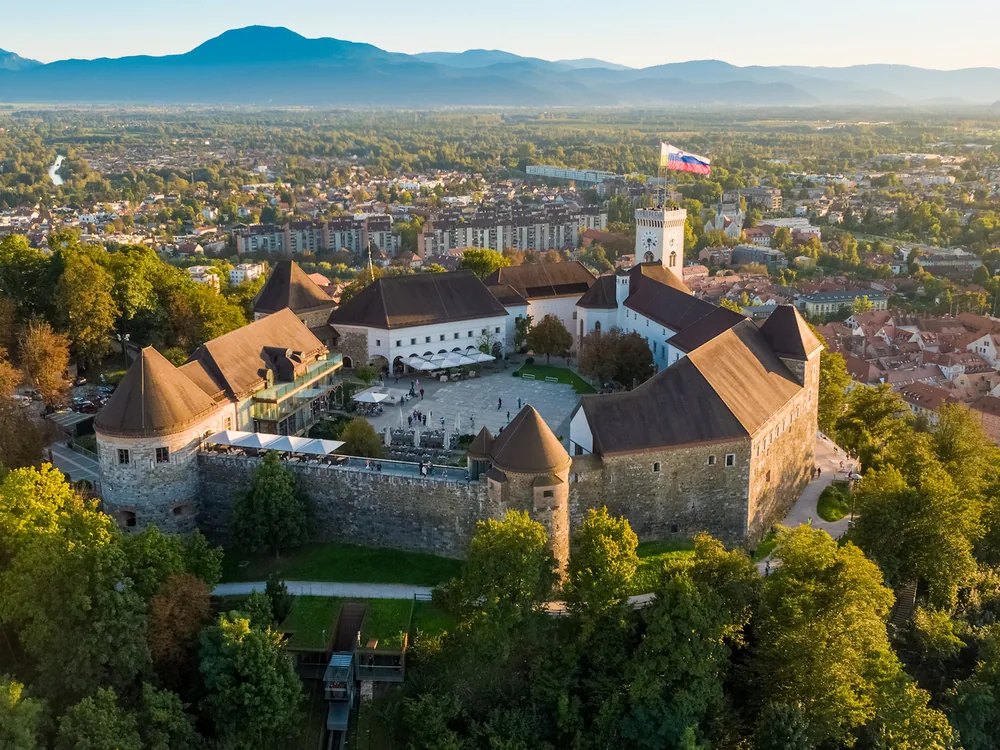
Combine with: Ljubljana Castle (25 km southeast — the hilltop castle dominating the Slovenian capital, with funicular access and panoramic Ljubljana views; the most-visited castle in Slovenia and a natural companion to a Škofja Loka day) and Bled Castle (30 km northwest — the cliff-top castle above Lake Bled, one of the most dramatic castle settings in central Europe).
Frequently Asked Questions
The Bishops of Freising (a diocese near Munich) received the Škofja Loka estate in 973 CE as a grant from Holy Roman Emperor Otto II, part of the broader process by which the Holy Roman Emperor rewarded loyal ecclesiastical lords with estates at the periphery of the empire. German-speaking ecclesiastical lords receiving frontier estates in what is now Slovenia was common in the 10th and 11th centuries, as the Carolingian and then Ottonian empires pushed their administrative reach eastward. The Freising bishops were among the most significant of these lords in Slovenian territory, holding the Loka estate for over 830 years — one of the longest continuous examples of such German ecclesiastical ownership over Slovenian lands. The Napoleonic reorganisation of the Holy Roman Empire in 1803 forced the secularisation of most such ecclesiastical estates, ending the Freising bishops' rule.
Location
Grajska pot 13, 4220 Škofja Loka, Slovenia
Nearby Castles
Tours & Tickets
Powered by GetYourGuide
From
€960/ group