Bled Castle
Blejski grad
Slovenia · Upper Carniola · Near Bled
Built 1004 · Medieval with Renaissance additions
This page is part of an independent travel guide and is not affiliated with, endorsed by, or operated by Bled Castle.
© Unsplash
Quick Facts
- Hours
- Daily 08:00–20:00
- Day trip from
- €74
- Duration
- 1.5–2.5 hours
- Best time
- All seasons
- Nearest city
- Bled
Featured Tour
From Ljubljana: Trip to Lake Bled and Bled Castle
Cancellation available · Instant confirmation
Highlights
- ✦The view from the castle terrace over Lake Bled, the island church, and the Julian Alps is one of the great panoramas of Central Europe
- ✦First documented in 1004 when Emperor Henry II granted it to the Bishop of Brixen; continuously occupied for over a thousand years
- ✦The castle winery produces wine from a vineyard on the cliff below — one of the most steeply positioned vineyards in Slovenia
- ✦The museum inside includes a reconstruction of a medieval printing press, traditional bookbinding, and blacksmithing workshops
- ✦Lake Bled below — with its island church reached by traditional pletna rowboats — is Slovenia's most photographed scene
Tickets & tours
Book through GetYourGuide
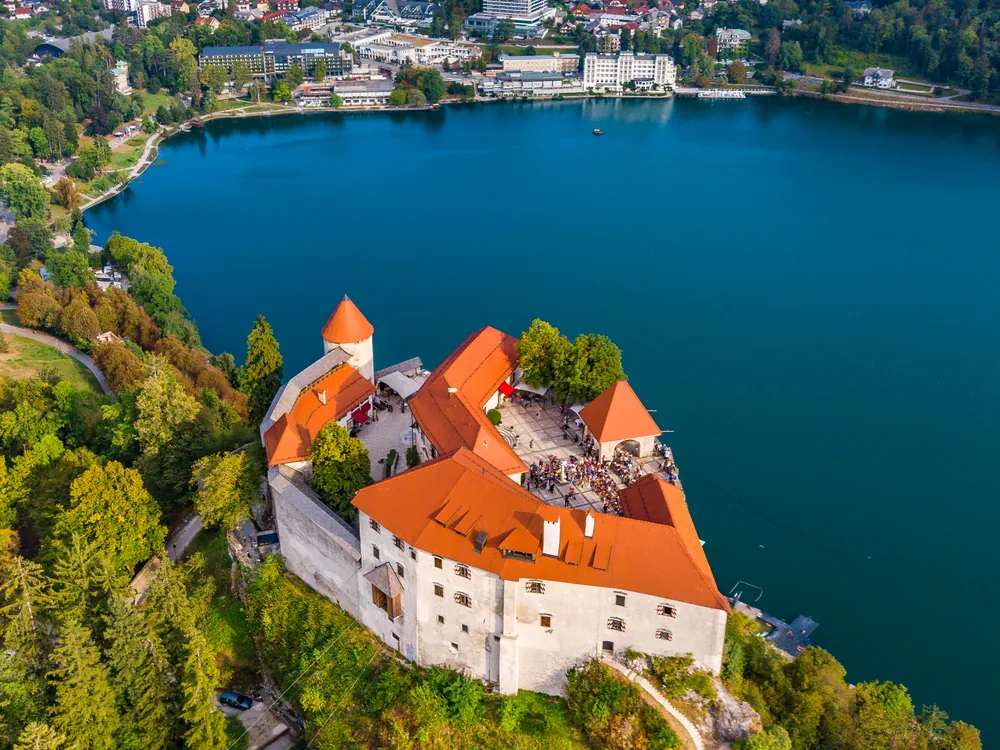
Bled Castle has the finest position of any castle in the Alps — perched on a sheer cliff 130 metres above the emerald water of Lake Bled, with the Julian Alps rising directly behind and the church on the lake's island visible below. Slovenia's most iconic image incorporates all three: castle, lake, island, and mountains. The reality more than matches the photographs.
The castle's thousand-year history begins in 1004 with a grant from Emperor Henry II of the Holy Roman Empire to the Prince-Bishops of Brixen, who used it as their primary residence in the Carniolan highlands for over 800 years. The structure was continuously expanded, rebuilt, and modified through the Romanesque, Gothic, and Renaissance periods, leaving a complex of buildings accumulated over centuries rather than a single architectural statement. The result — courtyard, chapel, defensive walls, residential towers, and a wine cellar cut into the cliff — is characteristically Slovenian in its modest scale and practical beauty.
The castle museum is more interesting than most castle museums at comparable sites: it includes a reconstruction of a Gutenberg-era printing press on which visitors can print a souvenir certificate, a wine cellar with the castle's own Bled wines, and workshops demonstrating traditional crafts. But the real reason to come is the terrace view: 360 degrees of Alps, lake, and valley, with the sound of the island church bell drifting up through the clear air.
History
Bled's strategic position controlling the pass into the Julian Alps has attracted fortification since at least the late Iron Age. The first written record of the castle dates to 1004, when Emperor Henry II donated the estates of Bled to the Prince-Bishops of Brixen (in modern South Tyrol), who used it as their administrative centre for the region.
The castle was expanded through the 11th and 12th centuries in Romanesque style. The defensive towers and walls that survive today date largely from the 15th century, when threats from Ottoman raiding parties — which reached as far as present-day Slovenia — made substantial fortification necessary. The Renaissance loggia and chapel were added in the 16th century under the Bishops of Brixen.
In 1803, after the Napoleonic suppression of the Church properties, the castle passed to the Austrian imperial administration. After 1918 it became the property of Yugoslavia and was used briefly as a royal residence by King Alexander I. After World War II, Yugoslav President Josip Broz Tito used the area around Lake Bled as a summer retreat — his villa (now a hotel) is still visible on the lakeside. The castle was converted into a museum and tourist facility in the 1950s.
How to Visit
Getting there: Lake Bled is 55 km northwest of Ljubljana — direct buses run from Ljubljana Bus Station roughly every hour (1h15 journey). By car, take the A2 motorway toward Kranjska Gora and exit at Bled. The castle path begins on the main road east of the lake; a small car park near the castle top is also reachable via the road behind the hill (signposted).
Tickets: Walk-up entry €15 adult, €7 child. The GetYourGuide tour — a 6-hour Ljubljana day trip to Lake Bled and Bled Castle with guided context and round-trip transport — book in advance.
Practical tips: Allow 1.5 to 2 hours inside — the museum, printing press workshop, wine cellar, and chapel are worth exploring beyond the terrace view. Combine the castle with a pletna boat ride to the island church below (traditional rowboats, approximately €15–18 per person, 45-minute circuit). The Bled cream cake (kremna rezina) served in the castle restaurant is the standard conclusion to any Bled visit.
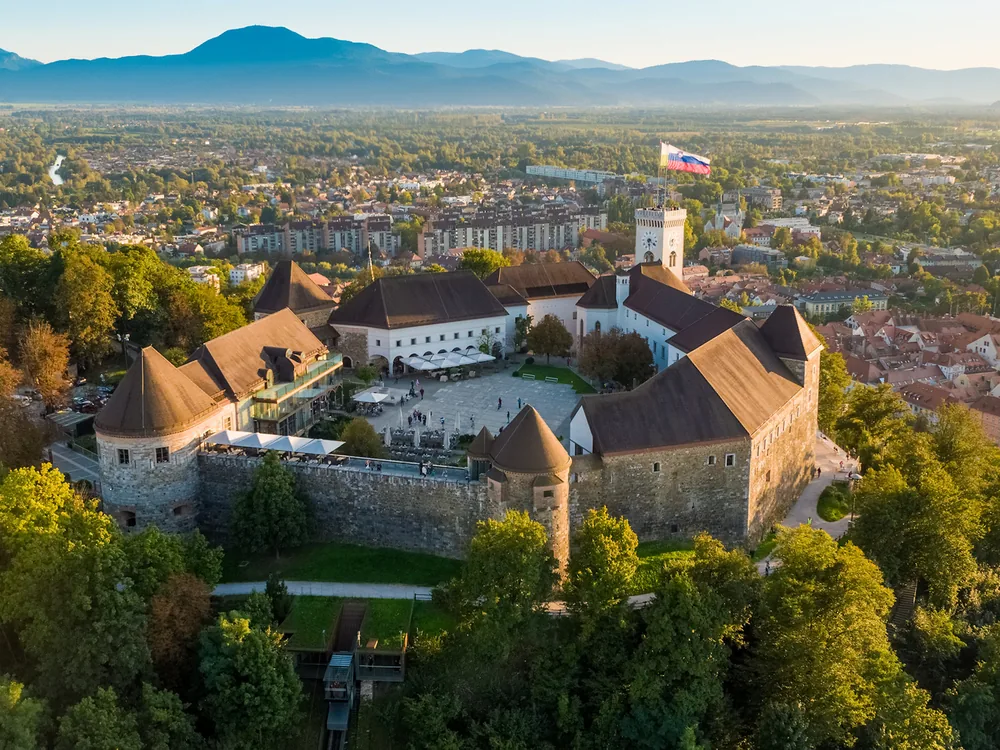
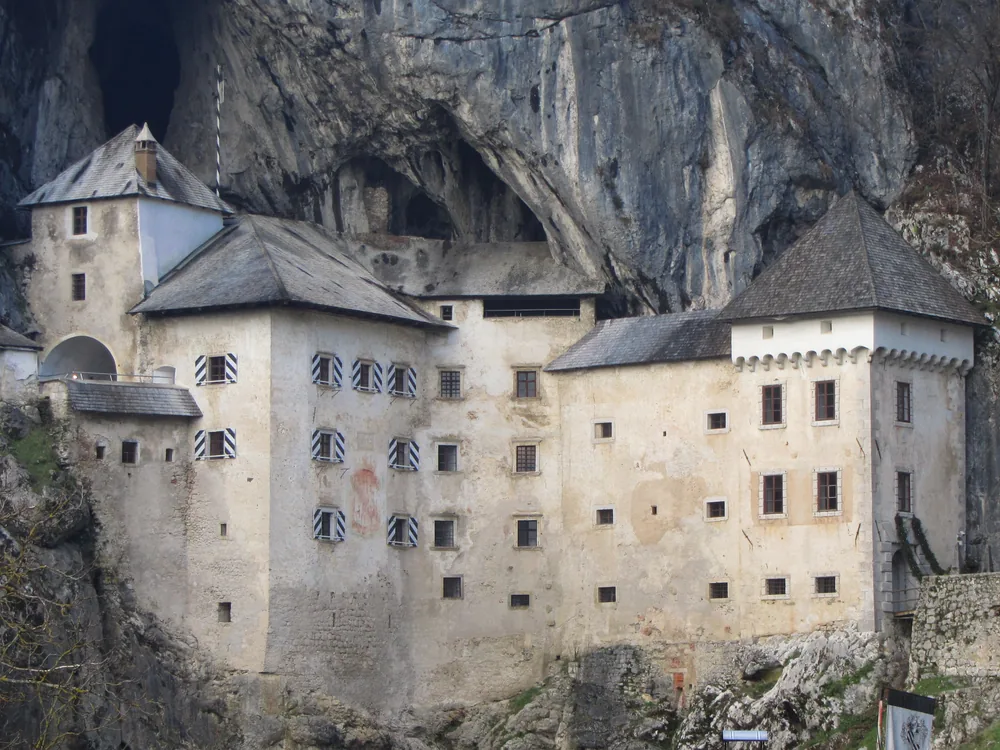
Combine with: Predjama Castle is 55 km south — a cave-fortress built into a cliff face, ideal on a Ljubljana–Bled–Predjama loop. Ljubljana Castle anchors the capital 55 km southeast, pairing naturally as the start or end of the same day.
Frequently Asked Questions
The island in Lake Bled is the only natural island in Slovenia. It contains the Church of the Assumption, dating to the 17th century (on the site of an early medieval church), reached by traditional wooden rowboats (pletna) rowed by boatmen who have held their licences for generations. Visitors climb 99 stone steps to the church and are invited to ring the bell and make a wish.
Location
Grajska cesta 61, 4260 Bled, Slovenia
Nearby Castles
Tours & Tickets
Powered by GetYourGuide
From
€74/ person