
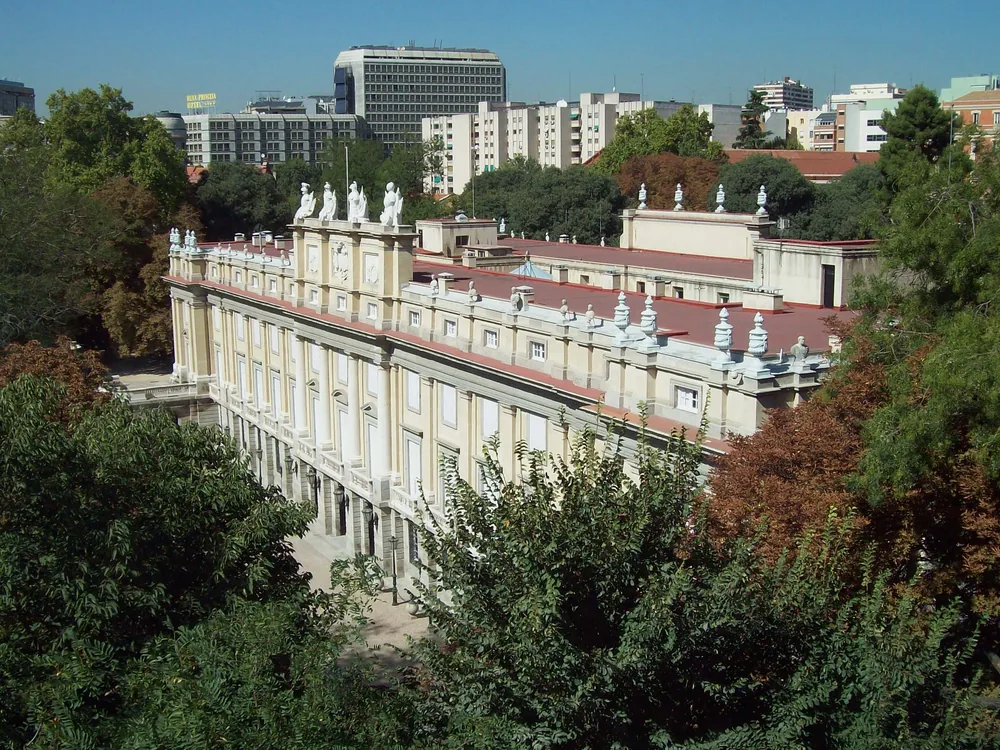
Aranjuez Royal Palace
Palacio Real de Aranjuez
Spain · Community of Madrid · Near Aranjuez
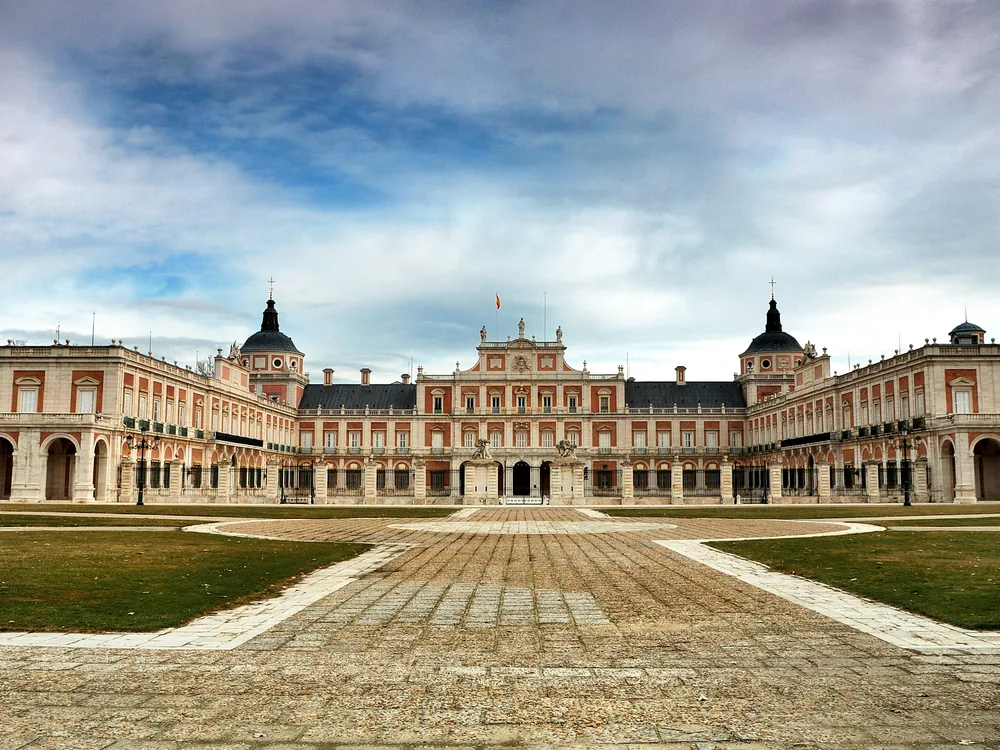
Built 1560 · Spanish Renaissance and Baroque royal palace built over earlier royal hunting lodges; the current main body was established under Philip II from 1560, with major expansions under the Bourbon kings Philip V and Ferdinand VI in the 18th century; notable for the extraordinary Porcelain Room (Salón de Porcelana), lined entirely with Buen Retiro factory porcelain tiles commissioned by Charles III; the formal gardens — Jardín de la Isla and Jardín del Príncipe — are some of the oldest planned gardens in Spain, incorporated into the UNESCO 'Aranjuez Cultural Landscape' designation of 2001
This page is part of an independent travel guide and is not affiliated with, endorsed by, or operated by Aranjuez Royal Palace.
© Castles & Palaces
Quick Facts
- Hours
- Tue–Sun 10:00–18:00. Closed Mon
- Skip-the-line from
- €12
- Duration
- 2–3 hours
- Best time
- March to June and September to November
- Nearest city
- Aranjuez
Featured Tour
Fast-Track Entry to the Royal Palace
Cancellation available · Instant confirmation
Highlights
- ✦The Porcelain Room (Salón de Porcelana) is the palace's most celebrated interior: every wall and ceiling surface is covered in Buen Retiro factory porcelain tiles commissioned by Charles III in the 1760s, creating one of the most elaborate examples of European decorative porcelain work outside the major German and French royal collections
- ✦Aranjuez was inscribed as a UNESCO World Heritage Site in 2001 under the 'Aranjuez Cultural Landscape' designation — an unusually holistic inscription that covers the palace, the Baroque gardens, the surrounding town, the river network, and the managed agricultural landscape together as a unified expression of Bourbon royal planning and Enlightenment-era landscape design
- ✦The Mutiny of Aranjuez in March 1808 — when crowds attacked the carriage of Charles IV's chief minister Godoy and forced the king's abdication in favour of his son Ferdinand VII — was the direct trigger for the Peninsular War; Napoleon used the dynastic crisis as the pretext to summon both father and son to Bayonne and replace them with his brother Joseph, initiating five years of guerrilla warfare that helped end Napoleonic hegemony in Europe
- ✦The formal gardens include the Jardín de la Isla (Garden of the Island), laid out on a natural island in the Tajo River, with fountains dating to the 16th and 17th centuries, and the Jardín del Príncipe (Garden of the Prince), an 18th-century Romantic landscape garden extending over 150 hectares along the river — together they represent over four centuries of continuous royal garden design in a single site
- ✦Aranjuez sits 45 minutes by train from Madrid-Atocha on the Cercanías C-3 line, making it the most accessible major royal palace day trip from the capital — closer and easier than El Escorial, and a natural pairing with Toledo (which is on the same rail corridor south of Madrid)
Skip the queue with a guided tour
Skip-the-line tickets & expert guides
The question of why the Spanish crown built a major royal palace at Aranjuez rather than at some more strategically obvious location has a simple answer: water. The confluence of the Tajo and Jarama rivers created a relatively humid microclimate in the otherwise semi-arid Castilian meseta, allowing the cultivation of a garden and hunting estate that became the most elaborate in Spain. Charles I (Holy Roman Emperor Charles V) used the site as a hunting lodge. Philip II, whose systematic conversion of the entire Spanish monarchical apparatus into architectural form is one of the defining achievements of 16th-century European statecraft, commissioned the palace that forms the current building's core around 1560. Subsequent Habsburgs added wings and modified the gardens. The Bourbons who succeeded after the War of the Spanish Succession in the 1700s rebuilt and expanded on a different scale entirely: Philip V and Ferdinand VI brought French and Italian architects and ambitions, converting Aranjuez into a palace that could reasonably claim comparison with the major French royal residences that the new Bourbon dynasty had left behind.
The result is a building that spans two centuries of Spanish royal architecture and two dynasties, unified by its position in a river landscape that remains one of the most carefully managed garden environments in Spain. The UNESCO World Heritage inscription of 2001, under the 'Aranjuez Cultural Landscape' designation, reflects this complexity: rather than inscribing a single building or garden, the inscription covers the palace, the Baroque gardens, the surrounding royal town, the river network, and the managed agricultural landscape around it as a unified expression of royal planning and Enlightenment-era ideas about the relationship between sovereign power and landscape order. This holistic designation is worth understanding because it explains what Aranjuez actually is: not a single monument but a managed environment created over four centuries for a specific royal purpose.
The palace interior is organised around a succession of Bourbon staterooms that accumulated through the 18th century as successive kings modified and expanded the circuit. The most celebrated room — and the most frequently photographed — is the Porcelain Room, the Salón de Porcelana, commissioned by Charles III in the 1760s. Every surface of the room, including the ceiling, is covered in tiles produced by the Buen Retiro factory, the royal porcelain manufactory established in Madrid in 1760 in direct imitation of the French Sèvres and German Meissen factories. The tiles depict chinoiserie scenes, putti, garlands, and allegorical figures in a palette of white, green, and gold that creates an immersive decorative environment of extraordinary technical ambition. The Buen Retiro factory was established specifically to create this kind of work for royal commissions, and the Porcelain Room at Aranjuez is its most complete surviving achievement — the factory was destroyed in 1812 during the Peninsular War, making the room's survival all the more significant.
The throne room and the series of royal apartments — the bedroom of Charles IV, the queen's chambers, the smoking room lined with Japanese lacquer panels — complete the principal interior circuit and document the specific tastes of successive Bourbon kings in a way that the Royal Palace in Madrid, with its more ceremonial function, cannot. Aranjuez was a private retreat as much as an official residence, and the rooms reflect a more personal relationship between the monarchs and their surroundings.
The gardens require their own attention and time. The Jardín de la Isla (Garden of the Island) occupies a natural island in the Tajo, reached by bridges, and preserves fountains and planting arrangements dating to the 16th century — among the oldest surviving elements of the Aranjuez landscape. The Jardín del Príncipe, on the north bank of the Tajo extending east of the palace, covers over 150 hectares in an 18th-century Romantic landscape design with long promenades, irregular planting, and the small Casa del Labrador (Labourer's House) — actually an elaborate royal retreat commissioned by Charles IV at the far end of the garden, one of the finest examples of Neoclassical royal interior design in Spain.
The palace's most politically consequential moment is inseparable from its Aranjuez location. In March 1808, as Napoleon's army occupied Spain under the guise of transit to Portugal, a crowd gathered at the palace and attacked the residence and carriage of Manuel Godoy, Charles IV's chief minister and the man held responsible for Spain's humiliating alliance with France. The king fled to the palace, the mob demanded Godoy's dismissal, and the incident escalated until Charles IV abdicated in favour of his son Ferdinand VII — the Mutiny of Aranjuez. Napoleon used the resulting dynastic dispute as the pretext to summon both father and son to Bayonne, where he forced a second abdication and installed his brother Joseph on the Spanish throne. The resulting guerrilla resistance — the Peninsular War — lasted from 1808 to 1814, tied down over 200,000 French troops, inspired the concept of 'guerrilla' warfare, and contributed materially to Napoleon's eventual defeat. The Mutiny of Aranjuez, a crowd riot at a royal palace that shifted the course of European history within weeks, makes the site a genuinely consequential historical location.
Practically, Aranjuez is the most accessible of the major royal palaces from Madrid. The Cercanías C-3 train from Atocha takes 45 minutes and runs frequently. The GetYourGuide fast-track ticket bypasses the general admission queue, which during spring and summer can be significant — the palace receives around 350,000 visitors annually and the Porcelain Room creates a natural bottleneck. The town of Aranjuez itself is pleasant for lunch and has direct associations with Joaquín Rodrigo's Concierto de Aranjuez, written in 1939, which remains the most famous piece of classical music directly inspired by a Spanish royal residence.
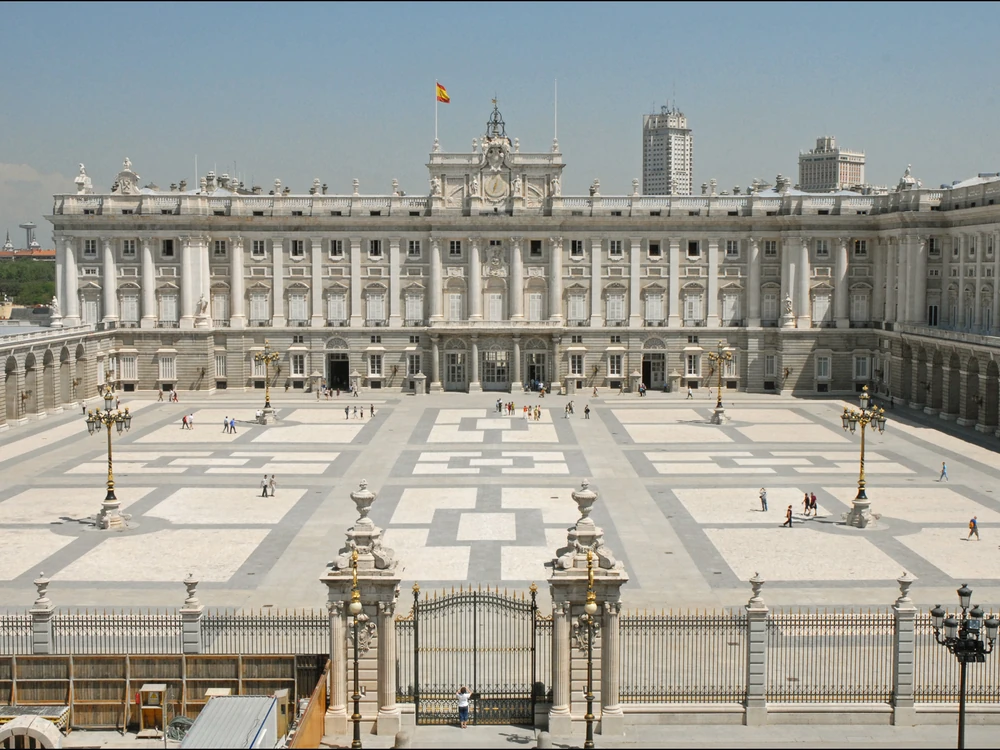
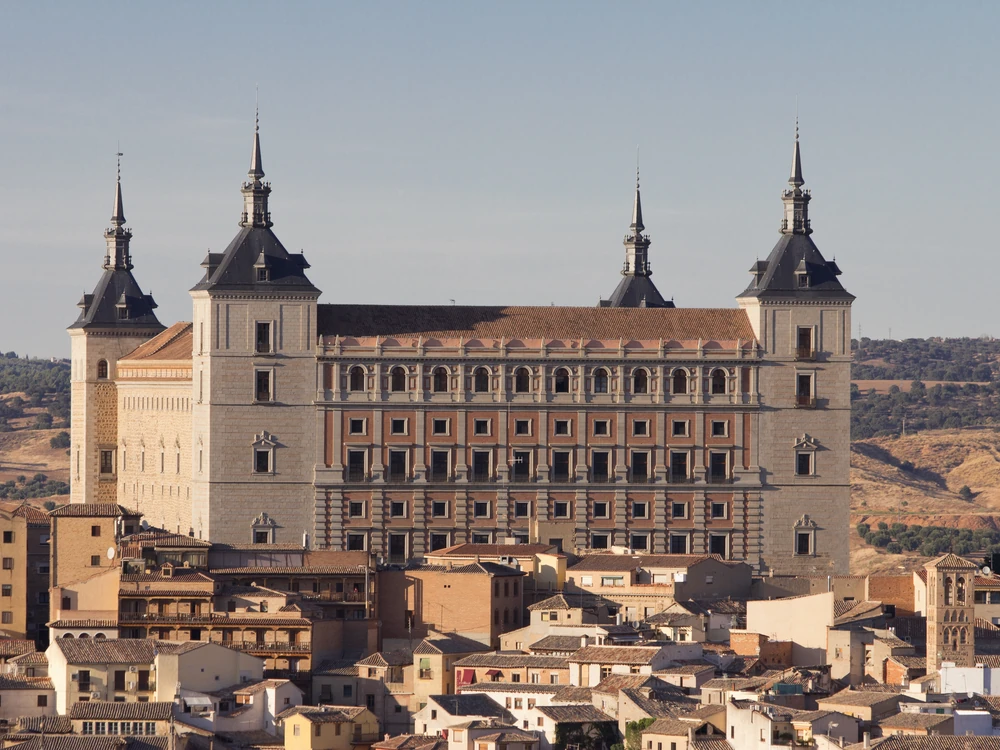
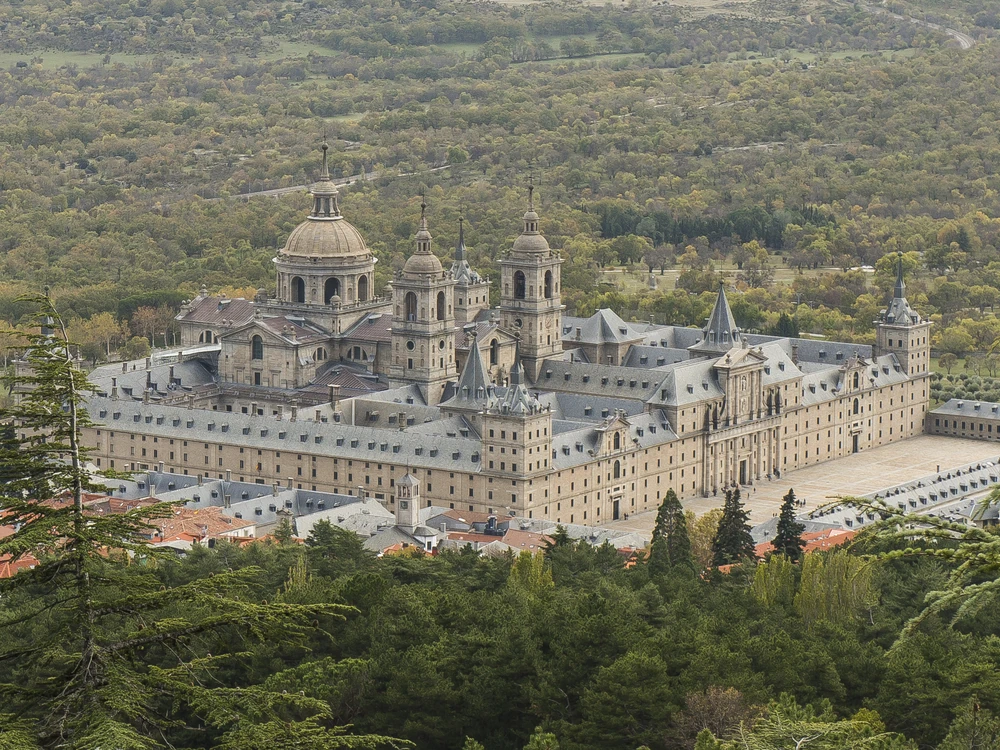
For the Madrid day-trip circuit, Aranjuez pairs logically with Toledo — both are on the south rail corridor from Atocha, approximately 45 minutes apart by car. The Royal Palace of Madrid, El Escorial, and the Alcázar of Toledo, all already on this site, together with Aranjuez form the comprehensive map of Spanish royal architecture from the 16th century through the 18th — Habsburg austerity at El Escorial and the Alcázar, Bourbon elaboration at Aranjuez and the Royal Palace of Madrid.
History
Charles I (Emperor Charles V) established a royal hunting lodge at Aranjuez in the 1530s, exploiting the confluence of the Tajo and Jarama rivers. Philip II commissioned the current palace structure around 1560, incorporating earlier buildings. Habsburg monarchs maintained and extended the estate through the 17th century. After the War of the Spanish Succession, the Bourbon kings Philip V and Ferdinand VI undertook major construction and garden works in the French manner. Charles III commissioned the Porcelain Room in the 1760s. The Mutiny of Aranjuez in March 1808 triggered Charles IV's abdication and the Peninsular War. The palace was inscribed as part of the 'Aranjuez Cultural Landscape' UNESCO World Heritage Site in 2001.
How to Visit
Getting there: The Cercanías C-3 train from Madrid-Atocha to Aranjuez takes 45 minutes and runs frequently. The palace is a 20-minute walk or short taxi from the train station. By car, Aranjuez is 45 km south of Madrid via the A-4 motorway.
Tickets: The GetYourGuide fast-track ticket skips the general queue. Walk-up entry also available.
Visit length: 2–3 hours for the palace interior and Jardín de la Isla. The full Jardín del Príncipe requires an additional 1–2 hours.
Practical tips: March to June and September to November.
Combine with: Toledo (45 min by car, also south of Madrid) makes a strong same-day pairing. The Royal Palace of Madrid, El Escorial, and the Alcázar of Toledo are all on this site and form the broader Habsburg/Bourbon royal architecture circuit.
Frequently Asked Questions
The Salón de Porcelana (Porcelain Room) is a room at Aranjuez commissioned by Charles III in the 1760s in which every wall and ceiling surface is covered in tiles produced by the Buen Retiro royal porcelain factory, established in Madrid in 1760. The tiles depict chinoiserie scenes, garlands, and allegorical figures in a complex decorative programme that represents the most complete surviving example of the Buen Retiro factory's output. The factory was destroyed in 1812 during the Peninsular War, making this room one of the few remaining monuments to its craft.
Location
Plaza de Palacio, s/n, 28300 Aranjuez, Madrid, Spain
Nearby Castles
Tours & Tickets
Powered by GetYourGuide
From
€12/ person