
Calahorra Tower
Torre de la Calahorra
Spain · Valencian Community — Alicante Province, Elche (Elx) historic centre · Near Alicante
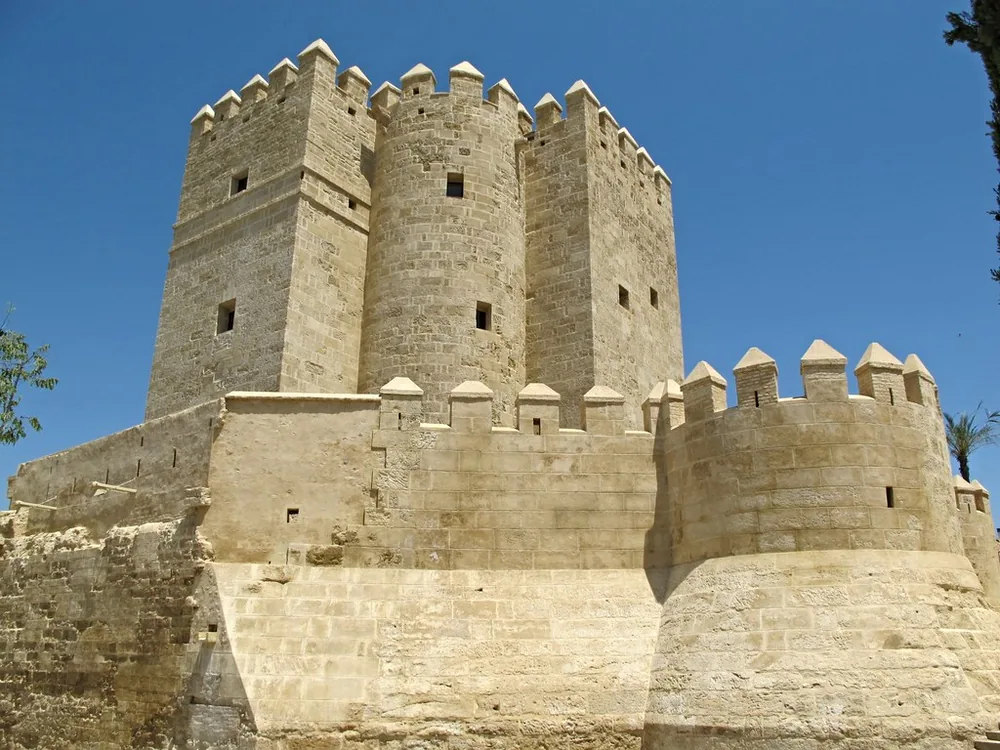
Built 1160 · 12th-century Almohad defensive tower — the Torre de la Calahorra of Elche (not to be confused with the Torre de la Calahorra in Córdoba) is the oldest surviving monument in Elche and the last remaining fragment of the Islamic city walls that enclosed the Moorish town of Yilliq (the Arabic name for Elche) before the Christian reconquest of 1265; the tower is a characteristic example of Almohad military architecture of the mid-12th century: a compact, square-plan defensive tower in local limestone, designed to anchor a section of the city wall and provide an elevated observation and shooting platform; the Almohad dynasty, which ruled the western Islamic world from Morocco across the Maghreb and into Al-Andalus in the 12th–13th centuries, brought a distinctive and austere military architectural style to their constructions in the Iberian Peninsula, characterised by solid masonry, minimal ornament, and functional emphasis on structural strength; the name 'Calahorra' derives from the Arabic al-qal'at al-ḥurra (the noble or free castle/tower), a term applied to significant fortification points in Andalusi towns
This page is part of an independent travel guide and is not affiliated with, endorsed by, or operated by Calahorra Tower.
© Castles & Palaces
Quick Facts
- Hours
- Tue–Sat 10:00–14:00. Closed Mon, Sun
- Guided tour from
- €52
- Duration
- 30–45 minutes (the tower itself, its exterior, and the immediate historic centre context — best visited as part of the broader MAHE/historic centre circuit that also includes the Palacio de Altamira)
- Best time
- October to May
- Nearest city
- Alicante
Featured Tour
Elche: Guided Walking Tour of the Historic Centre
Cancellation available · Instant confirmation
Highlights
- ✦Elche's oldest monument — the last fragment of the Islamic city walls — the Torre de la Calahorra is the oldest surviving monument in Elche, predating every other standing structure in the city; it is the sole remaining fragment of the Islamic city walls of Yilliq — the Almohad-era Moorish town that the Christian forces of James I of Aragon took in 1265; the Arabic city walls that enclosed Yilliq were largely dismantled or absorbed into later Christian construction after the reconquest; the Calahorra Tower survived because its solid Almohad masonry proved too substantial to remove, and its position at a corner of the old wall made it useful as a reference point in the reorganised Christian town; no other structure in Elche goes back further than this tower
- ✦Almohad military architecture in Al-Andalus — the tower in its historical context — the Almohad dynasty, which controlled the western Islamic world from Morocco across the Maghreb and into Al-Andalus in the 12th and 13th centuries, built characteristic military structures throughout the Iberian Peninsula — compact, solid, and austere towers and walls that prioritised structural strength over ornament; the Torre de la Calahorra belongs to this tradition; the same Almohad military impulse that built the Giralda tower in Seville (originally an Almohad minaret) and the Torre del Oro produced the walls and towers of Yilliq in the 12th century; Elche's example is smaller in scale but represents the same architectural programme
- ✦Not the Córdoba Calahorra — disambiguation essential — the name 'Torre de la Calahorra' is shared by one of Spain's most famous medieval monuments: the Córdoba Calahorra tower at the southern end of the Roman bridge, which guards the approach to the Mezquita from the opposite bank of the Guadalquivir; the Elche Calahorra Tower is an entirely different monument — smaller, less celebrated, architecturally distinct, and located in a different city and region; the two towers share the Arabic name 'calahorra' (al-qal'at al-ḥurra — noble or free fortress), applied to significant fortification points in Andalusi towns, but are not otherwise related; visitors to Elche searching for the Calahorra Tower should not expect the Córdoba bridge tower
- ✦Shared GYG tour with the Palacio de Altamira — the full Elche historic centre circuit — the same GYG guided walking tour of Elche's historic centre (t894655) covers both the Calahorra Tower and the adjacent Palacio de Altamira (MAHE museum) in a single guided circuit; the combination of the two monuments in one walk gives visitors both the oldest monument in Elche (the 12th-century Almohad tower) and the seat of late medieval and Renaissance Christian authority (the 14th-century Altamira palace), placed in direct historical dialogue by the guide's commentary; the walk between the two covers the historic centre of a city whose date-palm-lined streets and surviving medieval fabric have a character quite different from the coastal Alicante resort towns
Skip the queue with a guided tour
Skip-the-line tickets & expert guides
The historic centre of Elche is not obvious. The city is surrounded by the most famous date palm grove in Europe — the Palmeral d'Elx, a UNESCO World Heritage Site, 200,000 palm trees planted by the Moors that still shade the city's streets and outlying districts. The medieval town centre itself is compact, its streets narrowed between buildings that have accumulated over eight centuries of continuous occupation since the Christian reconquest. In this historic centre, near the Plaza de la Merced, stands the Torre de la Calahorra: a square limestone tower that is the oldest thing standing in Elche.
The tower dates to the 12th century, the Almohad period. The Almohads — the Berber Muslim dynasty from the Atlas Mountains of Morocco who came to control the western Islamic world and crossed into Al-Andalus to halt the Christian advance — built their military architecture with a characteristic solidity and austerity. Their towers and walls throughout the Iberian Peninsula are recognisable by their compact square plans, their thick limestone or rubble masonry, and their severe absence of decorative elaboration. The Calahorra Tower of Elche belongs to this tradition. It was part of the city walls of Yilliq — the Almohad-era Muslim town that James I of Aragon took in 1265 as part of the progressive Christian reconquest of the Valencian region.
When the reconquest happened and the Christian administration reorganised the city, the Islamic walls were mostly dismantled or absorbed into later construction. The Calahorra Tower survived. Its Almohad masonry was solid enough to outlast the processes of demolition and replacement that consumed most of the Islamic city fabric; its position at a corner of the old wall made it a useful orientation point in the reorganised Christian town. It is the sole surviving fragment of the walls that once enclosed Yilliq. Everything else is gone.
The name 'Calahorra' requires a note. The most famous monument in Spain with this name is the Torre de la Calahorra in Córdoba — the large medieval gateway tower at the south end of the Roman bridge, which today houses a museum of Moorish civilisation and guards the approach to the Mezquita from across the Guadalquivir. That tower is a famous and well-documented monument visited by hundreds of thousands of people each year. The Elche Torre de la Calahorra is a different monument entirely: smaller, less celebrated, and located in a different city on the opposite side of Andalusia. Both share the Arabic name 'calahorra' — derived from al-qal'at al-ḥurra, the noble or free fortress, a term applied to significant military towers in Andalusi towns — but they are not otherwise related. Visitors to Elche should be clear about which Calahorra they are looking for.
The tower is visited as part of the guided walking tour of Elche's historic centre (GYG t894655), which covers both the Calahorra Tower and the adjacent Palacio de Altamira — the late medieval and Renaissance palace that now houses MAHE, the city's archaeological and history museum — in a single circuit. The combination of the two monuments gives a visitor the full temporal span of Elche's surviving built heritage: the 12th-century Almohad tower as the oldest standing structure, and the 14th-century Christian palace that represents the medieval and Renaissance authority that succeeded the Islamic administration. They are within walking distance of each other in the historic centre, and the contrast between them is immediately readable in the architecture — the solid, unadorned Islamic masonry of the tower against the more articulated facade of the later palace.
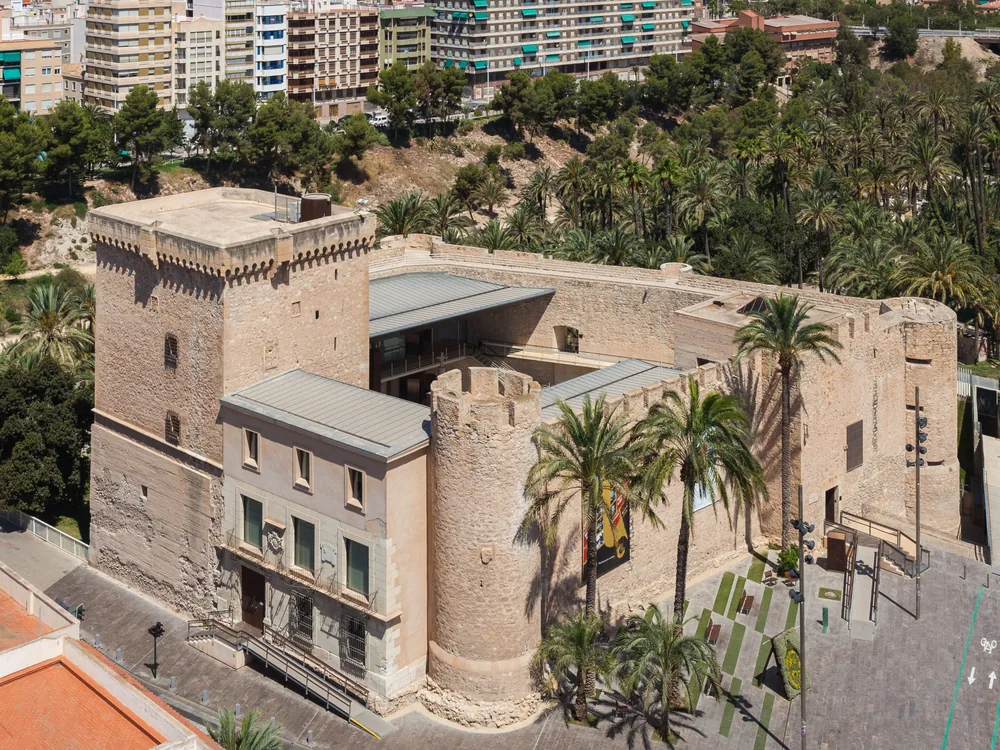
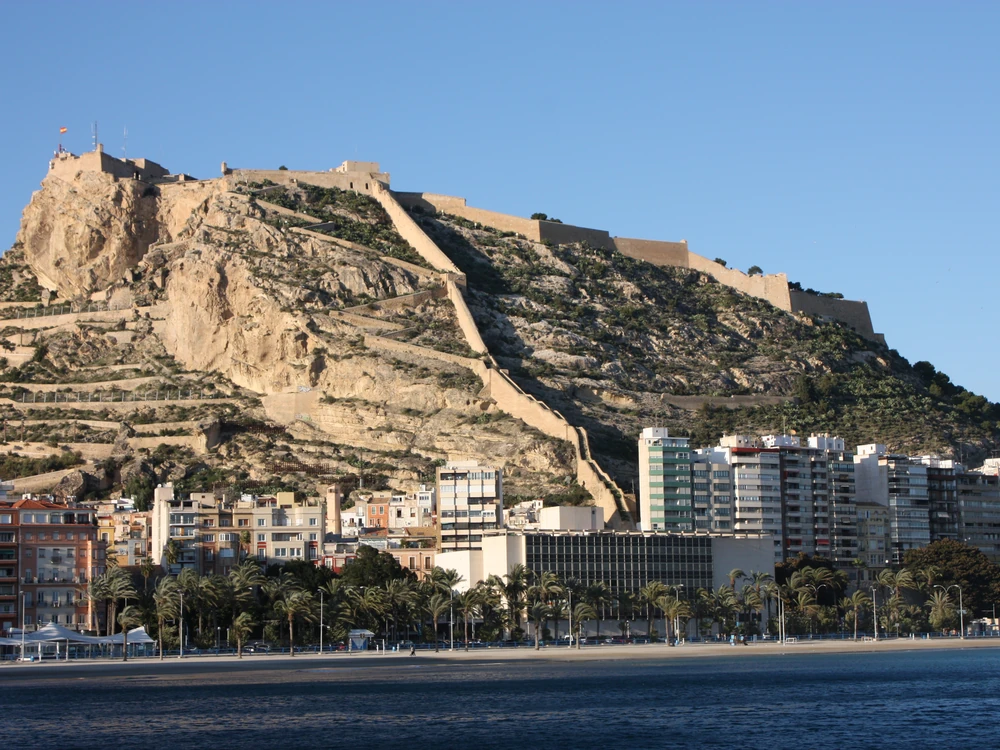
[Altamira Palace](/castles/spain/altamira-palace) — the 14th-century fortified palace housing MAHE museum, within walking distance in the same historic centre, and covered by the same GYG walking tour. [Santa Bárbara Castle](/castles/spain/santa-barbara-castle) — the great clifftop fortress above Alicante, 15km to the northeast — extends the Alicante province circuit for visitors with more time in the region.
History
12th century: Torre de la Calahorra built as part of the Almohad-era city walls of Yilliq (Arabic name for Elche); the tower serves as a corner fortification anchoring the defensive perimeter of the Islamic town. 1265: James I of Aragon (the Conqueror) takes Elche as part of the reconquest of the Valencian region; the Islamic city walls of Yilliq are largely dismantled or absorbed into the reorganised Christian town; the Calahorra Tower survives due to the strength of its masonry and its utility as an orientation point in the new urban fabric. 14th–15th century: the Palacio de Altamira established nearby as the seat of Christian noble and administrative power; the Calahorra Tower exists as a relic of the Islamic city within the new Christian urban order. 19th–20th century: historic centre of Elche preserved around the surviving medieval monuments; Calahorra Tower recognised as the oldest standing monument in the city. Present day: tower accessible as part of MAHE circuit and the GYG guided walking tour of Elche's historic centre; sole surviving fragment of the Islamic city walls of Yilliq.
How to Visit
Getting there: Elche (Elx) is 15 km southwest of Alicante. From Alicante, take the Cercanías or FGV train to Elche Parque station (~25 minutes); the historic centre is a 10-minute walk. By car via the A-7 motorway, around 20 minutes. The tower is at Plaza de la Merced, a few minutes on foot from the Palacio de Altamira.
Tickets: Walk-up entry €3 adult, €1 child; confirm interior access hours before visiting (Tuesday–Saturday 10:00–14:00; closed Sunday–Monday), as interior availability can vary. The tower exterior is always visible and free. The GYG tour (t894655, from €52) — a 2.5-hour guided walking tour of Elche's historic centre covering both the Calahorra Tower and the Palacio de Altamira — is the most reliable way to access the tower with historical context; book at least a day in advance.
Practical tips: Visit October–May for comfortable walking in the historic centre. Allow 30–45 minutes for the tower itself; combine it with the Altamira Palace (5 minutes on foot) for a full historic centre circuit. If you only have time for one stop, the Altamira Palace / MAHE museum offers more interior depth — the Calahorra Tower is best as an add-on.
Combine with: [Altamira Palace](/castles/spain/altamira-palace) — steps away in the same historic centre, the 14th-century fortified palace housing MAHE museum and covered by the same GYG walking tour. [Santa Bárbara Castle](/castles/spain/santa-barbara-castle) — the great clifftop fortress above Alicante, 15 km northeast, extends the province's castle circuit to a full day.
Frequently Asked Questions
No. The Torre de la Calahorra in Elche is a completely different monument from the famous Torre de la Calahorra in Córdoba, which stands at the south end of the Roman bridge and guards the approach to the Mezquita. Both towers share the Arabic name 'calahorra' — derived from al-qal'at al-ḥurra (the noble or free fortress), a term applied to significant military towers in Andalusi towns — but they are architecturally distinct, historically separate, and located in different cities. The Córdoba Calahorra is a late medieval gateway tower with a museum inside; the Elche Calahorra is a 12th-century Almohad defensive tower, the sole surviving fragment of the Islamic city walls of Yilliq. Visitors to Elche should not expect the Córdoba monument.
Location
Torre de la Calahorra, Plaza de la Merced, 03202 Elche, Alicante, Spain
Nearby Castles
Tours & Tickets
Powered by GetYourGuide
From
€52/ person