
Castell de les Sitges
Castell de les Sitges
Spain · Catalonia — Segarra, Lleida province, hamlet of Les Sitges, Torrefeta i Florejacs municipality · Near Cervera
Built 1050 · Romanesque frontier castle with 14th-century Gothic additions; rectangular keep with battlements and machicolations; noble hall with later Renaissance windows
This page is part of an independent travel guide and is not affiliated with, endorsed by, or operated by Castell de les Sitges.
© Castles & Palaces
Quick Facts
- Hours
- Daily By prior booking only — 1-hour guided visit slots
- Guided tour from
- €9
- Duration
- 1 hour (guided visit only)
- Best time
- Spring and autumn
- Booking
- Required — book 3+ days ahead
- Nearest city
- Cervera
Featured Tour
Guided Visit to the Castle of Les Sitges
Cancellation available · Instant confirmation
Highlights
- ✦One of the few medieval castles in Catalonia still owned by descendants of its original lords — nearly 900 years of family lineage, passing through several lines by marriage, inheritance, and one royal confiscation (War of the Spanish Succession), to the present-day Canales family who finally opened it to visitors in the 2010s
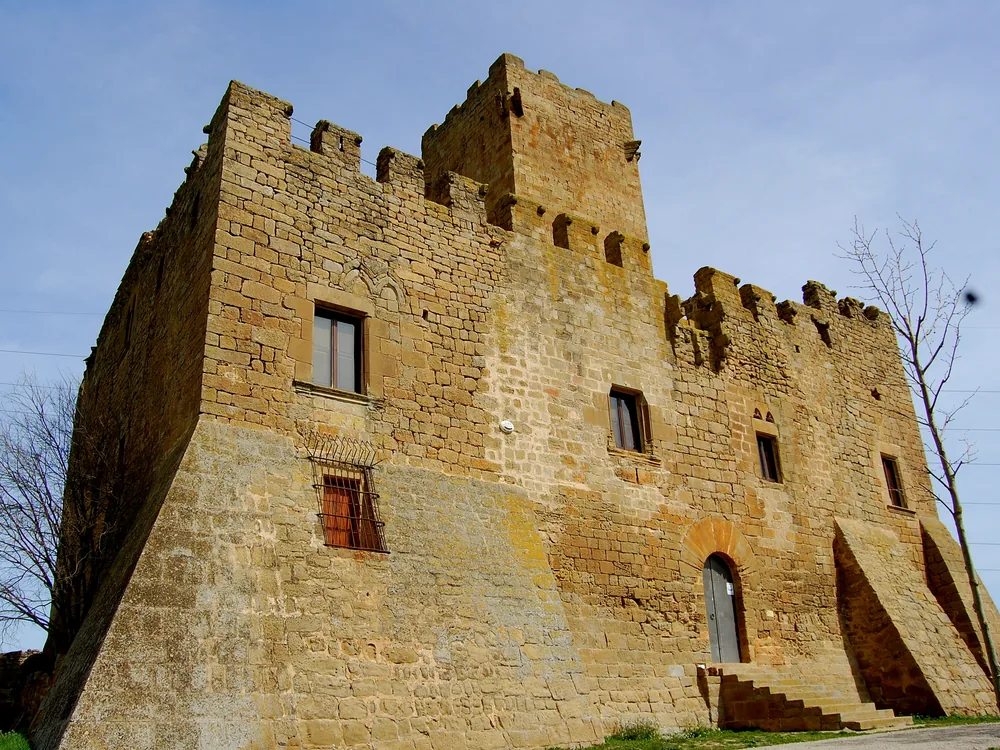
- ✦The original rectangular keep with intact battlements and machicolations, one of the best-preserved examples of 11th-century Catalan Romanesque military architecture in the Lleida plain
- ✦Interior preserves the working spaces of a real medieval household: the cellar, dungeon, kitchen, bread oven, and stables, all still in their original spatial relationship to the keep
- ✦Renaissance-era windows added to the noble hall centuries after the Romanesque construction — layered evidence of the castle's use across multiple periods without a clean break or major rebuild
- ✦Panoramic terrace view from the top of the tower over the Lleida plain and the Serra de Tallat — the same strategic horizon that justified the castle's position when Arnau Mir de Tost built it to guard the Reconquista frontier in the early 11th century
Skip the queue with a guided tour
Skip-the-line tickets & expert guides
The simplest extraordinary fact about Castell de les Sitges is that it never left private hands. From the early 11th century, when it was built to guard the advancing Reconquista frontier in what is now inland Catalonia, through nine centuries of inheritance, marriage, and one royal confiscation, the castle passed from family to family along lines that trace back to its original lords. The Canales family, who took possession in the mid-20th century, did what no previous owner had done: they opened it. The guided visits that began in the 2010s were the first time in approximately ten centuries that anyone outside the household could walk through the gates.
The castle's origins lie in the Reconquista, the southward advance of Christian kingdoms against Muslim-held territory across the Iberian Peninsula. Arnau Mir de Tost, one of the most powerful Catalan lords of the 11th century, built the fortification in the early 1050s to anchor the new frontier, working within the political orbit of Count Ermengol of Urgell. Its first documented mention comes in 1116, when it appears in records as "Castrum Ciges" — a document that caught a castle already decades old. Ownership passed through the Alemany de Cervelló, Josa, and Ribera lines before Philip V confiscated it after the War of the Spanish Succession — the one break in an otherwise unbroken line of private ownership — before passing through the Agulló de Pino, Sentmenat, and Calvo de Encalada families to the Canales family.
The castle's architectural core is a rectangular Romanesque keep with thick stone walls, intact crenellated battlements, and machicolations still visible on the upper courses. The noble hall retains a large medieval fireplace and, in a detail that amounts to an architectural diary of the castle's long occupation, a set of Renaissance windows inserted centuries later without dismantling the Romanesque fabric. Below the hall, the cellar, dungeon, kitchen, bread oven, and stables remain in their original arrangement — making Castell de les Sitges feel less like a curated monument and more like a preserved household.
The guided visit climbs the keep's steep tower stair to a terrace with an open view over the Lleida plain and the Serra de Tallat — the same strategic horizon that justified the position when the castle was new. Les Sitges is a genuine rural hamlet: no café, no visitor signage, no gift shop. The 1-hour guided visit is the entirety of the experience, conducted in Catalan and Spanish by people who know this building from the inside.
History
Among the Reconquista frontier fortifications built across 11th-century Catalonia, Castell de les Sitges stands apart for one reason: it never became a ruin, a museum, or a hotel. Arnau Mir de Tost, the great Catalan lord who drove the Christian advance into the Lleida plain in the mid-11th century, built or substantially fortified the castle to hold the new frontier against the Taifa of Lleida. The first written record dates from 1116, when it appears in documents as "Castrum Ciges," already two generations old by then and embedded in the Catalan feudal system. Ownership moved through several noble families over the following centuries — Alemany de Cervelló, then Josa, then Ribera — before Philip V of Spain, victorious in the War of the Spanish Succession, confiscated the castle as punishment for Catalan resistance; this was the one enforced rupture in nearly a millennium of private tenure. After the Bourbon settlement the property passed through the Agulló de Pino, Sentmenat, and Calvo de Encalada families. The Canales family, who took possession in the mid-20th century, undertook restoration and made the decision — historic in itself — to open the castle to guided visits in the 2010s, the first time in ten centuries that the public could enter.
How to Visit
Getting there: Les Sitges hamlet is approximately 15 km from Cervera and 45 km from Lleida. A car is necessary — the hamlet is not served by public transport. Follow the C-25 Lleida–Manresa motorway to Cervera, then local roads northwest into the Segarra countryside toward Torrefeta i Florejacs. The hamlet is genuinely remote; plan your route in advance.
Tickets: Guided visits are by advance booking only — there is no walk-up admission. The GetYourGuide guided visit covers a 1-hour guided tour inside the castle including the keep, noble hall, kitchen, cellar, dungeon, and tower terrace. GetYourGuide lists it as a Rare Find, with limited slot availability. Book well in advance.
Practical tips: The castle is a real working private property in a remote hamlet — facilities are minimal. Tours run in Catalan and Spanish; the guide is a family member or appointed local guide with deep knowledge of the building. The 1-hour format covers everything but moves at pace on the tower stairs. This is not a coach-tour destination and has no surrounding amenities — bring water.
Combine with: Cardona Castle (~60 km south in Bages — one of the most impressive medieval Catalan castles, with a Romanesque collegiate church and stunning position above the Cardener valley) and Montsonís Castle (~65 km northwest in Lleida — a well-preserved Catalan medieval fortress in the Noguera Pallaresa foothills, also in the Reconquista frontier zone).
Frequently Asked Questions
Yes — but only via pre-booked guided visits. The castle was a private residence for approximately ten centuries and opened to visitors for the first time in the 2010s under the current Canales family ownership. There is no walk-up admission; all visits must be booked in advance.
Location
Les Sitges, Torrefeta i Florejacs, 25281 Lleida, Catalonia, Spain
Nearby Castles
Tours & Tickets
Powered by GetYourGuide
From
€9/ person