
Colomares Castle
Castillo de Colomares
Spain · Andalusia / Málaga Province · Near Málaga
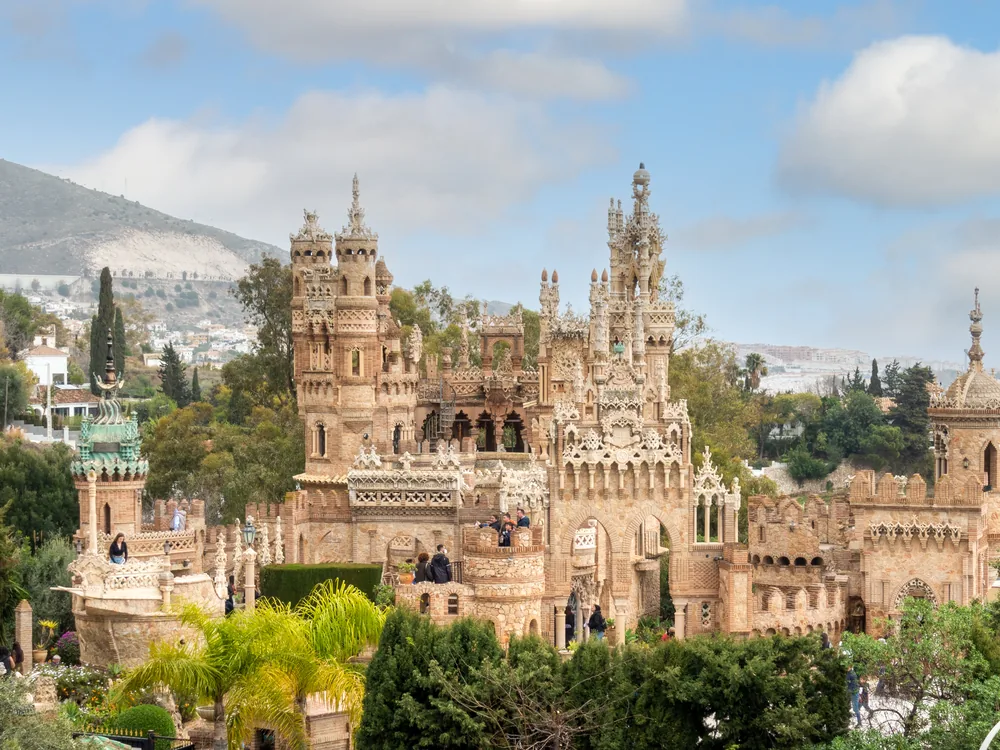
Built 1994 · Contemporary eclectic monument — the Castillo de Colomares is a 20th-century architectural monument built between 1987 and 1994 by local doctor Esteban Martín Martín as a personal tribute to Christopher Columbus and the 1492 voyage; the structure combines elements of Byzantine, Romanesque, Gothic, Mudejar, and Renaissance architecture in a deliberate pastiche of the architectural styles of late 15th-century Spain; it contains what is claimed to be the world's smallest church (an interior chapel of 1.96 square metres, registered in the Guinness World Records); it is not a defensive fortification and has no medieval history
This page is part of an independent travel guide and is not affiliated with, endorsed by, or operated by Colomares Castle.
© Castles & Palaces
Quick Facts
- Hours
- Daily 10:00–14:00 and 16:00–20:00
- Guided tour from
- €9
- Duration
- 40–60 minutes (monument circuit + guided interpretation included with GetYourGuide ticket)
- Best time
- Year-round
- Nearest city
- Málaga
Featured Tour
Colomares Castle: Entrance + Guided Interpretation (World's Smallest Church)
Cancellation available · Instant confirmation
Highlights
- ✦⚠️ Modern monument, not a medieval castle — Castillo de Colomares was built between 1987 and 1994 by Benalmádena physician Esteban Martín Martín as a personal tribute to Christopher Columbus. It is a 20th-century architectural monument with no medieval history, no defensive military function, and no historical connection to the Spanish Crown or the 1492 voyage beyond its commemorative intent. Its castle-like silhouette is purely aesthetic. All structural and historical context on this page reflects the monument's actual nature.
- ✦Five architectural styles in one building — the monument deliberately combines Byzantine arches, Romanesque towers, Gothic ribbed vaulting, Mudejar decorative tilework, and Renaissance proportions in a unified composition; the combination references the architectural eclecticism of late 15th-century Spain, when all five styles coexisted across the peninsula at the time of the Columbus voyage
- ✦The world's smallest church — within the monument is a chapel registered in the Guinness World Records as the smallest church in the world, measuring 1.96 square metres; the space is genuinely tiny — a single person with arms outstretched could touch both walls — and contains a small altar, mosaic floor, and religious imagery; the Guinness certification is displayed at the entrance
- ✦The Columbus narrative — the monument's exterior surfaces are decorated with relief panels and inscriptions telling the story of Columbus's voyages: the 1492 first voyage to the Americas, the return to Palos de la Frontera, the subsequent three voyages; the iconographic programme covers the ships (Niña, Pinta, Santa María), Columbus's patrons (Ferdinand and Isabella), and the encounter with the indigenous peoples of the Caribbean
- ✦Benalmádena setting and Costa del Sol combination — Benalmádena is on the Costa del Sol, approximately 20km west of Málaga; the monument is set in a residential area of the town with views toward the Mediterranean; it combines naturally with a visit to Benalmádena's cable car (Teleférico Benalmádena, near the Tivoli World area), the Butterfly Park, or the Buddhist stupa; for castle visitors, Castillo de Gibralfaro in Málaga city (~20km east, on this site) provides the actual medieval fortification context
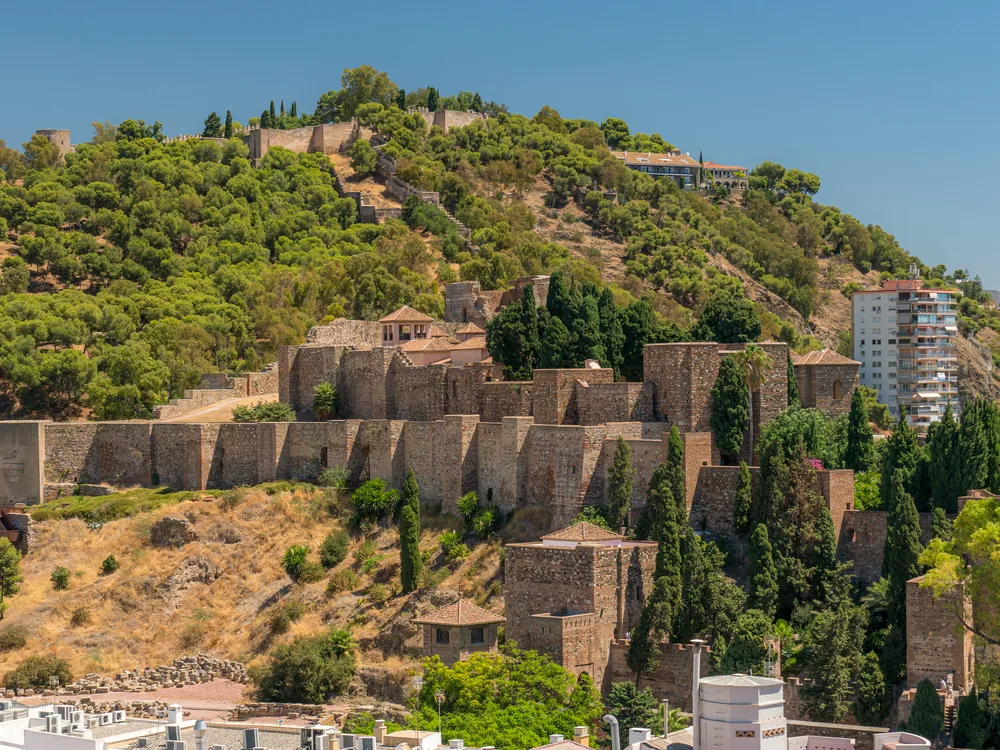
- ✦Near Castillo de Gibralfaro in Málaga (~20km east) — Gibralfaro is the 14th-century Nasrid castle on the hill above Málaga city with the Alcazaba at its base; the contrast between the genuine medieval Nasrid fortification (Gibralfaro) and the commemorative 20th-century eclectic monument (Colomares) is useful context for understanding what each site actually is
Skip the queue with a guided tour
Skip-the-line tickets & expert guides
The Castillo de Colomares in Benalmádena is one of the most unusual sites in Andalusia, and its unusual quality rests precisely on the clarity of what it is not. It is not a medieval castle. It was not built by a medieval noble, a Moorish caliph, or a Castilian king. It was designed and constructed between 1987 and 1994 by Esteban Martín Martín, a physician from Benalmádena who spent seven years building a monumental tribute to Christopher Columbus using his own resources and the help of local craftsmen. The result is a building that looks, from a distance, like a medieval castle with towers, battlements, and decorative stonework, and that reveals itself on closer inspection as a complex artistic project that combines five distinct architectural traditions in a single structure as a way of invoking the cultural diversity of the Spain that dispatched Columbus on the 1492 voyage.
Esteban Martín Martín was born in the Almería province and moved to Benalmádena as a practicing physician in the 1970s. The construction of the Colomares monument — which he began in 1987, five years before the quincentenary of the 1492 voyage — was a project of personal devotion rather than official commission. There was no architectural firm and no institutional patron; Martín worked with local craftsmen using traditional materials (stone, tile, ironwork, hand-carved wood) and directed the project himself over seven years. The monument was opened to the public in 1994, two years after the Columbus quincentenary. The Benalmádena municipality recognised it as a monument of local cultural interest, and it has since received legal architectural monument status from the Andalusian government.
The architectural eclecticism is programmatic, not accidental. The five styles present in the building — Byzantine, Romanesque, Gothic, Mudejar, and Renaissance — all coexisted in late 15th-century Spain, the Spain of Ferdinand and Isabella and of the 1492 dispatch. The Byzantine inheritance was visible in the Mozarabic churches of Castile; Romanesque structures were still being built or modified in northern Spain; Gothic was the dominant idiom for contemporary ecclesiastical construction; Mudejar — the Spanish synthesis of Islamic craft techniques (tile, plasterwork, woodwork) within Christian architectural frameworks — was at its fullest development; and Renaissance forms were beginning to arrive from Italy via the Aragonese connections of the Crown. The building is an argument in stone that these five traditions belonged to a single moment, a single civilisation in its complex late-medieval fullness.
The most-cited feature of the interior is the chapel registered in the Guinness World Records as the smallest church in the world — 1.96 square metres in floor area, containing a small altar, mosaic floor, and painted religious imagery. The space is functional as a church (marriages and baptisms have reportedly been performed there) while being physically extraordinary: a single adult with arms outstretched can touch both walls simultaneously. The Guinness certification is displayed at the entrance to the monument.
The exterior surfaces carry an extensive iconographic programme: relief panels depicting the three ships of the 1492 voyage (Niña, Pinta, Santa María), Columbus's appearance before Ferdinand and Isabella at the court of Granada, the arrival in the Caribbean, and the subsequent return to Palos de la Frontera. Inscriptions in Spanish chronicle the key dates and events. The total programme is an outdoor narrative of the Columbus voyage in architectural form.
The GetYourGuide-listed entry ticket (approximately 40 minutes with guided interpretation included) provides self-guided and interpretive access to the full monument. The visitor experience is consistently reported as enjoyable and visually impressive, with a large and positive review base; the 40-minute duration reflects the relatively contained scale of the site. Visitors interested in actual medieval Andalusian fortification should add Castillo de Gibralfaro (~20km east in Málaga city, on this site) as the primary castle destination of the area; Colomares is best understood as a supplementary contemporary monument rather than a primary heritage site.
History
Castillo de Colomares built 1987–1994 by local physician Esteban Martín Martín of Benalmádena as a personal tribute to Christopher Columbus and the 1492 voyage. No historical precedents on the site. Opened to the public 1994 (two years after the Columbus quincentenary). Guinness World Records registration for the world's smallest church (1.96 m²). Recognised as a monument of cultural interest by the Benalmádena municipality and the Junta de Andalucía. Now operated as a tourism and cultural site.
How to Visit
Getting there: Benalmádena is approximately 20 km west of Málaga on the Costa del Sol. By train from Málaga Centro-Alameda, take the C1 cercanías line to Benalmádena-Arroyo de la Miel station (~20 minutes); the monument is a 10-minute walk or taxi from the station. By car via the A-7 coastal road, around 20 minutes from Málaga city. Regular buses connect Málaga with Benalmádena throughout the day.
Tickets: Walk-up entry €5 adult, €3 child; no advance booking required (confirm current hours at castillocolomares.es). The GetYourGuide tour — a 40-minute guided interpretation of the monument with entry included, covering the Columbus narrative, the five architectural styles, and the world's smallest church — book 1 day in advance.
Practical tips: The monument is pleasant year-round thanks to Benalmádena's mild climate; in July–August, visit in the morning to avoid peak afternoon heat. Allow 40–60 minutes for the full circuit. Note that Colomares is a 20th-century tribute monument, not a medieval castle — pair it with Castillo de Gibralfaro in Málaga for genuine Nasrid fortification context.
Combine with: Castillo de Gibralfaro — the 14th-century Nasrid military castle above Málaga city, 20 km east, which provides the real medieval fortification context that makes Colomares's architectural pastiche most legible.
Frequently Asked Questions
No. The Castillo de Colomares was built between 1987 and 1994 — it is a 20th-century monument, not a medieval fortification. It was constructed by a Benalmádena physician, Esteban Martín Martín, as a personal tribute to Christopher Columbus and the 1492 voyage. It has no defensive military history, no historical occupants, and no connection to the Spanish Crown or the Moorish period beyond its commemorative architectural vocabulary. Its castle-like silhouette and medieval-style architectural details are intentional artistic choices, not historical survivals.
Location
Av. de la Constitución, s/n, 29631 Benalmádena, Málaga, Spain
Nearby Castles
Tours & Tickets
Powered by GetYourGuide
From
€9/ person