
La Mola, Isabel II Fortress
Fortalesa Isabel II - La Mola
Spain · Balearic Islands · Near Mahón (Maó), Menorca
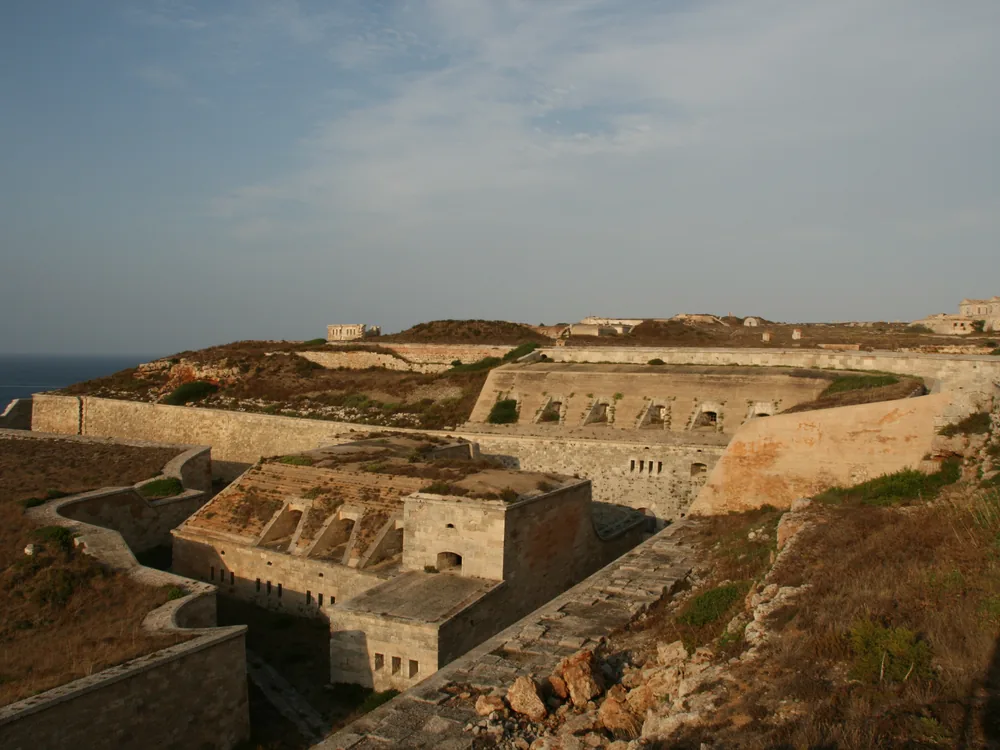
Built 1848 · 19th-century bastioned military fortification built between 1848 and 1875 on the headland of La Mola at the mouth of Menorca's Port of Mahón; the fortress complex covers ten defensive fronts divided between land and sea facing sections, with the sea-facing side reinforced by natural sea cliffs; notable structures include Fort Isabel II, the underground tunnel network of La Mina housing powder magazines and casemates, the Puerta de la Reina entrance, an Embrasure Gallery with 48 casemates for riflemen, and the Vickers Battery with naval guns originally capable of ranges up to 35 kilometres; served as a military prison between 1948 and 1970
This page is part of an independent travel guide and is not affiliated with, endorsed by, or operated by La Mola, Isabel II Fortress.
© Castles & Palaces
Quick Facts
- Hours
- Mon–Fri 10:00–14:00. Sat & Sun 10:00–20:00
- Entry via GetYourGuide
- €8
- Duration
- 1–2.5 hours
- Best time
- April to October
- Nearest city
- Mahón (Maó), Menorca
Featured Tour
Menorca: La Mola, Isabel II Fortress
Cancellation available · Instant confirmation
Highlights
- ✦One of the largest and best-preserved 19th-century military fortifications in Spain, built over 27 years (1848–1875) on the headland of La Mola specifically to deny the British Navy access to Menorca's Port of Mahón — a strategic port that had already changed hands between British, French, and Spanish control four times in the preceding century
- ✦Ten defensive fronts split between land and sea approaches, with natural sea cliffs reinforcing the sea-facing side — the fort exploits Menorca's geology as a structural element in a way that makes the site read differently from typical star-fort plans
- ✦The underground tunnel network of La Mina: a labyrinth of powder magazines, casemates, and communication passages built deep into the headland's rock, offering one of the most atmospheric underground military infrastructure experiences in the Balearic Islands
- ✦The Embrasure Gallery: 48 casemates built for riflemen, with narrow apertures commanding the sea approaches — a specific, named architectural element that gives the fortress its distinctive south-facing profile
- ✦The Vickers Battery naval guns, capable of ranges up to 35 km — a specific and dramatic piece of early-20th-century military hardware, added to a 19th-century fortification as technology evolved and the strategic threat to Port of Mahón continued into the naval arms race era
- ✦Fully wheelchair accessible with electric buggy hire available (extra cost) — one of the more genuinely accessible major military heritage sites in Spain
Skip the queue with a guided tour
Skip-the-line tickets & expert guides
The history of Menorca in the 18th century is largely the history of a harbour that everyone wanted. Port of Mahón — Maó in Catalan — is one of the finest natural deep-water harbours in the Mediterranean: long, sheltered, easily defensible from the land but difficult to block from the sea, with depth sufficient for the largest warships of the age. The British seized Menorca in 1708 during the War of the Spanish Succession and held it, with brief interruptions, for most of the 18th century, using Port Mahón as the primary base for the Royal Navy's Mediterranean operations. The French took it briefly in 1756 in the engagement that resulted in the court-martial and execution of Admiral Byng (a consequence so disproportionate to the actual outcome that Voltaire used it as the basis for Candide's satirical observation that 'in England it is thought necessary to kill an admiral from time to time, to encourage the others'). The Spanish recovered it in 1782, lost it again to the British in 1798, and recovered it finally in 1802 under the Treaty of Amiens.
By the 1840s, when Spain finally began serious construction of a permanent fortification on the La Mola headland at the harbour's mouth, the specific fear driving military planning was a fourth British seizure. The Fortress Isabel II — named for the reigning Spanish queen — was built between 1848 and 1875 over a 27-year construction programme: a timeline that reflects both the technical ambition of the project and the complex military engineering required to build on a headland of exposed limestone above open sea.
The fortress's design divides ten defensive fronts between land-facing and sea-facing sectors. The sea-facing side uses natural sea cliffs as part of its defensive structure — a deliberate integration of Menorca's geology that saves construction effort while creating vertical drops that no 19th-century amphibious assault could scale. The land-facing side has the more conventional military engineering: bastioned walls, glacis slopes, ditches, and the underground infrastructure required to store ammunition, house personnel, and maintain communications under fire. The overall plan is neither a simple star fort nor a linear coastal battery, but a hybrid that adapts the period's military engineering thinking to the specific shape of the La Mola peninsula.
Within the complex, several named sections reward specific attention. **Fort Isabel II** is the administrative and residential core. **La Mina** is the fortress's underground network: a labyrinth of tunnels cut into the headland's limestone connecting powder magazines, casemates, and communication passages — the kind of underground infrastructure that shows how military fortification in the industrial era moved systematically below ground to protect ammunition stores from bombardment. **The Puerta de la Reina** is the formal entrance gate, its name reflecting the same royal dedication as the fortress itself. **The Embrasure Gallery** presents 48 casemates for riflemen in a line along the southern cliff face — 48 narrow apertures commanding the sea approaches in a structure whose profile is unlike any other in the Balearic Islands. **The Vickers Battery** represents a later technological addition: naval guns installed in the early 20th century, when the strategic threat to Port of Mahón extended into the era of dreadnought naval warfare, with ranges documented at up to 35 kilometres — capable of engaging ships long before they could enter the harbour.
The fortress's more difficult chapter came between 1948 and 1970, when it served as a military prison under the Franco regime — a function that added a 20th-century layer to its already complex history. This chapter is less prominently interpreted on site but is part of the building's complete historical record.
The visit is flexible in length: 1 to 1.5 hours covers the main accessible section; the full circuit of all ten defensive fronts takes 2 to 2.5 hours. The fortress is large enough that the site recommends arriving at least 1.5 hours before closing regardless of which option you choose. Electric buggies and 4-to-6-seater vehicles are available for hire within the fortress at extra cost, making it one of the genuinely accessible major military heritage sites in Spain — the hire is extra to the €9 entry ticket but strongly recommended for visitors with limited mobility given the site's scale.
History
The Fortress Isabel II at La Mola was built between 1848 and 1875 to defend Menorca's strategic Port of Mahón — a harbour that had changed hands between British, French, and Spanish control multiple times during the 18th century. The fortress was designed to deny future access to the port by hostile naval forces, particularly the British Navy, which had used it as its primary Mediterranean base during periods of British occupation.
The fortification was built in stages over 27 years, incorporating ten defensive fronts, underground tunnel networks, riflemen's casemates, and later additions including the Vickers Battery naval guns. Between 1948 and 1970, the complex served as a military prison under the Franco regime. Today it operates as a public heritage site with an audio guide and optional vehicle hire, and is one of the most extensively visited military monuments in the Balearic Islands.
How to Visit
Getting there: La Mola headland lies approximately 7 km east of Mahón (Maó) along the M-3 road. By car, it is 10–12 minutes from Mahón city centre with free parking at the entrance. Taxis from the centre cost around €10–12 and take about 10 minutes. A water-taxi service from Port of Mahón offers a scenic sea approach — check local operators for current schedules. A parallel service road alongside the M-3 is available for cyclists and pedestrians.
Tickets: Walk-up entry €9 adult, free child. The GetYourGuide listing — entry ticket covering the full fortress complex — can be booked in advance online. No advance booking is strictly required, but confirming availability at lamola-menorca.es before travelling is advisable, especially in summer.
Practical tips: The full circuit of all ten defensive fronts takes 2–2.5 hours; the fortress recommends arriving at least 1.5 hours before closing. Electric buggies and 4-to-6-seater vehicles are available for hire within the site at extra cost — strongly recommended for visitors with limited mobility given the scale. An audio guide is available at the entrance and is worth taking given the number of named sections (La Mina, the Embrasure Gallery, the Vickers Battery) that are not clearly self-explanatory.
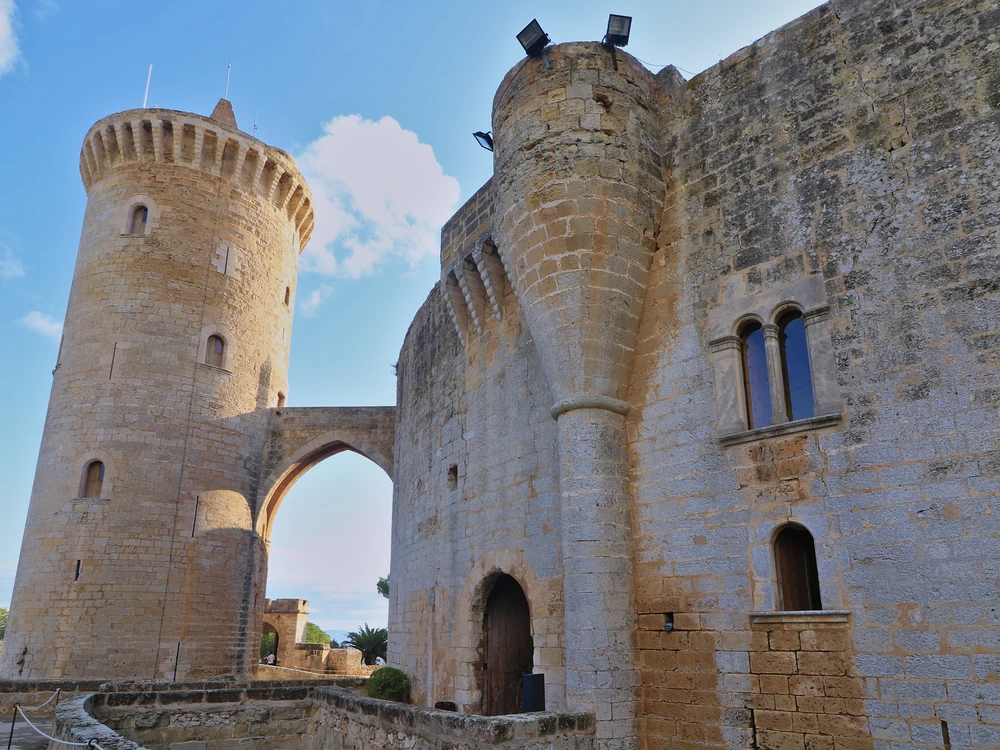
Combine with: Sagunto Castle on the Valencia coast — the closest major medieval fortress on the mainland, reachable by ferry from Mahón — or Bellver Castle on neighbouring Mallorca for a contrasting circular Gothic fortification from the same Mediterranean defensive tradition.
Frequently Asked Questions
The fortress was built between 1848 and 1875 specifically to prevent a future British seizure of Menorca's Port of Mahón — one of the finest natural deep-water harbours in the Mediterranean. Britain had controlled Menorca for much of the 18th century, using Port Mahón as the primary base for Royal Navy Mediterranean operations. Spain recovered Menorca in 1802 but by the 1840s still lacked a permanent fortification capable of defending the harbour mouth against a naval assault. The Fortress Isabel II was designed to close that gap by denying access to the port from the sea.
Location
Ctra. de La Mola, 07701 Maó, Illes Balears, Spain
Nearby Castles
Tours & Tickets
Powered by GetYourGuide
From
€8/ person