
Castle of Láchar
Castillo de Láchar
Spain · Andalusia (Granada province, Vega de Granada) · Near Granada
Built 1400 · Nasrid origins (15th century, last years of the kingdom of Granada); rebuilt in Neo-Arabic/Neo-Nasrid style late 19th–early 20th century under the Duke of San Pedro de Galatino, drawing explicitly on the Alhambra's decorative vocabulary
This page is part of an independent travel guide and is not affiliated with, endorsed by, or operated by Castle of Láchar.
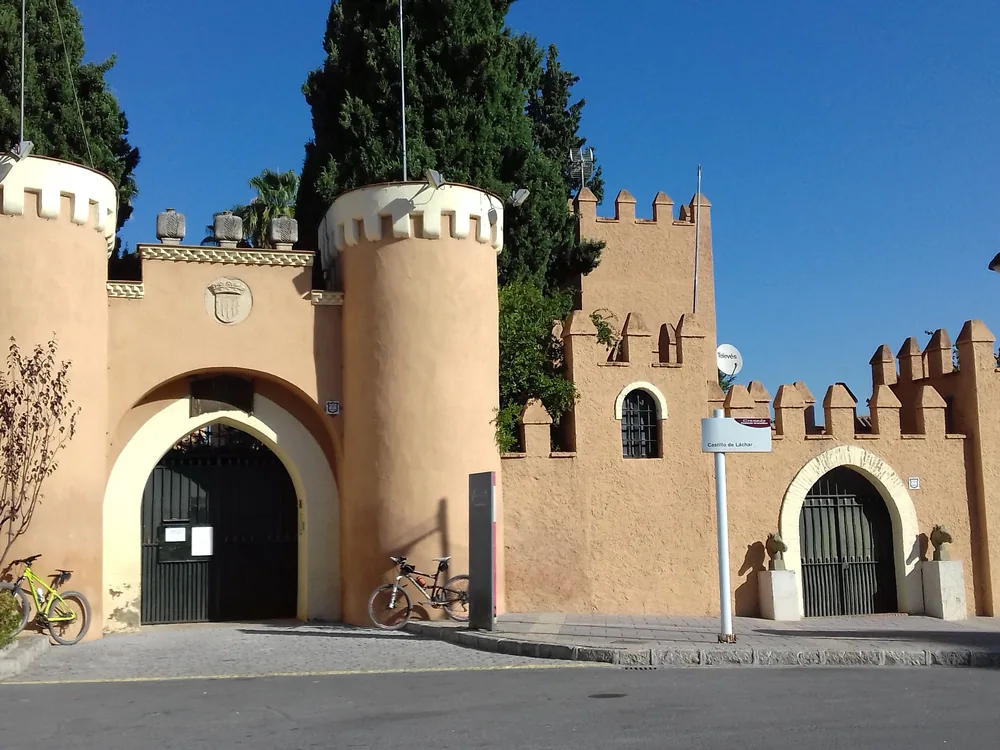
© Castles & Palaces
Quick Facts
- Hours
- Tue–Sun 10:00–14:00. Closed Mon
- Guided tour from
- €6
- Duration
- 1–1.5 hours (guided tour format)
- Best time
- March to June, September to November
- Booking
- Required — book 1+ days ahead
- Nearest city
- Granada
Featured Tour
Guided Visit to the Castle of Láchar, Granada
Cancellation available · Instant confirmation
Highlights
- ✦Neo-Nasrid architecture — the late 19th-century reconstruction by the Duke of San Pedro deliberately referenced the Alhambra (20km away) with horseshoe arches, azulejo tilework, muqarnas, and geometric arabesques, creating a Belle Époque Orientalist fantasy on a genuinely medieval Nasrid site
- ✦Nasrid origins — the site held a 14th-century Nasrid watchtower and a 15th-century castle built in the final years of Muhammad XII's kingdom; the 1492 reconquest passed the castle to the Spanish nobility
- ✦Joaquín Sorolla and Alfonso XIII — in its Belle Époque heyday the castle hosted the Valencian painter Sorolla (who made studies of the castle and gardens) and King Alfonso XIII
- ✦Restoration in progress — acquired by the Láchar town council in 2016, the castle is being restored under EU and regional cultural heritage funding; visiting now means seeing a live restoration site alongside the historic spaces
- ✦Vega de Granada setting — the castle commands views over the irrigated plain stretching west of Granada, one of Andalusia's most fertile agricultural landscapes
Skip the queue with a guided tour
Skip-the-line tickets & expert guides
The Castle of Láchar sits above the town of the same name in the Vega de Granada — the irrigated plain stretching west of the city, some 20 kilometres from the Alhambra — and its present appearance is a product of two entirely separate moments of construction: a 15th-century fortress built in the last years of the Nasrid kingdom, and a late 19th-century reconstruction that recast it in an ornate Neo-Arabic vocabulary deliberately recalling the monument on the hill above Granada. The juxtaposition of authentic Nasrid-era origins and Belle Époque Orientalist reimagining gives the castle a character unlike any other property in the province.
The site's first documented structure was a Nasrid watchtower from the 14th century — a strategic lookout above the Vega de Granada at a point where the plain narrows and the road toward Loja becomes visible for considerable distance in both directions. The castle proper was built in the 15th century, during the reign of Muhammad XII (Boabdil), in the final decades of the Nasrid kingdom. When Granada fell to Ferdinand and Isabella in January 1492, the castle passed to the Spanish nobility; it eventually came to the Cañaveral family, who held the estate for several centuries and made modest additions over successive generations.
The decisive transformation came in the 1890s and early 1900s, when Julio Quesada-Cañaveral y Cañaveral, Duke of San Pedro de Galatino, undertook a wholesale reconstruction of the castle in the Neo-Arabic style that had become fashionable in late 19th-century Andalusia — a mode of building that looked to Moorish architecture, and specifically to the Alhambra just 20 kilometres to the east, for its decorative vocabulary. The reconstruction replaced much of the surviving 15th-century fabric with a new building in azulejo tilework, horseshoe arches, arabesques, and geometric muqarnas — all consciously echoing the palatial apartments of the Nasrid palaces, though at smaller scale and in a Belle Époque rather than medieval register. It was, in effect, an aristocrat's deliberate homage to the Alhambra on a property that had originally been part of the same Nasrid cultural world.
In its heyday around the turn of the 20th century, the reconstructed castle was a celebrated destination in Andalusian society. The Valencian painter Joaquín Sorolla visited and made studies of the castle and its gardens; the painting produced from these studies is one of the more significant late Sorolla works to emerge from the Granada region. King Alfonso XIII visited the castle — his relationship with the Andalusian aristocracy was extensive — and the Duke of San Pedro moved in the social circles around the Bourbon court during the Restoration and early Alfonso XIII periods.
After the Civil War and through the middle of the 20th century, the castle fell into private disuse. The reconstruction of the late 19th century had not been maintained with the resources that had originally created it; the interiors deteriorated and parts of the building became inaccessible. By the late 20th century, the castle was in poor structural condition.
In 2016, the Láchar town council acquired the property and began a restoration programme funded through a combination of municipal resources, regional Andalusian cultural heritage grants, and EU structural funds. The restoration has been carried out in phases, consolidating the most urgent structural problems, reopening the main ceremonial spaces to visitors, and stabilizing the historic fabric. Some portions of the building remain under active restoration. The result is a castle that is now open to the public on small guided visits, with the restoration context itself — the scaffolding, the newly stabilized sections, the materials archaeology — forming part of the experience.
Visiting the Castle of Láchar means engaging with a property that is both genuinely old (the site has been occupied since at least the 14th century) and explicitly theatrical (the 19th-century reconstruction was designed to look more Alhambra-like than any actual medieval structure in the province would have done). The guided visit covers the main courtyard and its arcaded galleries, the principal reception rooms of the reconstruction, what survives of the 15th-century walls and fabric, and the views over the Vega de Granada from the upper levels.
The GetYourGuide guided visit (private group) is the primary way to book access. The visit lasts approximately 1.5 hours and includes the full circuit of currently accessible spaces. Because the Láchar council runs the property with limited staffing, visits outside scheduled times require prior arrangement — the GetYourGuide booking system handles this and is the most reliable way to confirm a specific date and time.
The broader context for understanding the Castle of Láchar is the late 19th-century vogue for Neo-Moorish architecture across Andalusia and Spain. The style emerged from a confluence of Romantic nationalism — which sought to reclaim the region's Moorish past as part of a Spanish national identity rather than a purely Catholic one — and an Orientalist aesthetic imported partly from France and Britain, where Islamic architecture had become fashionable as a decorative mode. The most celebrated example of the style is the Palacio de Mondragón in Ronda; the most elaborate is the Carlos Larios palace in Málaga. The Láchar reconstruction sits within this tradition but is unusual in being built on a site with genuine Nasrid origins rather than as a purely invented pastiche.
Láchar is located 20 kilometres west of Granada city centre, accessible by the A-92 motorway. It is not served by regular public transport from Granada — a car or taxi is required. The Alhambra, which the Láchar reconstruction so explicitly references, is 20 kilometres to the east and is naturally the primary context for visiting; seeing the original first allows the architectural quotation at Láchar to register fully. The town of Láchar itself is small and largely agricultural; the castle is the sole visitor destination, and there is no significant local tourism infrastructure beyond it.
History
Site occupied by Nasrid watchtower from the 14th century; castle built in the 15th century in the last years of the Nasrid kingdom of Granada. Passed to Cañaveral family after the 1492 Reconquista. Rebuilt in Neo-Arabic/Neo-Nasrid style c.1890–1910 by Julio Quesada-Cañaveral, Duke of San Pedro, referencing the nearby Alhambra. Painter Sorolla and King Alfonso XIII visited in the Belle Époque period. Castle fell into disuse mid-20th century. Acquired by Láchar town council in 2016; restoration ongoing.
How to Visit
Getting there: 20km west of Granada city centre via the A-92 motorway. Not accessible by public transport — car or taxi required. The castle is signposted from the Láchar exit.
Booking: Visits are guided only and must be pre-booked. The GetYourGuide tour is the most reliable booking route and confirms availability in real time.
Tickets: Walk-up entry €6 adult, €5 child. The GetYourGuide tour — Guided Visit to the Castle of Láchar, Granada — offers a guided visit; book in advance.
Practical tips: March to June, September to November — Andalusian summers are very hot. Book at least 1 day ahead.
Combine with: The Alhambra (20km east) is the natural pairing — seeing the Alhambra first establishes the architectural context that the Neo-Nasrid rebuilding of Láchar explicitly references.
Frequently Asked Questions
Neo-Nasrid (also called Neo-Arabic or Neo-Moorish) architecture is a 19th-century revival style that drew on the decorative vocabulary of Moorish Spain — specifically the Alhambra and the Alcázar of Seville — for new construction and renovations. Key elements include horseshoe arches, geometric arabesque tilework (azulejos), muqarnas (stalactite-style carved plasterwork), and interlaced geometric ornament. It was fashionable across Andalusia from the 1860s onward as Romantic nationalism and Orientalist aesthetics converged.
Location
Calle Castillo, 18220 Láchar, Granada, Spain
Nearby Castles
Tours & Tickets
Powered by GetYourGuide
From
€6/ person