
Las Dueñas Palace
Palacio de las Dueñas
Spain · Andalusia, Seville — historic centre, Macarena/Alfalfa area · Near Seville
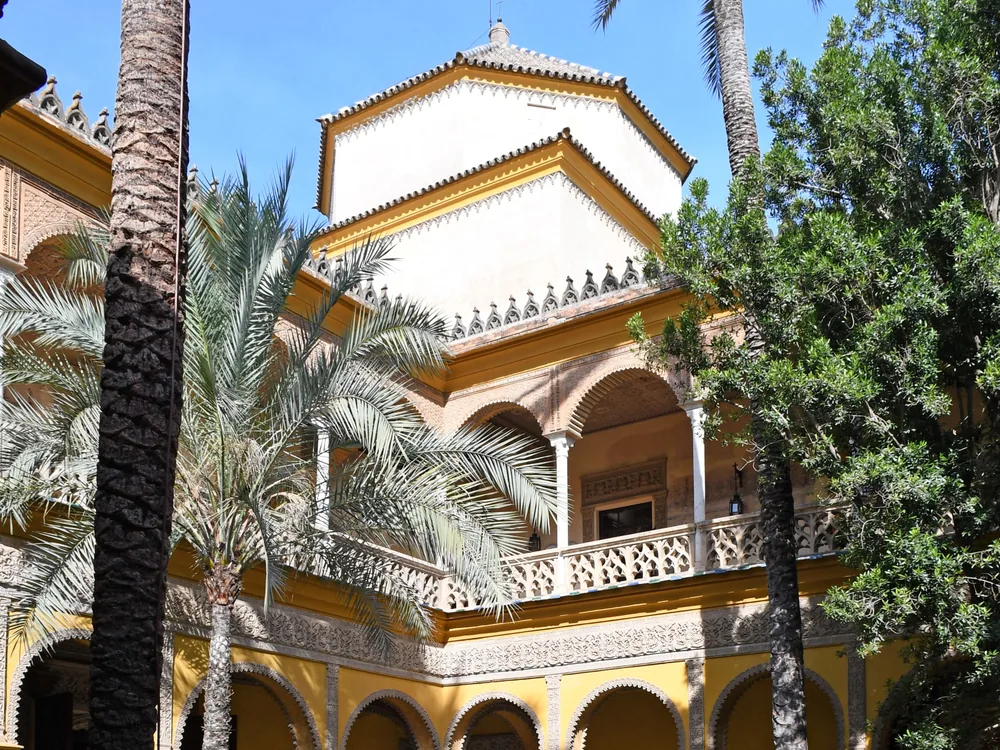
Built 1496 · Sevillian palace combining Gothic, Mudéjar, and Renaissance elements — the principal patio (courtyard) is a double-height arcaded square with slender Ionic columns, sculptural marble busts at the archway keystones, Mudéjar tile dados (azulejos) at lower register, and a central garden; the palace accumulated its current form through additions from the 15th to the 19th centuries, creating a layered domestic architecture typical of Seville's great urban noble palaces; the main facade on Calle Dueñas is relatively modest, preserving the Sevillian tradition of concealing interior splendour behind plain street walls
This page is part of an independent travel guide and is not affiliated with, endorsed by, or operated by Las Dueñas Palace.
© Castles & Palaces
Quick Facts
- Hours
- Daily 10:00–19:00
- Entry via GetYourGuide
- €15
- Duration
- 1–1.5 hours
- Best time
- October to April
- Nearest city
- Seville
Featured Tour
Seville: Las Dueñas Palace Entry Ticket and Audio Guide
Cancellation available · Instant confirmation
Highlights
- ✦Birthplace of Antonio Machado (1875) — Spain's most beloved 20th-century poet was born in this palace when his father was employed here; Machado's poetry (the Generation of '98, the landscapes of Castile, the elegy for his dead wife) is one of the summits of Spanish literature, and a modest plaque marks the room where he was born
- ✦Still inhabited — Las Dueñas is not a converted-to-museum aristocratic house but a working family palace: the House of Alba continues to use portions of the building while the main patio and state rooms are open to visitors; the atmosphere is correspondingly more lived-in and less institutional than the Alcázar
- ✦The main patio — one of the finest Sevillian palace courtyards: a double-height arcaded square with slender Ionic columns, sculptural marble busts at the archway keystones, Mudéjar azulejo tile dados, and a central garden; comparable to the Casa de Pilatos but less visited
- ✦Roman archaeological collection — the palace holds a significant collection of Roman sculpture, funerary stelae, and architectural fragments assembled by the Dukes of Alba from their estates and from private purchases, displayed throughout the patio galleries
- ✦Goya's portrait of the Duchess of Alba — the palace's most famous artwork, a Goya portrait of the 13th Duchess of Alba (whom the painter allegedly loved), one of the key works in the House of Alba's art collection
- ✦5-minute walk from the [Alcázar of Seville](/castles/spain/alcazar-seville) — the contrast is instructive: the Alcázar is a royal public monument receiving hundreds of thousands of visitors in a regimented circuit; Las Dueñas is an intimate private palace with a fraction of the crowds and the feel of an occupied aristocratic house
Skip the queue with a guided tour
Skip-the-line tickets & expert guides
Las Dueñas Palace stands on Calle Dueñas in Seville's Alfalfa neighbourhood — the dense residential quarter north of the Alcázar and the Cathedral, away from the main tourist circuit and entered through a relatively plain street facade that gives little indication of what lies inside. This is the Sevillian palace tradition at its most characteristic: an austere exterior and a lavish interior organised around a courtyard garden, where architectural ambition is directed inward rather than outward toward the street.
The name 'Dueñas' refers to the Dominican nuns (Dueñas) who held property in this neighbourhood from the medieval period. The current palace began to take shape in the late 15th century when the site was acquired by the powerful Enríquez and later Álvarez de Toledo family — the family that would become the Dukes of Alba, one of the oldest and most titled noble houses in Europe. Construction and expansion continued through the 16th century, with later additions in the 17th, 18th, and 19th centuries layering Renaissance, Baroque, and Romantic elements onto the Mudéjar foundation.
The palace today is owned by the Fundación Casa de Alba, the cultural foundation established by the 18th Duchess of Alba, Cayetana Fitz-James Stuart, who held more than 40 noble titles at her death in 2014 — a figure that placed her in the Guinness World Records as the most titled person in history. The palace was opened to the public in 2016 by her heirs. Portions of the building remain in private use by the family; the public route covers the main patio, the surrounding galleries, the garden rooms, and the principal state apartments.
The main courtyard is Las Dueñas' centerpiece. A double arcade of slender Ionic columns supports the upper gallery walkway, creating the characteristic Sevillian patio structure: ground-level arched loggia, upper-level open corridor, central garden below. What distinguishes Las Dueñas' patio from comparable examples — the Casa de Pilatos, the Alcázar's private courts — is the density of its decorative programme: marble sculptural busts at the archway keystones, Mudéjar azulejo tile dados at the column bases, Roman sarcophagi and architectural fragments positioned in the corners, and a garden planting that reflects careful horticultural attention. The patio is oriented to catch the morning light from the east, which illuminates the column arcade for approximately two hours each day in a way that has been exploited by photographers since the palace's opening.
The Roman archaeological collection distributed through the palace is one of the most significant private Roman sculpture collections in Andalusia, assembled by the Dukes of Alba from their extensive land holdings across southern Spain and from private purchases over several centuries. Funerary stelae, portrait busts, decorative capitals, and relief panels are positioned throughout the patio galleries and the garden rooms with varying degrees of contextualisation — the collection is displayed as part of a living domestic environment rather than in a museum arrangement.
Las Dueñas' most famous association is with Antonio Machado (1875–1939), the Sevillian-born poet who became one of the greatest writers of 20th-century Spanish literature. Machado was born in this palace — his father was employed in the household — and spent his earliest years in it before the family moved to Madrid. The poetry he later wrote, particularly the meditations on Castile, on loss, and on the Spain of the Generation of '98, earned him a literary reputation that placed him alongside Lorca and Unamuno. A commemorative plaque in the palace marks his birth room. The Goya portrait of the 13th Duchess of Alba — the legendary figure whom the painter reportedly loved — is the palace's most famous single artwork, a document of the intersection between aristocratic patronage and Romantic-era artistic personality.
The contrast with the [Alcázar of Seville](/castles/spain/alcazar-seville), a five-minute walk south, is informative. The Alcázar is a royal monument, a UNESCO World Heritage Site, and the most visited building in Seville; its circuit is structured and managed, its rooms are classified and interpreted, and its visitor numbers create the crowds typical of major Spanish heritage sites. Las Dueñas is none of these things. It is a private family palace, opened to visitors on its own terms, with the atmosphere of a place that is still in use rather than preserved for exhibition. The main patio might have a cat sleeping in the garden. A staff member might be rearranging furniture in a side room. These details — impossible at the Alcázar — give Las Dueñas a quality that the great public palaces cannot replicate: the sense of visiting somewhere that remains, in some essential way, someone's home.
History
Medieval Dominican convent property on the Calle Dueñas site. Acquired by the Enríquez family late 15th century; construction of main palace begins c.1496. Passes to the Álvarez de Toledo family (Dukes of Alba) through inheritance. Renaissance patio construction 16th century. Successive Alba dukes add to the collection and extend the building through the 17th–19th centuries. 13th Duchess of Alba subject of Goya portraits, early 19th century. Palace remains in private family use through 20th century. Antonio Machado born in the palace 1875. 18th Duchess of Alba (Cayetana Fitz-James Stuart) maintains the palace until her death 2014. Fundación Casa de Alba opens the palace to the public 2016.
How to Visit
Admission (~€12 adult): Entry ticket and audio guide available via GetYourGuide (official provider) or walk-up at the palace entrance. No advance booking required but these tickets allow flexibility.
Getting there: Calle Dueñas 5 is a 10-minute walk from the Cathedral and the Alcázar. From the Santa Justa railway station: approximately 20 minutes on foot or bus, or 10 minutes by taxi.
Tickets: Walk-up entry €12 adult, €6 child. The tour — Seville — offers a guided visit; book in advance.
Practical tips: October to April — Seville's summers (June–September) exceed 38°C regularly.
Combine with: Alcázar of Seville (~500m south) for a full Sevillian palace day; the Alcázar for the royal Mudéjar state rooms and gardens, Las Dueñas for the intimate private palace counterpart. Also consider the Casa de Pilatos (~300m east), another great Sevillian palace patio — free on some days for EU citizens.
Frequently Asked Questions
Yes — the Fundación Casa de Alba continues to use portions of the palace for family and foundation activities, while the public visitor route covers the main patio, state rooms, and gardens. Unlike a fully converted house-museum, Las Dueñas has the atmosphere of a place still in active use, which is much of its appeal over comparable Sevillian palace visits.
Location
Calle Dueñas 5, 41003 Seville, Spain
Nearby Castles
Tours & Tickets
Powered by GetYourGuide
From
€15/ person