
Miravet Castle
Castell de Miravet
Spain · Catalonia — Tarragona Province, Ribera d'Ebre comarca, village of Miravet on the Ebro · Near Tarragona
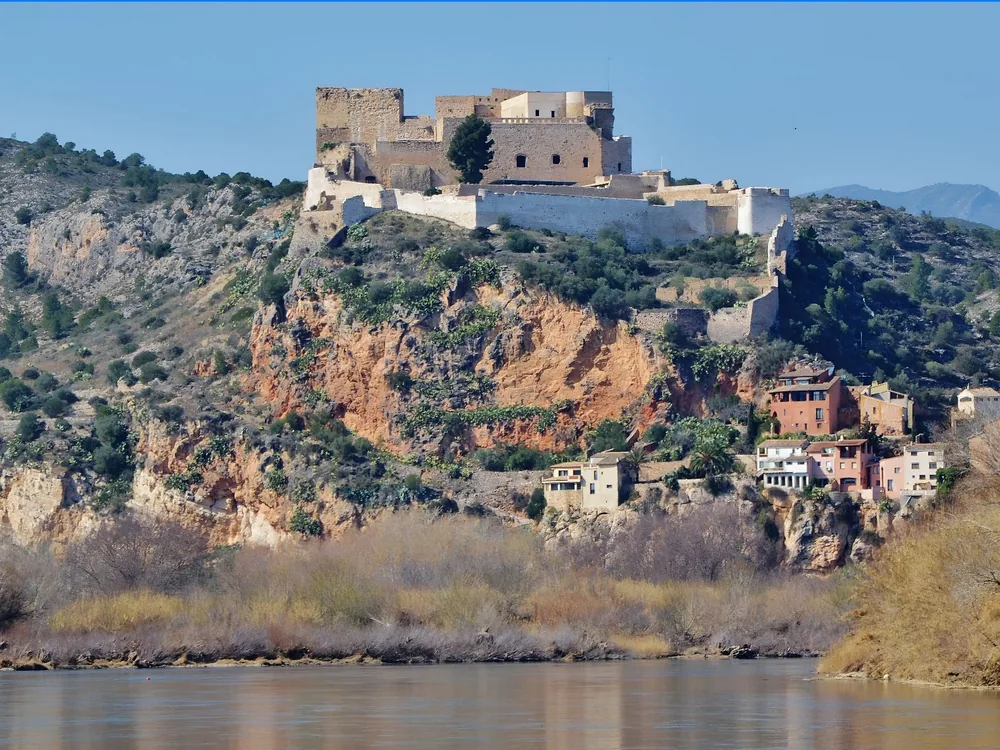
Built 1153 · Templar castle converted from a Moorish alcázar; Romanesque military and conventual architecture; the complex occupies a sheer cliff above the Ebro river, with the cliff face eliminating the need for defensive works on the river side; the concentric defensive circuit wraps the summit plateau, within which the Templars added a Romanesque church with carved stone capitals, communal refectory with original stone seating, dormitories, and chapter house; the plan closely follows the model of Templar monastico-military establishments developed across the order's network from the Holy Land to Portugal; the layering of Moorish defensive structure beneath Romanesque conventual architecture is legible throughout the complex
This page is part of an independent travel guide and is not affiliated with, endorsed by, or operated by Miravet Castle.
© Castles & Palaces
Quick Facts
- Hours
- Mon–Fri 10:00–18:00. Sat & Sun 10:00–19:00
- Entry from
- €17
- Duration
- 1.5–2 hours (self-guided with audio + VR)
- Best time
- April to October
- Nearest city
- Tarragona
Highlights
- ✦The Templars' last Iberian stand — when Philip IV of France suppressed the Knights Templar in October 1307, the Aragon Templars retreated to Miravet and held out against a royal siege by King James II for over a year, surrendering in November 1308; it was one of the final acts of the Templar suppression in Western Europe, making this cliff the site of the order's Iberian end
- ✦Romanesque conventual buildings — Miravet retains the most complete set of surviving Templar conventual architecture in Catalonia: Romanesque church with carved stone capitals, refectory with original stone benches, dormitories, and chapter house; the conventual fabric survives substantially intact and gives visitors a concrete sense of Templar communal life that few other Templar sites can match
- ✦Cliff position above the Ebro — the castle occupies a near-vertical limestone face on the right bank of the Ebro, with the river flowing directly beneath the walls; the position controlled river traffic through the Ebro gorge, and the views from the castle walls over the river, the terraced slopes, and the village below are among the most dramatic of any castle site in Catalonia
- ✦Audio guide and VR experience — the on-site ticket covers both a full audio guide routed through all major spaces and a virtual reality sequence showing the castle at its medieval Templar peak; the VR component reconstructs the castle as it appeared in the early 14th century, immediately before the suppression that ended the Templar occupation of this site
- ✦Moorish origins beneath the Templar fabric — Miravet was first built as a taifa alcázar controlling the Ebro river passage, taken by Ramon Berenguer IV of Aragon in 1153 and granted immediately to the Knights Templar; the Islamic defensive structure beneath the Romanesque conventual additions is legible throughout the complex, making the castle a vivid architectural record of the Reconquista in the Ebro valley
Skip the queue with a guided tour
Skip-the-line tickets & expert guides
Miravet Castle stands at one of the most dramatic sites in Catalonia — a near-vertical cliff of grey limestone dropping directly to the Ebro river, with the castle occupying the summit and the river flowing beneath its walls. The position explains everything about the castle's history: control of the cliff at this point in the Ebro gorge meant control of river traffic between the interior of the Iberian Peninsula and the Mediterranean, and that strategic reality made the site worth fortifying, fighting over, and rebuilding across more than a thousand years of Iberian history.
The site's origins are Moorish. Miravet was fortified as an alcázar under the Taifa of Tortosa, the Muslim city-state that controlled the lower Ebro valley after the fragmentation of the Caliphate of Córdoba in the early 11th century. The castle's position gave the taifa a commanding point of control over the river — anyone moving goods or armies up or down the Ebro had to pass beneath Miravet's walls. In 1153, the Crown of Aragon under Ramon Berenguer IV took the castle as part of the southward Christian advance through the Ebro basin. Rather than demolishing the Moorish structure, the Crown granted it to the Knights Templar, who would transform it into one of their most important Iberian preceptories.
The Templars spent the second half of the 12th century converting Miravet from an Islamic defensive structure into a Romanesque monastico-military complex. The castle's existing plan — concentric defensive walls on the cliff summit — was retained and reinforced, but within it the Templars added the buildings that defined their institutional character: a Romanesque church with carved stone capitals, a communal refectory with original stone seating benches, dormitories, and a chapter house where the order's governance was conducted. These conventual buildings follow the template established by Templar preceptories across the Holy Land and southern France, adapted for the Iberian climate and the specific topography of the cliff site.
The castle's most historically charged moment came in the early 14th century. When Philip IV of France moved against the Knights Templar in October 1307 — arresting members and seizing assets throughout the French kingdom — the Templars of the Crown of Aragon retreated to Miravet and refused to surrender to King James II's forces. The siege lasted more than a year. Miravet finally yielded in November 1308, one of the last Templar positions to fall in the Iberian Peninsula and one of the final scenes of the order's suppression in Western Europe.
Today, visitors enter via a combined ticket that includes an audio guide and a VR experience showing the castle at its medieval Templar peak. The audio guide routes through the defensive circuit, church, refectory, dormitories, and chapter house. The VR sequence uses digital reconstruction to place visitors within the castle as it appeared in the early 14th century — before the siege and surrender that ended the Templar occupation. The natural companion visit is [Siurana Castle](/castles/spain/siurana-castle), roughly 40 kilometres north in the Priorat, a Moorish cliff-top fortification in a dramatically different landscape of eroded limestone and wine-country hills.
History
The cliff above the Ebro at Miravet was first fortified by the Taifa of Tortosa in the early Moorish period, when controlling the river passage was essential to managing the lower Ebro valley's trade and military routes. Ramon Berenguer IV, Count of Barcelona and Prince of Aragon, took the site in 1153 as part of the sustained Christian advance southward through the Ebro basin that characterised mid-12th-century Iberian politics. Rather than retaining the castle for the Crown, Ramon Berenguer granted it to the Knights Templar — the military-religious order that had already proved invaluable to the Aragonese frontier campaigns — and the Templars spent the following decades transforming an Islamic alcázar into a Romanesque preceptory.
The conventual buildings added in this period — church, refectory, dormitories, chapter house — followed the architectural model the Templars had developed across their network from Palestine to Portugal. Miravet became one of the order's most significant Iberian houses, administering a substantial territory in the Ebro valley. The castle's most famous chapter began in October 1307, when Philip IV of France ordered the simultaneous arrest of all Templars in his kingdom. The Templars of Aragon withdrew to Miravet and withstood a royal siege for over a year before surrendering in November 1308 — one of the final acts of the order's suppression in Western Europe. The castle subsequently passed to the Order of Hospitallers and eventually to the Crown.
How to Visit
Getting there: Miravet village is 75 km northwest of Tarragona and about 45 km from Tortosa; car is the most practical option. From Tarragona, take the AP-2 motorway west toward Lleida, exit at Móra d'Ebre, then follow the N-230 south and local roads to Miravet — journey time approximately 1 hour. Tortosa is the nearest rail town (about 30 minutes by car from Miravet); no direct bus or train serves the village itself.
Tickets: Entry covers the castle complex, full audio guide, and the VR experience showing the castle at its medieval Templar peak; the standard GetYourGuide combined ticket is the format in which most visitors book. Advance booking via GetYourGuide is recommended from April to October, though walk-up entry is sometimes available — confirm at castelldemiravet.com. Children's admission is approximately €9.
Practical tips: The cliff position means the castle is exposed to direct sun for much of the day; avoid visiting in July–August midday heat, when the stone surfaces become extremely hot. Spring and autumn provide the most comfortable conditions on the exposed site. Allow time after the castle for the village of Miravet itself — a well-preserved medieval Ebro settlement with a centuries-old pottery tradition and the famous Miravet ferry (barqueta de Miravet), one of the last wooden cable-drawn ferries in Spain, still crossing the river by the village.
Combine with: Siurana Castle lies 40 km north in the Priorat comarca — a Moorish cliff-top fortification in a dramatically different landscape of eroded limestone and wine country, worth pairing with Miravet for a full day in the castles of the Tarragona interior.
Frequently Asked Questions
The standard GetYourGuide ticket covers three components: admission to the castle complex, an audio guide that routes visitors through all the main spaces — defensive circuit, Romanesque church, refectory, dormitories, and chapter house — and a VR experience using digital reconstruction to show the castle as it appeared during the Templar period in the early 14th century. The combined format gives both the physical tour of surviving fabric and a visual reconstruction of how the Templar community lived and governed at the site.
Location
Carrer del Castell, s/n, 43747 Miravet, Tarragona, Spain
Nearby Castles

Tours & Tickets
Powered by GetYourGuide
Entry from
€17/ adult