
Ulldecona Castle
Castell d'Ulldecona
Spain · Catalonia, Terres de l'Ebre — Ulldecona, Montsià, Ebro Delta hinterland · Near Tortosa
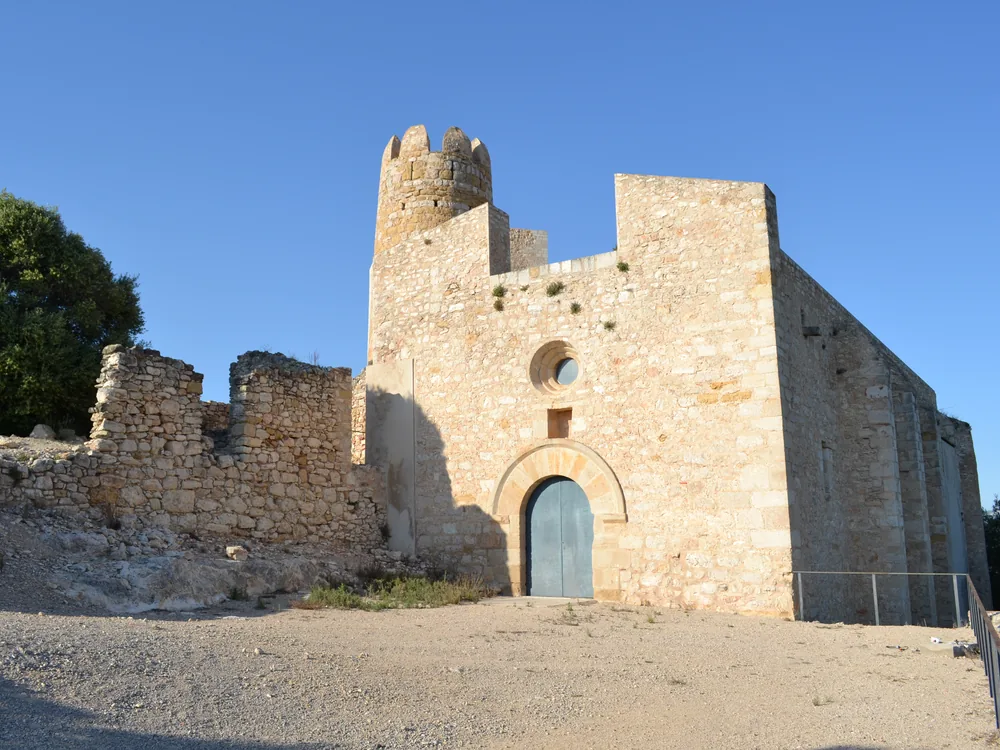
Built 900 · 10th-century Moorish-era foundation with later Christian Reconquista additions — the castle was built by the Moors on a commanding rocky promontory above the town of Ulldecona as a defensive outpost of the Ebro frontier zone; after the Christian Reconquista of the area in the 12th century it was maintained and modified by the Knights Templar and subsequently by the Knights Hospitaller as a strategic castle in the Ebro Delta hinterland; the current structure retains elements from multiple periods, with the medieval keep and curtain walls as the dominant architectural elements; the site is set on a limestone ridge with panoramic views over the Montsià plain toward the Ebro Delta and the Ports de Beseit mountain range
This page is part of an independent travel guide and is not affiliated with, endorsed by, or operated by Ulldecona Castle.
© Castles & Palaces
Quick Facts
- Hours
- Tue–Sun 10:00–14:00, 16:00–19:00. Closed Mon
- Guided tour from
- €15
- Duration
- 6 hours (GetYourGuide full day combining castle + millenary olive trees museum + Levantine cave paintings); 1–1.5 hours for castle alone
- Best time
- March to June and September to November
- Nearest city
- Tortosa
Featured Tour
Ulldecona: Combined Day Tour — Castle, Millenary Olive Trees Museum & Levantine Cave Paintings
Cancellation available · Instant confirmation
Highlights
- ✦Ulldecona Castle — the 10th-century Moorish fortress on a commanding limestone promontory has panoramic views over the Montsià plain toward the Ebro Delta and the Ports de Beseit mountains; it later passed to the Knights Templar and Knights Hospitaller in the post-Reconquista period, leaving multiple building phases in the current structure
- ✦Millenary olive trees (oliveres mil·lenàries) — the Terres de l'Ebre region around Ulldecona contains one of Europe's largest concentrations of ancient olive trees, some documented as 1,000–2,000 years old (verifiable by carbon dating); the Museu de les Oliveres Mil·lenàries includes some of the oldest known specimens, with gnarled, hollow trunks of extraordinary sculptural character; this is the most unusual element of the combined visit — not a standard museum but a living landscape of ancient trees
- ✦Levantine cave paintings — the Terres de l'Ebre area contains a number of sites with Levantine rock art (prehistoric cave paintings, typically 6,000–10,000 years old), declared a UNESCO World Heritage Site in 1998 as part of the 'Rock Art of the Mediterranean Basin on the Iberian Peninsula' inscription; the paintings depict hunting scenes and animal figures in the characteristic Levantine style (small-scale figures, dynamic compositions, red ochre pigment)
- ✦Three-site combined day — the GetYourGuide tour (6 hours) combines the castle visit, the millenary olive trees museum, and the cave paintings site in a single guided day; this combination is uncommon in European castle tour formats and gives Ulldecona a distinctive multi-layered day-visit character
- ✦UNESCO World Heritage rock art context — the cave paintings site near Ulldecona is one of the southern Catalunya sites included in the 'Rock Art of the Mediterranean Basin on the Iberian Peninsula' UNESCO inscription (1998), which covers sites across eastern Spain; the Terres de l'Ebre sites are among the less-visited in this inscription and retain a relatively unmanaged character
- ✦Ebro Delta hinterland — Ulldecona is 30km from the Ebro Delta (Delta de l'Ebre) — a UNESCO Biosphere Reserve and one of the most important wetland bird habitats in western Europe, with rice paddies, flamingo populations, and Audouin's gull breeding colonies; a natural complement to the cultural sites for visitors spending two or more days in the Terres de l'Ebre
Skip the queue with a guided tour
Skip-the-line tickets & expert guides
Ulldecona Castle stands on a rocky limestone promontory above the town of Ulldecona, in the Montsià comarca of southern Catalonia — the Terres de l'Ebre region at the mouth of the Ebro River, where Catalonia transitions into the Valencia region and the landscape shifts from the wooded Ports de Beseit mountains to the flat alluvial plain of the delta. The castle's position — commanding the approaches to the Ebro valley from the south and with clear sightlines to the Ebro Delta coast — explains why it was built here in the 10th century by the Moorish rulers of the Ebro frontier zone and why it was subsequently maintained and modified by every power that controlled this border territory.
The Moorish construction of c.900 AD established the original defensive works on the promontory. After the Christian Reconquista extended south to the Ebro in the 12th century, the castle passed to the Knights Templar — the military-religious order that played a major role in the organisation and defence of the Christian territories in this part of the Iberian Peninsula — and subsequently to the Knights Hospitaller when the Templar order was dissolved by Papal decree in 1312. Both organisations left modifications on the structure; the current castle retains elements from the Moorish, Templar, and Hospitaller periods without any single phase dominating.
The GetYourGuide guided tour (6 hours, Spanish and Catalan languages) is the most efficient way to access all three of Ulldecona's primary visitor sites in a single day: the castle, the Museu de les Oliveres Mil·lenàries (the millenary olive tree collection), and the Levantine cave paintings. The three sites are distinct enough in character that combining them without a guide and vehicle would be logistically complex for visitors without local knowledge.
The olive trees (oliveres mil·lenàries) are the most unusual element of the combined day. The Terres de l'Ebre region — and the area immediately around Ulldecona in particular — contains one of the highest concentrations of certified millenary olive trees in Europe: specimens whose age, verified by carbon dating, exceeds 1,000 years, with some specimens approaching 2,000 years. The trunks of these trees — hollow in many cases, gnarled and branching in forms that resemble the abstract sculptures of Mediterranean mythology rather than functional agricultural trees — are the visual and conceptual centrepiece of the olive museum. The trees are still productive; they still fruit; they are still harvested. The oldest living organisms in the landscape are, in this region, olive trees.
The Levantine cave paintings accessible from Ulldecona are part of the UNESCO World Heritage inscription 'Rock Art of the Mediterranean Basin on the Iberian Peninsula' (1998) — an inscription covering more than 700 rock art sites across eastern Spain, stretching from the Valencia coastline to the Ebro Valley and into Catalonia. The Terres de l'Ebre sites are among the less-visited in the inscribed set; access typically requires a local guide because the paintings are in natural shelter sites on the hillsides rather than purpose-built museums.
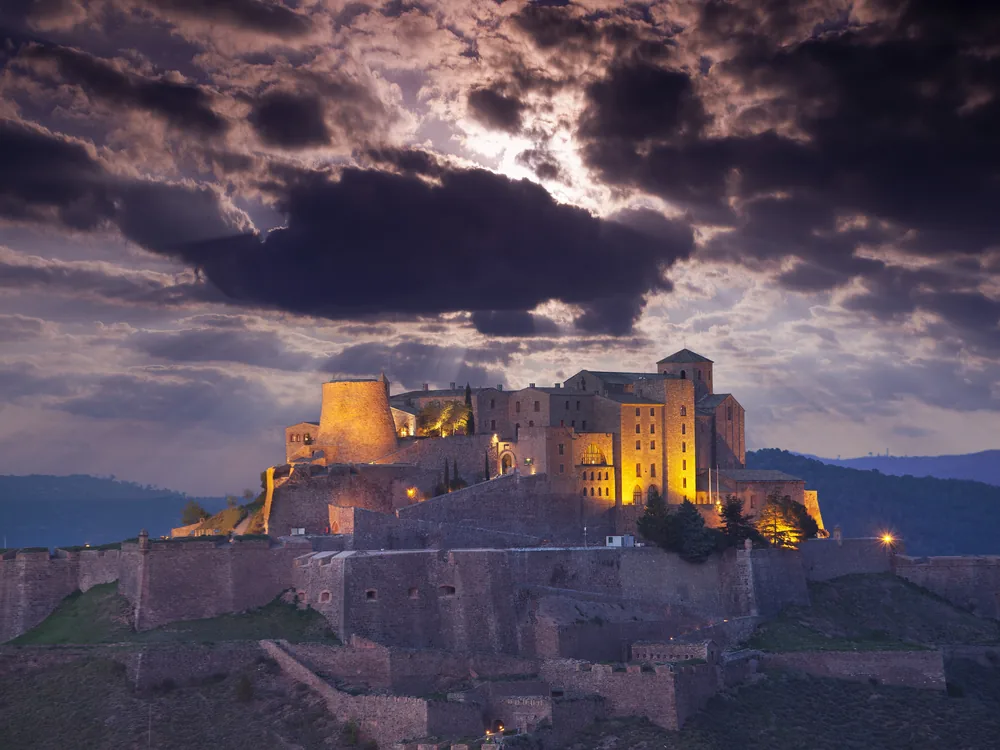
Ulldecona is accessible by car from Tortosa (~30km north), from Valencia (~150km south), or from Barcelona (~200km north). [Cardona Castle](/castles/spain/cardona-castle) — the medieval salt-mining fortress with the Collegial of Sant Vicenç — is approximately 200km north in the Cardoner Valley, a loose day-excursion connection for visitors touring the castles of Catalonia.
History
c.900 AD: Moorish defensive fortress established on the Ulldecona promontory as part of the Ebro frontier fortification system. 12th century: Reconquista — the castle passes to Christian control; granted to the Knights Templar who modify and maintain it. 1312: dissolution of the Knights Templar by Pope Clement V; castle passes to the Knights Hospitaller. Medieval period: further Hospitaller modifications; castle functions as administrative and defensive centre for the Montsià area. Post-medieval: castle declines as military importance diminishes. 20th century: restoration and preservation work. Current period: castle open as a public monument; the surrounding area designated for its natural and cultural heritage including the millenary olive trees and Levantine cave paintings.
How to Visit
Getting there: Ulldecona is about 30 km south of Tortosa by car (N-340) and 150 km north of Valencia on the AP-7. There is no practical public transport to the town — the nearest rail station (Ulldecona-Alcanar) has very limited services; a car is strongly recommended.
Tickets: Walk-up entry €5 adult, €3 child for the castle alone; confirm current hours at ulldecona.cat before visiting, as the castle is closed Mondays and hours change seasonally. The GetYourGuide tour — a 6-hour guided day combining the castle, the millenary olive trees museum, and the Levantine cave paintings, departing from Ulldecona at around 9:00 — is the most efficient way to cover all three sites; book in advance. The cave paintings require a local guide and are not accessible as an independent self-guided visit.
Practical tips: The three-site combination (castle + 2,000-year-old olive trees + UNESCO rock art) is what makes Ulldecona worth the detour; the castle alone is interesting but less distinctive than the full day. Confirm the GetYourGuide tour availability in advance as it runs in Spanish and Catalan only. Bring water for the cave paintings walk, which involves outdoor hiking on natural terrain. Spring and autumn are the most comfortable seasons; July–August reaches 35°C+.
Combine with: Siurana Castle — about 60 km northwest in the Priorat gorge country, another Moorish reconquest fortress in dramatic natural scenery — or Cardona Castle 200 km north, the great salt-mining medieval fortress of inland Catalonia.
Frequently Asked Questions
A millenary olive tree (olivera mil·lenària in Catalan) is a specimen whose age has been verified at 1,000 years or more, typically by carbon dating of core samples or by historical documentation. The Terres de l'Ebre region around Ulldecona has an exceptionally high concentration of these specimens — some dated to 1,000–2,000 years old — because the area's mild climate, well-drained limestone soils, and relatively undisturbed agricultural history have allowed olive trees to grow continuously on the same sites since Roman or even pre-Roman cultivation. The oldest specimens have trunks of 5–8 metres circumference with hollow centres, still producing fruit after two millennia of growth.
Location
Carrer del Castell s/n, 43550 Ulldecona, Tarragona, Catalonia, Spain
Nearby Castles
Tours & Tickets
Powered by GetYourGuide
From
€15/ person