
Siurana Castle
Castell de Siurana
Spain · Catalonia — Siurana, Municipality of Cornudella de Montsant, Priorat comarca, Province of Tarragona · Near Reus
Built 900 · Moorish (Andalusi) fortification, early medieval — built as a defensive stronghold on a near-impregnable rock promontory above the Siurana river gorge; the site was occupied and fortified by the Moors (Muslim rulers of Al-Andalus) from at least the early medieval period until 1153, when Siurana became the last Moorish stronghold in Catalonia to fall to the Christian Reconquista; the fortress ruins include sections of the original defensive wall, a late Romanesque church (the Ermita de Santa Maria, built after the reconquest), and the sheer cliffs of the promontory itself; the location was chosen entirely for its military defensibility — the promontory drops vertically hundreds of metres on three sides into the Siurana gorge, leaving the landward approach as the only viable route of attack; the modern village of Siurana, with its medieval-plan lanes and vernacular stone houses, occupies the same promontory as the original fortress
This page is part of an independent travel guide and is not affiliated with, endorsed by, or operated by Siurana Castle.

© Castles & Palaces
Quick Facts
- Hours
- Mon Open (exterior ruins and village accessible at all times). Tue–Sun Open
- Guided tour from
- €450
- Duration
- 1.5–2 hours (village walk, fortress ruins, Ermita de Santa Maria, cliff viewpoints, and the Roca de la Mora); allow more time for the climbing area or surrounding gorge hike
- Best time
- April to June and September to November
- Nearest city
- Reus
Featured Tour
From Salou: Siurana Village & Priorat Private Tour
Cancellation available · Instant confirmation
Highlights
- ✦The last Moorish stronghold in Catalonia — in 1153, Christian forces under Ramon Berenguer IV, Count of Barcelona, captured Siurana, ending Muslim rule in Catalonia; it was the last Moorish-held position in the region and its fall completed the Reconquista of what is now Catalonia; the site had been held by the Moors for centuries, its clifftop position making it nearly impregnable; the fall of Siurana is a foundational event in Catalan history
- ✦The legend of the Moorish princess — according to the legend associated with the site, when Christian forces breached the walls of Siurana in 1153, a Moorish princess (variously named Abriham or Zenobia in different tellings) rode her horse to the edge of the cliff rather than surrender; the horse's hoofprint is said to be visible on the rock face, and the promontory known as the Roca de la Mora ('the Moor's rock') marks the spot; the legend — almost certainly apocryphal but deeply embedded in local identity — gives the cliff-edge site an emotional charge that architectural ruins alone rarely achieve
- ✦World-class sport climbing — the limestone cliffs of the Siurana gorge are among the most significant sport climbing destinations in Europe; the area is known for extremely difficult routes, and Siurana is on the itinerary of professional climbers from across the world; the name 'Siurana' appears in international climbing literature as a benchmark location; the climbing and the medieval fortress share the same cliffs, and the area around the village rewards visitors regardless of whether they climb
- ✦Priorat wine region — the village of Siurana sits within the Priorat comarca, one of only two Spanish wine regions with DOCa (Denominación de Origen Calificada) status (the other is Rioja); the Priorat's llicorella slate soils and extremely low-yielding Garnacha and Cariñena vines produce some of Spain's most concentrated and expensive wines; the combination of a historic Moorish fortress, world-class climbing, and one of Spain's great wine regions in the same small area is unusual
- ✦Siurana Reservoir and gorge landscape — the Siurana reservoir (Pantà de Siurana), completed in the 20th century, fills the river gorge below the village; the combination of the vertical cliffs, the reservoir, and the forested gorge gives the landscape around Siurana a visual drama that is exceptional even by the standards of Catalonia's varied geography; the reservoir is visible from the cliff-edge viewpoints directly below the fortress ruins
Skip the queue with a guided tour
Skip-the-line tickets & expert guides
The promontory at Siurana was chosen as a fortress site because of its geography. On three sides, the rock drops hundreds of metres in vertical limestone cliffs to the Siurana river gorge below; on the fourth, the landward approach rises across a narrow ridge that is the only viable route of access. For a medieval military commander, the site was nearly self-defending. A modest garrison holding the landward approach could resist a force many times larger; the cliffs did the work that walls could only partially replicate elsewhere. The Moors, who held Siurana as part of their territory in what is now Catalonia from at least the early medieval period, recognised this and fortified it accordingly.
In 1153, Christian forces under Ramon Berenguer IV, Count of Barcelona, captured Siurana. It was the last Moorish stronghold in Catalonia to fall to the Reconquista — the centuries-long Christian military campaign to reclaim the Iberian Peninsula from Muslim rule. The fall of Siurana completed the Reconquista of what is now Catalonia, making the event a foundational moment in the region's history. When the Christian forces entered the fortress, they found a Moorish position that had held out long after the surrounding territory was taken — a final redoubt whose geographical advantages had extended Muslim rule in the region by years or decades beyond what the military balance would otherwise have allowed.
The legend attached to the final moment of the fortress's fall is one of the more haunting in Catalan tradition. According to the story — almost certainly apocryphal in its details, but deeply embedded in the local identity of the site — a Moorish princess, rather than surrender to the Christian forces, rode her horse to the edge of the cliff and jumped. The horse's hoofprint is said to be visible on the limestone at the place now known as the Roca de la Mora ('the Moor's rock'), the promontory directly above the vertical drop into the gorge. The legend has no documentary basis but has the quality of a story that a place generates: the cliff edge, the defeated civilisation, the refusal of surrender, and the vertical fall into the gorge below are physical facts about the site, and the legend gives them a human dimension.
What remains of the fortress today is fragmentary. Sections of the original Moorish defensive walls survive, along with the late Romanesque church of Santa Maria, built after the reconquest as the physical expression of the Christian claim on the recaptured site. The village of Siurana — with its medieval-plan lanes, vernacular stone houses, and cliff-edge position — occupies the same promontory and is itself a heritage site: a small hilltop settlement that has changed relatively little in physical character since the medieval period. The combination of the fortress ruins, the church, the village, and the cliff-edge viewpoints makes a visit to Siurana a compact but rich experience.
The same limestone cliffs that made Siurana defensible in the medieval period have made it one of the most important sport climbing destinations in Europe in the modern era. The routes on the Siurana gorge walls are known internationally in the climbing community; some of the hardest sport climbing grades in the world have been established here, and the area attracts professional climbers from across Europe and beyond. The combination of a medieval Moorish fortress and a world-class contemporary climbing venue sharing the same cliff face is unusual enough to deserve mention even for visitors who do not climb.
The surrounding Priorat comarca adds a third dimension. Priorat is one of only two Spanish wine regions to hold DOCa status — the highest classification in Spanish wine regulation, indicating a region with both exceptional quality and a rigorous governance system. The Priorat's distinctive soils (llicorella, a dark shale and slate composite) and its old-vine Garnacha and Cariñena plantings produce wines of extreme concentration and longevity that are among Spain's most expensive and sought-after. The village of Siurana and the fortress above it sit at the centre of this wine landscape; the terraced vineyards visible from the cliff-edge viewpoints belong to the same DOCa that produces the bottles on Michelin-starred wine lists across Europe.
The GYG private group tour (t878186) departs from Salou, a resort town south of Tarragona, and visits Siurana and its surrounding area with a private guide over a full afternoon. The tour provides transport from the coast and gives the site a historical and wine-regional context that an independent walk through the ruins would not necessarily provide.
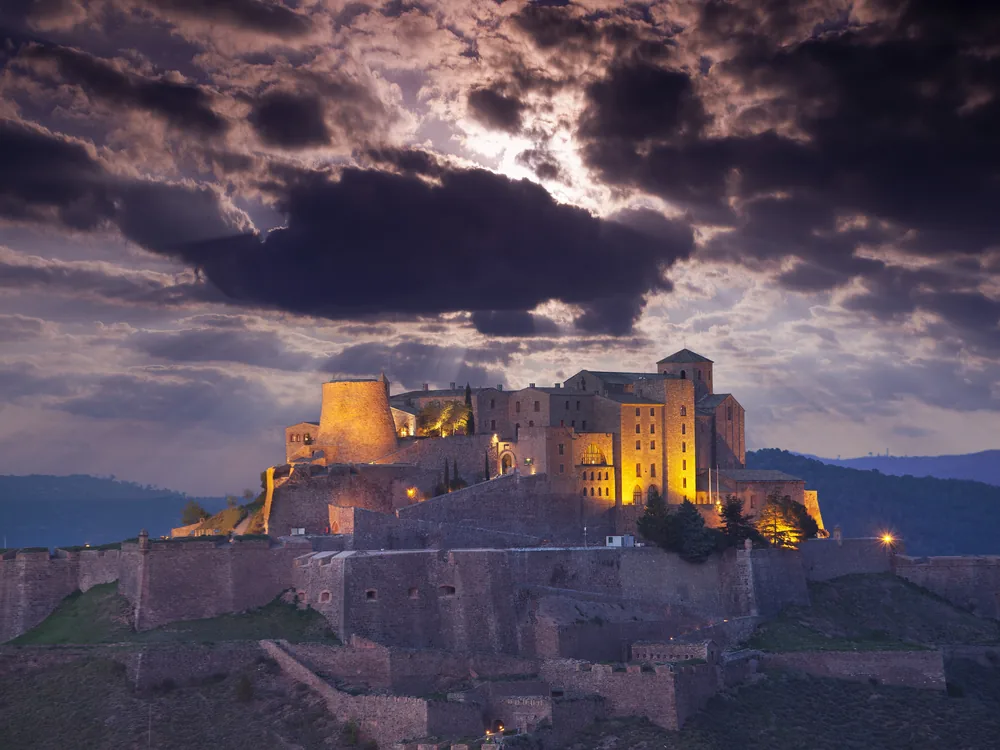
[Cardona Castle](/castles/spain/cardona-castle) — the 9th-century Carolingian fortress above the town of Cardona in the Bages comarca, approximately 120km northwest of Siurana — is a larger and better-preserved Catalan medieval fortress with a similarly significant role in Catalan history.
History
Pre-8th century: the Siurana promontory may have had pre-Islamic occupation given its strategic position. 8th–11th century: Siurana under Moorish (Andalusi) control as part of the Muslim territory of the Iberian Peninsula; fortified as a stronghold. 11th–12th century: as Christian forces advance southward in the Reconquista, Siurana becomes an increasingly important Moorish frontier position. 1153: Ramon Berenguer IV, Count of Barcelona, captures Siurana — the last Moorish stronghold in Catalonia; Christian rule established; Ermita de Santa Maria built on the site. 12th–15th century: Siurana under Christian feudal control; the village occupies the promontory. Early modern and modern period: the village and fortress ruins remain in place; the site becomes a regional heritage attraction. 20th century: Siurana Reservoir (Pantà de Siurana) constructed below the promontory, filling the Siurana river gorge. Late 20th–21st century: sport climbing community discovers the Siurana gorge limestone; Siurana becomes a major international climbing destination. Present day: free access to the ruins and village; GYG private tours available from the coast.
How to Visit
Getting there: Siurana is about 40 km from Reus and 55 km from Tarragona by road — a car is essential, as no public transport serves the village. From Cornudella de Montsant on the main valley road, a narrow 8 km lane with passing places climbs to the promontory. Parking on the promontory is limited: arrive early in summer and at weekends.
Tickets: Free entry. The ruins, village lanes, and cliff-edge viewpoints are accessible at all times year-round with no admission charge. The GYG private group tour (t878186, from €450) — a 7-hour private guided visit from Salou covering the fortress, village, and Priorat wine landscape, with transport included — is the option for groups wanting historical context without the self-drive logistics; book in advance.
Practical tips: Allow 1.5–2 hours for the village walk, fortress wall sections, Ermita de Santa Maria, and the cliff viewpoints including the Roca de la Mora — the promontory edge where the legend of the Moorish princess is anchored, with near-vertical drops into the gorge. Spring (April–June) and autumn (September–November) give the best conditions; the narrow access road becomes congested in July–August and the heat is intense. The Priorat harvest season (September–October) is the most atmospheric time to see the terraced vineyards visible from the clifftops — they belong to one of only two Spanish DOCa wine zones.
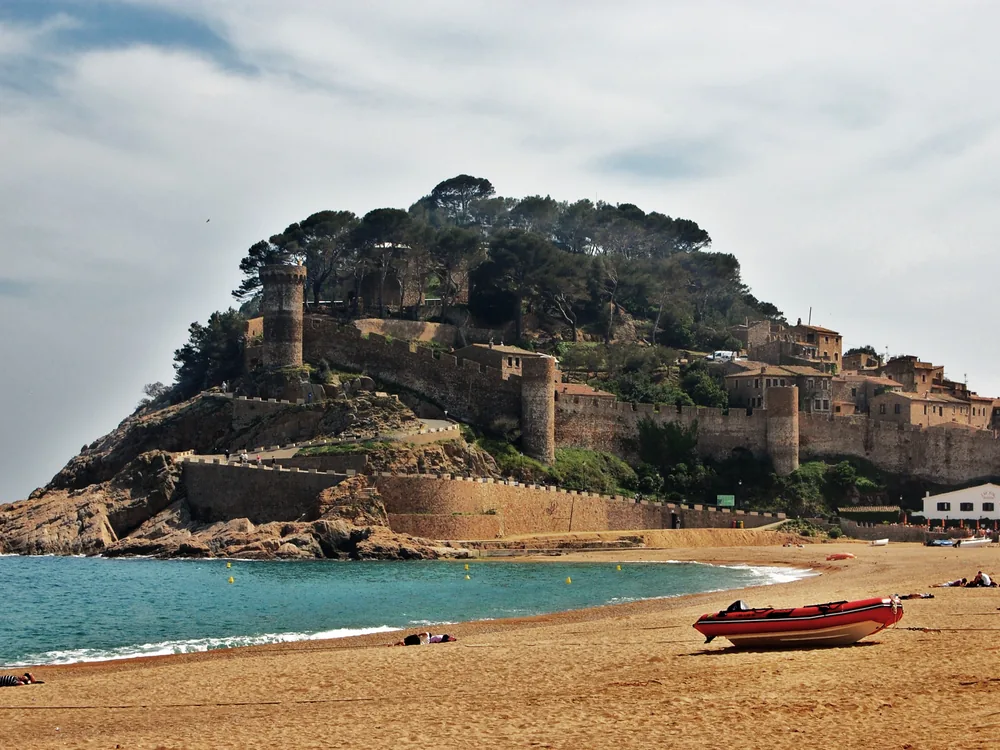
Combine with: [Cardona Castle](/castles/spain/cardona-castle) — the 9th-century Carolingian fortress about 120 km northwest, a larger and better-preserved Catalan medieval stronghold — or [Castle of Tossa de Mar](/castles/spain/castell-de-tossa-de-mar) on the Costa Brava, around 100 km northeast, for a contrast between inland Catalan fortress ruins and a coastal walled town.
Frequently Asked Questions
In 1153, Christian forces under Ramon Berenguer IV, Count of Barcelona, captured the Moorish fortress of Siurana — the last Muslim-held stronghold in Catalonia. The Reconquista (the Christian military campaign to reclaim the Iberian Peninsula from Muslim rule) had progressively pushed southward through what is now Catalonia over several centuries, but Siurana's near-impregnable clifftop position had allowed it to hold out long after the surrounding territory fell. Its capture in 1153 completed the Reconquista of Catalonia — after this date, there were no remaining Muslim-controlled positions in the region. The event is a foundational moment in Catalan history, and the site retains a historical weight that the fragmentary ruins alone do not fully communicate.
Location
Castell de Siurana, 43360 Siurana, Cornudella de Montsant, Tarragona, Catalonia, Spain
Nearby Castles
Tours & Tickets
Powered by GetYourGuide
From
€450/ person