
Sagunto Castle
Castell de Sagunt
Spain · Valencian Community, Valencia Province — Sagunto, 25km north of Valencia · Near Valencia
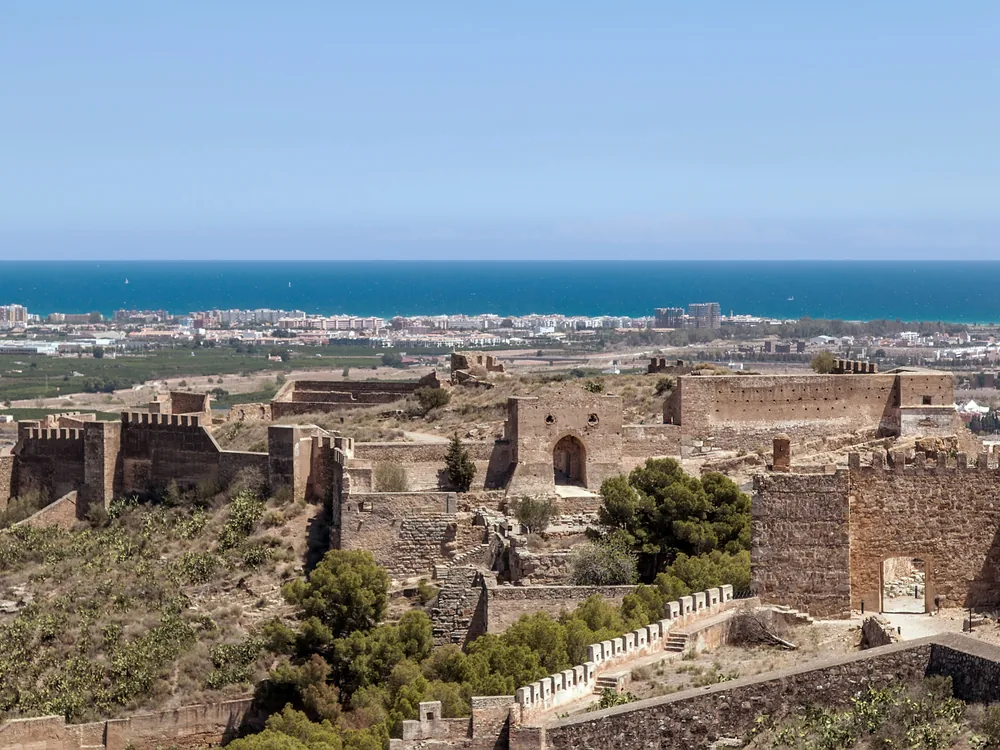
4th–3rd century BC · Exceptional multi-layer site spanning 2,000+ years of fortification — the castle ridge contains identifiable Iberian, Roman, Visigoth, Moorish, and medieval Christian construction phases in sequential stratigraphic layers; the Iberian oppidum (fortified settlement, 4th–3rd century BC) was the original defensive use of the ridge; the Romans converted it after the destruction of 219 BC into a military installation and acropolis; the Visigoths maintained it; the Moors extended the fortification system with towers and cisterns in the Islamic period; the Christian Reconquista forces modified it again in the 13th century; the total enclosed area of the fortress ridge is approximately 7 hectares, making it one of the largest castle complexes by ground area in Spain; the adjacent Roman Theatre (Teatro Romano), partially carved into the hillside below the castle in the 1st century BC, is a distinct monument included in the same entry ticket
This page is part of an independent travel guide and is not affiliated with, endorsed by, or operated by Sagunto Castle.
© Castles & Palaces
Quick Facts
- Hours
- Mon–Fri 10:00–18:00. Sat & Sun 10:00–20:00
- Day trip from
- €30
- Duration
- 2–2.5 hours for castle + Roman Theatre; 3–3.5 hours with the Historical Museum and town
- Best time
- March to June and September to November
- Nearest city
- Valencia
Featured Tour
Valencia: Sagunto Castle, Roman Theatre & Historical Museum Small-Group Day Tour (3.5–4h, skip-the-line)
Cancellation available · Instant confirmation
Highlights
- ✦2,000+ years of occupation in one site — the Sagunto ridge has been fortified continuously since at least the 4th century BC (Iberian period); walking the castle from end to end traverses Iberian, Roman, Visigoth, Moorish, and Christian building phases in stratigraphic sequence without a gap in the occupation record; this is one of the best sites in Europe for experiencing the physical layering of civilisations in a single monument
- ✦The Siege of Saguntum (219 BC) — Hannibal Barca's siege and destruction of Saguntum (modern Sagunto) in 219 BC was the precipitating event of the Second Punic War — the conflict that produced the battles of Ticinus, Trebia, Lake Trasimene, and Cannae, and determined whether Roman or Carthaginian civilisation would dominate the Mediterranean; Sagunto's refusal to surrender to Hannibal after a siege of several months, and the Roman Senate's failure to relieve the city in time, led to its destruction and the Roman declaration of war against Carthage; the castle ridge is the site of that siege
- ✦Seven-hectare enclosed area — the castle is one of the largest by ground area in Spain; the full length of the ridge is approximately 900 metres, divided into several walled precincts from different periods; a complete circuit of the walls and towers takes over an hour and covers views from the Valencian coastline to the interior mountains
- ✦Roman Theatre (Teatro Romano) — the 1st-century BC Roman theatre partially carved into the hillside immediately below the castle is included in the same combined entry ticket; it is a significant Roman monument in its own right, with the cavea (seating area) carved into the natural rock of the Sagunto hill; it hosts summer open-air performances as the Teatro Romano festival (June–August) — check sagunto.es for the programme
- ✦Historical Museum of Sagunto — a third element of the combined entry ticket, the municipal museum in the town centre covers the history of the city from the Iberian period through to the modern era; the museum collection includes finds from the castle excavations and the Roman Theatre, giving context to both monuments
- ✦GetYourGuide small-group tour from Valencia (~€30, 3.5–4 hours) — the tour departs from Valencia, includes transport, a qualified guide, and the combined admission ticket (castle + theatre + museum) with skip-the-line access; a practical option for visitors based in Valencia who want a structured historical context without the logistics of independent travel
Skip the queue with a guided tour
Skip-the-line tickets & expert guides
Sagunto — ancient Saguntum — stands on a limestone ridge 25 kilometres north of Valencia, its castle walls visible from the AP-7 motorway and the Sagunto train station below. The site's claim on historical attention is not primarily architectural (the castle is impressive by volume but relatively plain in detail) but chronological: the ridge has been fortified, inhabited, contested, rebuilt, and occupied continuously for at least 2,300 years, with the Iberian, Roman, Visigoth, Moorish, and medieval Christian building phases surviving in identifiable form on the same 7-hectare ridge. A walk from one end of the castle to the other is a walk through the stratigraphy of Mediterranean civilisation.
The most famous event in Sagunto's history is also one of the most consequential in ancient Mediterranean history: the siege of Saguntum by Hannibal Barca in 219 BC. Saguntum was a city allied with Rome, located south of the Ebro River in what Carthage considered its sphere of influence under the terms of the Ebro Treaty (226 BC). Hannibal's siege — which lasted several months and ended with the city's destruction rather than surrender — broke the treaty and provided Rome with the cause of war it needed to declare against Carthage. The Second Punic War that followed (218–201 BC) included Hannibal's crossing of the Alps, the battles of Ticinus, Trebia, Lake Trasimene, and the catastrophic Roman defeat at Cannae (216 BC, the largest military disaster in Roman history), and ultimately ended with Scipio Africanus's victory at Zama (202 BC) and the reduction of Carthage to a client state. The ridge above the modern town of Sagunto is where this sequence began.
After the Roman reconquest (212 BC), the city was rebuilt as a Roman colony. The Roman phase produced the Theatre (Teatro Romano) — a 1st-century BC monument partially carved into the hillside immediately below the castle ridge, with the cavea (seating area) cut into the natural rock; it remains one of the better-preserved Roman theatres in Spain and is included in the combined entry ticket alongside the castle and the Historical Museum of Sagunto in the town centre. The theatre hosts summer cultural events (the Teatro Romano festival, June–August) and is an active performance venue as well as a monument.
The GetYourGuide small-group guided tour from Valencia (3.5–4 hours) departs from Valencia and includes transport, a qualified guide covering the Iberian, Roman, and medieval phases of the site, and the combined entry ticket (castle + Roman Theatre + Historical Museum) with skip-the-line access. For visitors based in Valencia who want an historical context for the site without the logistics of independent travel, this is the practical option; trains from Valencia Nord to Sagunto run every 20–30 minutes (~30 minutes, €3), making independent access equally straightforward for visitors comfortable with Spanish rail.
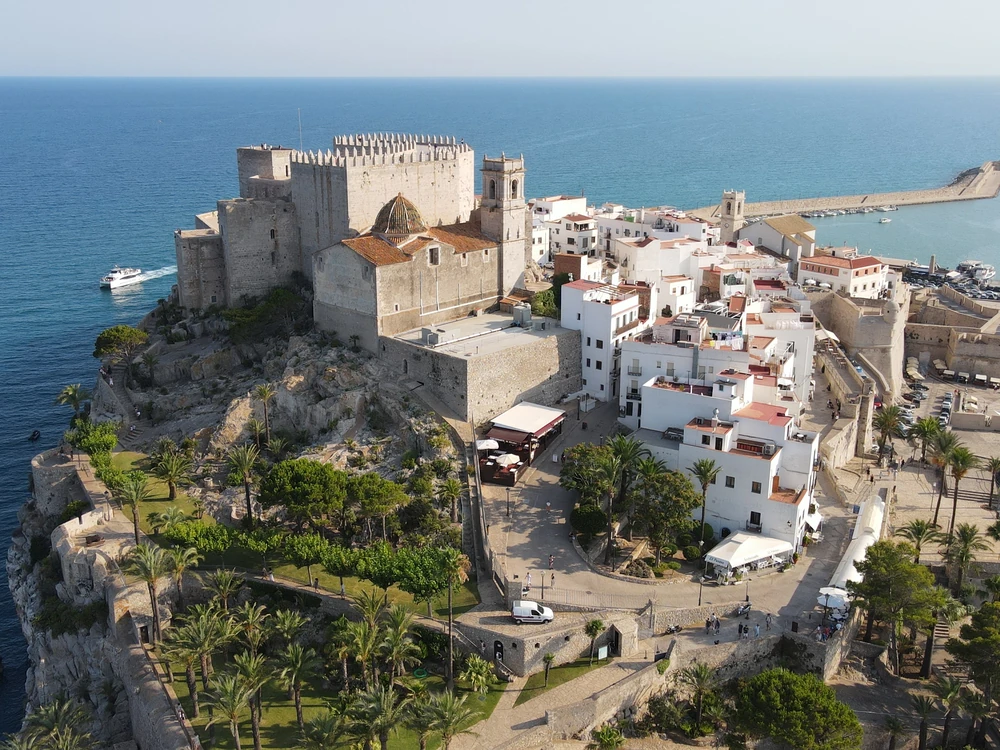
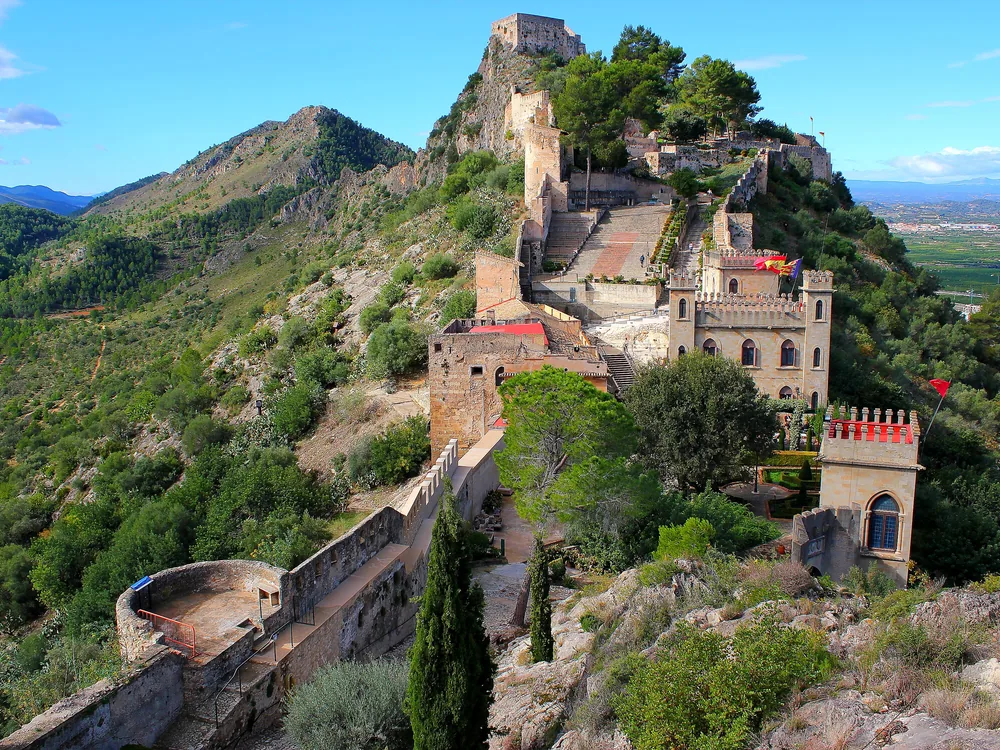
The nearest castles covered on this site are [Peñíscola Castle](/castles/spain/peniscola-castle) — 100 kilometres north on the Mediterranean coast, the medieval fortress of Pope Benedict XIII — and [Xàtiva Castle](/castles/spain/xativa-castle) — 60 kilometres south, the most impressive Valencian castle after Sagunto, with a 1-kilometre ridge of Iberian-to-Aragonese walls.
History
4th–3rd century BC: Iberian Arse (later Saguntum) fortified settlement on the limestone ridge. 219 BC: Siege of Saguntum — Hannibal Barca besieges and destroys the city; triggers the Second Punic War. 212 BC: Roman reconquest; city rebuilt as Roman colony Saguntum. 1st century BC: Roman Theatre (Teatro Romano) constructed. Imperial Roman period: city reaches maximum development. 5th century AD: Visigoth period; fortifications maintained. 8th century: Moorish conquest; Islamic tower and cistern additions. 12th–13th century: Reconquista; Christian modification and maintenance of the fortress. 1811: partially damaged in the Napoleonic Wars (Siege of Sagunto during the Peninsular War). 19th–20th century: archaeological excavations reveal Iberian and Roman layers. Current period: castle, Roman Theatre, and Historical Museum operated as combined heritage site with unified entry ticket.
How to Visit
Getting there: From Valencia, trains from Valencia Nord to Sagunto run every 20–30 minutes (around 30 minutes, approximately €3). The castle is a 20-minute uphill walk from Sagunto station through the historic town. By car from Valencia, take the AP-7 or CV-35 northbound — about 25 km and 25 minutes.
Tickets: Walk-up entry €5 adult, €2 child — a combined ticket covering the castle, the Roman Theatre (Teatro Romano, 1st century BC), and the Historical Museum in the town centre; buy at the castle entrance or the Teatro Romano box office. The GetYourGuide tour — a 3.5–4-hour small-group guided excursion from Valencia including transport, guide, and the combined ticket with skip-the-line access — is the practical option for visitors wanting a structured visit from Valencia; book in advance.
Practical tips: The 7-hectare castle ridge is entirely exposed — avoid midday visits in July and August when temperatures exceed 35°C. Allow 1–1.5 hours for a full circuit of the walls and towers; add the Roman Theatre (10 minutes downhill from the castle entrance) and the Historical Museum for a complete 3-hour visit. The Teatro Romano festival (June–August) uses the theatre for open-air performances — check sagunto.es for the programme if your visit coincides.
Combine with: Peñíscola Castle — 100 km north on the Mediterranean coast, the medieval papal fortress of Benedict XIII — or Xàtiva Castle — 60 km south, the most extensive Valencian castle after Sagunto.
Frequently Asked Questions
Yes — the limestone ridge that Sagunto Castle occupies today is the site of ancient Saguntum, the city besieged by Hannibal Barca in 219 BC. Hannibal's destruction of the Roman-allied city provided Rome with the cause to declare war on Carthage, beginning the Second Punic War (218–201 BC) — the conflict that determined whether Roman or Carthaginian civilisation would dominate the Mediterranean world. The Iberian-period walls on the ridge predate Hannibal's siege; the Roman rebuilding followed it.
Location
Carrer del Castillo s/n, 46500 Sagunto, Valencia, Spain
Nearby Castles
Tours & Tickets
Powered by GetYourGuide
From
€30/ person