
Palace of Viana
Palacio de Viana
Spain · Andalusia, Córdoba — historic centre, north of the Mosque-Cathedral · Near Córdoba
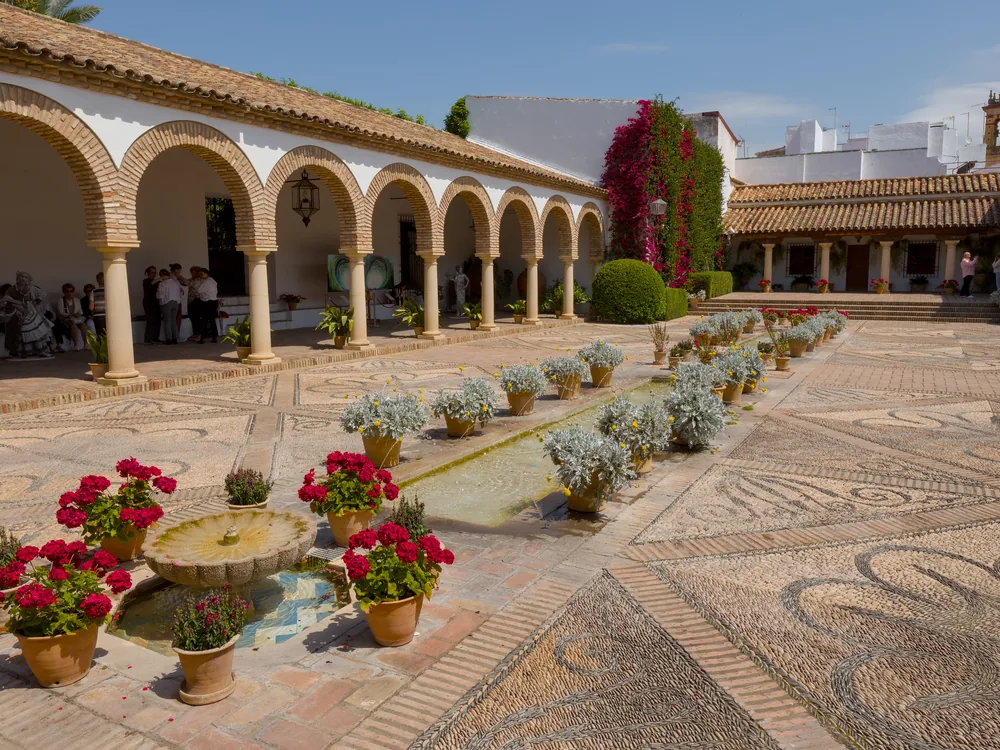
Built 1470 · Córdoban palace of the 15th–20th centuries, built around 12 successive courtyards of different eras and styles — the oldest patio (Patio de las Rejas) dates from the original 15th-century construction; subsequent additions in the 16th, 17th, 18th, and 20th centuries added additional courtyards in different styles (Renaissance, Baroque, and 20th-century garden design); the result is a sequence of 12 enclosed outdoor spaces unified by the Córdoban patio tradition — whitewashed walls, terracotta tiles, wrought-iron grilles (rejas), and intense floral planting — while differing architecturally from each other; the palace building itself is an aristocratic residence that accumulated its current form over five centuries
This page is part of an independent travel guide and is not affiliated with, endorsed by, or operated by Palace of Viana.
© Castles & Palaces
Quick Facts
- Hours
- Daily 10:00–19:00
- Skip-the-line from
- €8.5
- Duration
- 1.5–2 hours for the 12 courtyards; add 45 minutes for the palace interior rooms
- Best time
- April to May
- Nearest city
- Córdoba
Featured Tour
Córdoba: Palacio de Viana Skip-the-Line Ticket (12 Courtyards & Gardens)
Cancellation available · Instant confirmation
Highlights
- ✦12 courtyards across five centuries — the palace's defining feature: 12 enclosed outdoor spaces built from the 15th to the 20th century, each with its own architectural character but unified by the Córdoban patio tradition of whitewashed walls, wrought-iron rejas, and flower-filled planting; no other palace in Andalusia offers this sequential courtyard experience at this scale
- ✦UNESCO Intangible Cultural Heritage — the Córdoba Patio Festival (Festival de los Patios de Córdoba), held annually in early May, was inscribed by UNESCO in 2012; the Palacio de Viana is one of the festival's anchor sites and its patios are considered among the finest in the city; the inscription recognises not just the architectural tradition but the living social practice of maintaining and opening private patio gardens
- ✦IMPORTANT: Two separate tickets — the GetYourGuide skip-the-line ticket covers the 12 courtyards/gardens only; interior palace rooms (tapestries, arms collection, period furniture) require an additional on-site ticket (~€3–5); most visitors focus on the patios, which are the primary experience
- ✦The Córdoba patio tradition — Córdoba's tradition of enclosed ornamental courtyard gardens, developed from the Roman atrium and the Moorish Islamic courtyard through centuries of Christian Andalusian development, is one of the city's defining cultural expressions; private residents across the city maintain patios and open them to public visitors during the May festival; the Palacio de Viana's scale makes it the most impressive single example
- ✦The palace collections (interior ticket) — the palace interior rooms, open with a separate on-site ticket, contain a significant collection of Flemish tapestries, Spanish arms and armour, period furniture, porcelain, and paintings accumulated by the Marquises of Viana from the 15th to the 20th century; the collections give the visit an additional historical dimension beyond the patios
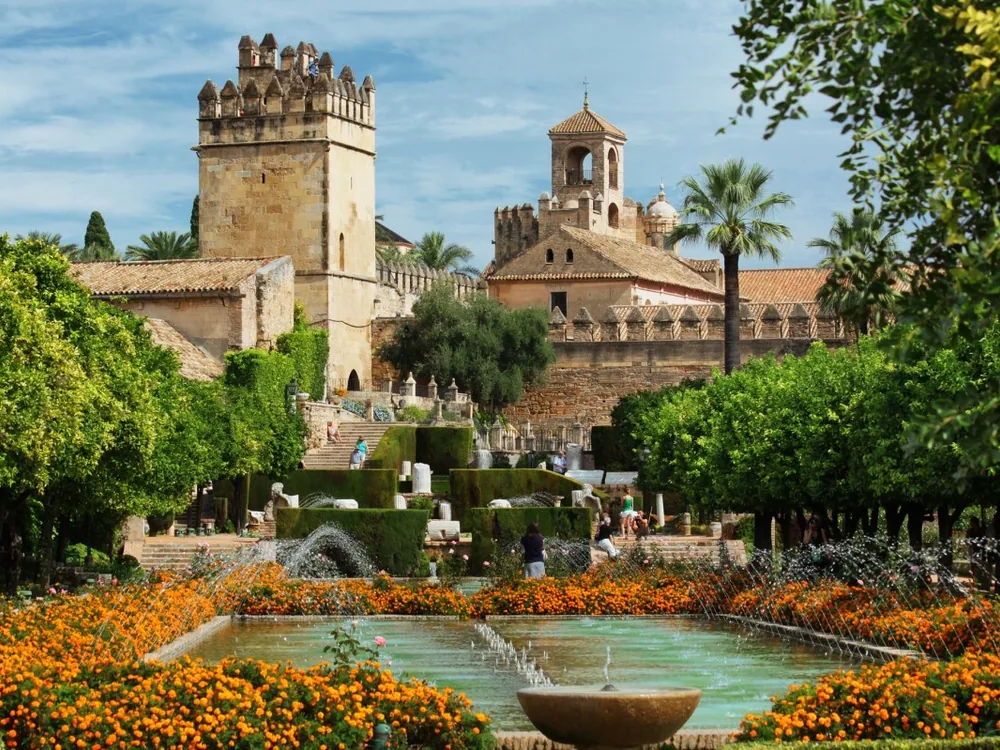
- ✦300m from the [Alcázar de los Reyes Cristianos](/castles/spain/alcazar-de-los-reyes-cristianos) — the castle where Ferdinand and Isabella met Christopher Columbus to commission the 1492 voyage; combining both sites covers Córdoba's medieval palatial heritage in a single day
Skip the queue with a guided tour
Skip-the-line tickets & expert guides
The Palace of Viana stands on the Plaza de Don Gome in central Córdoba, a few hundred metres north of the Mosque-Cathedral and the Roman bridge, in the tangle of medieval streets that forms the heart of the city's UNESCO World Heritage historic centre. It is not, in the conventional sense, a castle or a great Renaissance palace — it is something more unusual: a series of 12 enclosed courtyard gardens, accumulated over five centuries by successive aristocratic occupants, that constitute the most extensive single example of the Córdoban patio tradition anywhere in the city.
The palace began as a 15th-century aristocratic residence built for a noble family connected to the Castilian royal court. The original core — the oldest surviving patio, the Patio de las Rejas, with its Renaissance arcade and wrought-iron grilles — dates from this 1470s construction. As the residence passed through different families and finally to the Marquises of Viana (who gave the palace its current name), successive generations added additional courtyards in different styles: Renaissance loggias, Baroque garden design, early 20th-century Arts and Crafts influenced planting. The result is a palace that has never been designed as a unified architectural composition but has accumulated its character through continuous habitation and repeated enhancement, each generation adding a patio of its own.
The 12 courtyards are the primary reason to visit. They differ from each other considerably in architectural vocabulary — one has a formal Renaissance arcade, another a Baroque fountain as centrepiece, another 20th-century garden beds designed in a more naturalistic style — but they are unified by the essential elements of the Córdoban patio tradition: whitewashed walls that reflect and intensify sunlight and heat in a Mediterranean climate, wrought-iron rejas (grilles) on the windows that provide security while allowing air circulation, terracotta paving tiles, and an intense floral planting that typically prioritises geraniums, jasmine, roses, and climbing plants in a controlled riot of colour and scent. In late spring, particularly during the Córdoba Patio Festival in early May, the floral displays in these courtyards reach their annual peak — the timing of the festival is calculated to coincide with the flowering season — and the palace becomes one of the most photographed interiors in Andalusia.
Ticketing requires a note: the GetYourGuide skip-the-line ticket and the online ticket available at palaciodecordoba.es cover access to the 12 courtyards and the exterior gardens only. The palace interior rooms — which contain the Marquises of Viana's accumulated collections of Flemish tapestries, Spanish arms and armour, period furniture, and paintings — require a separate on-site ticket (approximately €3–5, purchased at the palace entrance). This is not a hidden surcharge but the standard ticket arrangement: most visitors come specifically for the patios and are satisfied with the courtyard ticket alone; those interested in the historical collections of an aristocratic residence add the interior ticket on-site.
The Córdoba Patio Festival (Festival de los Patios de Córdoba) was inscribed on the UNESCO Representative List of Intangible Cultural Heritage in 2012, recognising not just the architectural tradition of the patio but the living social practice of maintaining, decorating, and opening private domestic patios to neighbours and visitors. The Palacio de Viana is one of the largest and most established participants in this tradition; during the festival (typically the first two weeks of May), the palace patios are in full competitive display and the city's wider patio culture — hundreds of private residents opening their courtyards — is at its most vivid.
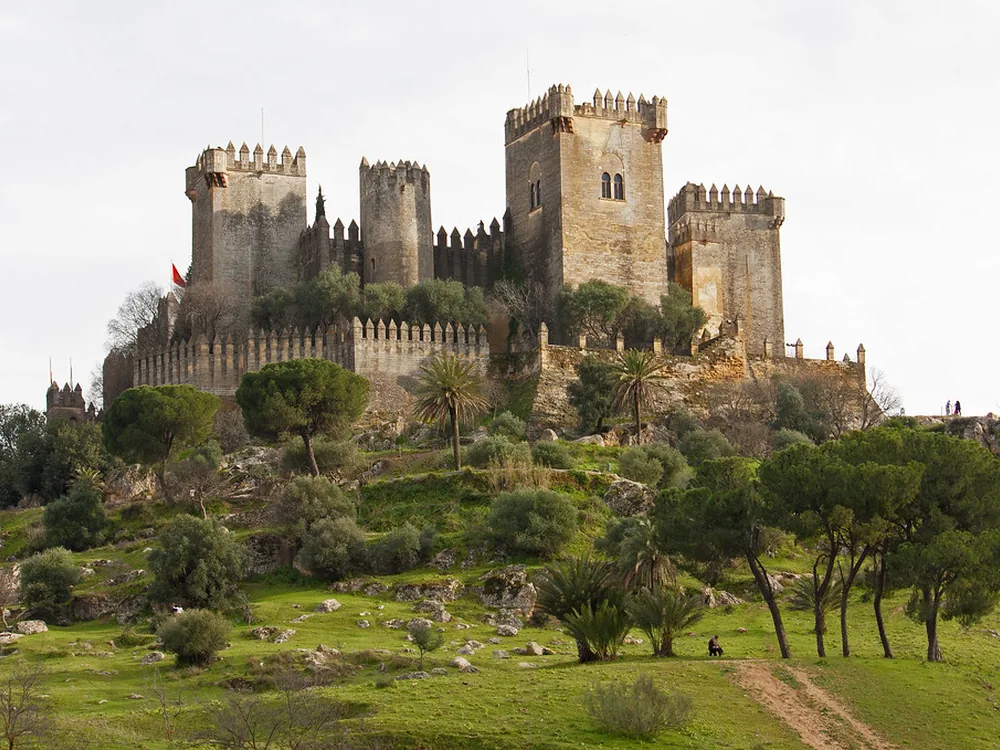
Combining the Palace of Viana with the [Alcázar de los Reyes Cristianos](/castles/spain/alcazar-de-los-reyes-cristianos) — 300 metres south, the fortress where Ferdinand and Isabella received Columbus in 1489 and where the Spanish Inquisition maintained its Córdoba tribunals — and with [Almódovar del Río](/castles/spain/almodovar-castle) (30 kilometres west, the most dramatic medieval hilltop castle in the province), creates a comprehensive Córdoba province castle day.
History
Palace founded 1470s as an aristocratic residence on the Plaza de Don Gome site in Córdoba. Original Renaissance patio (Patio de las Rejas) constructed at this period. Subsequent courtyard additions: 16th, 17th, 18th, and 20th centuries, each adding a patio of different character. Estate acquired by the Marquises of Viana in the 17th century; collections of tapestries, arms, and art assembled over the following two centuries. Palace maintained as a private residence through the 19th and early 20th centuries. 20th century: additional garden patios added in period style. Opened to the public as a heritage site, management transferred to the Cajasur cultural foundation. Córdoba Patio Festival inscribed UNESCO Intangible Cultural Heritage 2012.
How to Visit
Getting there: Córdoba is a major AVE hub — about 1 hour 45 minutes from Madrid, 45 minutes from Seville, and 50 minutes from Málaga. The palace is a 15-minute walk from Córdoba train station, in the historic centre north of the Mosque-Cathedral on Plaza de Don Gome. Taxis from the station take 5 minutes.
Tickets: Walk-up entry €5.50 adult, €3 child — covers the 12 patios and gardens only. The GetYourGuide skip-the-line ticket — advance-purchase entry to the 12 courtyards and gardens, bypassing the ticket queue — is worth booking for peak spring visits. Note: the palace interior rooms (tapestries, arms collection, period furniture) require a separate on-site ticket of approximately €3–5, purchased at the entrance and not included in the GetYourGuide or standard online courtyard ticket.
Practical tips: Arrive at opening (10:00) to have the patios before tour groups fill them — the space is at its best in the first 30–45 minutes. April to May is peak season; the Córdoba Patio Festival (typically first two weeks of May, UNESCO Intangible Cultural Heritage) is when the palace courtyards are at their floral peak and the wider city opens hundreds of private patios to street-level visitors — this street-level patio walk through residential Córdoba is free and one of the finest travel experiences in Spain. Visiting the week after the festival gives near-peak flowers with noticeably fewer visitors.
Combine with: Alcázar de los Reyes Cristianos — 300 m south, the medieval fortress where Ferdinand and Isabella received Columbus in 1489 — or Almódovar Castle — 30 km west by car, the most dramatic hilltop medieval castle in Córdoba province.
Frequently Asked Questions
No — the GetYourGuide skip-the-line ticket and the standard online courtyard ticket cover the 12 patios and gardens only. The palace interior rooms (tapestries, arms collection, period furniture) require an additional ticket purchased on-site at the palace entrance. Most visitors come specifically for the patios and are satisfied with the courtyard-only ticket.
Location
Plaza de Don Gome 2, 14001 Córdoba, Spain
Nearby Castles
Tours & Tickets
Powered by GetYourGuide
From
€8.5/ person