
Zug Castle
Burg Zug
Switzerland · Canton of Zug · Near Zug
Built 1200 · Medieval; originally built c.1200; the current main tower (Zytturm or Clocktower) was added in the 14th century and became the city's emblem; the castle complex is integrated into the old town of Zug; the Zytturm leans 1.6 metres from vertical — visible to the naked eye; houses the Museum Burg Zug with collections on Zug cantonal history
This page is part of an independent travel guide and is not affiliated with, endorsed by, or operated by Zug Castle.
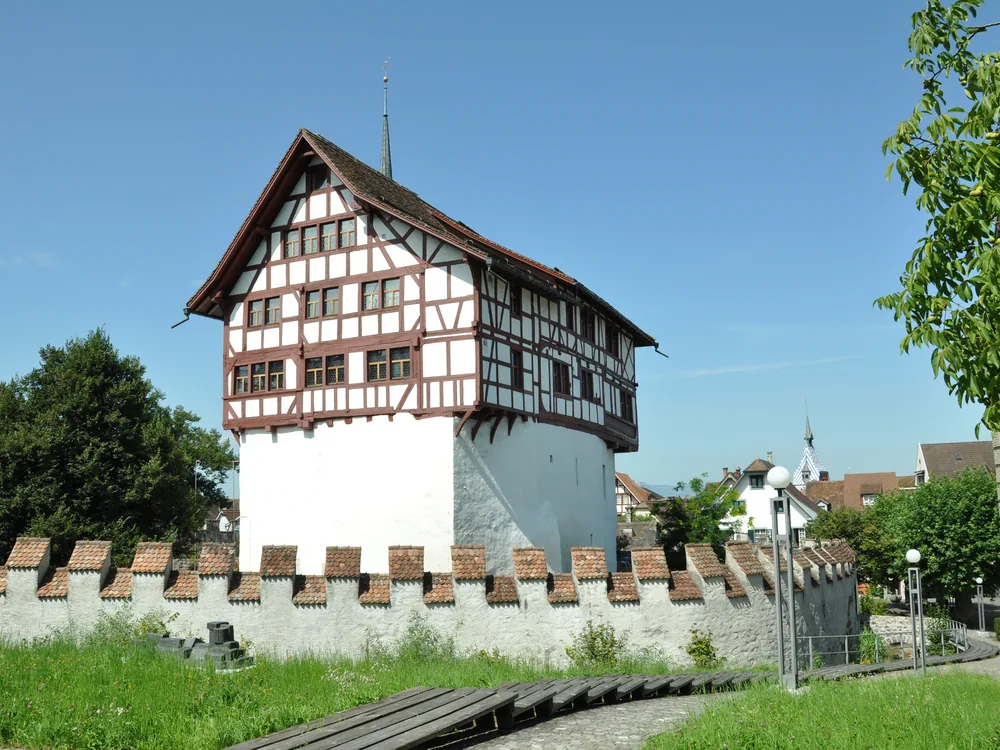
© Castles & Palaces
Quick Facts
- Hours
- Tue–Sat 14:00–17:00. Sun 10:00–17:00. Closed Mon
- Entry from
- €15
- Duration
- 1–1.5 hours
- Best time
- Year-round
- Nearest city
- Zug
Highlights
- ✦The Zytturm, a 14th-century clocktower that leans 1.6 metres from vertical, visible to the naked eye and the emblem of the city of Zug
- ✦Established around 1200 as Zug's administrative and military centre under Habsburg protection, before the town joined the Swiss Confederation in 1352
- ✦The Museum Burg Zug, covering the canton's history from the medieval period through the 20th century, including material on the 1422 Battle of Arbedo
- ✦Set within one of the best-preserved small medieval old towns in central Switzerland, largely untouched by 19th-century redevelopment
- ✦A striking contrast between its modest medieval scale and the canton's modern status as one of the wealthiest jurisdictions in the world
Skip the queue with a guided tour
Skip-the-line tickets & expert guides
The canton of Zug is the smallest in Switzerland by population, but it is also one of the wealthiest jurisdictions anywhere in the world, a consequence of its flat-rate tax policies and the corporate residency decisions of several hundred multinational companies. Its capital, the town of Zug, sits on the shore of the Zugersee with the Alps rising behind it, and its old town contains a medieval castle tower that leans 1.6 metres from the vertical. The tower is visible proof that medieval builders were not infallible, and it gives the castle, and the town, an engaging personality. Burg Zug is not among the great castles of Switzerland, but it is the right castle for understanding this particular corner of the Confederation, and the leaning tower is better than it sounds.
The castle at Zug was first established around 1200 as the administrative and military centre of the town, which grew up under Habsburg protection during the 13th century. The Habsburgs, the same dynasty that would eventually rule Austria, Spain and the Holy Roman Empire, originated not far from here, in Aargau, and the early history of Zug is largely a story of Habsburg administration and the town's gradual evolution from subject territory to independent confederate member. Zug joined the Swiss Confederation in 1352, becoming the fifth of the eight original cantons, a status that still shapes its civic identity today.
The most distinctive feature of the castle complex is the Zytturm, a 14th-century clocktower that has subsided so that it now leans 1.6 metres from vertical, visible to anyone standing in the old town and looking directly at it. The lean has been stable for several centuries, having been measured and monitored since the 16th century — a reassuring detail for anyone standing beneath it. The Zytturm is the emblem of the city of Zug and appears on the municipal coat of arms. Its tile-roofed cap, added in the 18th century, was designed to accommodate the lean rather than correct it, a pragmatic solution that has left the tower's tilt as a permanent and oddly endearing civic feature rather than a structural embarrassment.
The castle now houses the Museum Burg Zug, a local and regional history museum covering the development of the town and canton from the medieval period through the 20th century. The collection includes objects relating to the Battle of Arbedo in 1422, a significant defeat for the Swiss Confederates that tempered some of the era's military overconfidence, alongside material on the Zug cantonal government's history, traditional crafts and occupations, and medieval weaponry. The museum is compact and well organised, and it rewards visitors who want to understand Swiss political history at the cantonal level, which is where Swiss democracy actually functions day to day, rather than at the more abstract federal level more familiar to outside visitors.
The castle is integrated into one of the best-preserved small medieval old towns in central Switzerland, a compact area of burgher houses, the Church of St. Oswald, a remarkable late-Gothic church begun in 1478, the Rathaus, and a lakefront promenade. The Zugersee stretches south toward the Alps, with the Rigi and Pilatus massifs visible on clear days. The old town has an unusual coherence: unlike many Swiss towns that rebuilt extensively during the 19th century, Zug's old town avoided heavy redevelopment, and the scale of the medieval street plan remains essentially intact.
It is worth noting, without overstating the irony, that the canton of Zug has the lowest cantonal tax rates in Switzerland and has attracted the registered offices of hundreds of international companies, creating a local economy of extraordinary prosperity wrapped around a medieval core. The contrast, a leaning medieval tower, a 14th-century church, and the global headquarters of commodity trading companies registered to the same postcode, is one of the more unusual juxtapositions in European heritage tourism, and walking from the castle to the lakefront makes that contrast almost impossible to miss.
History
The castle at Zug was established around 1200 under the protection of the Habsburg dynasty, serving as the administrative and military centre for the town as it developed through the 13th century. Zug formally joined the Swiss Confederation in 1352, becoming its fifth member and shifting the castle's role from an instrument of Habsburg regional control to a seat of increasingly independent cantonal administration.
The Zytturm, the castle's defining 14th-century clocktower, developed its characteristic 1.6-metre lean over subsequent centuries, a subsidence that has been monitored since at least the 16th century without ever requiring structural correction. An 18th-century roof cap was designed specifically to accommodate the existing tilt. The castle complex now functions as the Museum Burg Zug, presenting the canton's medieval and modern history, including its role in the 1422 Battle of Arbedo, within the broader, exceptionally well-preserved setting of Zug's old town.
How to Visit
Getting there: Zug is 25 minutes from Zürich by S-Bahn S5 (regular service, no reservation required). From Lucerne: approximately 20 minutes by train. The castle is a 10-minute walk from Zug railway station through the medieval old town.
Tickets: Walk-up entry CHF 15 adult, free for children — paid at the Museum Burg Zug entrance. Open Tuesday–Friday 14:00–17:00, Saturday and Sunday 10:00–17:00; closed Mondays. No advance booking required.
Practical tips: Start at the old town square and look directly at the Zytturm tower from ground level — the 1.6-metre lean is clearly visible to the naked eye from this angle. Walk the Zugersee lakefront promenade south from the castle for 15 minutes, then back — the best view of the leaning tower against the lake and the Alps is from this direction, and the contrast between the medieval waterfront and the corporate-registered addresses on the same street is the defining Zug juxtaposition. Allow extra time for the Church of St. Oswald (begun 1478), a late-Gothic church immediately adjacent to the castle.
Combine with: Rapperswil Castle (25 km east on Lake Zürich, a 13th-century hilltop castle above the Rose City with the Polish Museum and a medieval wooden bridge) and Munot Fortress (50 km north in Schaffhausen, Switzerland's unique circular Renaissance bastion with free entry and nightly bell tradition).
Frequently Asked Questions
The Zytturm, the 14th-century clocktower at the heart of Burg Zug, has subsided unevenly over the centuries, producing a lean of 1.6 metres from vertical that is visible to anyone looking at it from the old town. The tilt has been monitored since at least the 16th century and has remained stable, and rather than attempting a structural correction, builders added a roof cap in the 18th century specifically designed to accommodate the existing lean. The tower's tilt is now treated as a permanent and distinctive civic feature rather than a defect.
Location
Kirchenstrasse 11, 6300 Zug, Switzerland
Nearby Castles
Tours & Tickets
Powered by GetYourGuide
Entry from
€15/ adult