
Ihlamur Pavilion
Ihlamur Kasrı
Turkey · Istanbul — Ihlamur valley, between Beşiktaş, Yıldız and Nişantaşı · Near Istanbul
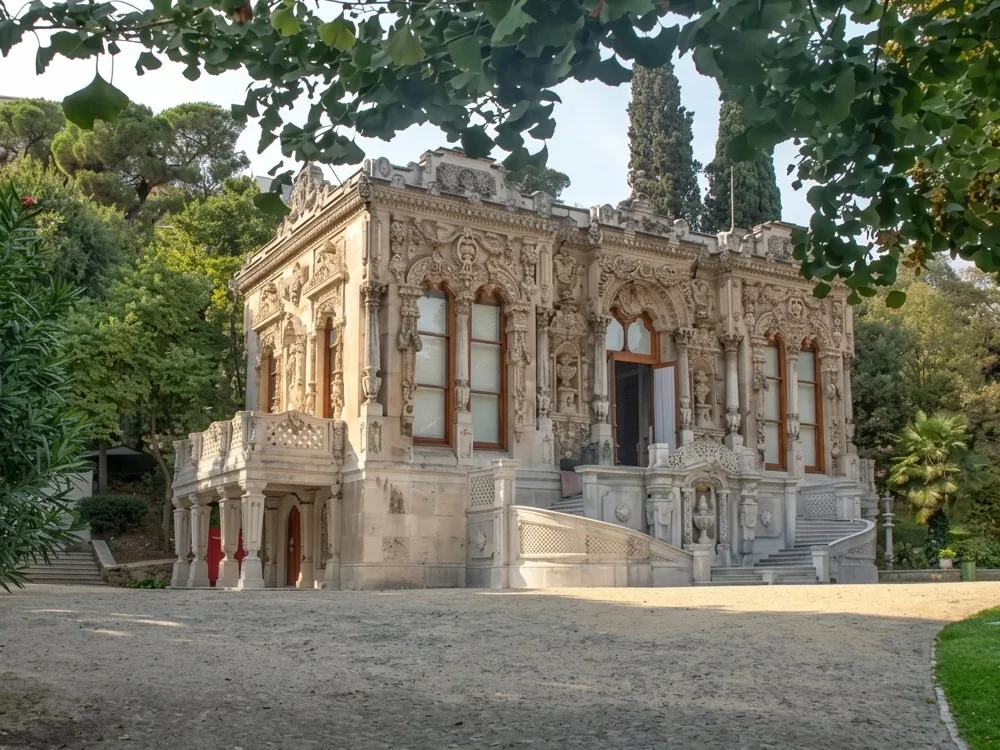
Built 1855 · Ottoman Baroque pavilion built 1848–1855, designed by Armenian-Ottoman court architect Nigoğayos Balyan; gardens laid out by German gardeners who also worked at Dolmabahçe Palace
This page is part of an independent travel guide and is not affiliated with, endorsed by, or operated by Ihlamur Pavilion.
© Castles & Palaces
Quick Facts
- Hours
- Tue–Sun 09:00–17:00. Closed Mon
- Entry via GYG
- €12
- Duration
- 45 minutes to 1 hour (self-guided with audio guide)
- Best time
- Year-round
- Nearest city
- Istanbul
Featured Tour
Ihlamur Pavilion Skip-the-Line Ticket with Audio Guide
Cancellation available · Instant confirmation
Highlights
- ✦The Ihlamur valley, nestled between the Beşiktaş, Yıldız and Nişantaşı hills, served as an Ottoman imperial garden since the 18th century, where Sultans Selim III and Mahmud II held archery contests
- ✦The present pavilion was built between 1848 and 1855 for Sultan Abdülmecid I, designed by Armenian-Ottoman court architect Nigoğayos Balyan of the celebrated Balyan family, also responsible for Dolmabahçe Palace
- ✦The gardens were laid out by German gardeners who also worked at Dolmabahçe Palace, giving Ihlamur's grounds a shared design lineage with Istanbul's grandest imperial residence
- ✦French poet Alphonse de Lamartine described an earlier pavilion on this site in 1846 as 'tranquil and enchanting'
- ✦Shares its profile with Küçüksu Palace and Beylerbeyi Palace, already published on this site — a 19th-century Ottoman imperial pleasure pavilion rather than a primary residence, with the same entry-plus-audio-guide GYG product structure
Skip the queue with a guided tour
Skip-the-line tickets & expert guides
Ihlamur Pavilion sits within a small valley nestled between the Beşiktaş, Yıldız and Nişantaşı hills on Istanbul's European side, a setting that had served the Ottoman court as an imperial garden since at least the 18th century, long before the pavilion that stands here today was ever built. Sultans Selim III and Mahmud II both used these grounds for archery contests, a favoured court pastime, establishing Ihlamur's identity as a place of imperial leisure and recreation well before it acquired any permanent architectural expression of its own.
The pavilion visitors see today dates to a considerably later phase of this garden's history. It was constructed between 1848 and 1855 by order of Sultan Abdülmecid I, the same reforming sultan responsible for commissioning Dolmabahçe Palace, Istanbul's grandest 19th-century imperial residence. Ihlamur's design was entrusted to Nigoğayos Balyan, a member of the celebrated Armenian-Ottoman Balyan family of court architects, whose work also produced Dolmabahçe itself — placing Ihlamur within the same architectural family, both literally and stylistically, as Istanbul's most famous 19th-century palace. The pavilion's Ottoman Baroque styling reflects the same broader aesthetic language the Balyan family deployed across their various imperial commissions during this period of intense palace-building along the Bosphorus and its surrounding valleys.
The gardens surrounding the pavilion carry their own direct connection to Dolmabahçe: they were laid out by German gardeners who also worked on the grounds of that grander palace, meaning Ihlamur's landscaping shares both a design lineage and, in practical terms, the same hands responsible for shaping some of Istanbul's most significant 19th-century Ottoman garden spaces. This connection gives the modest scale of Ihlamur's own grounds an unexpected weight: though far smaller than Dolmabahçe's extensive gardens, they were conceived and executed within the same design tradition and by some of the same practitioners.
Ihlamur's evocative character was already recognised well before the current pavilion was built. The French poet and statesman Alphonse de Lamartine, who travelled extensively through the Ottoman Empire and wrote influentially about his experiences, described an earlier pavilion on this same site in 1846 as 'tranquil and enchanting' — a description that speaks to the valley's long-established reputation as a place of retreat and quiet pleasure within the wider, more bustling geography of Istanbul, a reputation the current Balyan-designed pavilion inherited and, by most accounts, successfully extended.
Ihlamur Pavilion shares a clear architectural and functional profile with two other Ottoman-era sites already published on this site, Küçüksu Palace and Beylerbeyi Palace: all three are kasırlar, imperial pleasure pavilions built for recreational and leisure use rather than as primary seats of government or full-time royal residence, distinguishing them from grander working palaces such as Dolmabahçe or Topkapı. This shared category extends to how visitors typically experience these sites today: like Küçüksu, Ihlamur is visited via a self-guided entry ticket that includes a professional English-language audio guide, without an accompanying in-person guided tour, reflecting the more intimate, self-paced style of visit these smaller imperial pavilions generally offer compared to Istanbul's larger palace complexes.
For visitors building an itinerary around Istanbul's 19th-century Ottoman palace architecture, Ihlamur Pavilion offers a genuinely worthwhile, lower-traffic complement to the more heavily visited Dolmabahçe and Topkapı circuits — a chance to see the Balyan family's design vocabulary and the era's characteristic garden design applied at an intimate, human scale, within a valley whose reputation as a place of imperial leisure and retreat considerably predates the pavilion standing there today.
The pavilion's location, tucked into a quiet valley away from the Bosphorus waterfront where most of Istanbul's other Balyan-designed palaces stand, gives Ihlamur a genuinely different visiting experience from its better-known siblings. Rather than approaching by ferry along the strait, as visitors typically do for Küçüksu or Beylerbeyi, reaching Ihlamur means a short inland journey through the hills between Beşiktaş and Nişantaşı, arriving at a pavilion set among mature trees rather than framed by open water. That inland, garden-set character, combined with the pavilion's direct architectural and horticultural connections to Dolmabahçe, makes Ihlamur a genuinely distinctive stop for visitors who want to understand the full geographic range of Ottoman imperial leisure architecture across 19th-century Istanbul, not only its waterfront expression.
History
The Ihlamur valley served as an Ottoman imperial garden from at least the 18th century, used by Sultans Selim III and Mahmud II for archery contests. An earlier pavilion on the site was described by the French poet Alphonse de Lamartine in 1846 as 'tranquil and enchanting.' The current pavilion was built between 1848 and 1855 by order of Sultan Abdülmecid I, designed by Nigoğayos Balyan of the Armenian-Ottoman Balyan family of court architects, who also designed Dolmabahçe Palace. The surrounding gardens were laid out by German gardeners who also worked at Dolmabahçe. Ihlamur Pavilion is today managed as a national museum, open to the public with a self-guided audio tour.
Frequently Asked Questions
Ihlamur Pavilion was designed by Nigoğayos Balyan, a member of the celebrated Armenian-Ottoman Balyan family of court architects, and built between 1848 and 1855 for Sultan Abdülmecid I. The same architect and family were responsible for Dolmabahçe Palace, Istanbul's grandest 19th-century imperial residence.
Location
Ihlamur Cad., 34357 Beşiktaş, İstanbul, Turkey
Nearby Castles
Tours & Tickets
Powered by GetYourGuide
From
€12/ person