
Yıldız Palace
Yıldız Sarayı
Turkey · Beşiktaş, Istanbul, Turkey · Near Istanbul
Built 1880 · Late Ottoman imperial palace complex on a wooded hillside above the Bosphorus in Beşiktaş; developed by Sultan Abdülhamid II from the 1870s onward as his primary residence after he abandoned Dolmabahçe Palace; the complex comprises a series of pavilions, kiosks, and gardens spread across roughly 500,000 square metres of hillside terrain rather than a single monumental building; the Şale Kiosk — the largest and most formally styled pavilion — was built to receive Kaiser Wilhelm II during his 1889 and 1898 state visits
This page is part of an independent travel guide and is not affiliated with, endorsed by, or operated by Yıldız Palace.
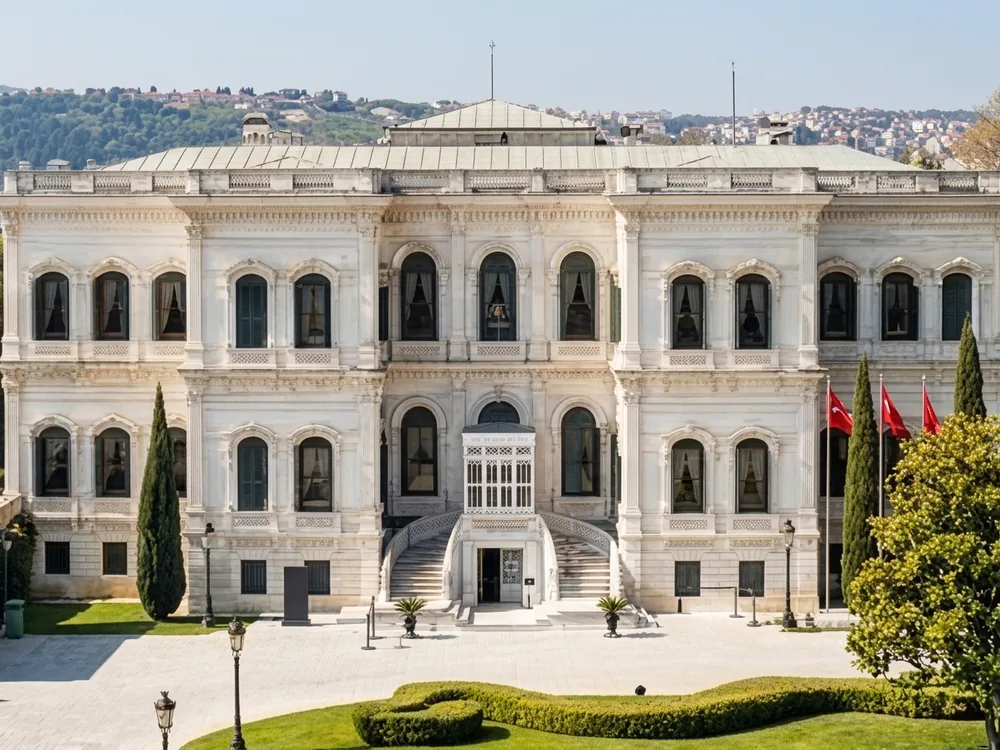
© Castles & Palaces
Quick Facts
- Hours
- Daily 09:00–17:00
- Entry via GetYourGuide
- €11.95
- Duration
- 1.5–2 hours for the main park and pavilions; 2.5–3 hours with the Şale Kiosk
- Best time
- April to June, September to November
- Nearest city
- Istanbul
Featured Tour
Yıldız Palace: Skip-the-Line Ticket and Audio Guide
Cancellation available · Instant confirmation
Highlights
- ✦The Sultan who never left — Abdülhamid II ruled the Ottoman Empire for 33 years (1876–1909) almost entirely from Yıldız Palace, rarely leaving the compound; he was said to be deeply suspicious of assassination attempts and preferred the hillside complex's natural security to the exposed Bosphorus frontage of Dolmabahçe or the accessible grounds of Topkapi; Yıldız became in practice a functioning imperial city — with its own porcelain factory, theatre, carpentry workshops, and animal menagerie — rather than simply a palace
- ✦The Şale Kiosk and Kaiser Wilhelm's state visits — the largest of Yıldız's many pavilions, the Şale Kiosk was built specifically to receive European heads of state; Kaiser Wilhelm II of Germany visited twice (1889 and 1898), and the kiosk's state rooms were furnished to German taste to impress him; the 1898 visit was a turning point in Ottoman-German relations that would eventually lead to Germany's role in the Ottoman military modernisation programme and the alignment that brought the Ottoman Empire into World War I
- ✦The park as destination — Yıldız's 500,000-square-metre hillside park is one of the largest green spaces in Istanbul, and one of the least visited despite being open to the public; the combination of mature woodland, ornamental gardens, and preserved pavilions scattered through the trees gives a very different experience from the palace museum interiors of Topkapi or Dolmabahçe
- ✦Far fewer crowds than Topkapi or Dolmabahçe — Yıldız receives a fraction of the visitors of Istanbul's two most famous palaces, making it one of the city's better-kept secrets; the skip-the-line ticket and audio guide give a structured independent visit without guide dependency
- ✦The GetYourGuide skip-the-line entry and audio guide (entry_ticket) covers access to the public areas of the palace complex and includes an audio guide (available in multiple languages including English, German, Arabic, Russian, and Turkish), allowing a self-paced visit through the grounds and pavilions
Tickets & tours
Book through GetYourGuide
Yıldız Palace occupies a wooded hillside above the Bosphorus in Beşiktaş, sandwiched between the more famous Çırağan and Dolmabahçe palaces on the waterfront below. Unlike those two buildings — which are single monumental structures designed to project Ottoman imperial power along the Bosphorus shoreline — Yıldız was conceived as a self-contained imperial city spread across forested terrain: a series of pavilions, kiosks, workshops, gardens, and service buildings loosely organised across roughly 500,000 square metres of hillside, much of it still forested.
The complex was substantially developed by Sultan Abdülhamid II (r. 1876–1909), who moved his court here from Dolmabahçe within the first years of his reign and effectively never left. Abdülhamid is one of history's more complex monarchs: an extremely capable administrator and reformer who simultaneously became one of the most paranoid rulers in Ottoman history, convinced from early in his reign that assassination was his most probable fate. Yıldız's hillside position, its surrounding walls, and the difficulty of approaching it undetected gave it a security profile that the Bosphorus-fronting palaces could not match. The Sultan is said to have slept in a different room each night. He spent his days in the compound's working buildings — he was a skilled carpenter and the palace's furniture workshop was one of his personal projects — while managing an empire through a communications network that made Yıldız the political centre of gravity for three decades.
The physical result is unusual for an imperial palace: instead of a single grand building with formal state rooms, Yıldız is a collection of smaller structures each serving specific functions — the Malta Kiosk for informal reception, the Çadır Kiosk as a garden pavilion, and the Şale Kiosk as the full state-reception building. The Şale was expanded specifically for Kaiser Wilhelm II's state visits in 1889 and 1898, when Abdülhamid was cultivating German support as a counterweight to British and Russian pressure. The German orientation of these visits would have long-term consequences: the Ottoman-German alignment became the strategic foundation for the Ottoman Empire's entry into World War I.
Abdülhamid was deposed in 1909 following the Young Turk revolution and spent the rest of his life under house arrest — first at Beylerbeyi Palace across the Bosphorus, then in Salonika. Yıldız's pavilions were repurposed under the Republic for various institutional uses and have been partially restored for public visiting.
The skip-the-line entry and audio guide covers the public areas of the complex. The Şale Kiosk — the grandest of the pavilions and the state-reception rooms built for the Kaiser's visits — has separately ticketed access and its own opening schedule; confirm locally before visiting.
History
The Yıldız site was used for Ottoman imperial garden pavilions from the 17th century, but its major development dates to the reign of Abdülhamid II (1876–1909), who moved his court here from Dolmabahçe and spent 33 years governing the empire from the compound. The Şale Kiosk was built in stages for Kaiser Wilhelm II's 1889 and 1898 state visits. Abdülhamid was deposed by the Committee of Union and Progress (Young Turks) in 1909 and taken into exile; Yıldız's buildings were briefly looted following his deposition before being secured. Under the Turkish Republic, the park was made partially public, and various pavilions were repurposed for institutional and museum use. Restoration work in the late 20th and early 21st century has opened more of the complex to visitors.
How to Visit
Getting there: Yıldız Palace is in the Beşiktaş district of Istanbul, above the Bosphorus shore. By bus or minibus: from Beşiktaş pier or Taksim Square, multiple lines reach the Yıldız stop on Çırağan Caddesi. By ferry: from Eminönü or Kabataş to Beşiktaş pier, then a 15-minute walk uphill. Not served by Metro directly — Beşiktaş is the nearest major transit hub.
Tickets: Walk-up entry is available at the gate. The GetYourGuide skip-the-line ticket and audio guide covers access to the public areas of the complex with an audio guide included; book in advance to avoid queues at popular entry periods.
Practical tips: The Şale Kiosk has its own opening hours and entry fee separate from the main park ticket — confirm locally before visiting if the Şale interior is a priority, as it closes independently of the park. The hillside park between pavilions is worth time on its own and gives a very different experience from the interiors. Yıldız receives far fewer visitors than Topkapi or Dolmabahçe on any given day — early afternoon is generally quiet.
Combine with: Dolmabahçe Palace (~1.5 km south along the Bosphorus shore — the ceremonial imperial palace that Abdülhamid abandoned in favour of Yıldız, with its 285-metre throne room facade visible from the waterfront; admission by guided tour only) and Beylerbeyi Palace (across the Bosphorus in Üsküdar — the palace where Abdülhamid spent his final years under house arrest after being deposed; accessible by ferry from Beşiktaş).
Frequently Asked Questions
Abdülhamid moved to Yıldız within the first years of his reign and never substantially returned to either Dolmabahçe or Topkapi. The most often cited reason is security: Dolmabahçe's Bosphorus frontage made it easily approached by boat, and Topkapi's central urban position made it accessible from multiple directions. Yıldız's hillside position, its surrounding walls, and the natural cover of its woodland gave the Sultan a more controllable security perimeter. Contemporary accounts suggest Abdülhamid was genuinely fearful of assassination — possibly with reason, given the political turbulence of his reign — and the physical characteristics of Yıldız suited a sovereign who wanted to control access to himself. Over time, Yıldız developed into a self-sufficient imperial compound with its own workshops, theatre, porcelain factory, and menagerie, allowing the Sultan to function without needing to leave.
Location
Çırağan Cad., Beşiktaş, 34349 İstanbul, Turkey
Nearby Castles
Tours & Tickets
Powered by GetYourGuide
From
€11.95/ person