Departing from Tirana
From Tirana: Berat – The City of a Thousand Windows & Its Living Castle
A UNESCO castle-city still inhabited after 2,400 years — Byzantine churches, Ottoman mosques and inhabited houses all inside the same medieval walls
From
€60/ person
Rating
★ 4.5(450)
Duration
Full day (9 hours)
Rating
4.5 ★ (450 reviews)
Languages
English
Group size
Max 18 people
About This Tour
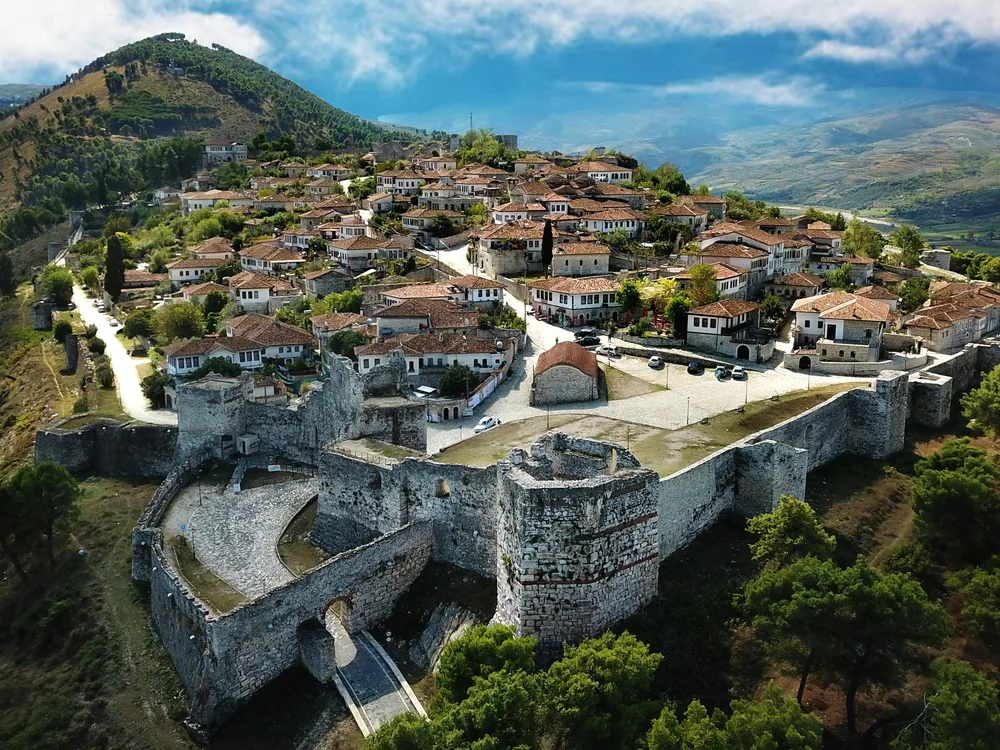
Berat is unlike any castle in Europe. Most medieval castles were abandoned when they ceased to function as military fortifications — Berat's was not. The Kala (castle district) on its limestone hill above the Osum River has been continuously inhabited for 2,400 years and still is: several dozen families live within the walls today, in Ottoman-era stone houses built among Byzantine churches, Roman cisterns and Illyrian foundations. The castle itself is not a single building but an entire medieval city — 9 Byzantine churches, 2 mosques, a covered market, defensive towers, a Roman gymnasium, and inhabited houses, all enclosed by 4th-century BC walls expanded by the Byzantines in the 6th century AD and the Ottomans in the 18th. Below the castle, the town of Berat unfolds in two extraordinary Ottoman-era neighborhoods: Mangalem (on the west bank of the Osum) and Gorica (on the east bank, reached by a stone bridge), each row of houses stacked up the hillside with their characteristic double rows of large bay windows reflected in the river below — giving Berat its UNESCO nickname 'the City of a Thousand Windows'. Albania's most-visited city is also one of Europe's most underrated medieval destinations.
Highlights
- ✓Berat Castle (Kala) — a living UNESCO castle-city continuously inhabited for 2,400 years, with Byzantine churches and Ottoman houses still in use within the walls
- ✓Onufri Museum — inside St Mary's Church within the castle walls, housing the icons of Onufri (16th century), the greatest Albanian painter, renowned for his unique shade of red
- ✓The City of a Thousand Windows — the Ottoman-era hillside neighborhoods of Mangalem and Gorica, with their distinctive stacked double windows
- ✓The Osum River view — the most photographed in Albania: both castle hill and Ottoman town reflected simultaneously
- ✓Byzantine churches within the walls — nine surviving Byzantine churches in the Kala, some with original frescoes
- ✓Albania's extraordinary value — one of Europe's most affordable travel destinations, genuinely off the mainstream tourist circuit
Ready to book this tour?
Free cancellation · Instant confirmation
Itinerary
Head south from Tirana across the Albanian lowlands toward the Osum River valley. The guide introduces Albania's extraordinary medieval heritage — a country that was a crossroads between the Byzantine, Ottoman and Venetian worlds, and that contains some of the most intact medieval architecture in Europe precisely because its 45 years of Communist isolation (1945–1990) prevented the development and modernisation that destroyed similar sites elsewhere. Berat was designated a UNESCO World Heritage Site in 2008 alongside Gjirokastër.
Berat Castle sits on a limestone hill 187 metres above the Osum River. The earliest fortifications date to the 4th century BC, when the Illyrian tribe of the Dassaretii built a hilltop settlement here. The Byzantines expanded the walls significantly in the 6th century AD under Emperor Justinian, creating the defensive circuit still largely visible today. The Ottomans, who took Berat in 1417, added their own improvements and the castle remained an active military installation until the 20th century. What makes the Kala unique is that it was never abandoned: Albanian families continued to live within the walls through Ottoman rule, through the Communist period (when religious buildings were converted to storage), and to the present day. Within the castle the guide visits St Mary's Church (now the Onufri Museum, housing 16th-century icons in Onufri's famously vivid red pigment), the Church of the Holy Trinity (13th century, with original Byzantine frescoes), and the ruins of a mosque and Roman cisterns.
Below the castle, the Mangalem quarter occupies the steep western bank of the Osum — Ottoman-era stone houses stacked up the hillside with their characteristic large bay windows (one row for each floor, maximising the view and light). The houses are built over Byzantine and Roman foundations; archaeologists regularly discover mosaic floors and ancient walls beneath Ottoman structures. The guide covers the architectural tradition that gives Berat its UNESCO nickname: the double rows of arched windows facing the river, each one reflecting the house opposite across the valley. Cross the Ottoman-era Gorica Bridge to the eastern bank and the Gorica quarter, where a similar landscape unfolds on the opposite hillside — the two neighborhoods mirroring each other across the river, with the castle watching over both from above.
What's Included
- ✓Return transport from Tirana
- ✓Professional English-speaking guide
- ✓Onufri Museum entry
- ✓Small group (max 18)
Not Included
- ✗Lunch (free time in Berat old town — traditional lunch available at extra cost)
- ✗Additional church entry fees (~€1–2 each)
- ✗Tips for guide and driver
Insider Tips
Albania is exceptional value — this full-day UNESCO World Heritage tour including transport costs less than a single museum ticket in Paris or London
The view from the Osum riverbank looking up at both the Mangalem quarter and the castle simultaneously is the definitive Berat photograph — take it in the late afternoon light
Onufri's red pigment is unique in Byzantine art — ask your guide about the technique, which he is said to have prepared from pomegranate seeds. No art historian has fully replicated it.
Berat's byrek (flaky pastry with cheese or spinach) and tavë kosi (baked lamb with yogurt) are among the finest examples of Albanian cuisine — try them at a restaurant in the old town
Frequently Asked Questions
Who was Onufri?
Onufri (c. 1515–1578) was the greatest Albanian painter of the 16th century and one of the most important Byzantine icon painters of the post-Byzantine period. He worked across Albania and Greece, and his icons are distinguished by an extraordinarily vivid shade of red — known in art history as 'Onufri's red' — which he achieved through a technique that has never been fully reproduced. The Onufri Museum in St Mary's Church within Berat Castle houses the largest collection of his work.
Is Albania safe for tourists?
Yes — Albania is widely considered one of the safest countries in the Balkans for tourists. The country has seen a dramatic transformation since the end of the Communist period in 1990 and is a major tourist destination. The infrastructure has improved significantly in recent years, though roads in more remote areas can be challenging. Berat is a fully established tourist town with good facilities.
Why does Berat have so many Byzantine churches?
Berat was an important Byzantine fortress city from the 6th century AD onwards and remained under Byzantine (and later Bulgarian and Serbian) control for much of the medieval period. The Byzantine administration and clergy built extensively: the Kala alone contains 9 surviving Byzantine churches, with foundations for many more. When the Ottomans took Berat in 1417, they permitted the Christian population to remain and maintain their churches — a relatively tolerant policy that preserved the Byzantine heritage intact.
More Tours from Tirana
Powered by GetYourGuide
From
€60
per person
Free cancellation available on most dates · Secure booking
Meeting point
Tirana city centre — exact departure point confirmed at booking
From
€60/ person