
Departing from Sarlat-la-Canéda
Sarlat: Beynac, Castelnaud & La Roque Gageac – The Dordogne Castle Valley
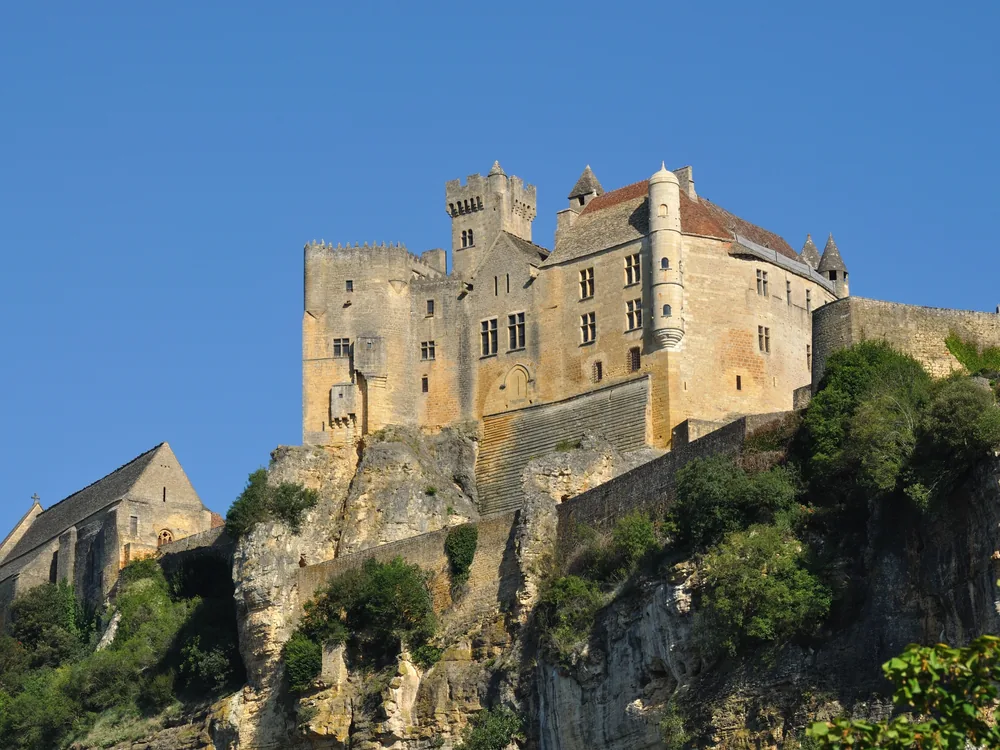
Two medieval rivals on opposing cliffs — one English, one French — glaring at each other across the most castle-dense valley in Europe
From
€163/ person
Rating
★ 4.7(320)
Duration
Full day (8 hours)
Rating
4.7 ★ (320 reviews)
Languages
English, French
Group size
Max 8 people
About This Tour
The Dordogne Valley in Périgord Noir is the most castle-dense landscape in Europe: within a 15-kilometre stretch of the river, a medieval castle appears on every cliff, every promontory, every defensible height. No fewer than 14 significant medieval fortifications overlook the same winding river — more than almost any equivalent stretch in England, France, or Germany. The two greatest face each other directly across the valley: Château de Beynac on its 150-metre limestone cliff (French-held throughout the Hundred Years War, the castle from which Eleanor of Aquitaine's grandson Richard the Lionheart launched campaigns against Phillip II of France) and Château de Castelnaud on the opposite cliff 2 kilometres away (English-held for most of the Hundred Years War, now housing one of the finest medieval war museums in France). Between them lies La Roque Gageac — a village built directly into the golden limestone cliff above the Dordogne river, classified as one of the most beautiful villages in France. The guide covers the Hundred Years War through the lens of these two rival castles, and the extraordinary history of Eleanor of Aquitaine — the woman who was Queen of both France and England and whose inheritance of Aquitaine set off a century of conflict.
Highlights
- ✓Château de Beynac — the French stronghold, Richard the Lionheart's castle, perched on a 150-metre limestone cliff above the Dordogne
- ✓Château de Castelnaud — the English stronghold, directly opposite on the facing cliff, now the Museum of Medieval Warfare
- ✓The Hundred Years War in miniature — two castle rivals visible simultaneously from the valley floor, 2 km apart
- ✓La Roque Gageac — one of the most beautiful villages in France, built into the cliff face above the river
- ✓The Dordogne from the water — the classic view of Beynac from a flat-bottomed gabarre (river boat)
- ✓Eleanor of Aquitaine — the Queen of France then England, whose inheritance of Aquitaine set off the Hundred Years War
Ready to book this tour?
Free cancellation · Instant confirmation
Itinerary
Beynac Castle rises from a vertical 150-metre limestone cliff above the Dordogne — a site so naturally defensive that it was described in the Middle Ages as 'the eagle's nest of Périgord'. The castle was built in the 12th century and became one of the four baronies of Périgord — the most powerful lordships in the region. Richard the Lionheart (Duke of Aquitaine and later King of England) seized it in 1189 and used it as a base for his campaigns against Phillip II of France; it was returned by treaty after Richard's death. During the Hundred Years War, Beynac was the French side's principal stronghold in Périgord Noir while Castelnaud, directly opposite, was held by the English. The guide tells the story of Eleanor of Aquitaine — Duchess of Aquitaine, Queen of France (to Louis VII), then Queen of England (to Henry II) — whose inheritance of this entire region set off 116 years of war between England and France.
La Roque Gageac is built directly into the golden limestone cliff face above the Dordogne — not in front of the cliff but into it, using the overhanging rock as a partial roof for the highest houses. In winter, the cliff stores the sun's heat and creates a microclimate warm enough for palm trees and Mediterranean plants. The village has been classified as one of the most beautiful villages in France (Plus Beaux Villages de France) and offers the finest view in the Dordogne valley: looking west, Beynac is visible on its cliff to the right, and Castelnaud on its cliff to the left — the two rivals framing the village from opposite sides. Traditional flat-bottomed gabarres (river boats) depart from the village quay for views of all three from the water.
Castelnaud Castle faces Beynac directly across the Dordogne valley — the two castles are 2 kilometres apart and have an unobstructed view of each other from their respective clifftops. While Beynac was French throughout the Hundred Years War, Castelnaud was largely English-held, serving as the base for English and their Gascon allies in Périgord. The guide covers the extraordinary military logic of the Hundred Years War in this valley: how two forces controlling opposite cliffs and the same river crossing could hold each other in strategic paralysis for a century. Castelnaud now houses the Musée de la Guerre au Moyen Âge (Museum of Medieval Warfare) — one of the finest collections of medieval weapons, armour and siege equipment in France, including working reconstructions of trebuchets and mangonels deployed in the castle grounds.
What's Included
- ✓Pickup from Sarlat
- ✓Private vehicle with driver
- ✓Expert English-speaking guide throughout
- ✓Château de Beynac entry and guided tour
- ✓Château de Castelnaud entry
- ✓Private tour (max 8)
Not Included
- ✗Gabarre (river boat) ride at La Roque Gageac (optional, ~€9)
- ✗Lunch (free time — Beynac village has excellent local restaurants)
- ✗Tips for guide and driver
Insider Tips
The classic view of the Hundred Years War: stand on the Dordogne riverbank between the two castles and you can see both Beynac and Castelnaud simultaneously on their opposing cliffs. This single view tells the entire story.
Take the gabarre river boat from La Roque Gageac — the flat-bottomed traditional boat gives the finest views of both castles and the village cliff from the water
Castelnaud's trebuchet demonstrations (scheduled on certain summer days) show how the great siege machines actually worked — check the schedule at booking
Sarlat-la-Canéda's medieval centre is one of the finest in France — arrive the evening before and spend time in the town before the tour departs
Frequently Asked Questions
Why were Beynac and Castelnaud on opposite sides in the Hundred Years War?
The Hundred Years War (1337–1453) was fundamentally a dynastic dispute over who should rule France — the English Plantagenet kings (who also controlled Aquitaine through Eleanor of Aquitaine's inheritance) or the French Valois dynasty. In the Dordogne valley, the lords of Beynac backed the French crown throughout, while the lords of Castelnaud allied with the English (whose Gascon territories included much of what is now southwest France). The two castles controlling opposite cliffs of the same river crossing made the valley one of the most militarised landscapes in medieval France.
Who was Richard the Lionheart and what did he do at Beynac?
Richard I of England (1157–1199) was Duke of Aquitaine before becoming King of England — meaning Beynac and the entire Dordogne region were his personal domain. He seized Beynac in 1189 during a campaign against his own barons who had rebelled against his father Henry II. Richard used the castle as a base for military operations in Périgord, and it was returned by treaty after Richard's death. He is famous for leading the Third Crusade, negotiating a truce with Saladin that left Jerusalem in Muslim hands but allowed Christian pilgrims to visit, and spending almost no time in England despite being its king.
How many castles are there in the Dordogne valley?
The Périgord region of the Dordogne is sometimes called 'the land of 1,001 châteaux.' Within the Dordogne valley itself, between Souillac and Bergerac, there are approximately 14 significant medieval fortifications visible from the river — an extraordinary concentration. Beyond the valley, the broader Périgord region contains over 1,500 château and castle sites. This density is the direct result of the Hundred Years War: both sides built, reinforced and fought over every defensible hilltop in the region for over a century.
More Tours from Sarlat-la-Canéda
Powered by GetYourGuide
From
€163
per person
Free cancellation available on most dates · Secure booking
Meeting point
Sarlat-la-Canéda city centre — exact pickup point confirmed at booking
From
€163/ person