
Departing from Belgrade
From Belgrade: 3 Danube Fortresses Guided Day Trip
Three medieval fortresses on the river that separates Serbia from the empire that consumed it — Golubac, Smederevo & Ram on the most castle-dense stretch of the Danube
From
€120/ person
Rating
★ 4.8(47)
Duration
Full day (10 hours)
Rating
4.8 ★ (47 reviews)
Languages
English
Group size
Max 15 people
About This Tour
East of Belgrade, the Danube becomes the most castle-dense river in the Balkans. Three medieval fortresses guard a 100km stretch of the Serbian bank: Smederevo, the massive triangular capital of the last Serbian medieval state, built in emergency haste to hold the Ottoman advance; Ram, the perfectly scaled Ottoman river fort at the Mlava confluence; and Golubac, the ten-towered masterpiece at the entrance to the Iron Gate gorge, where the Danube carves its deepest canyon between the Carpathian and Balkan mountains. Together they mark the front lines of the Serbian Despotate's last stand before the Ottoman conquest of 1459. Note: entrance fees for all three fortresses are not included in the tour price and are payable on site.
Highlights
- ✓Smederevo Fortress — one of the largest medieval fortresses in Europe (11 hectares), capital of the Serbian Despotate 1428–1459
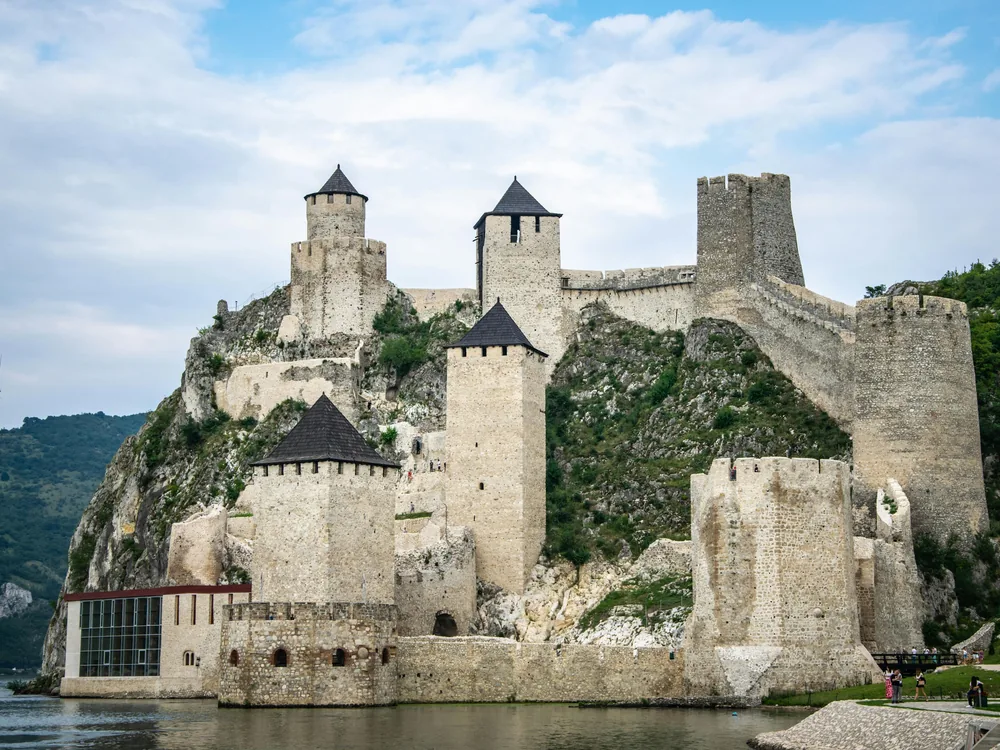
- ✓Golubac Fortress — ten towers above the Iron Gate gorge, recently restored, one of the most photogenic castles in the Balkans
- ✓Ram Fortress — a compact Ottoman river fort at the Danube confluence, built on 14th-century Serbian foundations
- ✓Iron Gate gorge — where the Danube carves through the Carpathians, the most dramatic river canyon in Central Europe
- ✓Expert guide covering the Serbian Despotate, the Ottoman conquest, and 1,000 years of Danube history
Ready to book this tour?
Free cancellation · Instant confirmation
Itinerary
Head east from Belgrade along the south bank of the Danube into the Smederevo district. Your guide introduces the Serbian Despotate — the final medieval Serbian state, which survived as an Ottoman vassal for 30 years after the fall of the Serbian Empire at Kosovo in 1389 — and explains Despot Đurađ Branković's gamble: building the largest fortress in the Balkans in just three years hoping it could hold the Danube line against Mehmed II.
Smederevo Fortress was built between 1428 and 1430 by Despot Đurađ Branković as the new capital of the Serbian Despotate. Triangular in plan, with 25 towers and nearly 3km of curtain wall, it covers 11 hectares — one of the largest medieval fortresses in Europe. Two sides face the Danube, one faces land. Despite its scale it fell to Sultan Mehmed II in 1459, ending the Serbian Despotate permanently. Walk the curtain walls, the towers, and the ruins of the inner fortified town that once housed the entire Serbian court. Entrance fee payable on site.
Ram Fortress stands at the confluence of the Mlava River and the Danube — a compact pentagonal river fort built by the Ottomans in 1483 on the foundations of a 14th-century Serbian castle. Five round towers, a river gate, and a well-preserved enceinte make it one of the finest examples of Ottoman riverside military architecture on the middle Danube. The scale is intimate compared to Smederevo — a garrison fort controlling river traffic rather than a dynastic capital. Entrance fee payable on site.
Golubac Fortress stands where the Danube enters the Iron Gate — the 130km gorge where the river forces its way through the Carpathian and Balkan mountains. Ten towers rise from a limestone crag directly above the water in three defensive lines up the cliff face. Built in the 14th century, it changed hands between Serbs, Hungarians and Ottomans repeatedly before the Ottomans secured it in 1458. Extensively restored and reopened in 2019 with an excellent interior museum, Golubac is the most photogenic medieval fortress in the Balkans — especially seen from the Danube. Entrance fee payable on site.
What's Included
- ✓Return transport from Belgrade
- ✓Professional English-speaking guide
- ✓Guided visits to all three fortresses
- ✓Small group (max 15)
Not Included
- ✗Entrance fees for Smederevo, Ram and Golubac fortresses (payable on site at each location)
- ✗Lunch (stop in Golubac village or Ram)
- ✗Iron Gate speedboat cruise (optional upgrade — highly recommended)
- ✗Additional personal expenses
Insider Tips
Budget for the entrance fees at all three fortresses — they are modest (a few euros each) but not included in the €120 tour price
The speedboat upgrade through the Iron Gate gorge past Golubac is the single best way to see the fortress — the view from the water is how it was designed to be experienced
Golubac's 2019 restoration includes one of the best medieval fortress museums in the Balkans — allow the full 2.5 hours
Serbian wine tourism is almost entirely undiscovered by Western visitors — if you want to extend the day, wineries in the Smederevo region offer tastings independently
Frequently Asked Questions
Are the fortress entrance fees included in the price?
No — entrance fees for Smederevo Fortress, Ram Fortress, and Golubac Fortress are not included in the €120 tour price and are payable on site at each location. The fees are modest (a few euros per person at each fortress). Budget approximately €10–15 per person for all three entrance fees combined.
What is the Iron Gate?
The Iron Gate (Đerdap in Serbian) is a 130km gorge where the Danube carves through the Carpathian and Balkan mountains between Serbia and Romania, reaching depths of 300m with walls rising vertically from the water. Emperor Trajan built a road along the Serbian cliff face in AD 100 to supply his invasion of Dacia — the carved inscription recording this (Tabula Traiana) remains visible from the river today.
Why is Smederevo Fortress so large?
Despot Đurađ Branković built Smederevo in 1428–1430 as a strategic last resort. After losing Kosovo to the Ottomans he needed a Danube capital that could hold against Mehmed II. Building the largest fortress in the Balkans in three years was a remarkable feat — but the bet failed. Mehmed captured Smederevo in 1439, lost it, then took it permanently in 1459, ending the Serbian Despotate.
Is Golubac Fortress accessible by boat?
Yes — and the view from the Danube is one of the most dramatic castle views in Europe. The tour can be upgraded to include a speedboat ride past the fortress and into the Iron Gate gorge. The fortress is also accessible by road from Belgrade in approximately 2 hours.
More Tours from Belgrade
Powered by GetYourGuide
From
€120
per person
Free cancellation available on most dates · Secure booking
Meeting point
Belgrade city centre — exact location confirmed at booking
From
€120/ person