
Toptani Castle
Kalaja e Tiranës
Albania · Tirana · Near Tirana
Built 1415 · Medieval Albanian tower and castle remains within the urban fabric of Tirana city centre; the surviving tower and wall sections date from the Ottoman period, with earlier medieval foundations; the castle occupied the high ground of central Tirana and was used by successive ruling clans — including the Toptani family, the Albanian beylerbeys who governed the Tirana region for the Ottoman Empire in the 18th century, and who gave the castle its current name; the castle ruins are adjacent to the National History Museum in Skanderbeg Square and form part of the Archaeological Park of Tirana, which also contains Byzantine-era floor mosaics uncovered during the 2015–2018 Skanderbeg Square renovation; the tower (Kulla e Sahatit, or Clock Tower, built 1822) stands adjacent to the castle remains and is one of Tirana's most recognisable landmarks; the Toptani Shopping Centre, built over and around the medieval archaeological zone, has become controversial as an example of commercial development on a heritage site
This page is part of an independent travel guide and is not affiliated with, endorsed by, or operated by Toptani Castle.
© Castles & Palaces
Quick Facts
- Hours
- Daily 09:00–20:00
- Entry from
- Free
- Duration
- 30–45 minutes (castle remains); combine with the National History Museum for 2 hours
- Best time
- Year-round
- Nearest city
- Tirana
Highlights
- ✦The Toptani family — the Ottoman-Albanian bey dynasty who governed the Tirana region as beylerbeys (governors) from this castle complex through the 18th century — gave the castle its current name and were the most powerful clan in central Albania during the late Ottoman period; the Toptani lords mediated between Ottoman authority and local Albanian clan structures in a pattern of negotiated power characteristic of the Ottoman Balkans
- ✦The 2015–2018 renovation of Skanderbeg Square — Tirana's central public space, named for the 15th-century Albanian national hero Gjergj Kastrioti Skënderbeu — uncovered Byzantine-era floor mosaics beneath the communist-era paving; these mosaics, from the 4th–6th centuries AD, established that there was significant Byzantine settlement at the Tirana location centuries before the Ottoman castle; they are now visible within the Archaeological Park adjacent to the castle remains
- ✦The Clock Tower (Kulla e Sahatit), built 1822 in the final Ottoman period of Tirana's pre-independence history, stands next to the castle remains and is one of Tirana's most photographed landmarks; at 35 metres, it was the tallest structure in Tirana for most of the 19th century and remains among the most recognisable historic buildings in the city centre
- ✦The castle site's position in Skanderbeg Square places it at the symbolic centre of Albanian national identity: the square is named for Albania's 15th-century national hero who resisted Ottoman expansion for 25 years before his death in 1468; the equestrian statue of Skanderbeg dominates the square, and the National History Museum's mosaic facade covers one side of it — creating a concentration of Albanian historical memory around the castle's ancient walls that is unusual in a post-communist capital that has undergone significant architectural erasure
- ✦The relationship between the Toptani Castle remains and the Toptani Shopping Centre, built in the early 2000s on and around the archaeological zone, is one of the more visible examples in the Balkans of commercial development in direct conflict with heritage preservation; the shopping centre's construction required archaeological excavation that revealed medieval remains but proceeded over their partial preservation; the tension between the two is an ongoing heritage management debate in Tirana
Tickets & tours
Book through GetYourGuide
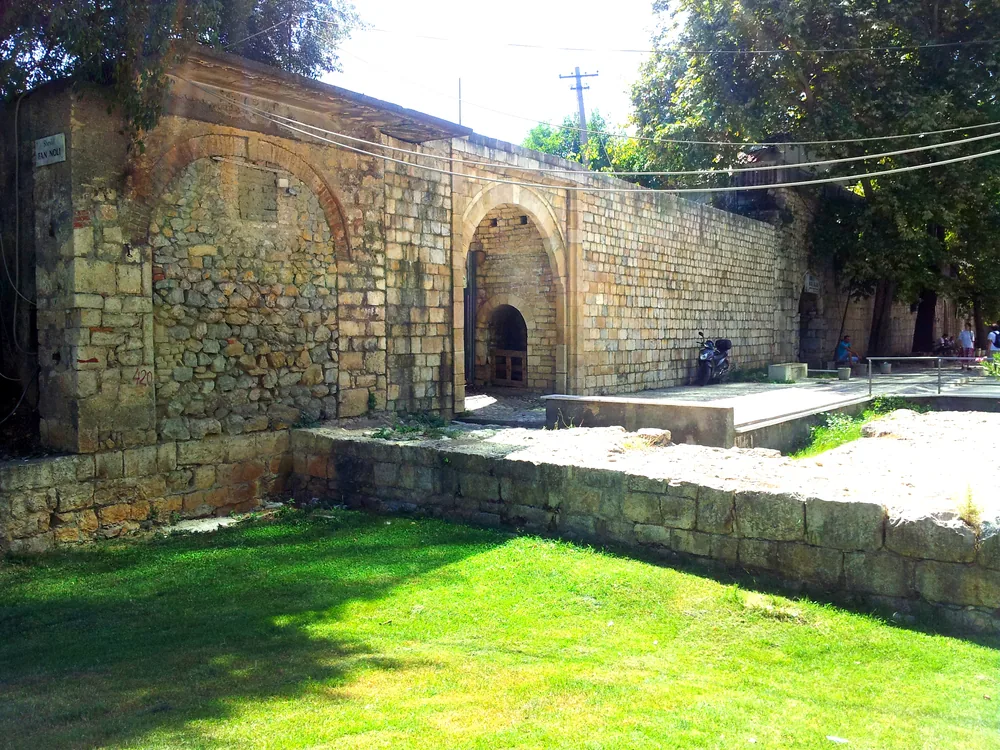
Toptani Castle occupies a position in the heart of Tirana that is simultaneously central and marginal: the surviving walls and tower are remnants of an Ottoman-era fortification in the middle of Skanderbeg Square, Albania's principal national public space, surrounded by the equestrian statue of the national hero, the National History Museum, the Et'hem Bey Mosque, and the Toptani Shopping Centre. The castle's physical presence is fragmentary — sections of wall, a tower base, wall footprints — but its historical position is foundational to the urban development of Tirana.
The site was fortified before the Ottoman conquest of Albania in the 15th century. The Byzantine mosaics uncovered during the 2015–2018 renovation of Skanderbeg Square confirmed 4th-to-6th-century settlement at this exact location; the high ground of central Tirana, above the flood plains of the Lana river, was an obvious fortification site for whoever controlled the region. The Ottoman administration formalised the castle complex in the 15th century after the conquest, using it as the administrative centre for the Tirana kaza (administrative district).
The Toptani family rose to prominence in the 18th century as the Ottoman-Albanian bey dynasty who governed the Tirana region as beylerbeys — provincial governors answerable to the Sublime Porte in Istanbul but exercising considerable local autonomy. The Toptani lords mediated between Ottoman administrative requirements and the clan structures of central Albania in the characteristic pattern of late Ottoman Balkan governance, where nominal imperial authority was filtered through local dynasties whose power was hereditary and whose loyalty was conditional. The castle complex served as the seat of this dynastic authority, and the Toptani name has remained attached to the site ever since.
The late 18th and early 19th centuries brought several significant additions to the castle area: the Clock Tower (Kulla e Sahatit) was built in 1822 adjacent to the castle complex, at 35 metres the tallest structure in Tirana at the time. The Et'hem Bey Mosque, built 1789–1823, occupies the corner of the square adjacent to the castle — its frescoed interior is one of the finest examples of late Ottoman religious painting in Albania and one of the few buildings in Tirana's city centre that survived the communist-era demolitions and reconstructions with its historic fabric intact.
Tirana became Albania's capital in 1920 (previously the capital had been at various other cities depending on which faction controlled the government). The communist regime of Enver Hoxha (1944–1985) undertook systematic demolition and reconstruction of the city centre, and many of the historic buildings around the castle area were destroyed or altered. The castle remains survived, though the surrounding context was radically changed. The post-communist period brought both renewal and new conflicts: the Toptani Shopping Centre, built in the early 2000s on and around the archaeological zone, became a controversial example of commercial development on heritage ground. The construction required archaeological excavation and revealed medieval remains; whether these were adequately preserved and documented before construction proceeded is a question that remains debated in Albanian heritage management circles.
The 2015–2018 renovation of Skanderbeg Square — a major public infrastructure project that reorganised the entire central space — uncovered the Byzantine-era floor mosaics that established early medieval presence at the site. These mosaics, from the 4th–6th centuries AD, are now visible in the Archaeological Park established adjacent to the castle remains.
For most visitors to Tirana, the castle remains are a 30-to-45-minute addition to a broader Skanderbeg Square orientation — seen alongside the National History Museum, the Et'hem Bey Mosque, the Clock Tower, and the surrounding cultural buildings. [Petrela Castle](/castles/albania/petrele-castle) and [Preze Castle](/castles/albania/preze-castle), the two medieval castle ruins in the immediate Tirana hinterland, can be combined with a Toptani/Skanderbeg Square visit in a single day out from the city — Petrela now has its own dedicated bookable GetYourGuide day tour, while Toptani and Preze remain free, self-guided sites.
History
The 2015–2018 renovation of Skanderbeg Square settled a long-debated question: the high ground at the centre of modern Tirana had been occupied since Byzantine times. Floor mosaics uncovered beneath the communist-era paving dated the settlement to the 4th–6th centuries AD, establishing that whoever chose this position above the Lana river's flood plain understood its strategic value long before the Ottoman conquest of Albania.
The Ottomans formalised the castle complex in the 15th century as the administrative centre of the Tirana district. Its most consequential occupants were the Toptani family, who rose in the 18th century as the Albanian bey dynasty governing the region under Ottoman suzerainty. Operating within the characteristic late Ottoman pattern of negotiated local power, the Toptanis mediated between imperial administrative requirements and Albanian clan structures, using the castle as the physical seat of their authority. The Clock Tower (Kulla e Sahatit) built adjacent to the complex in 1822 remains the most recognisable structural legacy of their period.
Tirana's designation as Albania's capital in 1920 and the communist redevelopment of the city centre in subsequent decades transformed the context around the castle without eliminating the remains. A new controversy arrived in the early 2000s when the Toptani Shopping Centre was constructed over part of the archaeological zone — a heritage conflict that remains unresolved. The surviving walls and tower foundations are now in the Archaeological Park of Tirana, freely accessible within Skanderbeg Square.
How to Visit
Getting there: Toptani Castle sits at the northeast corner of Skanderbeg Square, the geographic centre of Tirana. It is reachable from any point in the city and a 15-minute taxi ride from Tirana International Airport.
Tickets: The castle remains and Archaeological Park are free to enter and open daily. The Clock Tower (Kulla e Sahatit) adjacent to the ruins has a small separate entry fee. There is no dedicated GetYourGuide tour for Toptani specifically; Petrela Castle, 22 km southeast, has its own bookable GetYourGuide day tour with transport from Tirana.
Practical tips: Combine the castle remains with the National History Museum on the same square (approximately €2 entry) — allow at least 2 hours for both together. The Byzantine mosaics uncovered during the 2018 square renovation are displayed in the Archaeological Park and are among Tirana's most genuinely surprising discoveries; they are easy to walk past without noticing, so look for the marked display panels near the castle wall.
Combine with: Petrela Castle and Preze Castle — Petrela has its own dedicated bookable GetYourGuide day tour, while Toptani and Preze are free, self-guided sites best combined with a private driver from the city.
Frequently Asked Questions
The Toptani were an Albanian Muslim bey family who rose to prominence as Ottoman-appointed governors (beylerbeys) of the Tirana region in the 18th century. They governed central Albania within the Ottoman system, mediating between imperial authority and local clan structures. Their castle complex in central Tirana served as their dynastic seat, and the family name became attached to the site. The Toptani remained an influential family in Albanian political life into the 20th century.
Location
Sheshi Skënderbej, Tirana 1001, Albania
Nearby Castles
Tours & Tickets
Powered by GetYourGuide
Free Entry