
Hellbrunn Palace
Schloss Hellbrunn
Austria · Salzburg, Salzburg-Umgebung — 4km south of Salzburg city centre · Near Salzburg
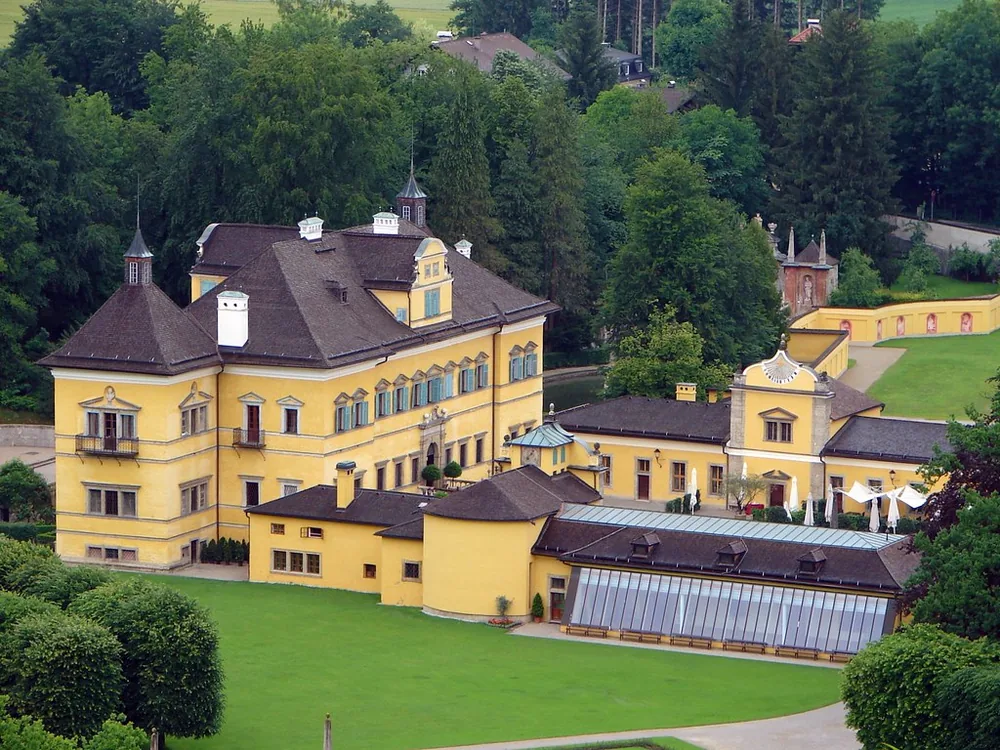
Built 1619 · Early 17th-century Baroque Italianate palazzo — built 1612–1619 by Markus Sittikus, Prince-Archbishop of Salzburg, as a pleasure residence and hunting lodge designed by Santino Solari in the Italian Mannerist style; the palace is a single-storey villa with a formal garden arrangement in the Italian tradition, but it is distinguished from all other Baroque pleasure palaces by the elaborate system of water-powered trick fountains and mechanical theatre installations built into the garden — a system without parallel in the German-speaking world and among the finest surviving examples of 17th-century hydraulic garden art in Europe; the mythological grottoes (including the Neptune Grotto, Roman Theatre Grotto, and the famous Stone Table with the trick seat that drenched guests) are integrated into the garden's natural hillside topography
This page is part of an independent travel guide and is not affiliated with, endorsed by, or operated by Hellbrunn Palace.
© Castles & Palaces
Quick Facts
- Hours
- Mon–Wed 09:00–17:30. Thu & Fri 09:00–21:00. Sat & Sun 09:00–17:30
- Guided tour from
- €24
- Duration
- 2–2.5 hours (Trick Fountain guided tour + palace interior + Baroque Museum + Stone Theatre; allow extra time for the zoo and grounds)
- Best time
- May to September
- Nearest city
- Salzburg
Featured Tour
Salzburg: Hellbrunn Palace Baroque & Mozart Evening Concert (45 min, optional add-on)
Cancellation available · Instant confirmation
Highlights
- ✦The Trick Fountains (Wasserspiele) — the world-famous hydraulic garden installations built 1612–1619 use the same water pressure from the Almbach stream that powered them 400 years ago; hidden jets in stone chairs, table surfaces, floors, and walkways activate without warning; the guide controls the system but visitors have no prior knowledge of which stone will suddenly shoot water — the effect at the Stone Table (Steintisch) where guests were drenched at the Archbishop's dinner parties is identical to the original
- ✦Stone Theatre (Steintheater) — the world's oldest open-air rock theatre, carved into the hillside cliffs above the palace c.1617; it predates the Vienna opera house by 230 years and is still used for summer opera performances during the annual Hellbrunn Festival — performances take place on the natural rock stage with the mythological cliffs as backdrop
- ✦Mechanical Baroque Theatre (Technisches Kabinett) — a 1752 water-powered mechanical theatre of 141 moving figures representing a Baroque-era town in full activity: blacksmiths, barbers, soldiers, gondoliers, merchants, and a royal court; powered entirely by the same water pressure as the outdoor fountains, without electricity
- ✦Mythological grottoes — the Neptune Grotto, the Roman Theatre Grotto, and the Crown Grotto are 17th-century artificial cave installations with hydraulic automata, mythological sculptures, and water trick installations integrated into the natural hillside; the Neptune Grotto's mechanical sea creatures move when the water pressure activates them
- ✦Archbishop's Stone Table and the soggy dinner — the famous stone dining table in the garden, where Archbishop Markus Sittikus entertained guests and, at the moment he chose, activated the water jets in every guest's seat; only the Archbishop's own stone chair lacked the hidden jet; the table and its hydraulic system survive and function identically to 1619
- ✦Baroque Museum and palace rooms — the palace interior (included in the ticket) contains the Baroque Museum with 17th–18th century paintings, period furniture, and exhibits on the Archbishop's court life, plus access to the frescoed rooms of the summer residence
- ✦Salzburg city connection — Hellbrunn is 4km south of Salzburg's old town, reachable by bus (line 25), by bicycle along the riverside path, or on foot from the old town in approximately 45 minutes; the site complements [Hohensalzburg Fortress](/castles/austria/hohensalzburg-fortress), [Mirabell Palace](/castles/austria/mirabell-palace), and [Schloss Ort](/castles/austria/schloss-ort) for a multi-day Salzburg itinerary
Skip the queue with a guided tour
Skip-the-line tickets & expert guides
Hellbrunn Palace sits 4 kilometres south of Salzburg's old town on a low hillside above the Fürstenweg road, surrounded by English park, formal Italian gardens, and the forested slopes of the Hellbrunn Mountain rising behind. From the street, the palace looks like what it is — a Baroque single-storey Italian villa in cream and terracotta, elegant and composed. Nothing about the exterior prepares a visitor for what Archbishop Markus Sittikus had built into the gardens behind.
Markus Sittikus (1574–1619), Prince-Archbishop of Salzburg from 1612, was one of the great Baroque patrons of his time in the German-speaking world — a powerful ecclesiastical ruler with Italian tastes, Italian architects (his principal architect was Santino Solari, who also built the Salzburg Cathedral), and a talent for theatrical gesture. His summer residence at Hellbrunn, built between 1612 and 1619, was designed not as a display of architectural grandeur (the palace itself is relatively modest by Baroque standards) but as a landscape theatre: a series of mythological grottoes, fountains, and hydraulic automata in which the Archbishop could stage elaborate water-powered entertainments for his guests — with the guest as involuntary participant.
The Trick Fountains (Wasserspiele) are the reason Hellbrunn exists as a visitor attraction. They are an interconnected hydraulic system fed by the Almbach stream, which drops in elevation as it flows from the Hellbrunn Mountain above, creating the water pressure that powers every jet, every mechanical figure, and every hidden fountain in the garden — without pumps, without electricity, and with no external power source other than the gradient of the hillside. The system has operated continuously since 1619, making it one of the oldest functioning hydraulic installations in Europe. The tour activates the fountains in sequence: hidden jets in the paths, stone benches that shoot water from below, a stone owl whose eyes move and beak opens when the water flows, and — at the famous Stone Table — the Archbishop's dinner-party trap, where every seat at the table has a hidden water jet except the Archbishop's own. The Archbishop controlled the jets from a hidden lever. The guide controls them today. The visitor's experience of not knowing which stone will suddenly activate is identical to the experience of the Archbishop's 17th-century guests, because the mechanism is identical.
The Mechanical Baroque Theatre (Technisches Kabinett) was added in 1752 — nearly a century after the rest of the garden — and represents a different kind of hydraulic artistry: 141 carved figures in a miniature Baroque townscape, each animated by the water pressure from the Almbach stream, performing simultaneously in the blacksmith's workshop, the barber's shop, the military parade ground, the gondola canal, the market square, and the royal court. The theatre runs on a fixed cycle. It is powered by water, not electricity. It has been running in essentially this form since 1752.
The Stone Theatre (Steintheater), carved into the natural rock face above the garden around 1617, predates the Technisches Kabinett by a century and is the oldest surviving open-air rock theatre in the world. It is still used: the Hellbrunn Festival runs summer opera and theatre productions on the natural stone stage, with the mythological cliff architecture as the permanent set.
The entry ticket (€16.50 adults, €7.50 children) covers all of the above: the Trick Fountain guided tour, the palace interior and Baroque Museum, the Stone Theatre, the Baroque garden, and access to the adjacent Salzburg Zoo (a separate natural attraction on the same grounds). An optional baroque and Mozart concert evening (45 minutes) is available separately as an evening cultural add-on — a concert event in the palace rooms, not the main palace entry experience.
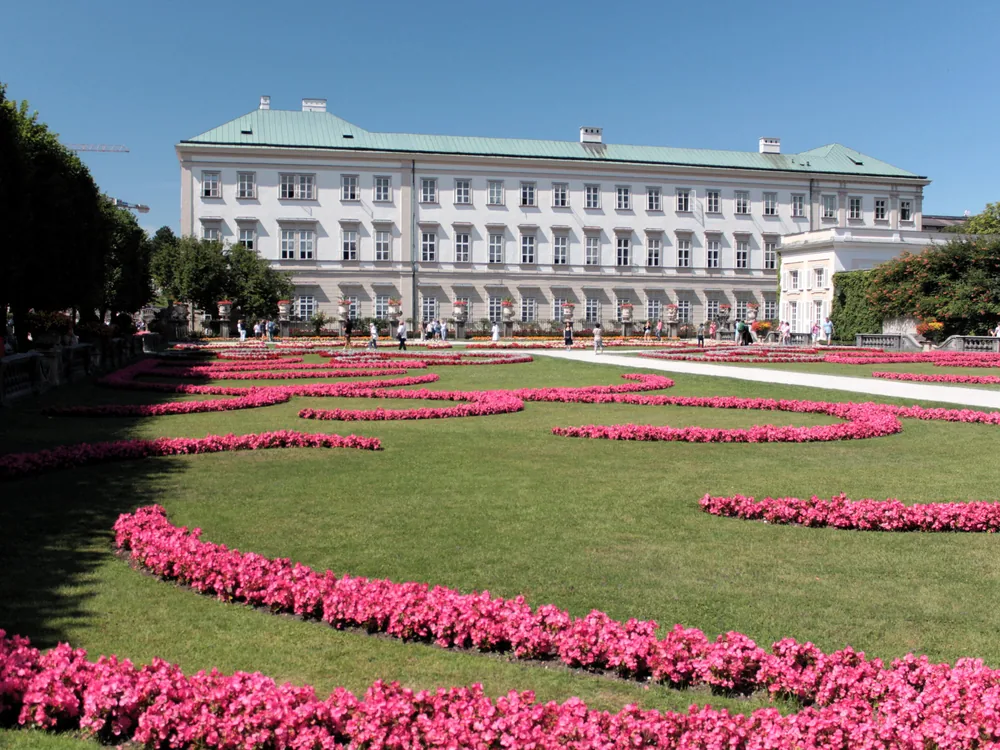
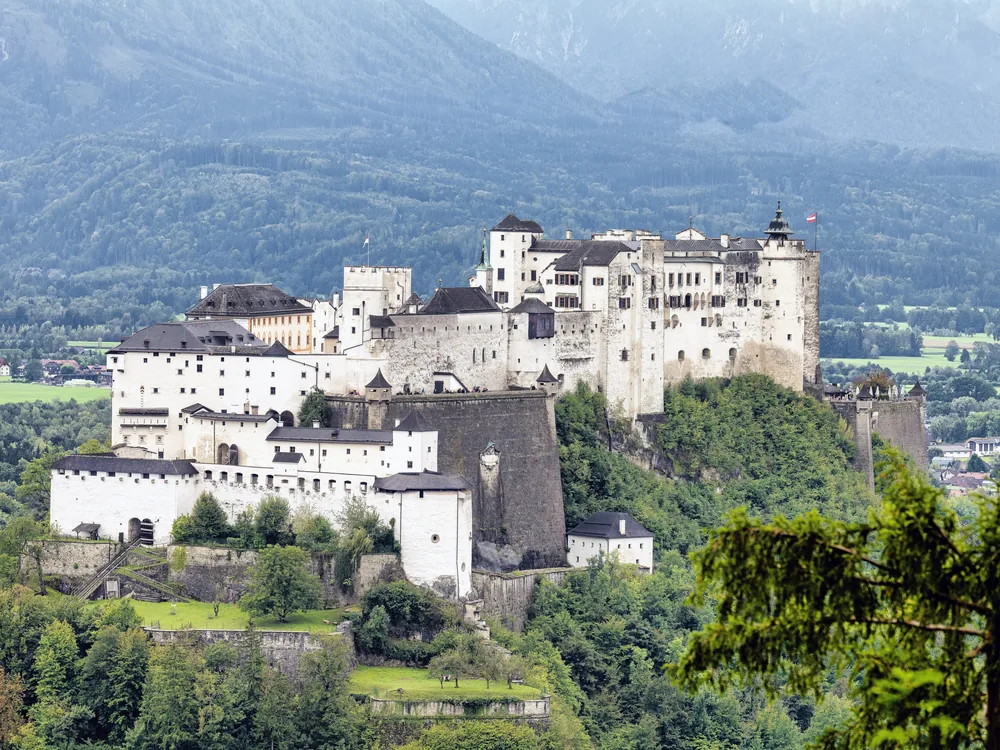
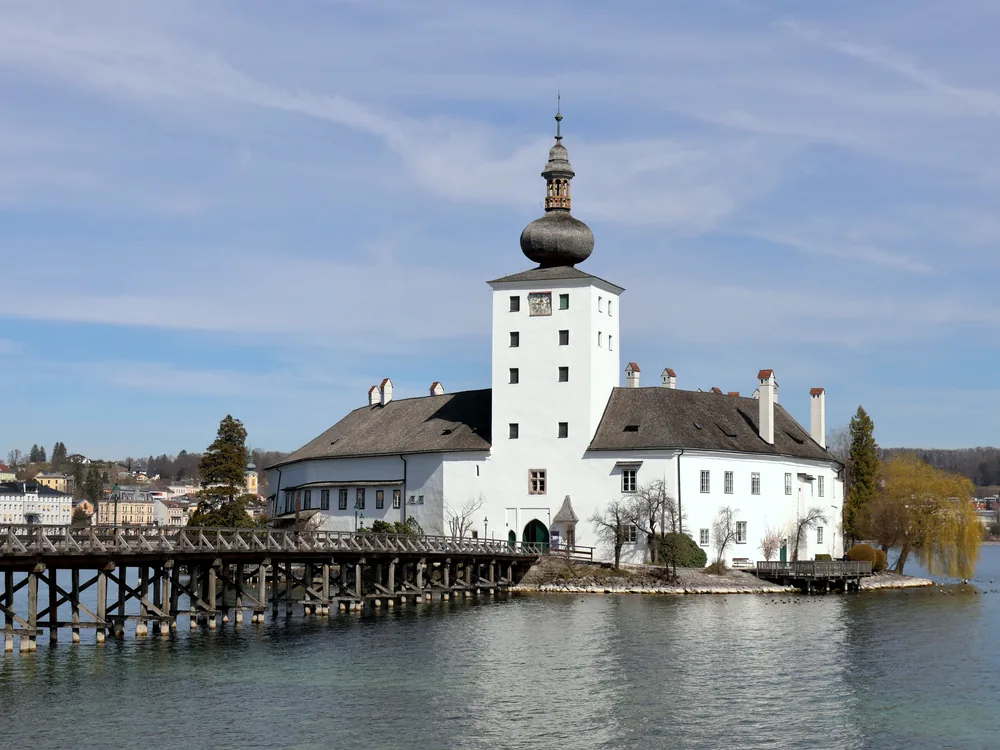
Hellbrunn is most naturally combined with a Salzburg day that includes [Hohensalzburg Fortress](/castles/austria/hohensalzburg-fortress) (4km north, the medieval hilltop fortress above the old town) and [Mirabell Palace](/castles/austria/mirabell-palace) (in the city centre, free garden entry, Mozart birthplace). [Schloss Ort](/castles/austria/schloss-ort) in Gmunden on Lake Traunsee (~50km northeast) is a day-trip extension for the Austrian lake district.
History
Archbishop Markus Sittikus came to the Salzburg see in 1612 with Italian Renaissance pleasure culture firmly in mind — he had grown up in the Medici orbit and intended his court to reflect it. He commissioned Santino Solari, who was simultaneously designing the new Salzburg Cathedral, to build a summer palace on the Hellbrunn estate south of the city. Within seven years, Sittikus had a complete pleasure complex: the palace itself, Italian formal gardens, a series of mythological grottoes, the Stone Theatre (one of the oldest outdoor theatres north of the Alps), and the trick fountains that would define Hellbrunn's reputation across Europe.
The hydraulic engineering of the fountains drew on Italian expertise and the natural spring water of the Hellbrunn Mountain, which ran under constant pressure without mechanical pumping — a system that, remarkably, continues to function today on the same principles. Sittikus died in 1619, the year the complex was completed, passing it to his successors as Prince-Archbishop of Salzburg. In 1752, a further addition brought the Mechanical Baroque Theatre: 141 hydraulic figures performing a miniature court scene, powered by the same water system.
The estate was extended with an English park in the 18th and 19th centuries and transferred to the City of Salzburg and the Land Salzburg in 1921. The Salzburg Zoo, now one of Austria's best-visited, was established on the adjacent grounds in the postwar decades. Today Hellbrunn operates as a major heritage garden, with the trick fountain system in continuous operation after more than four centuries.
How to Visit
Getting there: Bus line 25 from Salzburg Hauptbahnhof or the old town (Mozartsteg stop) to Hellbrunn takes approximately 20–25 minutes. By bicycle, the riverside path south from the old town covers the 4 km in about 25 minutes. By car, Hellbrunn is 4 km south on Hellbrunner Allee with parking at the palace.
Tickets: Walk-up entry is €16.50 adults, €7.50 children, covering the Trick Fountain guided tour, palace interior, Baroque Museum, Stone Theatre, Baroque garden, and Salzburg Zoo access — buy at the gate or online at hellbrunn.at. The GetYourGuide Baroque & Mozart evening concert is a separate 45-minute cultural add-on in the palace rooms, bookable independently of the standard entry.
Practical tips: Bring a light waterproof layer — the Trick Fountain tour will get you wet. The guide activates hidden jets without warning and visitors have no advance knowledge of which stone will fire; this is entirely the point. The Mechanical Baroque Theatre (141 water-powered moving figures, added 1752) is often underestimated: it is extraordinary for anyone who can appreciate pre-industrial hydraulic engineering.
Combine with: Hohensalzburg Fortress — the hilltop medieval fortress above Salzburg's old town, 4 km north, and the natural companion for a day that covers both the fortress and the pleasure palace end of Salzburg's architectural range.
Frequently Asked Questions
Yes — this is the point. The Trick Fountains tour activates water jets hidden in paths, benches, and the famous Stone Table, and visitors are sprayed without advance warning. The guide controls the sequence but does not warn participants before each activation. Most visitors find this the most entertaining part of the tour; children are particularly enthusiastic. On warm days, getting wet is pleasant; on cooler days, a light waterproof layer is advisable. The tour lasts approximately 40–50 minutes outdoors.
Location
Fürstenweg 37, 5020 Salzburg, Austria
Nearby Castles
Tours & Tickets
Powered by GetYourGuide
From
€24/ person