
Hohenwerfen Castle
Burg Hohenwerfen
Austria · Salzburg · Near Werfen
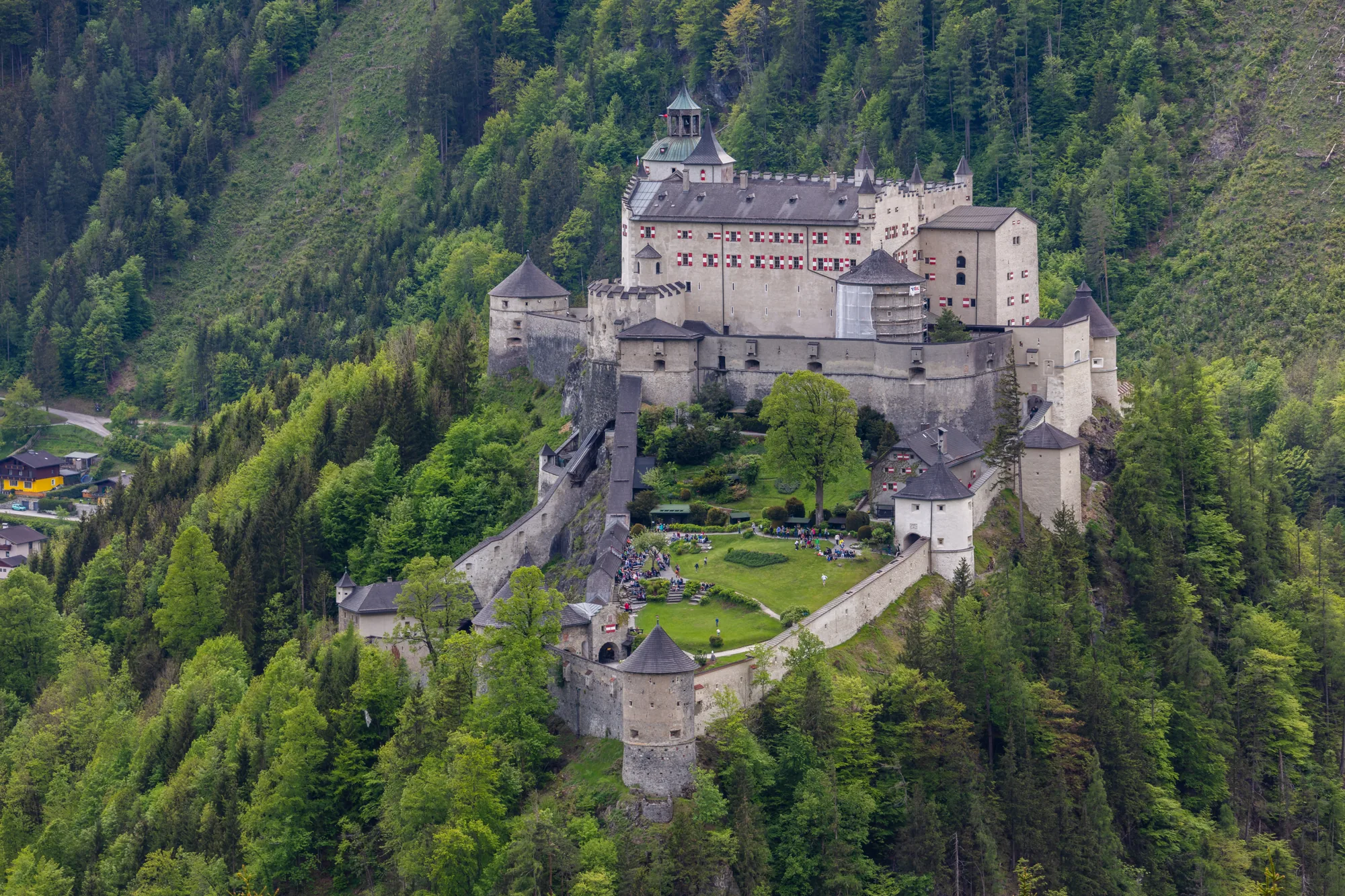
Built 1077 · Romanesque origins 1077; substantially rebuilt 1533–1560 under Archbishop Matthäus Lang; the castle rises 155 metres above the Salzach valley floor on a sheer rock; headquarters of the Falconer School (Greifvogelwarte) with daily falconry demonstrations; featured filming location for The Sound of Music (1965)
This page is part of an independent travel guide and is not affiliated with, endorsed by, or operated by Hohenwerfen Castle.
© Castles & Palaces
Quick Facts
- Hours
- Daily 09:00–17:00
- Entry via GetYourGuide
- €14
- Duration
- 2–3 hours
- Best time
- April to November
- Nearest city
- Werfen
Featured Tour
Werfen: Hohenwerfen Castle Entrance Ticket BASIC
Cancellation available · Instant confirmation
Highlights
- ✦Rises 155 metres above the Salzach valley floor on a near-vertical rock face, making it one of the most dramatically positioned castles in Austria
- ✦Founded in 1077 by Archbishop Gebhard of Salzburg during the Investiture Controversy, controlling one of the main Alpine passes between northern and southern Europe
- ✦Home to a falconry school (Greifvogelwarte) with daily demonstrations featuring eagles, falcons, owls and vultures, connected to a UNESCO-recognised living tradition
- ✦Featured in the famous aerial opening sequence and interior scenes of The Sound of Music (1965)
- ✦Reached by a dramatic cable car ascent from the valley floor, included in the standard entry ticket
Skip the queue with a guided tour
Skip-the-line tickets & expert guides
There is a moment on the road south from Salzburg, about 45 minutes after leaving the city, when the valley narrows and the mountains step closer, and on a vertical rock face rising 155 metres above the Salzach River, a medieval castle appears as if growing from the stone itself. Hohenwerfen Castle has stood on this rock for nearly a thousand years. It is arguably the most dramatically positioned castle in Austria, and in the Sound of Music-saturated landscape of Salzburgerland, it is the castle that most completely delivers on the promise of the genre.
The original fortress at Hohenwerfen was built in 1077 on the orders of Archbishop Gebhard of Salzburg, during the Investiture Controversy — the long conflict between the Holy Roman Emperor Henry IV and the papacy over the appointment of bishops. The strategic purpose was unambiguous: Hohenwerfen controlled the Salzach valley pass, one of the primary routes through the Eastern Alps connecting the German lands to the south. The castle passed through the hands of successive Archbishops of Salzburg, who used it as both a military stronghold and a refuge during periods of conflict with rival powers and rebellious nobility. The present structure is largely the work of Archbishop Matthäus Lang, who rebuilt it substantially between 1533 and 1560 in a late-Gothic and early-Renaissance style, giving the castle most of the form visible today.
The falconry school at Hohenwerfen, the Greifvogelwarte, is among the oldest in Austria and has operated continuously for decades. The daily demonstrations, held in the courtyard and in the valley meadows visible from the castle walls, feature eagles, falcons, owls and vultures flying in close, controlled passes over the audience. Falconry at Hohenwerfen is not simply a tourist spectacle staged for visiting crowds — the wider Salzburg region maintains a genuine working tradition with birds of prey, and the school runs active breeding programmes alongside its public displays. UNESCO added falconry to its Intangible Cultural Heritage list in 2016, and Hohenwerfen is among the most visible and accessible practitioners of that tradition anywhere in the Alps.
The 1965 film adaptation of Rodgers and Hammerstein's The Sound of Music used the Salzburg region extensively as its setting, and Hohenwerfen appears in the celebrated aerial opening sequence that introduces the von Trapp family's mountain landscape. The castle's interior was also used for several scenes. For Sound of Music fans, who still make up a significant share of Salzburg's annual visitors, Hohenwerfen is treated as an essential stop on any film-related itinerary. The views from the castle walls today, taking in the wide valley with the Tennengebirge range rising behind it, are recognisably the same views captured on film six decades ago.
The castle interior houses a museum devoted to medieval history and, inevitably for an Austrian castle of this vintage, a display of historic torture instruments — competent but not the main draw. The real highlight is the climb to the top of the keep: from there, the Salzach valley stretches north toward Salzburg and south into the deeper mountains, with the Tennengebirge massif filling the view across the valley and, on clear days, the Hochkönig peak visible in the distance. The climb is not long, but the reward at the top is unambiguous and immediate.
A cable car connects the valley car park to the castle gate, covering an ascent of roughly 100 metres and included in the standard entry ticket. Walking up from the valley floor remains possible via a moderately steep 20-minute forest path, but most visitors take the cable car, which provides its own small drama: stepping out at around 600 metres, with the castle looming immediately overhead and the valley already spreading out below.
History
Archbishop Gebhard of Salzburg founded the original fortress at Hohenwerfen in 1077, during the Investiture Controversy between the Holy Roman Emperor Henry IV and the papacy, establishing control over the strategically vital Salzach valley pass through the Eastern Alps. The castle remained under the control of successive Archbishops of Salzburg for centuries, serving as both a defensive stronghold and an occasional refuge during periods of regional conflict. Archbishop Matthäus Lang undertook a substantial rebuilding of the castle between 1533 and 1560, giving it much of its present late-Gothic and early-Renaissance form.
In the modern era, Hohenwerfen has become closely associated with two distinct strands of cultural identity: its long-standing falconry tradition, formalised through the establishment of the Greifvogelwarte falconry school, and its role as a filming location in the 1965 production of The Sound of Music, whose aerial opening sequence used the surrounding Salzach valley landscape. Today the castle operates as a heritage site combining historical exhibitions, daily falconry demonstrations and panoramic valley views, reached from the valley floor by a dedicated cable car.
How to Visit
Getting there: Werfen is approximately 40 minutes from Salzburg by regional train (Westbahn, one to two services per hour) or by car via the A10 Tauern motorway. The cable car from the valley car park to the castle gate is included in the entry ticket and covers most of the 155-metre ascent.
Tickets: Walk-up entry is €16 adults, children free. The GetYourGuide entry ticket covers castle entry and the cable car. The castle is closed November to March.
Practical tips: Check the falconry demonstration schedule at hohenwerfen.at before visiting — the daily shows (eagles, falcons, owls, vultures flying in close passes over the courtyard and valley meadows) are timed, and arriving without checking ahead risks missing them entirely. Push to the top of the keep: the view up and down the Salzach valley, with the Tennengebirge across the valley, is the castle's best single moment.
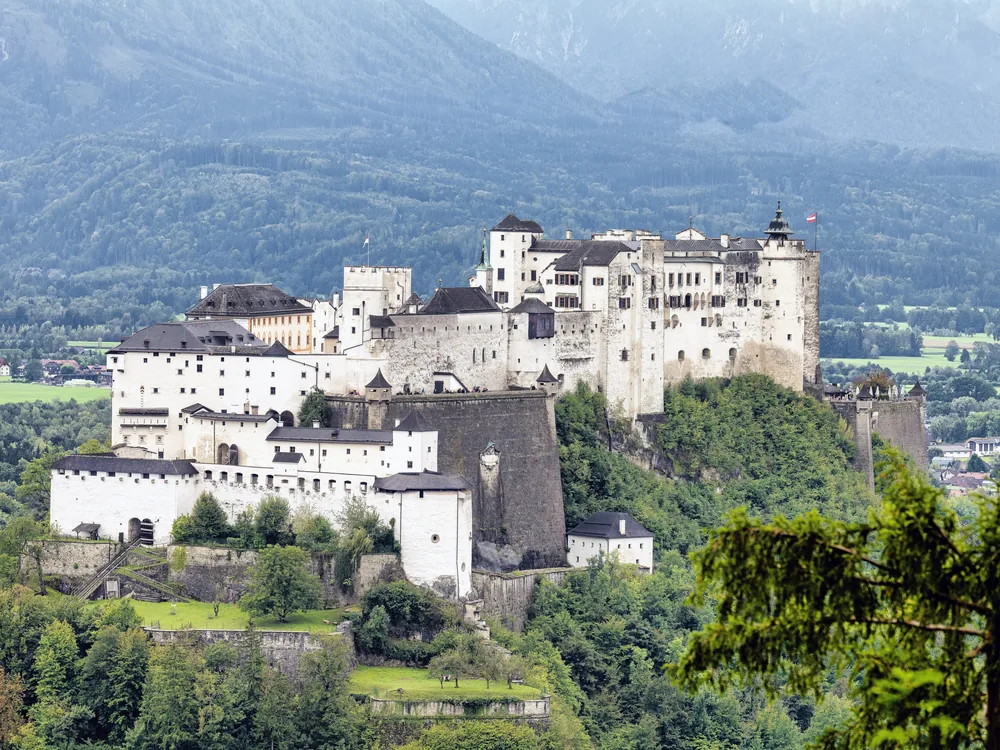
Combine with: Hohensalzburg Fortress — Salzburg's UNESCO-listed medieval fortress above the old town, approximately 40 minutes north by train, and the natural partner for a Salzburg-region fortifications day.
Frequently Asked Questions
Yes. Hohenwerfen appears in the film's famous aerial opening sequence over the Salzburg region, and parts of its interior were also used for filming. The castle is one of several Sound of Music-related sites in the wider Salzburg area and remains a popular stop for fans following the film's locations, alongside its independent historical significance as one of Austria's most dramatically sited medieval castles.
Location
Burgstraße 2, 5450 Werfen, Austria
Nearby Castles
Tours & Tickets
Powered by GetYourGuide
From
€14/ person