
Bobovac Fortress
Bobovac tvrđava
Bosnia · Central Bosnia, near Vareš / Kraljeva Sutjeska · Near Vareš
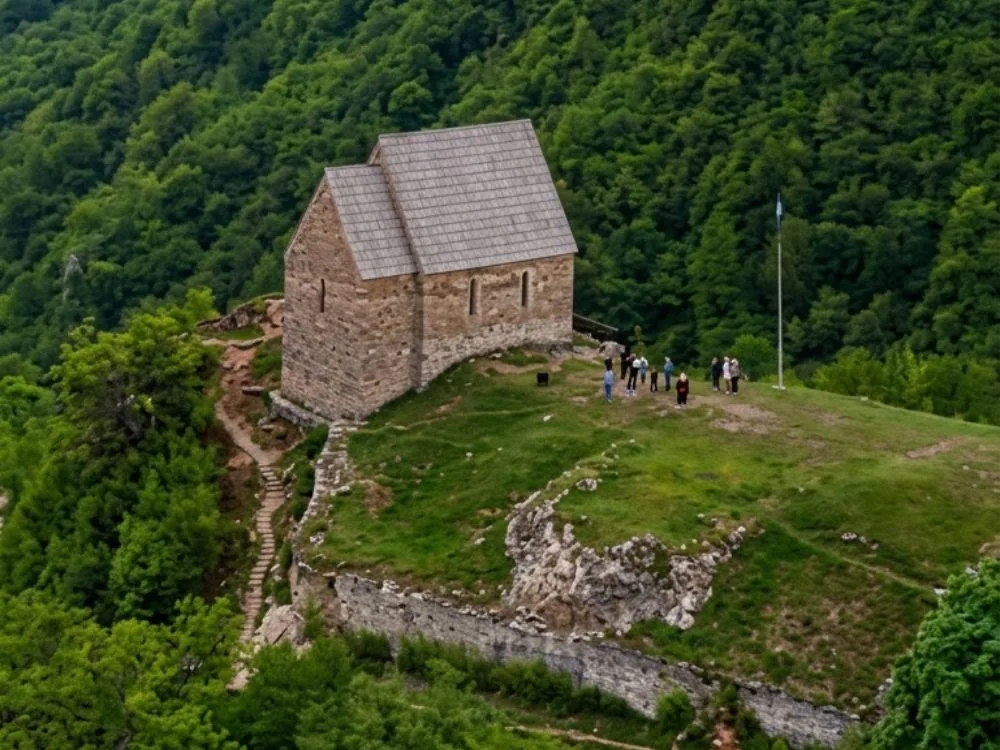
Built 1355 · Medieval Bosnian royal fortress on a steep limestone ridge; the principal seat of the Bosnian Kings from the mid-14th century until its fall to the Ottomans in 1463; the walls, towers, and royal chapel foundations remain on the ridge above the Bosna river valley
This page is part of an independent travel guide and is not affiliated with, endorsed by, or operated by Bobovac Fortress.
© Castles & Palaces
Quick Facts
- Hours
- Daily 08:00–18:00
- Guided tour from
- €120
- Duration
- 1–1.5 hours at the fortress; full day on the GetYourGuide tour with Kraljeva Sutjeska
- Best time
- April to October
- Nearest city
- Vareš
Featured Tour
Sarajevo: Kraljeva Sutjeska & Bobovac Day Trip
Cancellation available · Instant confirmation
Highlights
- ✦The last royal seat of the Bosnian Kings — Bobovac served as the principal fortress of the medieval Kingdom of Bosnia from the mid-14th century, housing the royal court, the state treasury, and ultimately the crown jewels; it was the last significant fortress to resist the Ottoman advance in 1463, falling after the capture of King Stephen Tomašević
- ✦The pairing with Kraljeva Sutjeska — the GetYourGuide private day tour combines Bobovac with the Franciscan monastery village of Kraljeva Sutjeska, one of the oldest Franciscan monasteries in Bosnia and the site where the Bosnian royal court is buried; monastery entrance and the fortress visit are both included
- ✦Traditional Bosnian coffee at the fortress — the tour includes a traditional coffee break served on-site at Bobovac, adding a cultural dimension to what would otherwise be a straightforward ruins visit; few fortress sites in Bosnia pair archaeological heritage with this kind of lived cultural ritual
- ✦The ridge setting and Bosna valley panorama — Bobovac's strategic position on a limestone ridge above the Bosna river valley made it ideal as both a royal residence and a defensive stronghold; the views from the walls across the central Bosnian countryside remain one of the most evocative landscapes in the country
- ✦An overlooked medieval kingdom — the Kingdom of Bosnia maintained genuine independence between the Byzantine and Ottoman spheres for over a century, developing its own heretical Christian tradition (the Bosnian Church) and a court culture documented in unique stećci stone monuments; Bobovac is the primary physical trace of this lost kingdom
Skip the queue with a guided tour
Skip-the-line tickets & expert guides
Bobovac Fortress occupies a limestone ridge above the Bosna river valley near Vareš in central Bosnia, at an elevation that gave it both the strategic control and the visual drama appropriate for a royal seat. From the mid-14th century until the Ottoman conquest of 1463, this was the principal fortress of the medieval Kingdom of Bosnia — the place where the Bosnian kings kept their court, their treasury, and their crown jewels, and from which they maintained the complicated diplomatic balancing act of a small Christian kingdom caught between Hungary, the Ottoman Empire, and internal religious factionalism.
The kingdom itself is one of medieval Europe's stranger historical footnotes. The Bosnians had developed their own branch of Christianity — the Bosnian Church, whose members (called Krstjani, 'Christians') were condemned as heretics by both Rome and Constantinople — and had maintained independence through the 14th and early 15th centuries by playing the great powers against each other. By 1463, that balancing act had run out of road. The Ottoman Sultan Mehmed II, fresh from the fall of Constantinople a decade earlier, drove his army into Bosnia in a campaign of devastating speed. King Stephen Tomašević was captured shortly after the fall of Bobovac and subsequently executed. The medieval Bosnian kingdom ended. The fortress never recovered its royal function.
What remains today is the core of the ridge fortress: stretches of the medieval wall, the foundations of the royal chapel, the cistern that supplied water to the garrison, and the general outline of a complex that once housed the apparatus of a functioning royal court. The ridgeline itself does most of the interpretive work — stand on the walls and look down at the Bosna valley, and it is immediately clear why someone building a medieval fortress would choose this exact position.
The GetYourGuide private day tour from Sarajevo pairs Bobovac with a visit to Kraljeva Sutjeska, the Franciscan monastery village approximately 5 km from the fortress. Kraljeva Sutjeska contains one of the oldest active Franciscan monasteries in Bosnia and Herzegovina, the burial site of multiple Bosnian royal court members, and a small museum documenting the medieval Bosnian kingdom. The monastery entrance and the Bobovac fortress visit are both included in the tour price. The itinerary concludes with traditional Bosnian coffee served at the fortress — an addition that turns the archaeological stop into something more memorable than a purely educational site visit.
History
Bobovac is first mentioned in documentary sources in 1340 and became the principal royal residence of the Kingdom of Bosnia under Ban (later King) Stjepan II Kotromanić in the mid-14th century. The fortress was substantially expanded through the 14th and early 15th centuries as the Bosnian kingdom developed its court culture and international diplomatic connections. King Tvrtko I, who elevated Bosnia to a kingdom in 1377, used Bobovac as his administrative centre. The fortress held the Bosnian crown jewels and served as a place of refuge for the royal family during periods of external pressure. In 1463, Sultan Mehmed II's rapid military campaign through Bosnia reached Bobovac; the fortress fell, and King Stephen Tomašević was captured nearby at Ključ and subsequently executed. The Ottoman conquest ended the medieval Bosnian kingdom in a matter of weeks. Bobovac was used as an Ottoman garrison site for a period but gradually fell out of strategic significance as the new administration built different fortifications. Archaeological investigations in the 20th and 21st centuries have clarified the site's layout and recovered artefacts from the royal period.
How to Visit
Getting there: Bobovac is approximately 70 km northeast of Sarajevo, near the villages of Kraljeva Sutjeska and Vareš. The site is not served by public transport; the most practical approach is by car (the last stretch is an unpaved track) or via the GetYourGuide private tour from Sarajevo. The tour departs from Sarajevo and handles all transport.
Tickets: Entrance to Bobovac Fortress is approximately €3 per adult (low nominal fee). The tour confirms the fortress visit and Kraljeva Sutjeska monastery entrance both as included. Traditional Bosnian coffee at the fortress is also included. Meals other than the coffee are excluded.
Practical tips: The path from the parking area to the fortress summit is steep and takes 15–20 minutes each way. Wear sturdy footwear and bring water. The site has no on-site facilities other than the tour's coffee service. Visiting Bobovac and Kraljeva Sutjeska together as a full-day circuit (as the tour does) is the recommended approach — the monastery visit provides context for the fortress's royal significance that a standalone fortress visit lacks.
Combine with: Jajce Fortress (~80 km southwest — the other major royal fortress of the medieval Bosnian kingdom, where King Stephen Tomašević was originally besieged before the Ottomans redirected toward Bobovac; the town's waterfall and fortress sit above the confluence of the Pliva and Vrbas rivers) and Travnik Fortress (~90 km west — the Ottoman-era fortress that became the seat of the Bosnian Viziers after the conquest, the next chapter in the region's political history).
Frequently Asked Questions
The crown jewels and royal treasury of the medieval Bosnian kingdom were stored at Bobovac during the later years of the kingdom. When the fortress fell to the Ottomans in 1463, the fate of the treasury is not precisely documented — some accounts suggest the valuables were dispersed or taken by the Ottomans, others that some items were removed before the siege. Archaeological investigations at the site have recovered medieval artefacts that are now held in Sarajevo's National Museum of Bosnia and Herzegovina, but the crown itself and the principal regalia are not among them. The collection at the National Museum includes medieval jewellery and objects from the royal court period.
Location
Bobovac Fortress, near Kraljeva Sutjeska, Central Bosnia
Nearby Castles
Tours & Tickets
Powered by GetYourGuide
From
€120/ person