
Travnik Fortress
Travnička tvrđava / Stari grad Travnik
Bosnia · Central Bosnia, Travnik · Near Travnik
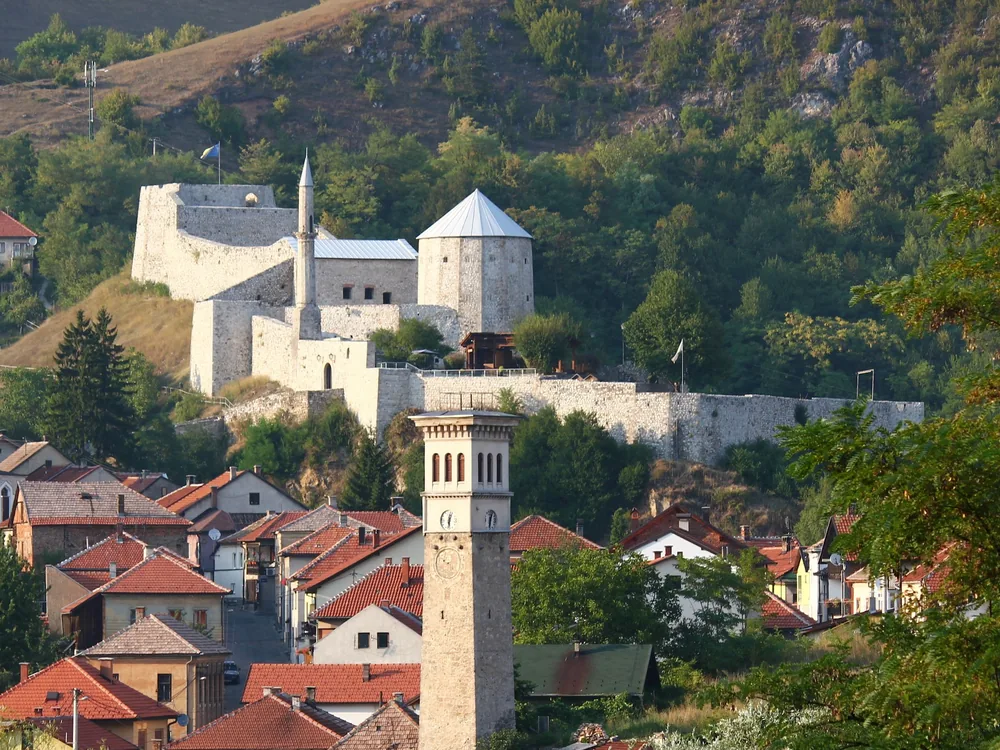
Built 1464 · 15th-century Ottoman-era fortress on the ridge above Travnik's old town; built after the Ottoman conquest of Bosnia in 1463, subsequently expanded and reinforced over the following two centuries; served as the fortified administrative seat of the Ottoman Bosnian Viziers for over a century; the walls, towers, and gate structures are substantially intact
This page is part of an independent travel guide and is not affiliated with, endorsed by, or operated by Travnik Fortress.
© Castles & Palaces
Quick Facts
- Hours
- Daily 09:00–19:00
- Guided tour from
- €140
- Duration
- 45–60 minutes at the fortress; 5.5 hours total on the GetYourGuide Travnik tour
- Best time
- April to October
- Nearest city
- Travnik
Featured Tour
From Sarajevo: Travnik Guided Tour with Free Time
Cancellation available · Instant confirmation
Highlights
- ✦The seat of Ottoman Bosnia — from the late 17th century to 1850, Travnik served as the de facto administrative capital of the Ottoman province of Bosnia, with the Bosnian Viziers (governors) holding court in the city below the fortress; the combination of the fortress above and the Ottoman urban fabric below gives Travnik one of the most coherent historic townscapes in Bosnia
- ✦The GetYourGuide guided day tour from Sarajevo includes the Travnik Fortress visit; the itinerary also includes Plava Voda, the Šarena Mosque, and drinks, with free time for independent exploring
- ✦Plava Voda — the 'Blue Water' karst spring that gives Travnik's old town its most distinctive natural feature; a series of watermills and traditional restaurants line the crystalline turquoise stream that emerges from the limestone hillside and runs through the bazaar quarter
- ✦Šarena Mosque (the 'Colourful Mosque') — a 16th-century Ottoman mosque decorated with vivid painted patterns on its exterior facade, one of the most unusual mosques in the Balkans and one of the confirmed stops on the GetYourGuide tour
- ✦Nobel laureate connection — the Yugoslav Nobel Prize winner Ivo Andrić was born in Travnik in 1892; his novel The Days of the Consuls is set in the city during the Napoleonic period, when Travnik was the seat of foreign consulates in the Ottoman province; a memorial museum in his birthplace adds a literary dimension to the town
Skip the queue with a guided tour
Skip-the-line tickets & expert guides
Travnik Fortress sits on a ridge above one of central Bosnia's most historically layered towns — a city that was, for several centuries after the Ottoman conquest, the administrative capital of an entire province. The fortress itself is a product of that Ottoman period, built and expanded from 1464 onward to secure the ridge above the growing town in the Lašva valley, but the city's significance as a seat of power came later, when the Ottoman Bosnian Viziers established their residence in Travnik rather than Sarajevo and turned it into a de facto provincial capital.
From the late 17th century to 1850, the Bosnian Viziers (provincial governors, reporting to the Sultan in Istanbul) held court in Travnik. The city attracted foreign consulates, merchants, and court figures from across the Ottoman world. Ivo Andrić, the Yugoslav Nobel laureate, used this period as the setting for his novel The Days of the Consuls — a fictional account of diplomatic life in Travnik during the Napoleonic era, when the city was the official seat of French, Austrian, and other foreign representatives in the Ottoman province. Andrić was born in Travnik in 1892, when the Viziers' residency had already ended but the city's Ottoman character remained intact.
The fortress itself is substantially preserved. The walls, towers, and gate structures that ring the ridge above the old town still stand to significant height, giving a clear sense of the defensive complex's extent without requiring the kind of imaginative reconstruction that fragmentary ruins demand. Inside the walls, the views over Travnik's rooflines and the Lašva valley below repay the uphill walk.
The GetYourGuide guided day tour from Sarajevo covers Travnik's three most distinctive sights in a single programme: the fortress, Plava Voda (the 'Blue Water' karst spring that sends turquoise water through a channel lined with watermills and traditional restaurants), and the Šarena Mosque (the 'Colourful Mosque', a 16th-century Ottoman mosque decorated with painted exterior patterns unlike any other mosque in the region). Drinks are included; free time is built into the itinerary for independent exploring in the bazaar quarter.
History
Travnik's Ottoman-era fortress was built from 1464 onward, immediately following the Ottoman conquest of Bosnia in 1463. The town in the Lašva valley below developed as an administrative and commercial centre under Ottoman rule. In the late 17th century, following a period of Ottoman-Venetian conflict that disrupted Sarajevo's position, the Bosnian Viziers began using Travnik as their primary residence; from this point until the Ottoman administrative reorganisation of 1850, the city functioned as the de facto capital of Ottoman Bosnia. Foreign powers established consulates here — a remarkable position for a city of its size — and the Vizier's court attracted a complex social world that Andrić would later document in his fiction. The 1850 Tanzimat reforms centralised Ottoman provincial administration in Sarajevo, ending Travnik's century of prominence as a Vizierial seat. The fortress continued to be used militarily through the Austro-Hungarian period and retains most of its wall structure today.
How to Visit
Getting there: Travnik is 90 km northwest of Sarajevo on the M5 highway (approximately 1.5 hours by car or bus). Direct buses from Sarajevo's main bus station run multiple times daily. The GetYourGuide guided day tour from Sarajevo handles all transport and includes a pick-up from Sarajevo.
Tickets: Entrance to Travnik Fortress costs approximately €3 per adult. The tour includes the fortress visit, alongside Plava Voda, the Šarena Mosque, drinks, and transport. Food is excluded; drinks are included.
Practical tips: Allocate time for both the fortress and the town below — the bazaar quarter, Plava Voda, and the Šarena Mosque together make Travnik one of the most satisfying half-days of any city in Bosnia. The Ivo Andrić memorial museum is in the old town if the Nobel Prize connection interests you. The tour's built-in free time allows independent exploration of the bazaar quarter.
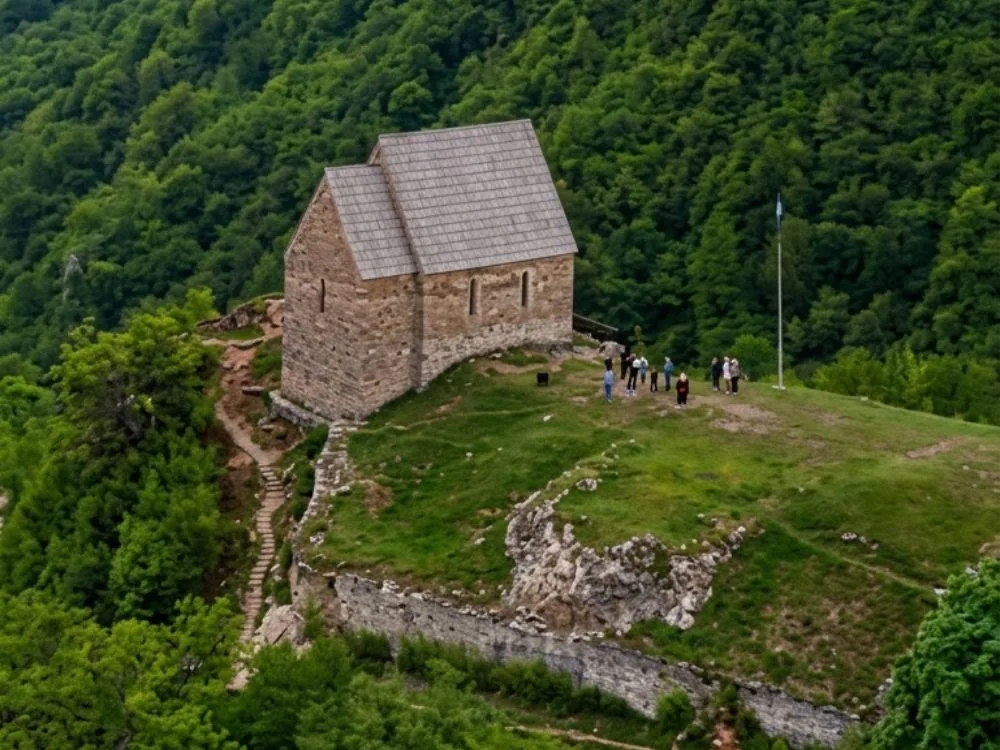
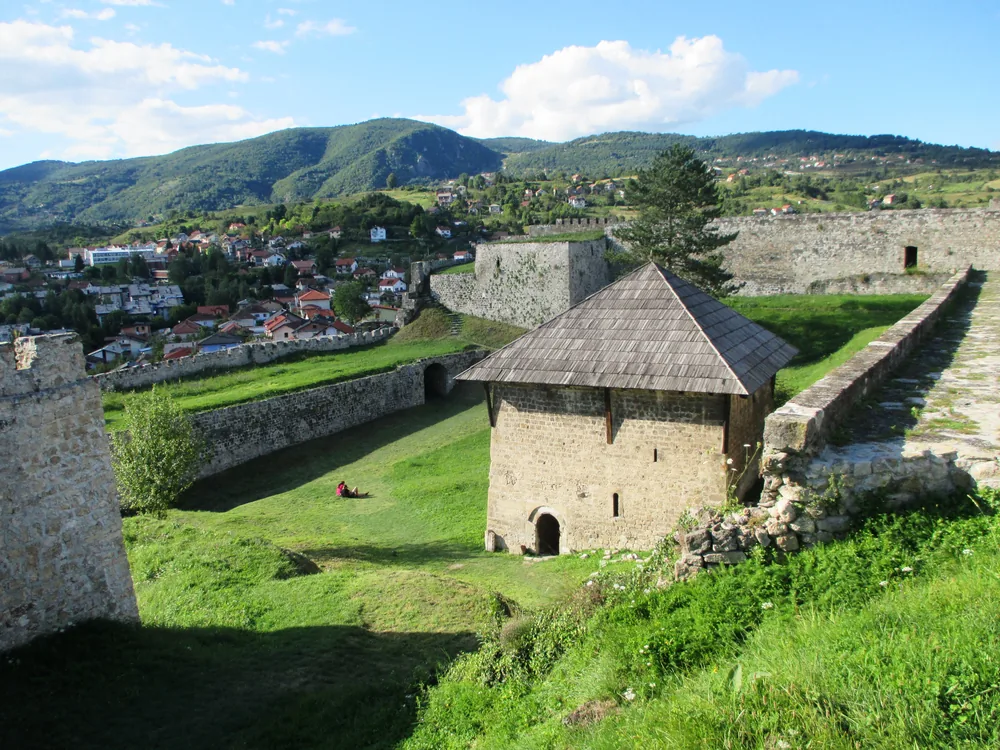
Combine with: Bobovac Fortress (~90 km east — the medieval royal fortress of the Bosnian Kings that preceded Travnik as the political centre of the region; the two sites bookend the medieval and Ottoman chapters of Bosnian history) and Jajce Fortress (~50 km southwest — the dramatic fortress above the Jajce waterfall, the other royal Bosnian capital before the Ottoman conquest).
Frequently Asked Questions
Sarajevo was the primary commercial and administrative city of Ottoman Bosnia for most of the post-conquest period. Travnik's prominence as a Vizierial seat came in the late 17th and 18th centuries, partly as a result of the Viennese wars and their disruption of Sarajevo's administrative stability. The Bosnian Viziers found Travnik's location in the Lašva valley — inland, defensible, and connected to the major road routes of central Bosnia — suitable for their residency and moved their court there. The foreign powers that needed to deal with the Viziers followed, establishing consulates. The arrangement lasted until the Ottoman administrative reforms of 1850 centralised the province again in Sarajevo.
Location
Stari grad Travnik, Travnik 72270, Bosnia & Herzegovina
Nearby Castles
Tours & Tickets
Powered by GetYourGuide
From
€140/ person